Перейти к содержимому
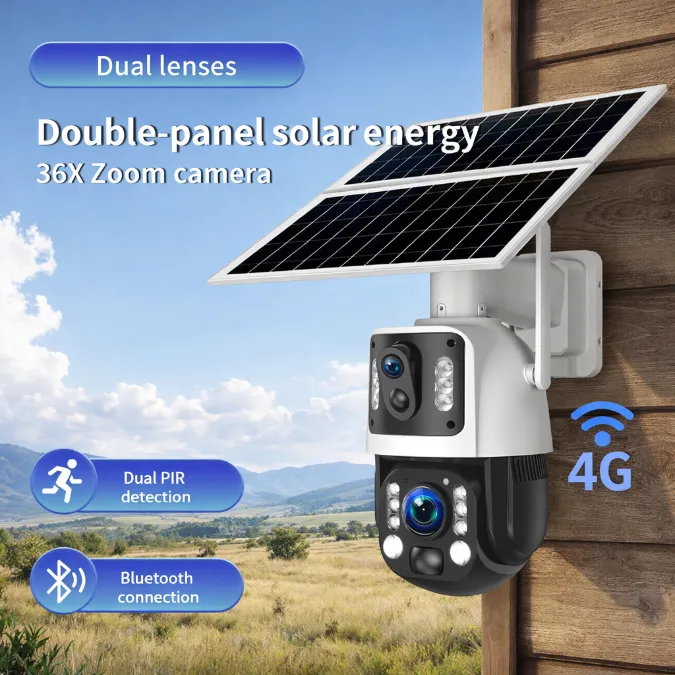
Sourcing a reliable solar camera 4g system is the only way to bypass the massive cost of trenching power lines across vast acreages. Relying on fragile local networks or limited grid access leaves remote agricultural and construction assets exposed to unchecked theft and critical operational blind spots.
This analysis benchmarks off-grid surveillance hardware against standard cellular infrastructure demands. We evaluate ultra-low power consumption standby, high-efficiency dual-panel solar charging, and regional LTE band compatibility to help you deploy a scalable, independent security network.
The Rise of Off-Grid Surveillance Technology
Solar 4G cameras are replacing wired setups, driven by rural demand, AI integration, and a need for independent power in areas with poor infrastructure.
Global Market Expansion and Regional Demand
North America controls the off-grid surveillance market, holding over a 35% share due to high security awareness and early adoption. The Asia Pacific region anticipates an 18.4% growth rate as rapid urbanization and smart city projects increase the need for flexible monitoring solutions.
Unreliable grid infrastructure in emerging regions forces businesses to abandon traditional wired setups. Specific sectors rapidly adopting this technology include:
- Agriculture: Farm operators monitor distant crops and livestock while preventing equipment theft across massive acreages.
- Industrial Construction: Site managers deploy temporary perimeter security immediately without waiting for permanent electrical hookups.
- Emerging Regions: Latin American and African markets use solar cameras to bypass unreliable power grids and secure remote assets.
Core Technologies Driving Off-Grid Systems
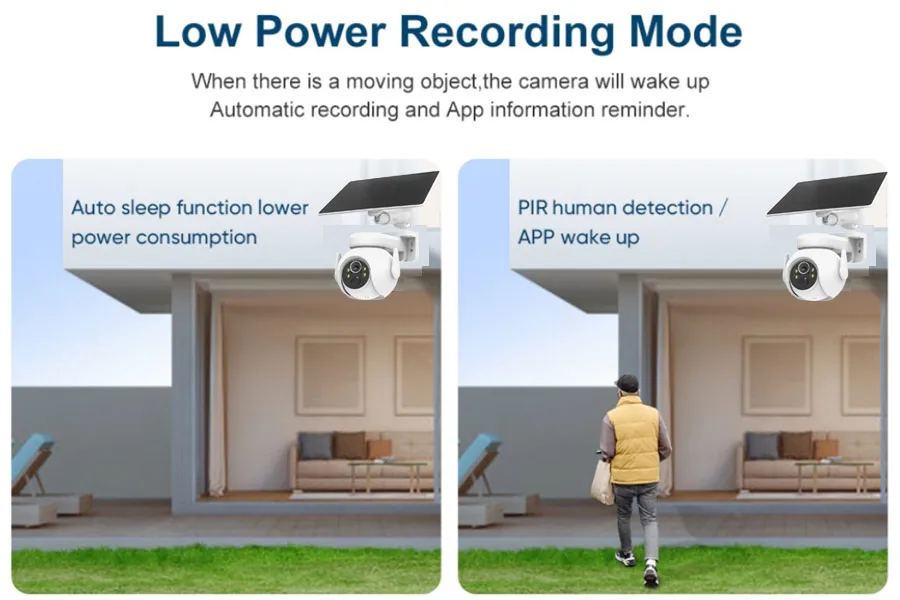
Independent power generation and cellular data transmission make remote monitoring viable. This hardware combination removes the need for wired internet and electrical mains, dropping long-term operational costs.
- Solar and Battery Power: Integrated solar panels and high-capacity batteries keep cameras running 24/7, eliminating expensive trenching and cabling requirements.
- Wireless 4G LTE: Built-in cellular modems transmit live high-definition video directly from remote locations to user devices and centralized control rooms.
- AI Sensor Processing: Edge computing allows cameras to detect actual security threats, filter out false alarms, and push instant notifications automatically.
How 4G LTE Connectivity Works in CCTV
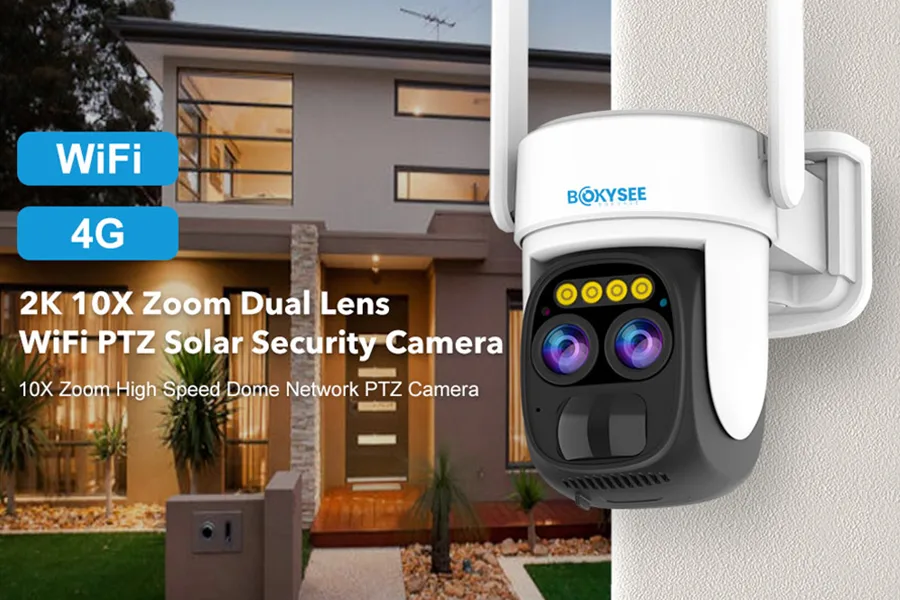
4G LTE CCTV systems replace traditional Wi-Fi and cables by using built-in modems and SIM cards to stream compressed video directly over cellular networks.
Essential Hardware Components for Cellular Transmission
Operating a security camera off the grid requires specific hardware to bridge the gap between local video capture and remote access. These components work together to replicate the connectivity you expect from a hardwired setup.
- 4G LTE modem: Acts as the core communication module, converting video data into radio packets to connect with local cell towers.
- Activated SIM card: Provides the network credentials needed to authorize data plans and link the camera to a specific cellular carrier.
- Built-in antennas: Enhance signal reception to ensure stable connectivity in remote or off-grid locations.
- Onboard processors: Handle video encoding formats like H.264 or H.265 to reduce bandwidth requirements for high-definition streaming.
This hardware stack eliminates the need for nearby routers or local networks. The camera functions completely independently, communicating straight to the carrier network.
The Data Transmission Process
Getting footage from a remote site to your screen involves a fast, systematic sequence. The hardware executes several steps the moment you power on the system or trigger a motion sensor.
- Network startup: The camera scans for available 4G LTE cell towers and authenticates the connection using the inserted SIM card during startup.
- Local compression: The internal processor compresses captured video footage locally before streaming the data over the cellular network via standard IP protocols.
- Server routing: Cellular networks route the video data to cloud servers or dedicated mobile applications, enabling live views, push notifications, and remote playback.
- Uptime management: The system maintains continuous network uptime by balancing cellular signal strength with onboard battery power management.
By compressing the files locally and managing battery draw against signal strength, these cameras keep data usage low while ensuring you receive real-time alerts without delays.
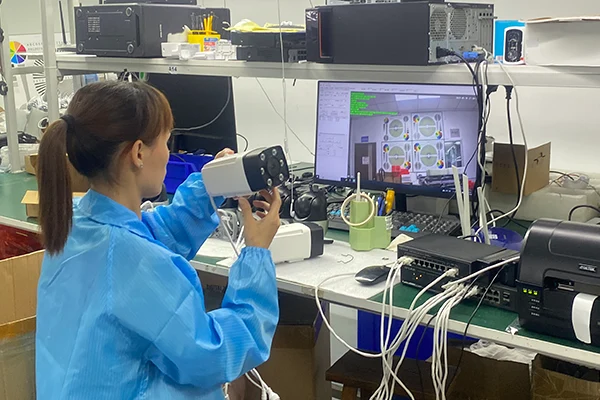
One-Stop OEM/ODM Security Camera Solutions
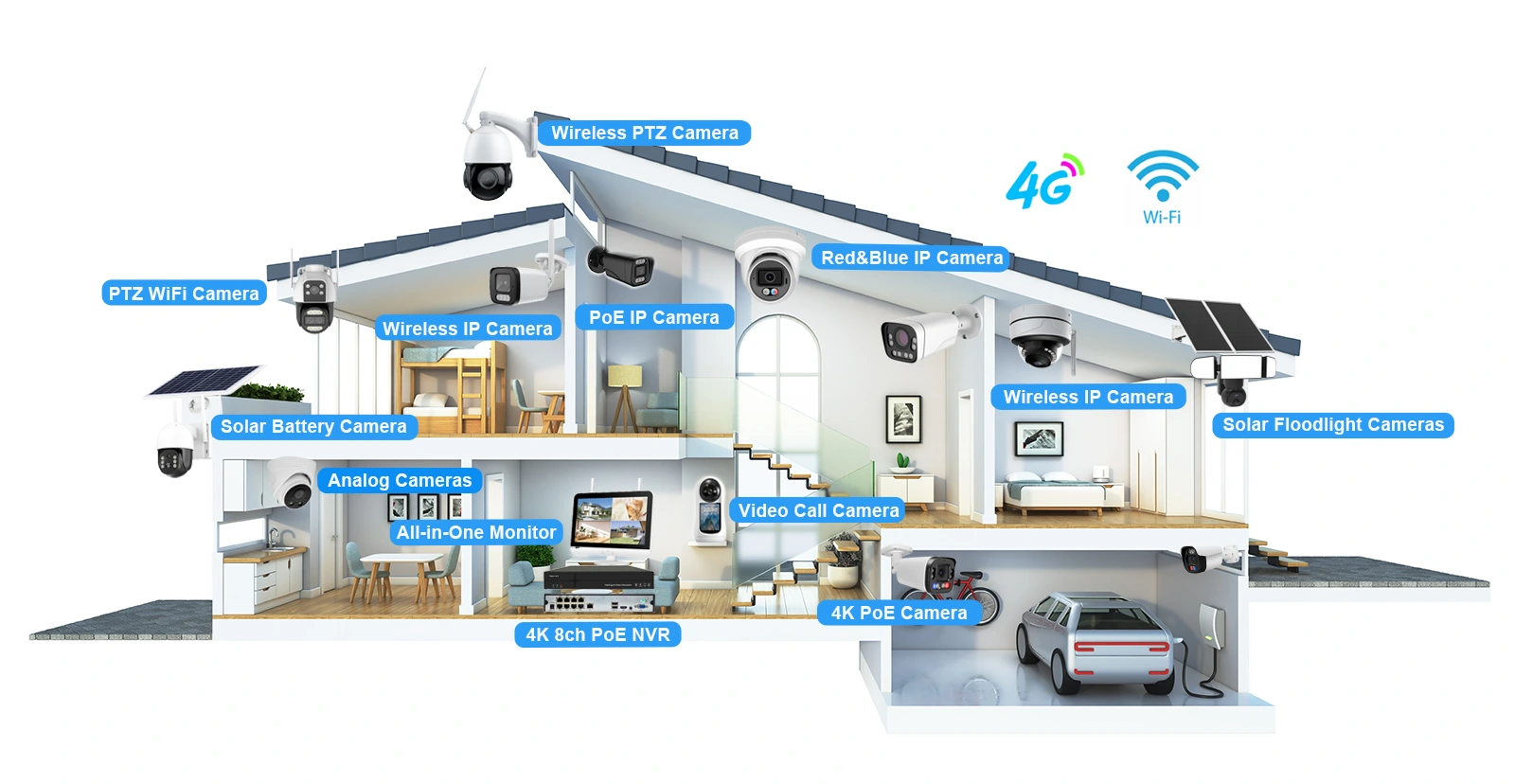
SIM Card Compatibility and Global Band Support
Matching your 4G solar camera’s built-in LTE modem to the correct carrier bands guarantees stable off-grid surveillance without relying on WiFi.
SIM Card Formats and US Carrier Support
Manufacturers primarily equip solar 4G cameras with nano-SIM cards. They often pre-insert these cards to provide trial data, allowing you to set up and test the camera immediately out of the box.
Hardware designs vary based on environmental demands. Bokysee models feature highly accessible, weatherproof-sealed slots that accept standard nano-SIM cards from major global networks, including US carriers like AT&T, Verizon, and T-Mobile.
When building an off-grid security system in 2026, you need to verify carrier compatibility upfront. Optimizing the integrated cellular modem for domestic networks entirely removes the need for WiFi.
International Network Bands and Data Requirements
European and UK deployments rely heavily on specific 3G and 4G LTE frequency bands. The hardware targets these regions by supporting local providers like Vodafone, O2, Telekom, Orange, and Bouygues.
You must match the camera’s LTE modem bands to your local carrier network. Aligning the hardware with North American bands like B2, B4, and B5 directly prevents signal dropouts and maintains a reliable connection in remote areas.
Continuous remote operation demands an active monthly data plan. Your data consumption scales based on specific system settings:
- Standard Monitoring: Typically consumes 1 to 5GB of data per month.
- Motion Alert Frequency: High-traffic areas trigger more event recordings and increase the total data draw.
- Video Resolution: Streaming high-definition footage demands more bandwidth than lower resolutions.
Low-Latency Remote Viewing via 4G Networks
Modern 4G networks deliver mean latencies around 30-35ms, enabling instant remote viewing and real-time control for off-grid solar surveillance without the cost of wired infrastructure.
Latency Benchmarks for Cellular Connections
Operators expect instant video feeds when managing remote surveillance. 4G networks deliver the speed required to keep security feeds highly responsive.
- Standard 4G Networks: Mean latencies sit between 30 and 35ms as of 2026.
- Video Transmission: Ultra-low latency encoders push speeds to 65ms.
- Round-Trip Time: Public network speeds remain well under 200ms.
Real-Time Monitoring in Remote Deployments
Relying on rural Wi-Fi creates technical bottlenecks. Signal interference and short transmission ranges limit coverage across large properties. Cellular connectivity bypasses these issues by entirely removing the need for expensive cabling and fragile range extenders.
With advanced hardware like the Bokysee BK-LXS38P, site operators gain dynamic, real-time oversight. Users can remotely control the Pan-Tilt-Zoom functions via their smartphones to scan wide fields, adjusting monitoring parameters on the fly across widespread utility-scale environments or agricultural perimeters.
Solar Power Sizing for Continuous 4G Streaming
Continuous 4G streaming demands 120–240 watt-hours daily. You need an 80–100W solar panel and a 40–60Ah 12V battery to ensure 24/7 uptime even through bad weather.
Calculating Daily Power Requirements
Continuous 4G streaming forces the camera to sustain active video encoding and constant cellular transmission. This intense processing pushes the average power consumption to a range of 5 to 10 watts.
To find your total daily energy need, multiply that average streaming power draw by 24 hours. The result establishes a baseline target between 120 and 240 watt-hours (Wh) per day for uninterrupted operation.
| Average Power Draw | Operation Time | Daily Energy Need |
|---|---|---|
| 5 Watts | 24 Hours | 120 Wh |
| 7.5 Watts | 24 Hours | 180 Wh |
| 10 Watts | 24 Hours | 240 Wh |
Selecting Panels and Batteries
You calculate the correct solar panel size using a specific formula: Panel Watts = (Daily Wh Need / Peak Sun Hours) × Oversize Factor. Apply a 1.5 to 2 oversize multiplier to this calculation to offset system wiring losses, controller inefficiency, and cloudy weather.
If you operate a 240 Wh/day system in a region that gets 5 peak sun hours, deploy an 80 to 100 watt solar panel paired with an MPPT charge controller. This configuration reliably harvests enough energy to cover the high continuous load.
Size the battery bank to guarantee two to three days of autonomy at a 50% depth of discharge (DoD). A 12-volt battery rated between 40 and 60 amp-hours pairs perfectly with this system, preventing unexpected shutdowns during extended bad weather.
| Daily Load | Autonomy Target | Depth of Discharge (DoD) | Required 12V Battery Capacity |
|---|---|---|---|
| 240 Wh | 2 Days | 50% | 40 Ah |
| 240 Wh | 3 Days | 50% | 60 Ah |
Data Encryption and Network Security Standards
Современный solar 4G cameras secure remote deployments by combining enterprise-grade TLS 1.3 transmission protocols with AES-256 storage encryption, entirely bypassing vulnerable public Wi-Fi networks.
Encryption Protocols for Data Transmission
When transmitting sensitive data from remote locations, relying on outdated network protocols opens the door to interception. Modern solar 4G cameras use TLS 1.3 as their primary 2026 encryption standard to secure communication channels and block unauthorized access.
For live streaming, these systems employ Secure Real-time Transport Protocol (SRTP) alongside WebRTC. This combination secures real-time video feeds as they travel across cellular networks to end-user devices.
Because the 4G LTE modules send encrypted video straight to cellular providers, they completely bypass the security vulnerabilities associated with public Wi-Fi networks, ensuring a direct and protected connection.
System Security and Local Data Protection
Data requires strict protection when resting on a local drive or cloud server. Security cameras deploy AES-256 encryption to safeguard all stored video footage and recorded logs against cryptographic attacks.
To maintain hardware integrity and restrict unauthorized entry, these surveillance setups execute several critical security measures at the device level:
- Multi-factor authentication (MFA): Systems prompt users for fingerprint scans or one-time codes before unlocking camera streams.
- Secure boot mechanisms: The camera firmware strictly loads authorized code during startup, preventing malicious OS modifications.
- Automated vulnerability patching: Systems download and apply security updates over the cellular network, eliminating the need for physical maintenance at isolated sites.
Selecting the Right 4G Band for Europe vs. South America
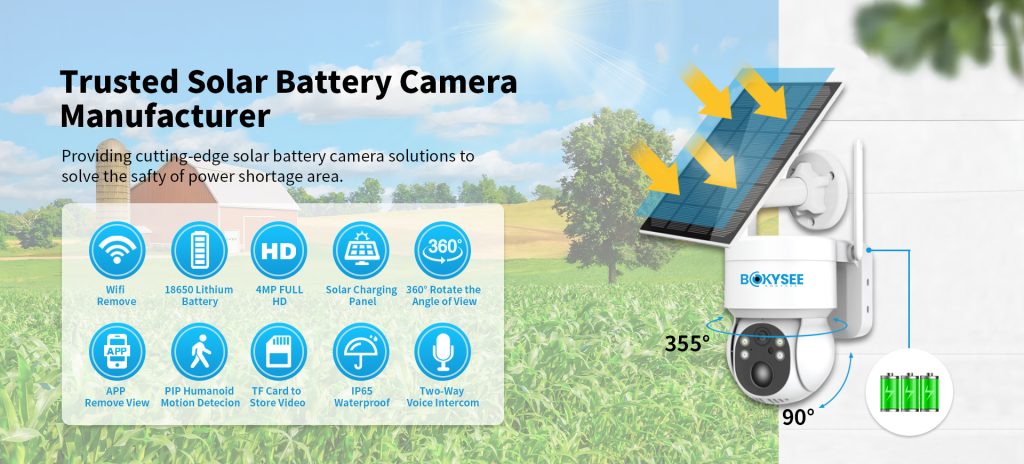
Choosing the wrong 4G band guarantees connection failure. European installations require B20 for rural reach, while South American deployments demand B4 compatibility to function on major networks.
European Band Requirements and Rural Deployments
Major European operators deploy core LTE FDD bands like B3 (1800 MHz) for high-capacity coverage and B7 (2600 MHz) for fast data rates. Off-grid солнечные камеры face a completely different set of physical challenges outside of urban zones, shifting the network priority away from raw speed to reliable signal range.
- Rural Penetration: Off-grid cameras rely heavily on B20 (800 MHz) for its superior signal penetration through physical obstacles and across long distances.
- Module Specs: Installers need CAT1 EU-version modules covering B1, B3, B7, B8, B20, and B28 to guarantee continuous network access across different European countries.
By 2026, buyers must actively verify local operator frequencies using mapping tools like cellmapper.net. You have to match camera specifications with regional infrastructure before you begin the physical installation.
South American Frequencies and Global Module Selection
South American networks demand broad frequency support. They heavily prioritize B4 (1700/2100 MHz AWS), which acts as the primary band for major carriers like Vivo and Claro in Brazil. Missing this band means missing the largest network footprints on the continent.
- Remote Connectivity: Agricultural and industrial sites require B28 (700 MHz) capabilities to maintain stable video connections in areas with sparse cell tower distribution.
- Module Selection: System integrators must choose global CAT1 or CAT4 modules supporting B2, B3, B4, B7, and B28. Restricted EU-only modules drop the critical B4 frequency entirely.
You can maximize field reliability by pairing global multi-band cameras with high-gain external antennas. Test the connection onsite using local SIM cards while directly monitoring RSSI and SINR metrics in the camera app to confirm signal quality.
Case Studies: Farm and Ranch Applications
Professional farm deployments require shared infrastructure, heavy-duty solar power, and independent 4G networks to reliably monitor hundreds of acres without trenching cables.
Large-Scale Deployment and Infrastructure Setup
Consumer-grade cameras fail on large agricultural properties. Professional-grade systems scale directly based on your acreage and minimize the total hardware footprint.
- Acreage scaling: We deploy 2-3 units to cover 50-100 acres, and expand to 4-6 cameras to monitor 100-300 acre ranches.
- Поле зрения: Relying on the BK-LXS38P camera, users leverage motorized 355-degree pan and 90-degree tilt rotations. This massive field of view allows a single device to monitor extensive loading zones or stockyards, drastically reducing the total number of devices required.
- Resource optimization: Multi-camera networks share central infrastructure. You connect multiple IP cameras to a single 4G router, a shared battery pack, and a larger solar panel to slash maintenance time.
Power Management and Remote Monitoring
Remote farm locations demand heavy-duty power configurations and reliable connectivity to bypass the massive cost of trenching AC power cables to distant barns.
- Power capacity: We install 15-30 W solar panels and 30-60 Wh battery packs to maintain continuous cellular connections during prolonged cloudy periods.
- Live transmission: Independent 4G connectivity pushes 2K HD footage directly to your phone in real time.
- Active deterrence: AI technology analyzes shapes to identify humans and vehicles, filtering out 90% of false alarms. Built-in 105dB sirens and two-way audio provide active deterrence directly from the camera.
- Environmental protection: IP66 and IP67 weather ratings protect the equipment from dust and water, ensuring the cameras operate efficiently in extreme outdoor conditions.
Часто задаваемые вопросы
How does a 4G solar camera connect?
A 4G solar camera connects directly to cellular networks using a built-in 4G LTE modem and an active Nano-SIM card. You insert the activated SIM into the camera, download the manufacturer’s mobile app, and scan a QR code to link the device. This establishes a direct, encrypted video feed to your phone without relying on local Wi-Fi or Ethernet cables.
How much data does it use monthly?
Most 4G solar cameras consume between 1.5 and 9 GB of data per month under normal motion-triggered operation. Total usage depends heavily on three factors: how often motion sensors trigger recording, your video resolution settings, and how frequently you pull up the live feed on your mobile app.
Can it work without Wi-Fi?
Yes, these cameras operate completely independently of Wi-Fi. They connect directly to 4G LTE cellular towers just like a smartphone. This makes them the standard choice for remote sites—such as farms, ranches, and construction zones—that lack any existing internet infrastructure.
What happens if the weather is cloudy?
The cameras rely on integrated lithium-ion batteries and smart power management controllers to keep running when sunlight drops. A fully charged system typically stores enough reserve power to operate continuously for 36 to 84 hours. This ensures your surveillance stays active through extended cloudy stretches or heavy rain.
Which cellular carriers do they support?
Most US-bound models support the major national networks, including Verizon, AT&T, and T-Mobile. Many manufacturers ship these cameras with a pre-installed IoT SIM card optimized for nationwide 4G LTE coverage. You just need an active monthly data subscription to keep the connection live.
Can buyers customize these cameras for bulk orders?
Yes, manufacturers routinely provide OEM and ODM services for bulk purchases. If you buy at scale, you can specify hardware configurations like solar panel wattage, battery capacity, and specific AI detection modules. Factories will also apply custom brand logos and packaging to meet your exact market requirements.
Заключительные мысли
Deploying cheap, consumer-grade cameras at remote sites guarantees dead batteries and dropped cellular signals when security matters most. Professional 4G solar systems secure widespread assets by matching specific regional LTE bands with heavy-duty power configurations for true 24/7 uptime. Investing in this commercial-grade architecture upfront prevents expensive maintenance trips and critical surveillance blind spots.
Ensure your remote security investment is backed by reliable performance. Start with a sample unit to verify 4G connectivity, real-time monitoring, and solar-powered operation in your target environment. Our team is available to assist with OEM requirements, network compatibility recommendations, and wholesale pricing for large-scale installations.







 Russian
  English
  Spanish