Перейти к содержимому

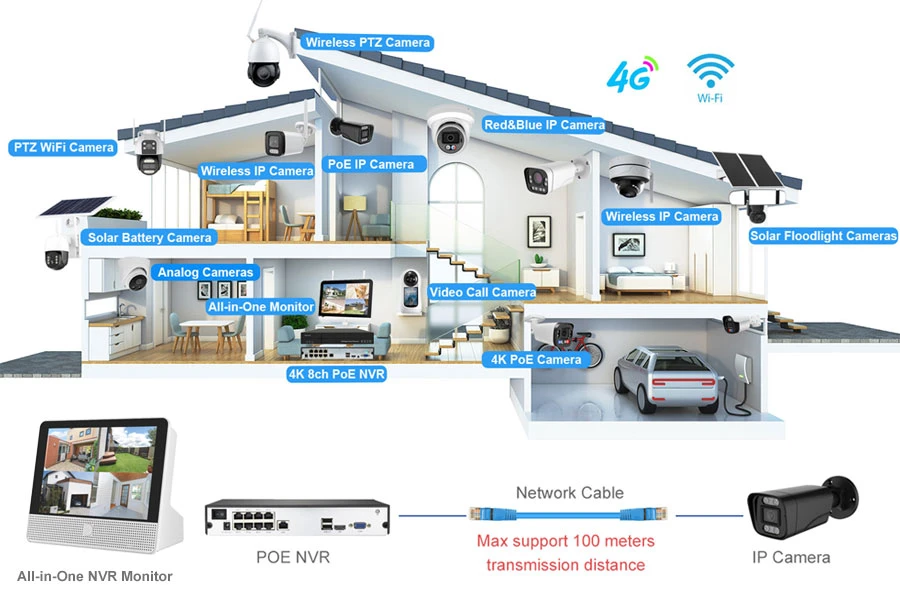
A network video recorder stores and manages footage from IP cameras. Compared with a basic recorder, an AI-enabled NVR may add person and vehicle classification, alert filtering, or advanced search. These functions can use processing in the recorder, compatible cameras, or both.
For installers and project buyers, the right choice comes down to recording needs, useful AI features, camera compatibility, and processing capacity. Comparing these requirements alongside equipment and licensing costs helps avoid paying for features the site will not use.
What Is an AI NVR?
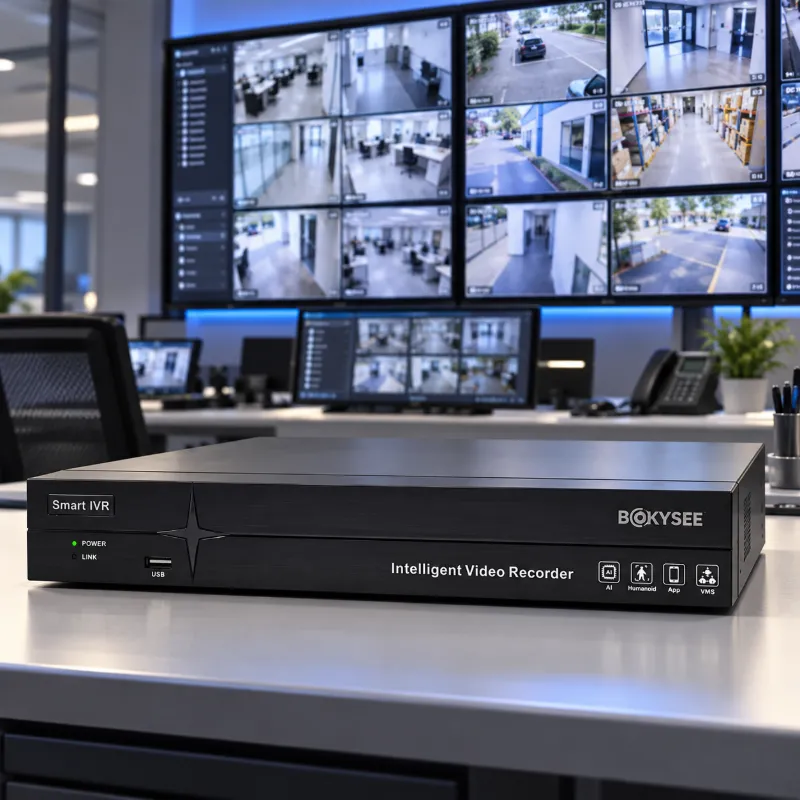
An AI NVR is a recorder that runs detection and classification on the video it stores, so events are searchable by type.
AI Processing in Network Video Recorders
AI processing in a recorder means the unit applies искусственный интеллект detection models to the incoming stream, classifying what appears in each frame. Instead of storing only raw video, the AI NVR keeps a parallel index of events: a person entered, a vehicle crossed a line, an object was left behind. That index is what makes the archive searchable in seconds rather than hours, and it runs on the recorder own processor rather than on a cloud server.
Camera-Based AI vs. NVR-Based AI
AI can live in two places: inside the camera or inside the recorder. Camera-based AI does the detection at the sensor and sends a simple alert, while NVR-based AI does it centrally on the recorded stream. Both approaches are valid, and many systems combine them, using the camera for the immediate alert and the recorder for deeper search across the whole archive.
Common AI Functions Supported by NVRs
The functions that matter most are person and vehicle detection, line crossing, intrusion into a zone, and the ability to search footage by those events. Some units add face recognition or plate reading. The practical value is the time saved when an operator finds one person across a week of video. That value appears only when the function is accurate enough to trust. Accuracy, not the feature list, is what buyers should test.
What Is a Traditional NVR?
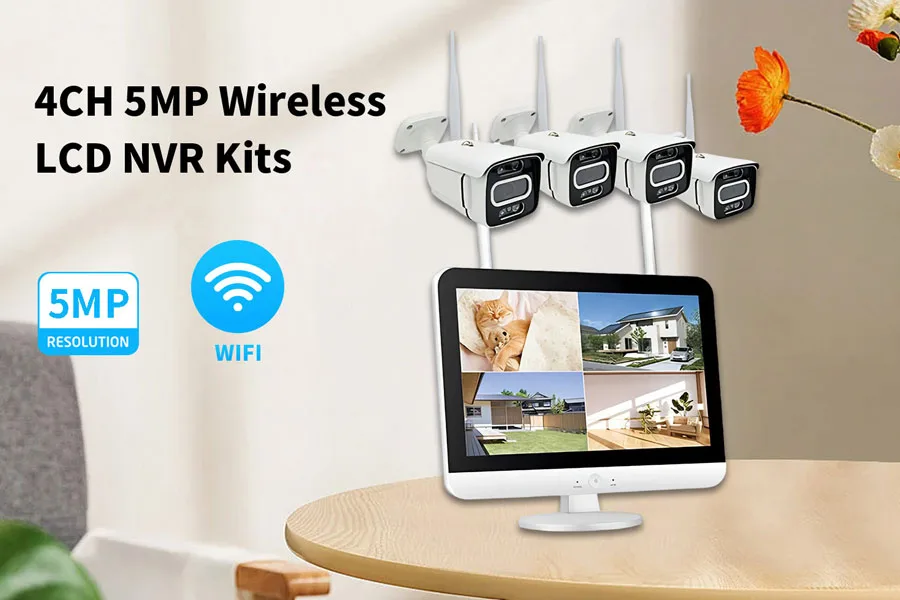
A traditional NVR records, stores, and plays back video, but it leaves the sorting and searching to the person watching.
Core Recording and Playback Functions
A traditional NVR does the fundamentals well: it accepts the camera streams, records them to disk, and plays back footage on demand. For a site that records continuously and reviews rarely, that is all the operator needs, and the unit is cheaper for it. There is no reason to pay for intelligence the site will never query.
Motion Detection and Basic Event Search
Traditional recorders still offer motion detection, which marks frames where the image changes and saves storage by skipping idle periods. Motion detection cannot tell a person from a passing car or a swaying tree. The resulting event list is often too noisy to be a useful search tool, and operators end up watching the video anyway.
Connecting IP Cameras to a Traditional NVR
A traditional NVR connects to IP cameras over the network and records whatever those cameras send. If the cameras themselves carry AI and push their own events, the recorder can store those tags. The recorder itself, however, does not add intelligence of its own to the footage, and anything the camera misses stays missing.
AI NVR vs Traditional NVR: Key Differences
The main differences are the supported analytics, alert filtering, search tools, and processing capacity. Basic recording functions may be similar, but available capabilities vary by model and connected cameras.
Video Analytics and Event Detection
Supported person and vehicle classification can reduce alerts caused by irrelevant movement. False alarms and missed detections remain possible, so camera position, detection rules, and site testing still matter.
Search, Playback and Incident Investigation
Both basic and AI-enabled NVRs may offer event-based playback. More advanced systems can add filters for supported target types, attributes, or other metadata. Search-time savings should be assessed using representative incidents rather than assumed from the AI label.
Camera Compatibility and Channel Capacity
Both recorders work with standard IP cameras, and an AI NVR does not require every camera to be an AI model. The recorder applies its own detection to ordinary streams up to its channel and processing limits. Checking those limits matters, because the AI workload is heavier than plain recording, and a unit that lists a high channel count may process far fewer at full AI depth.
AI capacity is only part of recorder selection. Our article on Best NVR Camera Systems: Features and Buying Tips covers other requirements, including recording channels, bandwidth, and storage.
Hardware Requirements and System Cost
AI processing costs more silicon, so an AI NVR is priced above a traditional unit of the same channel count, and it needs enough processing headroom to analyze every stream at once. The premium buys the search capability, which is worth it only where the footage is actually reviewed. On a rarely-watched archive, that money buys nothing the operator uses.
For the broader question of how the recorder fits into the system, our article on NVR versus DVR and the future of AI surveillance covers the recorder choice end to end.
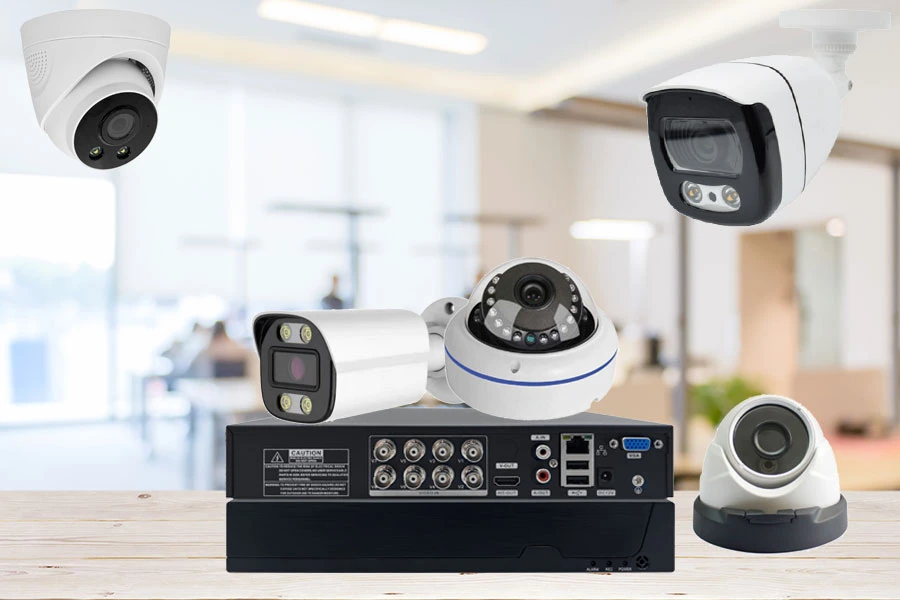
Sourcing NVRs and AI cameras for distribution or projects? Bokysee builds smart-detection recorders and AI cameras to order, with bulk pricing for OEM and ODM buyers.
Explore OEM/ODM Solutions →When Should You Choose an AI NVR?
Choose the AI unit where events are common and search time matters, not where the cameras just need to record.
Projects Requiring Intelligent Event Search
Any site that regularly pulls footage after an incident benefits from event search, because the operator skips the empty hours and lands on the event. Parking lots, retail back-of-house, and gated facilities are places where finding a person or vehicle quickly pays for the upgrade. There, waiting on a manual search is simply not acceptable.
Large Sites with Frequent Security Events
On a large site with dozens of cameras, the volume of stored video makes manual search impractical. An AI NVR indexes across every channel, so a single query covers the whole site. The more cameras and the more events, the stronger the case for the AI unit, because the search time saved grows with the scale.
Existing Systems That Need AI Upgrades
A site that already runs IP cameras can often add AI by replacing only the recorder, because the detection happens centrally. That path upgrades the search capability without swapping every camera, which is the cheapest way to add intelligence to a working system. It also preserves the wiring and the camera investment, so the upgrade is measured in the price of one recorder rather than a full rebuild.
What to Check Before Buying an AI NVR
Verify the AI capacity and the compatibility before buying, because the processing limits are where the promises usually stop.
Supported AI Functions and Processing Capacity
Confirm which functions the unit actually runs and on how many channels at once. A recorder that detects people on four channels may not do the same on sixteen, and the specification sheet should state the limit plainly. Matching that capacity to the camera count avoids a unit that falls back to plain recording under load, which would silently erase the reason it was bought.
Compatibility with Cameras and Protocols
The recorder must accept the cameras the site uses, which usually means standard IP protocols such as ONVIF. Checking compatibility before purchase prevents a situation where the AI works but the cameras do not talk to the recorder properly, and it protects a mixed estate of old and new cameras.
Storage, Bandwidth and Firmware Requirements
AI indexing adds metadata on top of the video, so the storage and network plan should account for it. Firmware updates also matter, because the detection models improve over time and a unit that cannot update quietly falls behind newer threats. A recorder that is current today but frozen at its first firmware version loses value year by year.
Licensing, Expansion and Long-Term Costs
Some AI features carry per-channel licenses, and some appear only on higher tiers, so the advertised price may not be the whole cost. Check whether adding a camera later requires a new license, and factor that into the total before comparing units. The cheapest recorder on the spec sheet can end up the most expensive once every channel is licensed.
Where the AI sits in the camera rather than the recorder, the trade-offs shift, and our guide to AI person detection cameras and false alarms explains that side of the equation.
Frequently Asked Questions About AI NVRs
What is the difference between an AI NVR and a regular NVR?
A regular NVR records and plays back video, while an AI NVR runs detection on the stream and indexes events like people and vehicles. The AI unit makes footage searchable by event, which a regular recorder cannot do on its own.
Does an AI NVR require AI cameras?
Not necessarily. Recorder-based analytics may work with compatible non-AI cameras. Features delivered through camera-based AI require cameras that support the relevant detection and metadata. Each advertised function should be checked separately.
Can an AI NVR work with regular IP cameras?
Yes. Standard IP cameras that follow common protocols such as ONVIF connect to an AI NVR, and the recorder runs its detection centrally on those streams.
Can a traditional NVR support AI features?
A traditional NVR can record events that AI cameras push to it, but it does not run detection itself. Adding AI usually means replacing the recorder or relying on camera-side detection for the intelligent features.
Does an AI NVR improve video quality?
No. The recorder stores whatever resolution the camera sends, and AI affects search and detection rather than the picture. Image quality is set by the camera, lens, and lighting, and upgrading the recorder will not sharpen a soft camera.
Is an AI NVR worth the extra cost?
It depends on how the footage is used. Sites that regularly search for incidents and fight false alerts get the value back in saved time, while a site that records and rarely reviews may not need the upgrade.
Заключительные мысли
The gap between an AI NVR and a traditional one comes down to search. Both record the same video, but the AI unit indexes it into events a person can find, which changes how the whole system is used. On sites with many cameras and regular incidents, that capability is usually worth the premium, and it often pays for itself the first time it saves a full day of manual review.
Confirm the AI functions, the per-channel processing limit, and the long-term licensing before you compare prices. Бокизее builds smart-detection NVRs and AI cameras to order for OEM and ODM customers. Share your channel count and project, and we will recommend the AI recorder that fits.







 Russian
 English
 Spanish