Перейти к содержимому

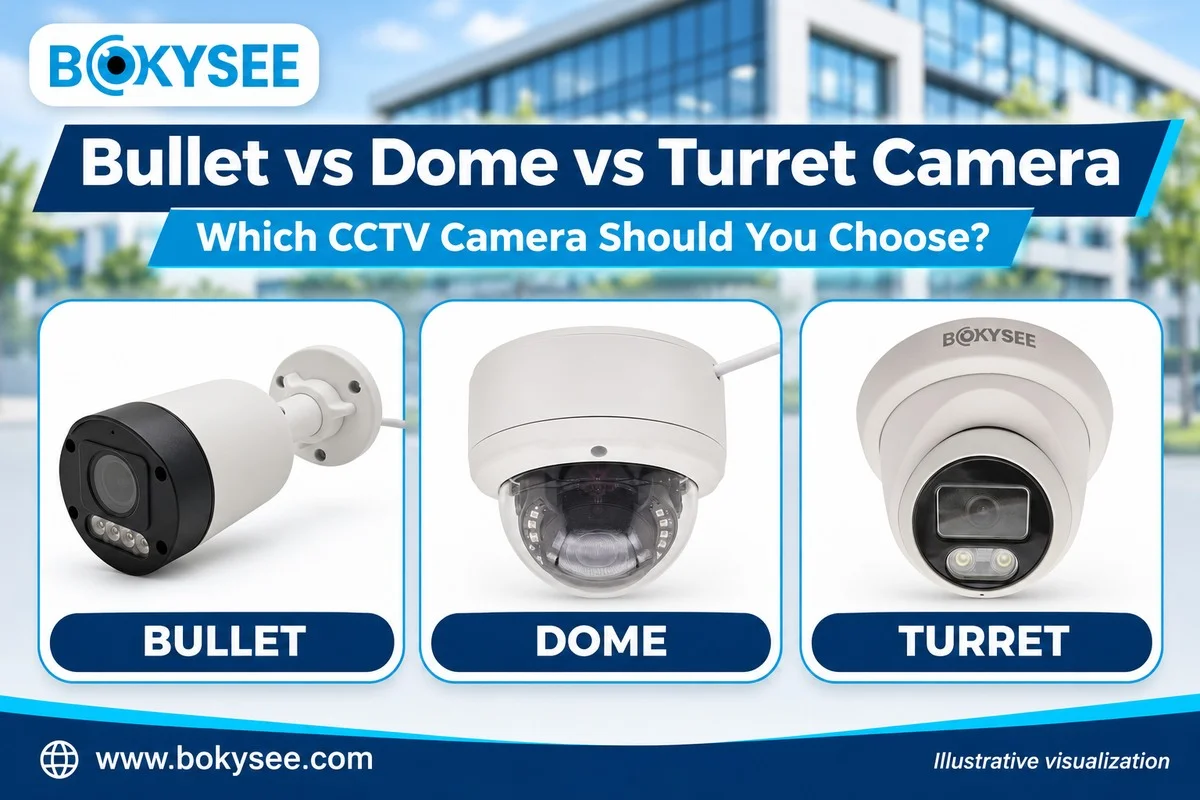
Selecting the right CCTV camera is not only about comparing the cost and the resolution of the images. A camera’s design affects its installation options, field of view, maintenance requirements, and suitability for different surveillance environments.
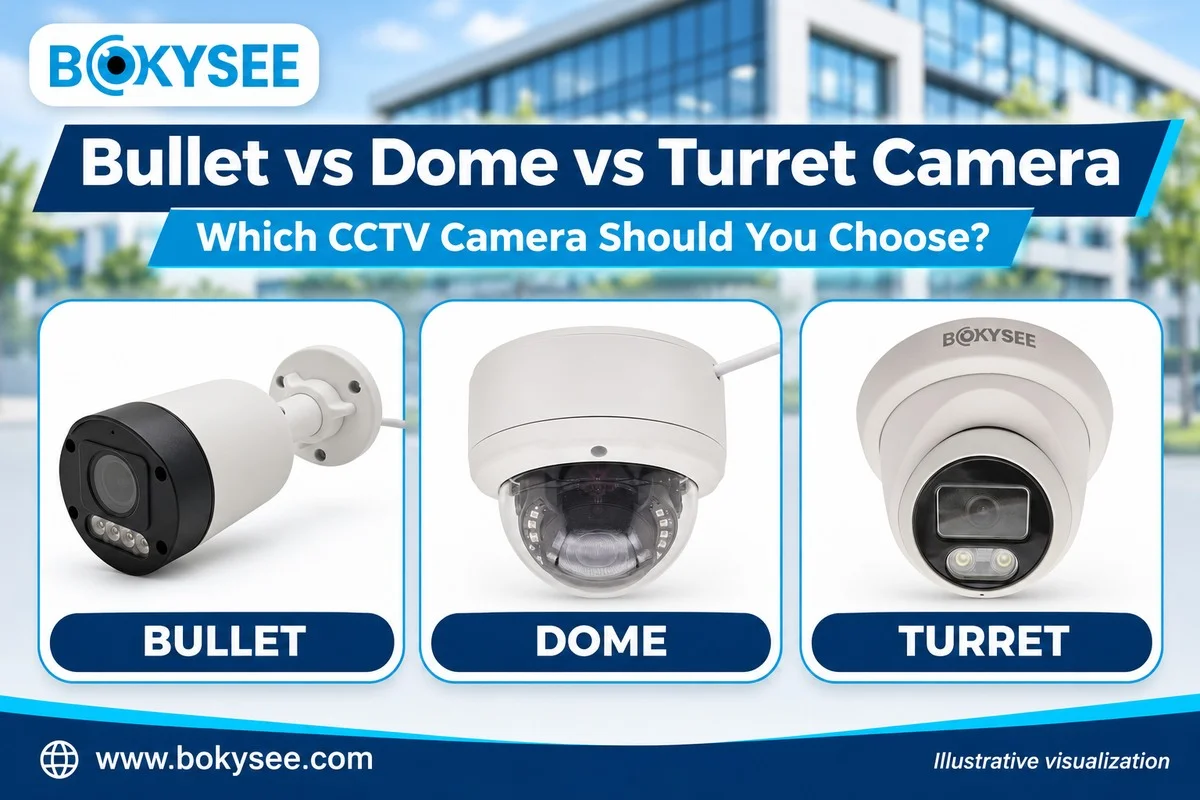
Bullet, dome, and turret cameras have their own advantages, which are based on their applications and product specifications. Every design may be used either indoors or outdoors depending on its suitability to the installation conditions.
When making comparisons between bullet, dome, and turret camera other CCTV camera types should also be considered.
In this guide, we will cover
-
Key differences between bullet, dome, and turret cameras
-
Technical features, advantages, and limitations of each camera type
-
Best applications for indoor, outdoor, and commercial security
-
Factors to consider when choosing the right CCTV camera for your project
-
Night vision, weatherproofing, lens selection, and PoE compatibility
What Is A Bullet Security Camera?
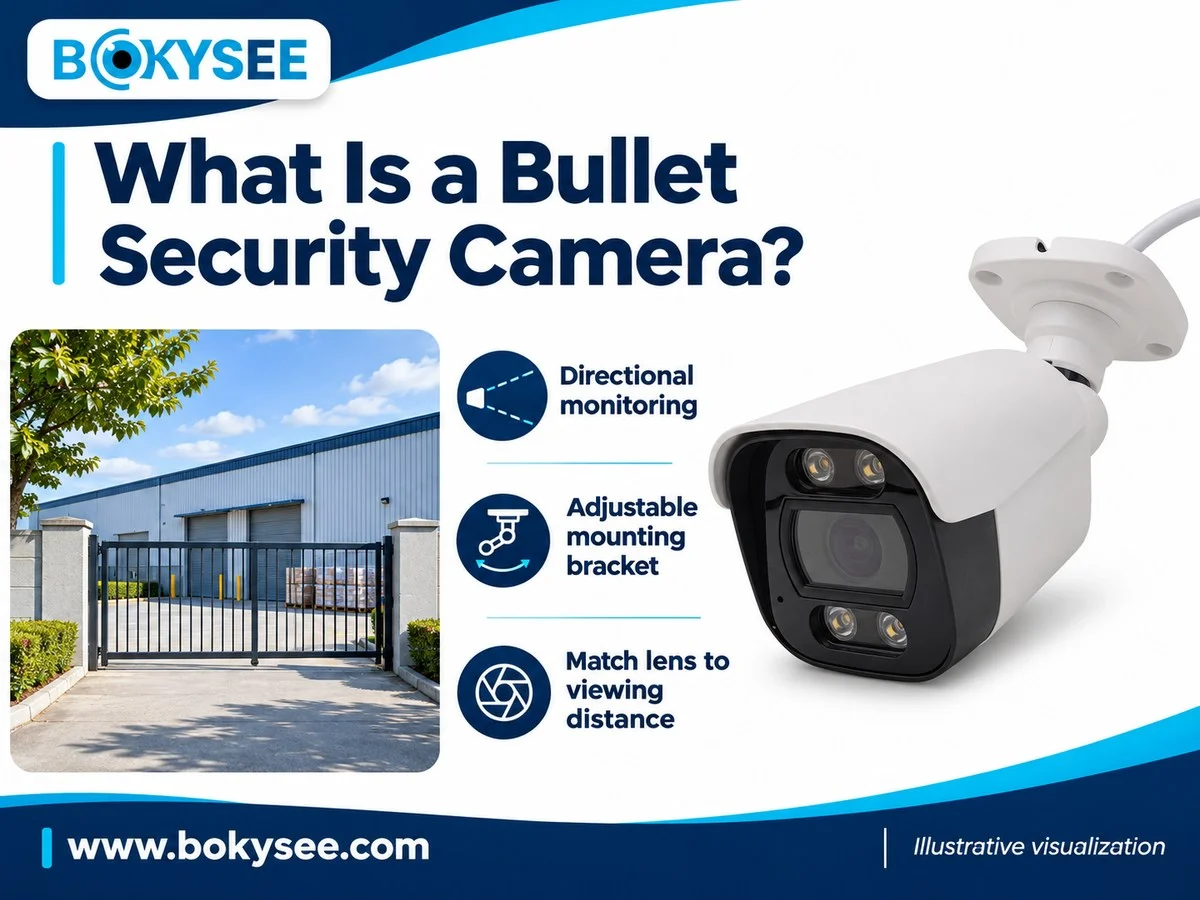
A bullet security camera is a surveillance gadget whose casing is long and cylindrical in shape and allows for focused surveillance.
The distinctive feature of its design to be frequently used in outside security systems where cameras have to focus on particular regions.
Key Design Features of Bullet Cameras
Bullet cameras can be installed on walls, poles, or any other convenient surfaces.
They have brackets, which make it possible to set the camera facing a specific direction.
Bullet cameras can either have fixed or varifocal lenses, infrared lights, and weatherproof housing.
Advantages and Limitations of Bullet Cameras
The bullet security camera may prove to be a viable option when it comes to directional and distance viewing. Various versions can be installed outdoors and have lenses depending on the viewing distance.
However, their vulnerability to manipulation or misalignment may arise from this open nature. Misalignment may result in some parts being left outside the camera's view.
Customers need to consider mounting height, environmental protection, and identification distance before choosing a model.
Where Are Bullet Cameras Commonly Used?
These types of cameras are commonly fitted in and around business premises, warehouse entrance, parking zones, gateways, and perimeter of industries.
They may also be used outdoors at access points where a well-defined viewing angle is necessary.
When buying such cameras for their uses, one needs to verify the focal length, night vision distance, and ingress protection of the camera.
What Is A Dome Security Camera?
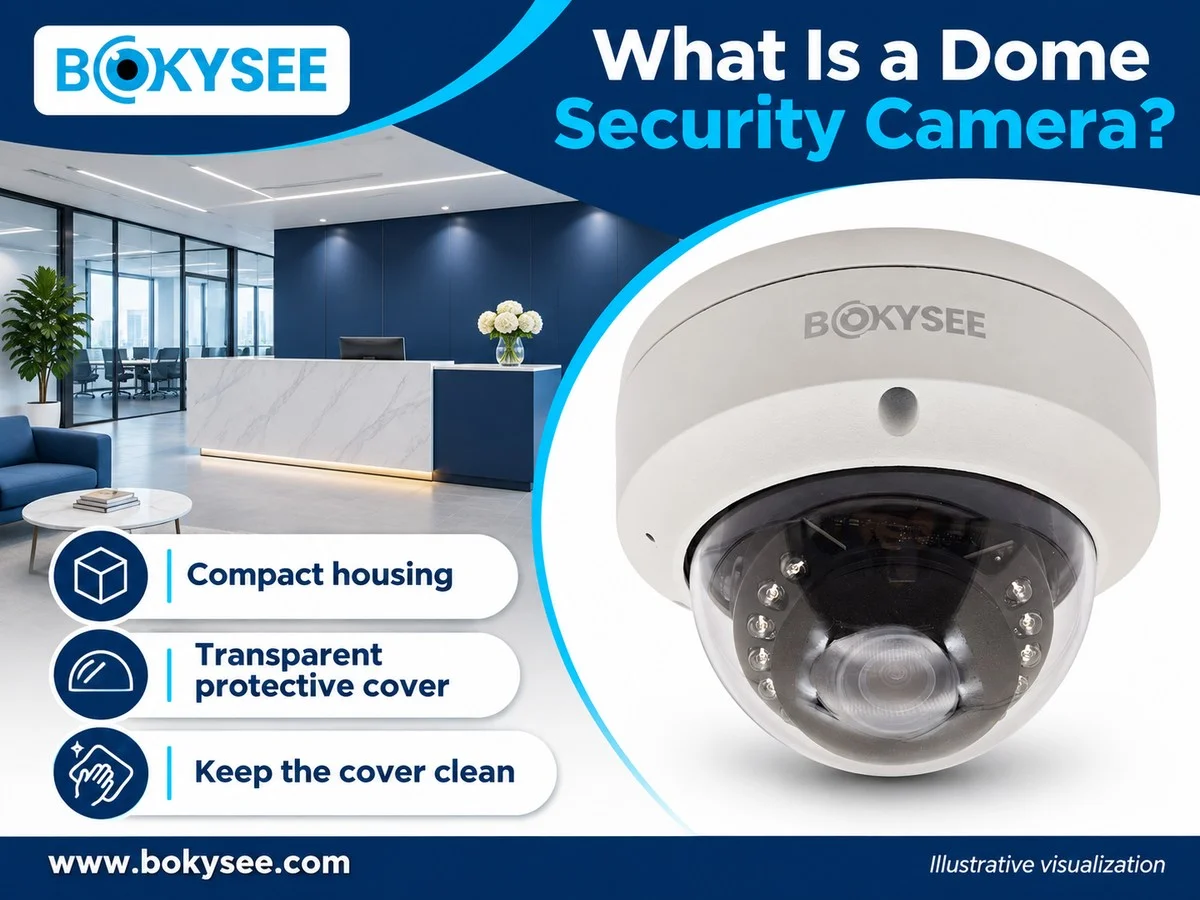
The dome security camera incorporates a domed body, typically surrounded by a clear housing that protects the camera’s lens.
The small form factor of the dome security camera is ideal for applications that require an inconspicuous design that will complement the interior of the building or the walls and ceilings in the building.
Key Design Features of Dome Cameras
Different types of dome cameras are available in varying sizes and types like fixed lens and varifocal lenses.
Dome cameras are installed on ceilings, walls, and other sturdy surfaces.
Some dome cameras are suitable for outdoor installations while some are suitable only for indoor installations.
Advantages and Limitations of Dome Cameras
The dome security camera is an ideal camera that can be installed easily in offices, stores, reception rooms, and corridors. In addition, its design can make it difficult to touch the lens.
Dome cameras have the problem of accumulating dust on the lenses, scratches and infrared reflections due to improper installations or maintenance of the device. This may cause image quality reduction at night time.
Where Are Dome Cameras Commonly Used?
Dome cameras are commonly used in retail stores, hotels, office premises, schools, and other indoor areas.
Their small size could be beneficial for those who place emphasis on looks and covering the whole ceiling area.
When installing dome cameras outdoors, one should choose devices that have suitable weatherproofing features.
What Is A Turret Security Camera?
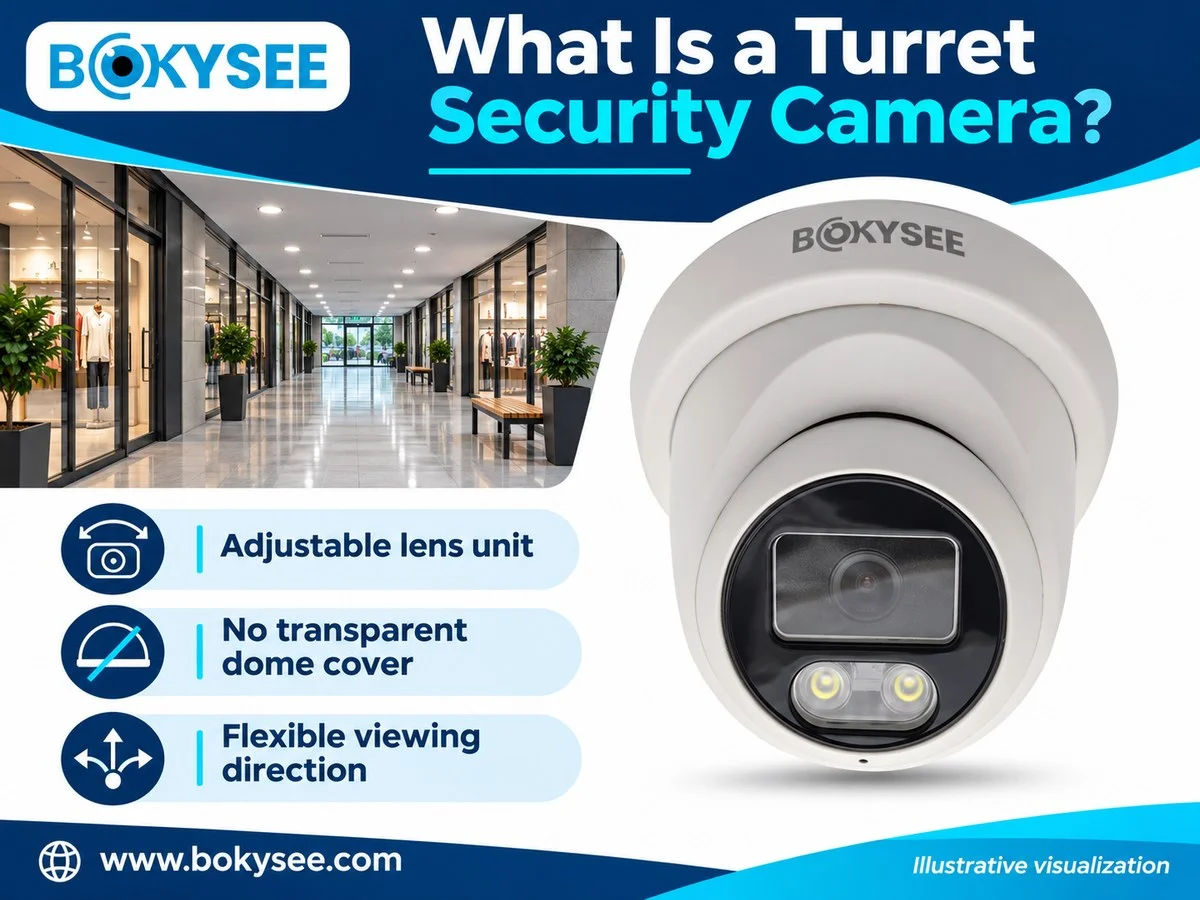
The turret security camera has an adjustable lens unit that is contained in a small housing unit.
In contrast to the dome security camera, the turret camera lacks a transparent dome unit covering the lens of the camera.
This type of camera is beneficial when there is a need for adjustment of the lens without the transparent dome cover.
Key Design Features of Turret Cameras
The turret camera is normally mounted on the ceiling and can be rotated to face towards the surveillance area.
Some turret cameras have infrared LEDs, light sources, mics, and even image processing capabilities.
Compact design allows their use in many residential and business settings.
Advantages and Limitations of Turret Cameras
Turret cameras offer flexible positioning and avoid the traditional transparent dome cover that can contribute to infrared reflections. Many models are available for both indoor and outdoor applications.
However, the need for further deliberation with regard to their exposed lens arrangement where there is an increased risk of vandalism or physical obstruction.
This can be achieved by proper mounting of the camera, height of its installation, and the protection provided by the housing.
Where Are Turret Cameras Commonly Used?
The turret camera is applicable in residential, office, warehouse, entrance, and outdoor surveillance applications.
It could be suitable if the installer needs to change the viewing direction and maintain the camera’s compactness at the same time.
It would be wise for buyers to analyze the necessary distance of viewing, the surrounding conditions, and the mounting point prior to deciding on the selection of a turret camera.
Bullet Vs Dome Vs Turret Camera: What Are The Key Differences?
These cameras have distinct designs as well as installation, maintenance, and security applications. The following table provides a comparison of seven significant aspects.
| Difference | Пулевая камера | Купольная камера | Камера на башне |
|---|---|---|---|
| Housing design | Cylindrical body | Rounded protective cover | Exposed adjustable lens |
| Установка | Wall or pole | Ceiling or wall | Wall or ceiling |
| Visibility | Highly visible | Compact appearance | Visible, compact design |
| Viewing adjustment | Depends on mounting and model | Depends on mounting and model | Often flexible |
| Ночное видение | Model-dependent | Dome reflections may occur | No traditional dome cover |
| Weather protection | Check IP rating | Check IP rating | Check IP rating |
| Common applications | Perimeter monitoring | Indoor surveillance | Indoor and outdoor monitoring |
1. Housing Design and Physical Appearance
The bullet camera has a long cylindrical casing, which makes its viewing direction quite obvious.
The dome camera has a dome-like cover for protecting its lens. Its compact design enables it to be easily camouflaged in office spaces, retail outlets, and other indoor areas.
The turret camera has an exposed lens mechanism in a compact casing. Its flexible construction allows for the positioning of the device without the transparency of the cover in dome cameras.
2. Installation and Mounting Flexibility
Bullet cameras are usually mounted on walls or poles, thereby making them very appropriate in terms of surveillance for gates and other boundaries outdoors.
The dome cameras are usually mounted on walls or ceilings. The ceiling mounting is especially helpful in surveillance inside buildings, but this depends on the installation height as well as the lens used.
Turret cameras may also be mounted on walls and ceilings. Their lens assemblies are normally adjustable, thus helping in focusing.
3. Camera Visibility and Deterrence
The slender nature of a bullet camera will make it fairly noticeable. Its conspicuousness could deter any form of inappropriate conduct in certain settings but there are other factors that affect this deterrence aside from camera structure.
Dome cameras are quite small in size, with their direction of view being difficult for a person to notice. This could prove helpful in those cases where discretion is preferred.
The turret cameras are still somewhat noticeable but they have a smaller size compared to most bullet cameras.
4. Night Vision and Infrared Reflection
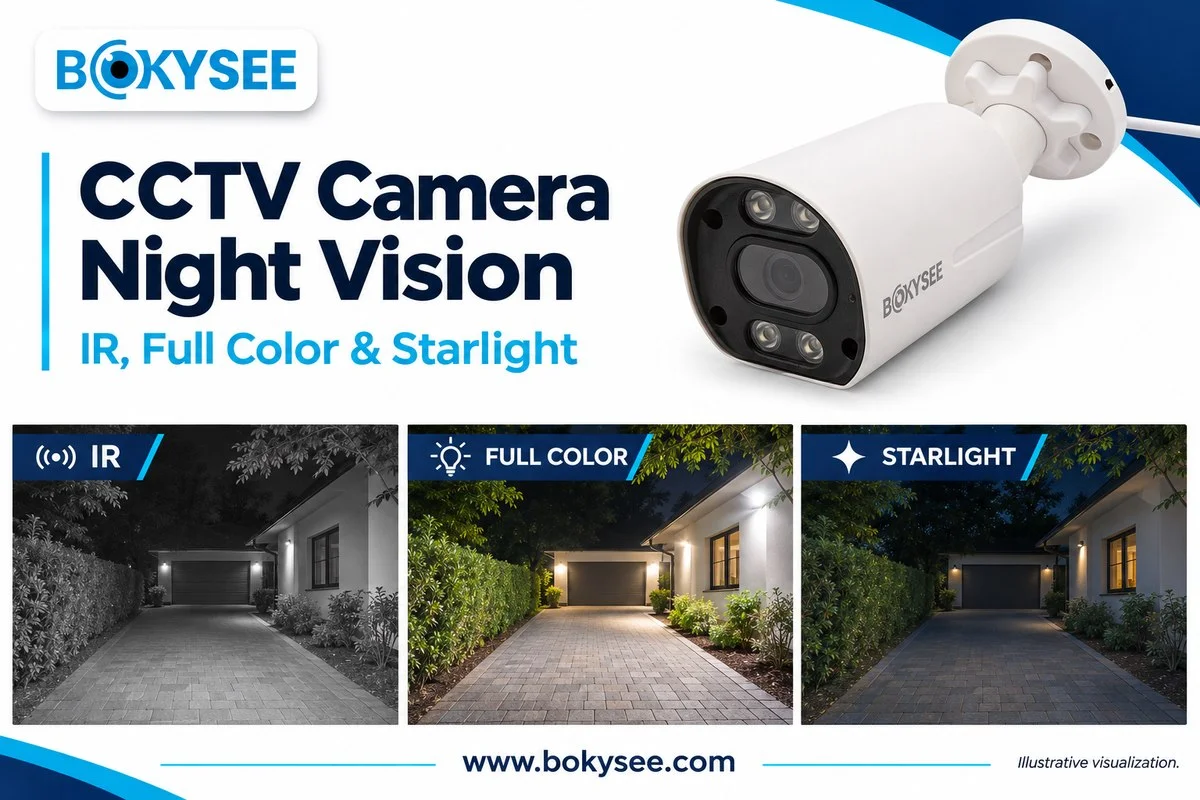
In some cases, bullet cameras may have features such as infrared LEDs, white-light illumination, and any other low-light technology. The performance of bullet cameras at night is affected by the sensor used, illumination distance, the lens, and surrounding lighting.
For dome cameras, they may suffer from infrared reflection when light bounces off the transparent dome lens that is dirty, scratched, or not properly designed.
Turret cameras lack the transparent dome lens that causes infrared reflection.
5. Weather Resistance and Environmental Protection
Outdoor versions of bullet cameras may also be found. It is necessary for buyers to confirm the IP rating, operating temperature, and mounting specifications before exposing an outdoor bullet camera to the elements. A good наружная камера безопасности needs to adapt to its environment.
Outdoor use of dome cameras is also possible when they are built to suit the environmental conditions. The sealing of these cameras should not be compromised.
The turret camera is available as an indoor model or outdoor model, where the environment suitability of the equipment will depend on its construction rather than its physical shape.
6. Vandal Resistance and Maintenance
Bullet cameras are susceptible to physical tampering due to the protrusion of their cases from their mounting points. Brackets and inspection are key methods of mitigating any installation risks.
Dome cameras shield the lens by covering it with a clear cover that could collect dust or become scratched. Proper cleaning of this cover is essential for optimal clarity of images.
Turret cameras offer easy accessibility of the lens, but this poses an exposure risk of the lens assembly compared to traditional covered dome cameras.
7. Best Applications and Overall Suitability
Bullet cameras can be used where directional surveillance is needed, such as parking lots, gates, driveways, and perimeters of buildings. The right lens and lighting will make it possible to ascertain whether they can provide the desired surveillance.
Dome cameras are widely used in offices, stores, hotels, and other public indoor places due to their small size.
Turret cameras can suit residential properties, commercial buildings, warehouses, and outdoor entrances. Their flexible positioning can be useful across different environments, provided their technical specifications meet the project's surveillance requirements.
Which Camera Is Best For Indoor And Outdoor Security?
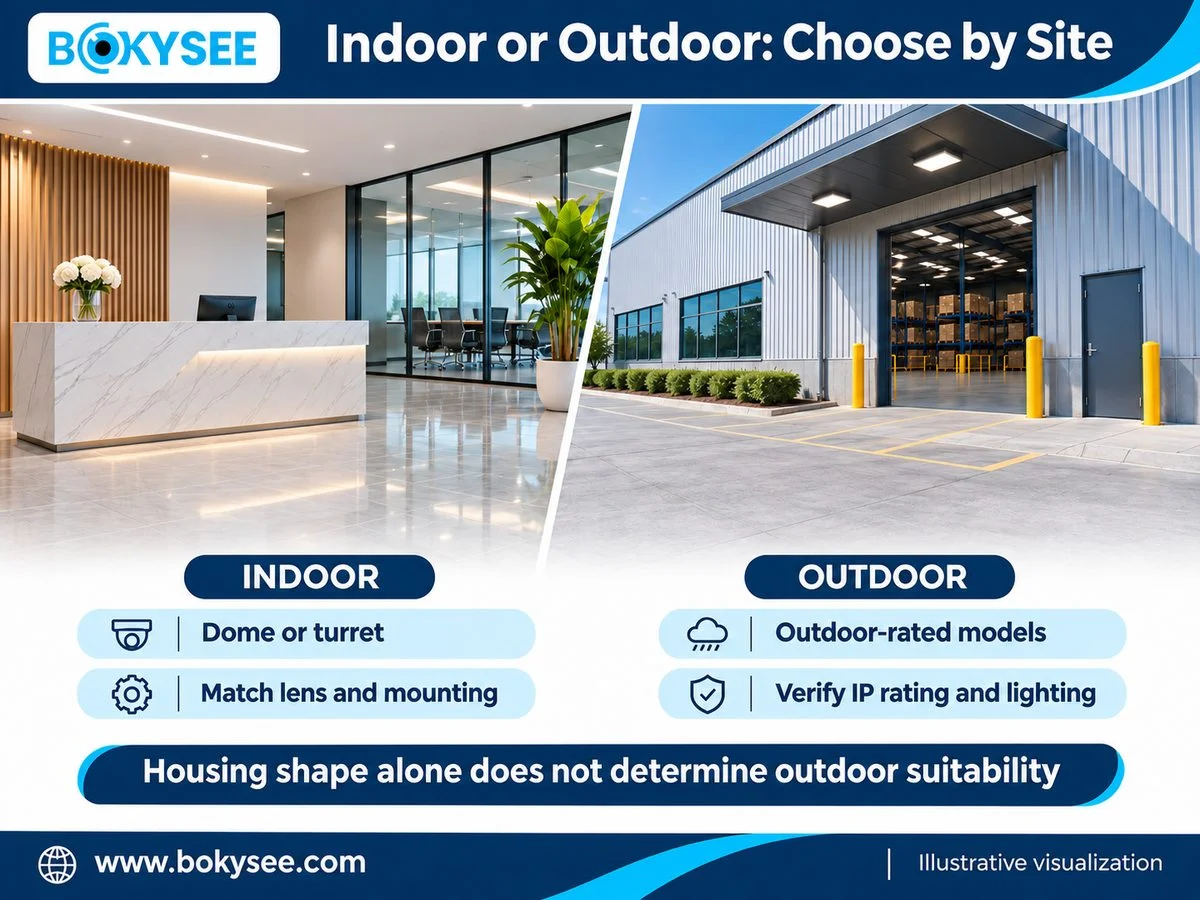
The choice of a suitable CCTV camera depends on the location of installation, the viewing distance, the lighting situation, and the security needs.
Best Camera for Indoor Security
The dome camera is a good option for offices, stores, reception areas, and corridors where space efficiency is preferred.
Turret cameras are one more alternative if you need flexibility in lens placement or don't want to use a transparent dome.
Best Camera for Outdoor Security
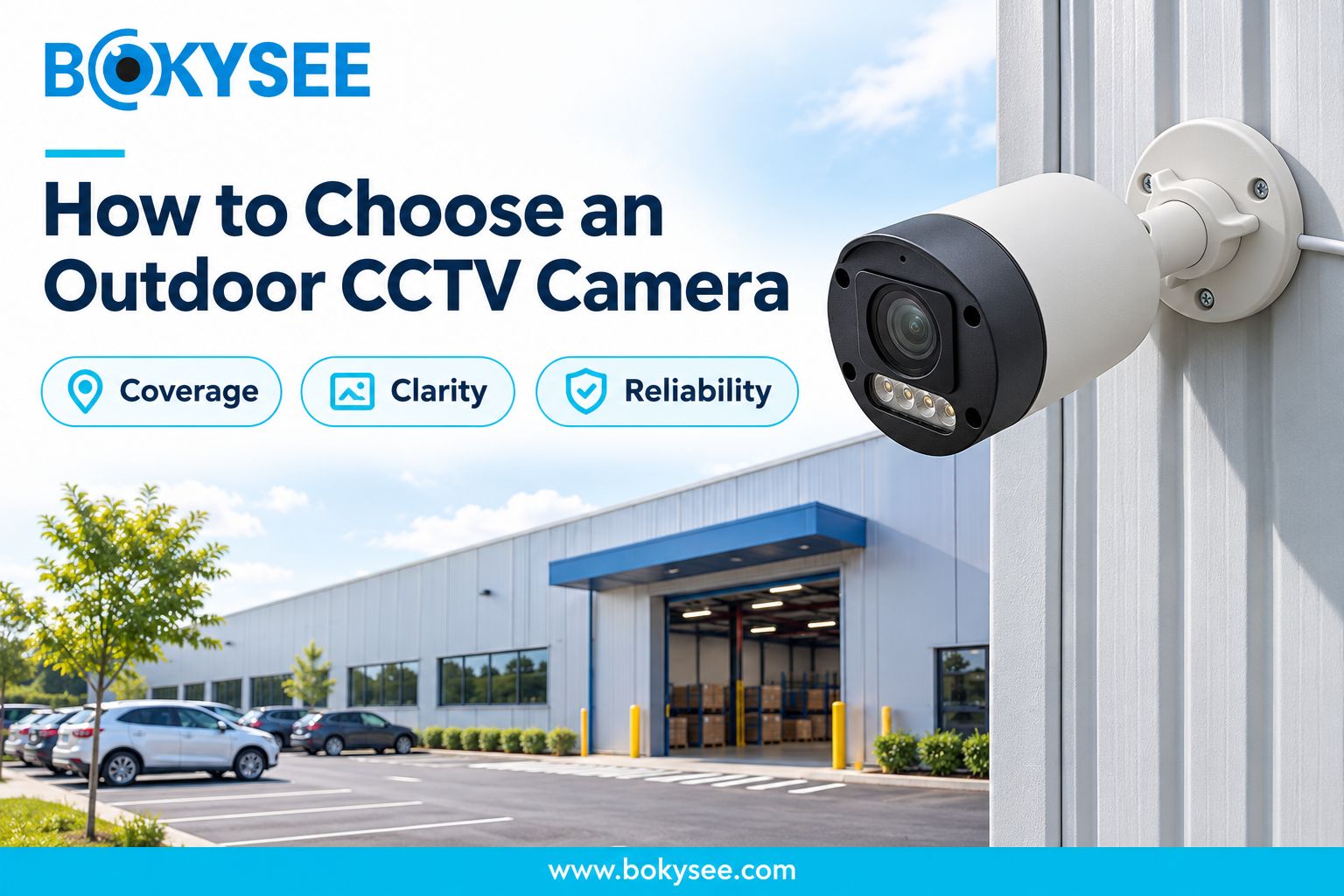
Users should select an outdoor security camera according to its environmental ratings and viewing needs.
Bullet cameras may work well for gates, driveways, parking lots, and around buildings due to their directional viewing abilities.
Turret cameras are capable of providing efficient outdoor surveillance when their environmental rating and lighting abilities suit the installation.
Dome cameras are useful outdoors only when designed for outdoor use.
Best Camera for Commercial and Industrial Facilities
Many warehouses, manufacturing plants, loading docks, and industrial facilities need cameras capable of covering extensive or selective areas.
-
Bullet cameras might work best on perimeters that need directionality
-
Turret cameras might be used in more flexible positions
-
Dome cameras might work best inside factories or offices
How To Choose The Right CCTV Camera For Your Project?
Camera housing is just one component in the whole system of surveillance.
Professional buyers should consider the technical parameters mentioned below when selecting their surveillance equipment.
Consider Resolution, Lens, and Viewing Distance
The resolution will determine the level of details that can be captured by the camera, but it is not the sole factor in determining the quality of identification.
Focal length of the lens, performance of the sensor, field of view, and subject distance are also important.
A wider lens can cover more area, whereas a narrower field of view can give more details for far objects.
Check Night Vision and Lighting Conditions
Determine the need for infrared night vision, light illumination, or full color in low light conditions. All three have unique purposes.
Review the advertised illumination distance of the camera and take into account the ambient light, reflective surfaces, and the distance from the subject.
A camera that has good night vision technology will not perform well if it is used improperly.
Verify IP Ratings and Installation Requirements
IP numbers denote the amount of protection from solid and liquid bodies when tested under certain conditions.
Understanding IP protection ratings helps buyers evaluate a camera’s resistance to dust and water before selecting a model for outdoor installation.
The IP number helps one to know if the camera is appropriate for installation in dusty or open areas.
In case shock-resistance is an issue, then one must look at the IK rating and construction of the camera housing.
Check PoE and Recording System Compatibility
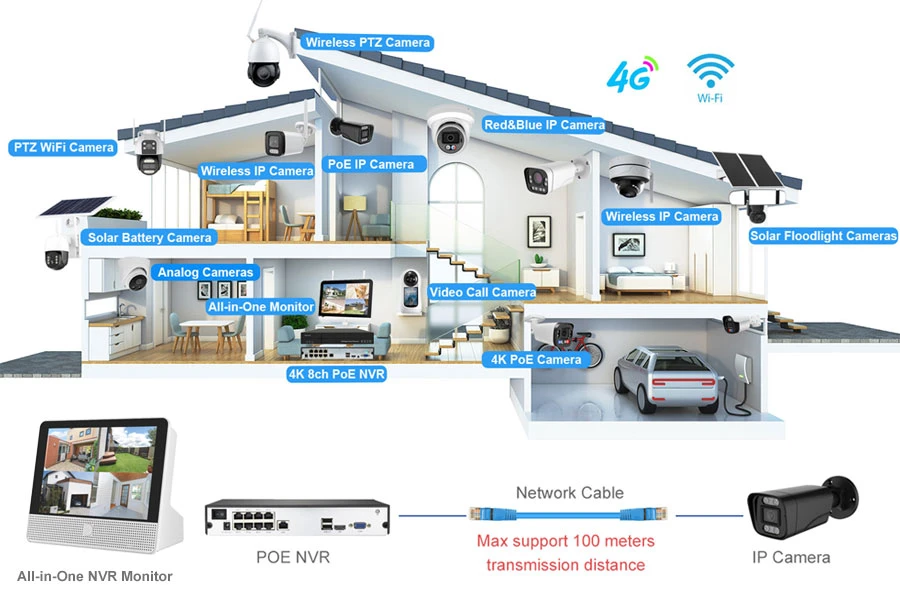
The PoE camera draws both its electrical power and networking capabilities from the Ethernet connection.
For a better understanding of network camera connections, see this Power over Ethernet (PoE) guide, which provides an example of PoE specifications for a network camera.
This can make the installation process simpler since it does not require an additional cable to supply electrical power to the camera at each installation point.
Compatibility with the network switch or PoE injector, NVR, video formats, and bandwidth should be verified before purchase.
Users should also consider their storage needs based on camera resolution, frame rate, scheduling, and storage period.
Confirming PoE camera compatibility before ordering helps buyers avoid unnecessary installation problems.
Related CCTV Camera Guides
Explore these related guides to learn more about CCTV camera types, installation methods, and security system selection for your project.
Wireless CCTV Camera vs Wired Camera: Which Is Better?
IP Camera vs CCTV Camera: Differences & Buying Guide
CCTV Camera Selection: A Step-by-Step Guide
CCTV Camera Types: A Complete Guide for Buyers
IP Camera Resolution: 2MP vs 4MP vs 5MP vs 8MP Guide
PoE IP Camera: A Complete Buying Guide | BOKYSEE
Top 10 CCTV Manufacturers and Suppliers in China
Thermal Security Cameras for Industrial Perimeter and Fire Detection
Explosion Proof Camera Guide 2026: Best Hazardous Area CCTV for Oil & Gas Sites
Sourcing Wholesale PTZ Security Cameras: The B2B Factory Guide
Заключительные мысли
Selection of the best camera is dependent on the security needs of your project.
Consider the resolution, lens field, night vision capabilities, weather proofing, mounting issues, and compatibility of the camera before purchase. These will determine the suitability of the camera in giving you quality recording at that particular location.
Comparing bullet, dome and turret camera designs options helps buyers evaluate the differences relevant to their projects.
Bullet, dome, and turret cameras each serve different surveillance needs. In short, bullet models suit directional monitoring, dome cameras offer compact installations, and turret cameras provide flexible lens positioning across various environments.
Часто задаваемые вопросы
What Is the Main Difference Between Bullet and Dome Cameras?
Bullet camera comes with an extended body and is usually used to monitor in a particular direction. Dome camera comes with a domed shape of housing and is usually used indoors.
Is a Turret Camera Better Than a Dome Camera for Night Vision?
The turret camera does not use the standard transparent dome, which causes infrared reflection problems. However, the actual effectiveness of night vision depends on the sensor, lighting, lens, and environment.
Which CCTV Camera Is Best for Outdoor Security?
Bullet cameras and turret cameras are popular outdoor solutions provided that the protection from the weather and the imaging abilities of such cameras satisfy the needs of the project.
Are Dome Cameras Suitable for Outdoor Installation?
Yes. There are some dome cameras that are manufactured to be used outdoors. Verify the IP rating, operating temperature range, housing materials, and impact resistance ratings before installation.
Do Bullet, Dome, and Turret Cameras Support PoE?
In fact, most models in all the three systems have PoE capability. The buyers should be able to check whether the particular camera has PoE capability.
Which Camera Type Is Best for Commercial Buildings?
It will depend on the layout of the building and the purpose of surveillance. Dome cameras might be ideal for offices and hallways, while bullet cameras could be ideal for perimeter surveillance.
Which CCTV Camera Requires the Least Maintenance?
Maintenance will depend upon how the camera is constructed and its surrounding environment, as well as whether there is any chance of dust or tampering. Dome cameras may also require additional cover cleaning.
Practical Buying Checklist: Choosing Bullet, Dome, or Turret Cameras
Start with the surveillance task, then select a housing that fits the installation. The right choice depends on where the camera will be mounted, what details must be recorded, and how the system will operate after dark.
Match the Camera to the Monitoring Point
-
Gates, driveways, and building perimeters: Consider a bullet camera when a visible, directional installation suits the site. Match the lens and mounting bracket to the required view.
-
Offices, reception areas, and retail interiors: Consider a dome camera when a compact appearance and protective cover are useful. Check the installation angle and access for cover cleaning.
-
Corridors, entrances, and general monitoring: Consider a turret camera when a compact housing and convenient manual aiming are priorities. Choose an outdoor-rated model for exposed locations.
-
Areas vulnerable to tampering: Compare the specific model’s impact protection, mounting security, and installation position. Housing shape alone does not establish vandal resistance.
Avoid Common Camera Selection Mistakes
Do not judge image quality by housing shape. Sensor performance, lens selection, illumination, exposure, and compression affect useful image detail. A rounded housing does not automatically provide a 360-degree view; check the specified field of view.
Do not confuse turret adjustment with PTZ operation. A conventional fixed turret camera is aimed manually during installation. Remote pan, tilt, or optical zoom requires those features to be explicitly specified.
Compare nighttime footage under realistic conditions. A turret avoids the traditional transparent dome cover, but nearby walls, glass, and other reflective surfaces can still affect the image. Dome reflections are a potential issue rather than an unavoidable result. Advertised infrared range is also not the same as the distance at which a person can be identified.
Confirm These Details Before Ordering
-
Coverage and detail: Confirm the monitoring area, target distance, lens, field of view, and required level of identification.
-
Night performance: Request footage of moving people or vehicles in lighting similar to the installation site.
-
Environmental protection: Check the IP rating, operating temperature, and any required IK impact rating. IP and IK describe different forms of protection.
-
Mounting and cabling: Confirm compatible brackets or junction boxes, cable entry, connector protection, and maintenance access.
-
Power and recording: Verify the model’s PoE requirements, power consumption, available switch power budget, and NVR compatibility. PoE is a product feature, not a consequence of housing shape.
-
Integration and supply: Test recording, audio, and required event functions with the intended NVR. Agree on the exact configuration, sample acceptance criteria, warranty terms, and technical support before bulk purchasing.
Plan a Mixed-Camera System When Appropriate
A project does not need to use one housing type everywhere. An office and warehouse site might combine dome cameras in reception areas, turret cameras in corridors, and bullet cameras at gates. Select each unit according to its monitoring task and verify performance before finalizing the order.
For further guidance, see our CCTV camera selection guide и PoE IP camera buying guide.
Need help selecting cameras for your project? Отправлять БОКИСИ your installation locations, viewing distances, lighting conditions, required quantities, and NVR details so our team can recommend suitable models and configurations.





 Russian
 English
 Spanish