Перейти к содержимому

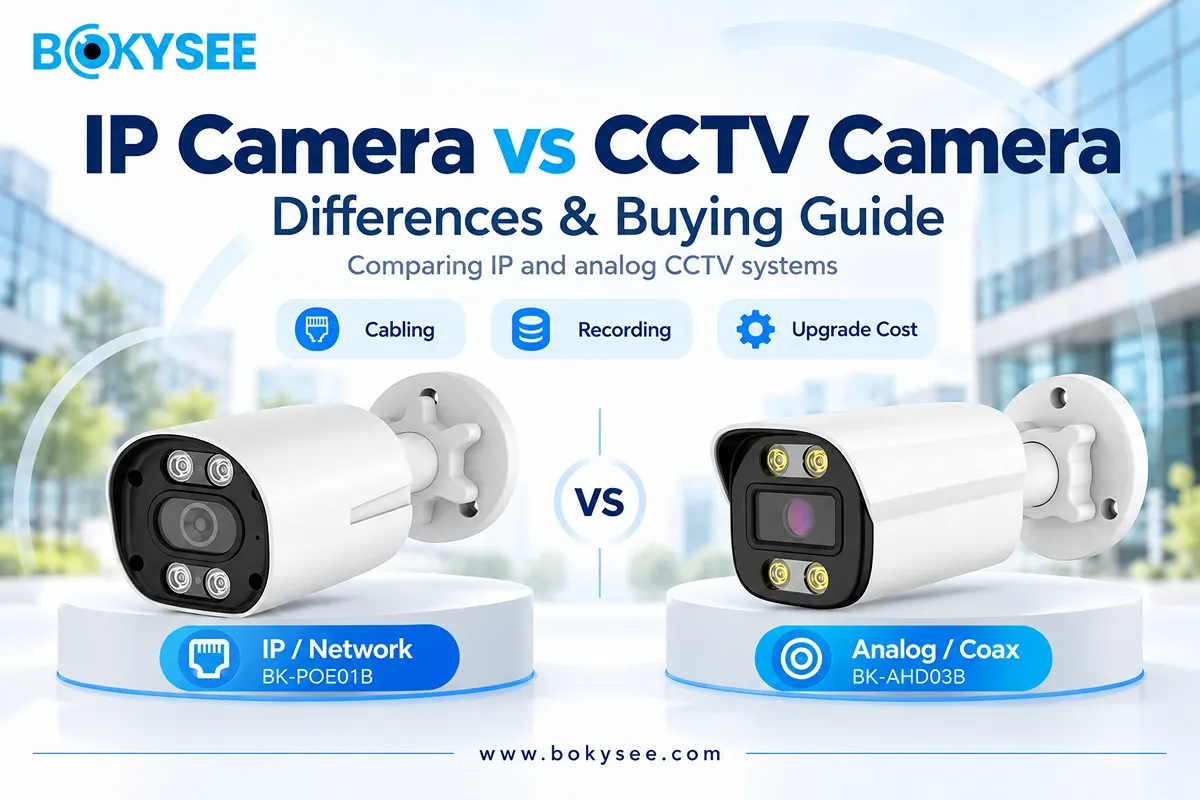
Selecting an appropriate security camera system can be a crucial step for both residential and commercial purposes. An appropriate security system not only assists in monitoring but also offers video footage that is useful in case of any occurrence. Nevertheless, picking the appropriate camera system will depend on the size of the property and the infrastructure available.
Today our topic is clear, we will inform you about IP camera vs CCTV camera options. In an IP system, the transfer is conducted digitally using networks. But the analog Камера видеонаблюдения transfers video via coaxial cables to a compatible video recorder. That’s why the customer has to be aware of the way that these cameras transfer video, record it, and enable remote viewing.
In this blog, we will makes an analysis of IP cameras and Системы видеонаблюдения in terms of the quality of images, the need for cabling, storing, installation cost, and scalability. We will also guide about the choice of the right camera product for a certain project.
What Is An IP Camera?
IP camera also referred to as Internet Protocol Camera или сетевая камера. It is a digital video surveillance tool that collects video and sends it via the network.
Unlike conventional аналоговые камеры, an IP camera records video digitally and exchanges data with other connected devices. It can use wired or wireless network connections.
How Does an IP Camera Work?
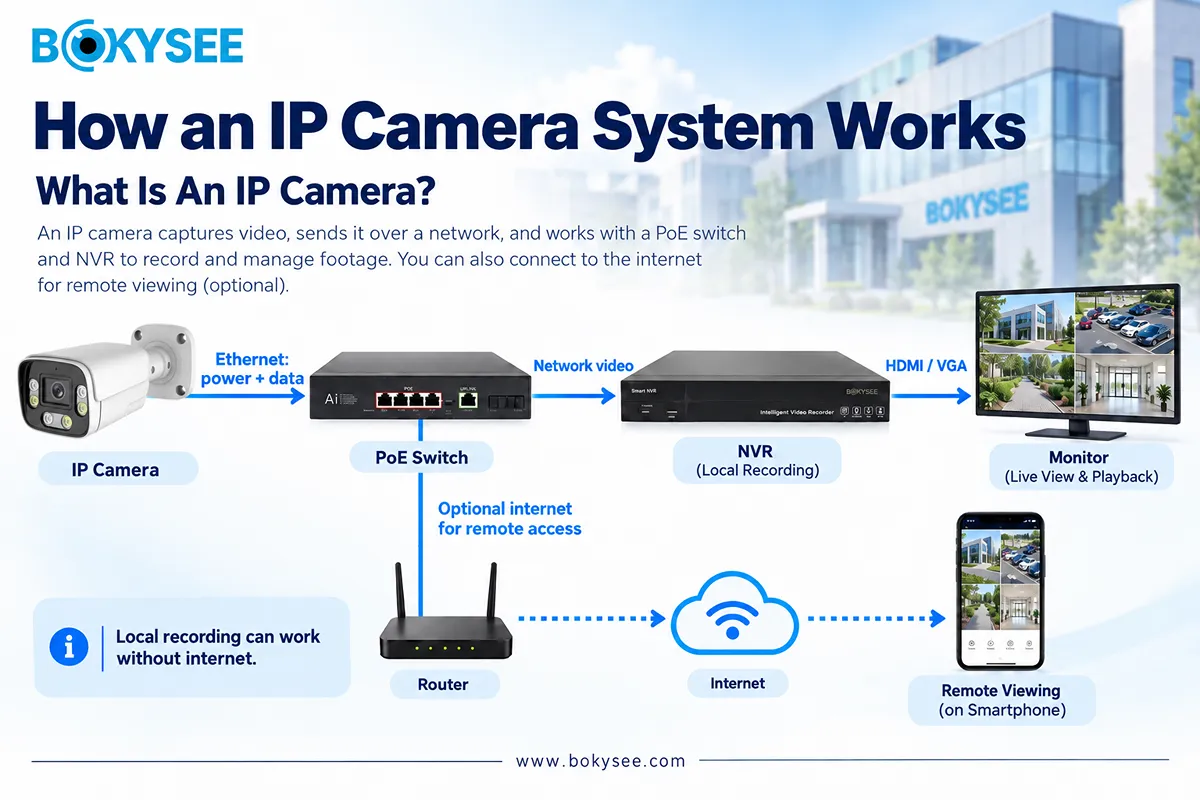
IP camera is able to take pictures through its sensor and encode them into digital video form.
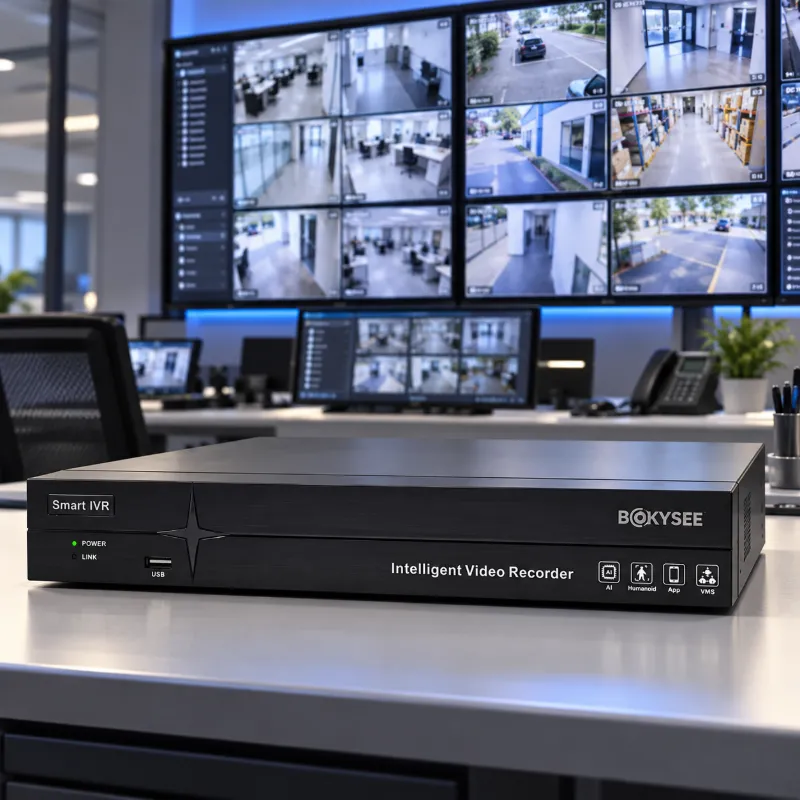
The video stream is transmitted through the Ethernet network or Wi-Fi network, which depends on the specific camera used. It may be stored using a corresponding Network Video Recorder (NVR), Video Management System (VMS), or any other device capable of recording the video stream.
It is possible to monitor the live video stream and recorded videos using computers and mobile devices that are authorized to do that. Usually, remote viewing requires a proper network setup and Internet connection when viewed from outside the local network.
Some IP cameras also allow users to use on-board storage and motion detection features.
Key Features of an IP Camera System
Ан Система IP-камер possesses various features that can be used in residential and business surveillance. Among them there are high definition video, remote viewing, motion detection and integration with compatible security software.
Many of them are compatible with PoE technology which means that both power and data can run through one Ethernet cable. This makes the installation process simpler provided that there is a compatible сетевая камера or injector.
Among other features of some models there are intelligent video analysis, configurable recording options, two way audio and ability to work with centralized monitoring systems.
Common Applications of IP Cameras
● In offices, factories, warehouses, shops, schools, car parks, and commercial buildings, IP video cameras are commonly employed.
● They are ideal for centralized monitoring, multi-camera setups, and integration with other security systems.
● For instance, an administrator of a warehouse can employ IP video cameras for keeping an eye on loading docks, aisles, and entry points from a central security office.
● Companies having several branches can use networked IP-based systems as well.
What Is A CCTV Camera?
CCTV stands for Closed Circuit Television. This refers to a surveillance system where the video signals are sent to a certain receiving or recording unit, and not broadcast publicly.
The term CCTV encompasses a variety of different technologies, such as IP cameras. But while comparing IP camera vs CCTV camera, it is the аналоговые камеры with a DVR that is usually referred to as CCTV.
How Does a Traditional Analog CCTV Camera Work?
In a traditional analog CCTV system, the camera produces video signals that are then transmitted using the correct coaxial cable.
An example of the components in such a setup include cameras, coaxial cables, power sources, DVRs, and monitors. Some DVRs can have network capabilities, thus enabling viewing from anywhere using compatible software or applications by authorized persons.
There is no need for an IP network connection between the camera and recorder. Therefore, traditional analog Системы видеонаблюдения are well suited for locations where there is existing coaxial connectivity.
Main Features of a Traditional CCTV System
Classic Системы видеонаблюдения have a standard recording setup that consists of an analog camera and matching DVR system. They might be suitable for simple security purposes, especially if there are the necessary cables on a property.
Camera types may vary and include dome, bullet, turret, among others, depending on the used technology and a particular company.
Modern HD-over-Coax systems are capable of delivering high-definition video, which means that analog-based surveillance does not necessarily equal low-resolution images.
One should pay attention to camera format compatibility, DVR channels, resolution, and power supply when buying additional cameras or improving the current system.
Common Applications of Traditional CCTV Cameras
● The old CCTV cameras can still be appropriate for use in residential buildings, stores, office buildings, and other commercial facilities that have the right coaxial cabling structure.
● The old CCTV cameras are also appropriate for use when there is a need to replace broken cameras without having to overhaul the whole surveillance system.
● For instance, a store that has a working digital video recorder (DVR) and appropriate coaxial cabling can replace the cameras without overhauling the entire surveillance system.
IP Camera Vs CCTV Camera: Key Differences
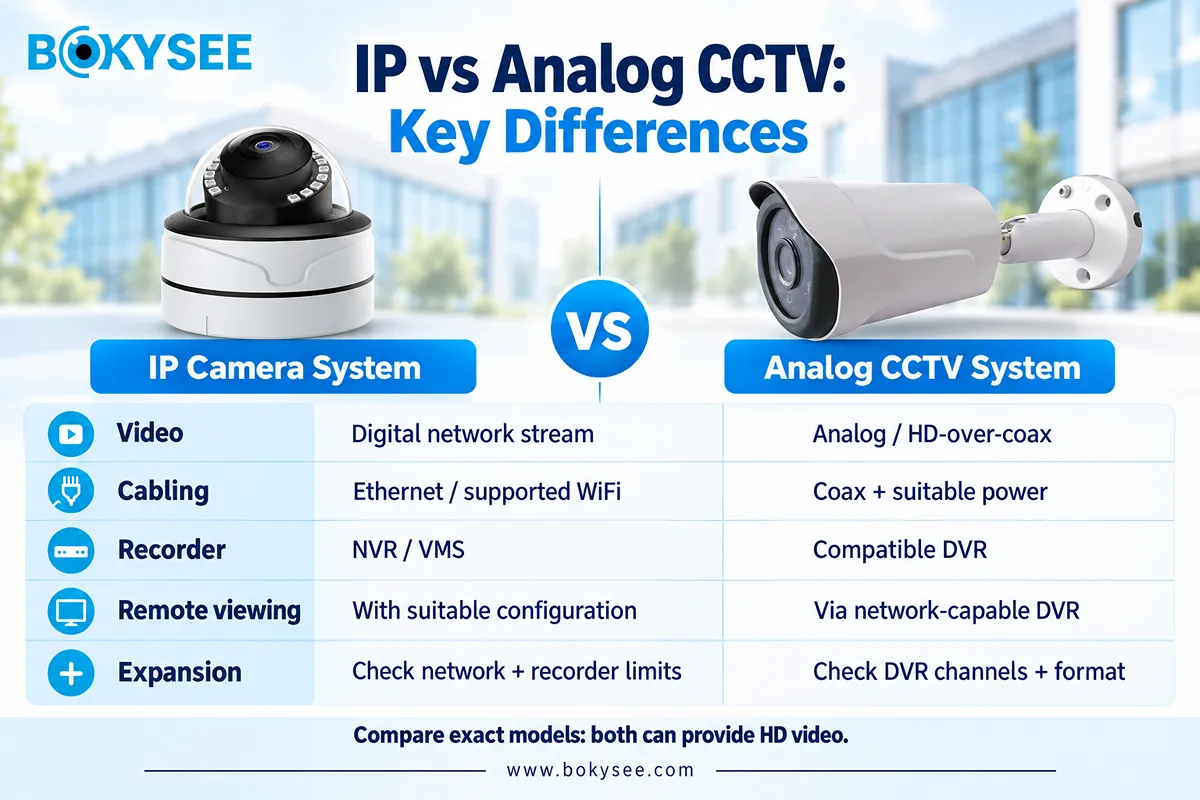
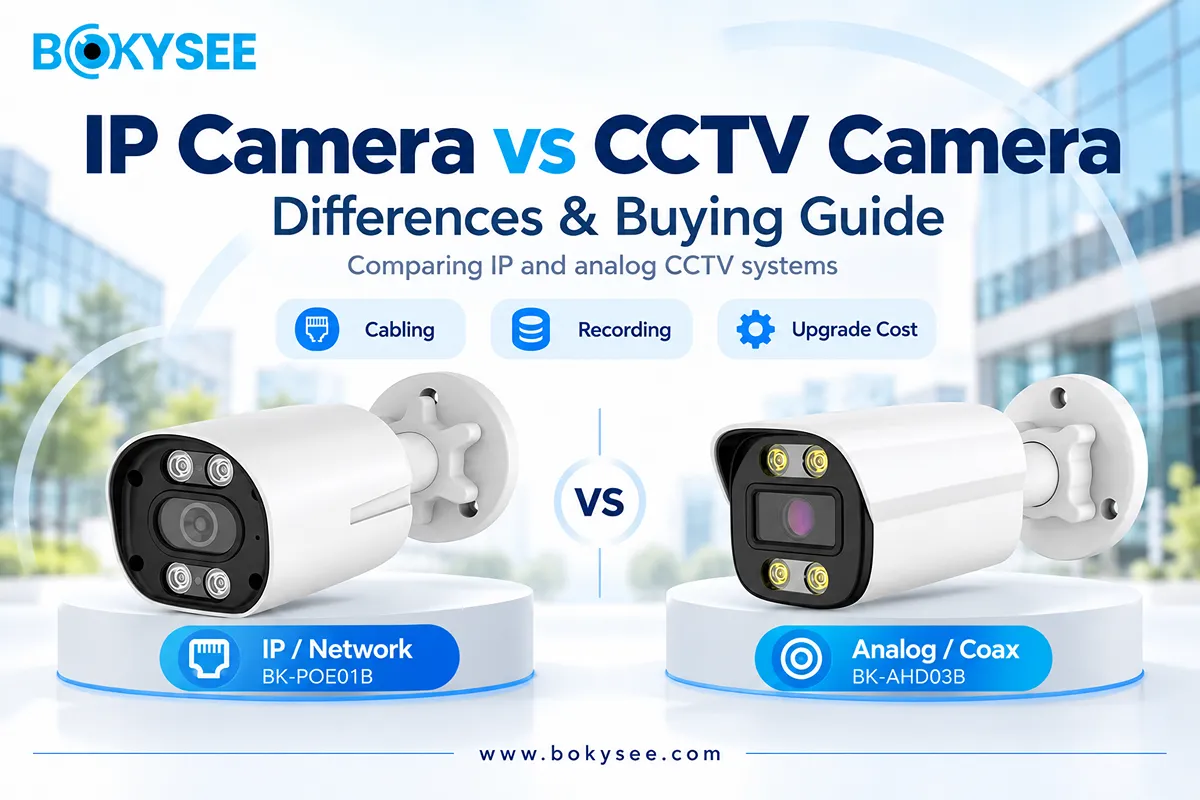
IP cameras and traditional analog CCTV cameras serve similar surveillance purposes, but they differ in how video is transmitted, recorded, and managed.
The following table summarizes six important differences buyers should evaluate.
| Comparison factor | IP-камера | Traditional CCTV Camera |
| Video transmission | Digital data over a network | Analog video over coaxial cable |
| Recording system | Usually NVR or VMS | Usually DVR |
| Разрешение изображения | Many high-resolution options | Depends on analog or HD-over-coax technology |
| Installation and cabling | Ethernet or Wi-Fi, depending on model | Usually coaxial video cabling |
| Remote monitoring | Supported through suitable network configuration | Available on compatible DVR systems |
| Scalability and integration | Flexible network-based expansion and software integration | Depends on DVR channels, cabling, and compatibility |
1. Video Transmission: Digital Network vs Analog Signal
The major difference between an IP Camera and an analog camera is the way in which the video signal moves from the camera to the device capturing the image.
IP cameras transmit video signals that are digitally encoded through a network connection. Depending on the type of IP Camera, the network can be wired (using Ethernet cables) or wireless (Wi-Fi).
In the case of a traditional analog CCTV camera, the camera transmits the video signal through a coaxial connection.
Both can serve effectively as surveillance cameras depending on the installation setting and needs.
2. Recording System: NVR vs DVR
The Система IP-камер uses a network video recorder, whereas the analog system makes use of a digital video recorder.
An NVR is usually supplied with digitally-encoded video streams from сетевые камеры and then stores them in its memory. Sometimes, depending on the model, it also provides remote connectivity, centralized camera management, and monitoring software integration.
An ideal NVR camera system must have adequate capabilities of recording channels, storage memory, and network performance for the intended installation.
DVR is responsible for processing and recording video images from аналоговые камеры that are compatible with it. The supported camera format, resolution, and inputs of a DVR determine the possible cameras to connect to it.
Before buying any recording system, buyers should verify their compatibility with cameras, channel capability, storage choices, and other recording capabilities.
3. Image Resolution and Video Detail
The image resolution determines the amount of visual information that can be recorded by a camera.
Various resolutions are available for IP cameras such as 2MP, 4MP, 8MP, and even higher. All of them may prove to be beneficial when choosing the right cameras for business entrances, stock rooms, production sites, and others.
Yet, resolution is not the sole factor that influences the quality of the picture. The sensor, lenses, illumination, compression, and viewing distance all influence the end result.
HD-over-coax cameras are able to produce high-definition images too. Thus, it is better to compare various models rather than make blanket statements about IP cameras always producing better images than CCTV ones.
4. Installation and Cabling Requirements
IP cameras often come with Ethernet cables, and when using PoE compatible IP cameras, both the power and data can be transmitted via one single cable.
The choice also depends on how many additional requirements of separate power cables will be required for the installation.
Analog CCTV cameras usually have coaxial cables and might need additional power connection. There are also some combinations of compatible cables that might be used in certain installations.
The choice of one type of installation or another also depends on factors such as cable runs, building structure, existing infrastructure, and cost of installation.
5. Remote Monitoring and Accessibility
Both IP cameras and traditional Системы видеонаблюдения can enable remote surveillance if the relevant hardware and configuration are present.
IP cameras can be connected to compatible NVRs, VMS solutions, and viewing devices. This makes IP cameras suitable for companies that wish to conduct surveillance at different locations or buildings through a centralized control panel.
The ability of a compatible IP CCTV camera to enable remote viewing depends on its recording solution, networking options, and security settings.
Similarly, the ability of the traditional CCTV system to support remote viewing will depend on the compatible network-based DVR, software, and other configuration.
In both cases, before configuring remote viewing, the buyer should look into account permissions, secure authentication, network access, and firmware updates provided by the manufacturer.
To protect remotely accessible surveillance systems, buyers should follow IP camera cybersecurity best practices, including secure network configuration, encrypted connections, and restricted user access.
6. Scalability and System Integration
IP camera systems are also capable of providing flexibility in terms of expansion because the cameras are communicating via the network.
The addition of cameras can be accomplished by adding to the network infrastructure and making sure that the NVR, VMS, bandwidth, and license will cope with the additional strain.
Системы видеонаблюдения can also provide expansion but due to the limited number of available DVR channels, coaxial connectivity, and camera types used, there could be restrictions on how many cameras the installation can have.
In terms of integrations with access control, monitoring systems, or video analytics, IP camera systems could be a better choice. Still, compatibility must be checked before buying anything.
Image Quality, Cabling And Storage Compared
Selection of surveillance systems goes beyond comparing technical specifications of cameras used.
А digital security camera ought to be selected based on project needs.
Image Quality and Night Vision
The factors that will determine the detail the camera will be able to capture include resolution, quality of the lens, sensor capabilities, and lighting.
The infrared lighting capability and night vision capability of the camera are significant in capturing images at night.
Ethernet vs Coaxial Cabling
The IP camera makes use of the Ethernet cable, which delivers both the power supply and the data through the PoE.
The older CCTV cameras make use of the coaxial cable connected to the DVR unit. Using the old coaxial cable can save costs of the installation.
Storage Capacity and Recording Time
Recording storage is dependent on the number of cameras, the resolution, the frame rate, compression, and the length of time needed for storage.
NVRs will normally be used to record IP camera recordings, whereas DVRs will usually be used in conventional Системы видеонаблюдения. Continuous recording takes up more space than motion activation recording.
Which Camera System Is Better For Different Projects?
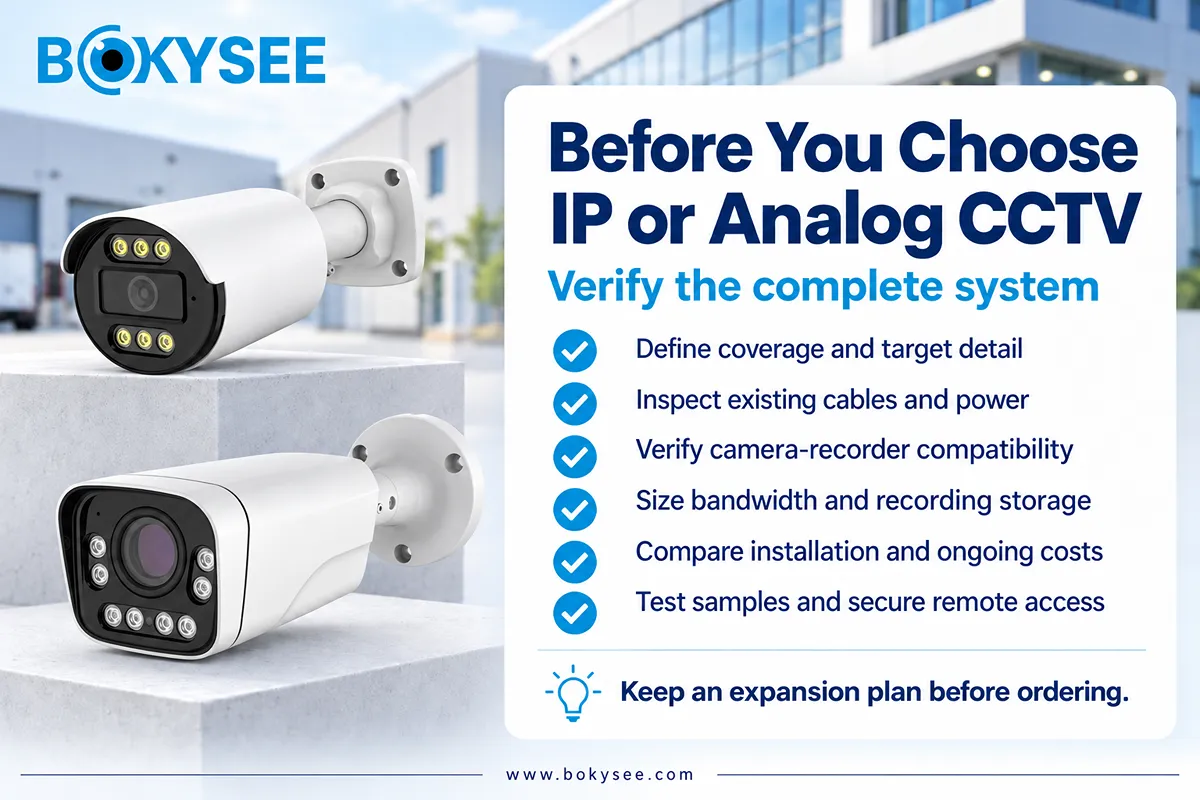
Choosing the appropriate surveillance system involves taking into consideration various factors including the size of the property, level of security required, the available facilities, and budget.
In some cases, it may be advisable to use IP cameras especially where advanced monitoring is needed.
| Project Type | Recommended System | Main Reason |
| Homes and small shops | IP or traditional CCTV | Depends on budget and monitoring needs |
| Warehouses and factories | Система IP-камер | Supports centralized monitoring and flexible expansion |
| Offices and retail stores | IP or traditional CCTV | Depends on image quality and integration requirements |
| Existing CCTV installations | Traditional CCTV or IP upgrade | Depends on cable compatibility and upgrade costs |
| Multi-location businesses | Система IP-камер | Supports centralized management across locations |
| Budget-conscious projects | Traditional CCTV | Can reduce costs when existing coaxial cables are reusable |
Why Modern Projects Are Moving Toward IP Cameras?
IP cameras are becoming increasingly common in surveillance systems due to their flexibility of use, resolution capabilities, and compatibility with digital surveillance systems, making them useful for companies looking for surveillance systems that have room for growth in the future.
● Higher Resolution: Captures detailed footage for monitoring entrances, workplaces, and large commercial areas.
● Smart Video Analytics: Supports features such as intrusion detection, line crossing, people counting, and license plate recognition on compatible models.
● Centralized Monitoring: Allows authorized users to monitor multiple offices, warehouses, or retail branches through a compatible platform.
● Flexible Expansion: Makes it possible to add cameras and network equipment as security requirements grow.
● Security System Integration: Can connect with compatible access control systems and video management software.
These features assist organizations in conducting surveillance in a more efficient way and adjusting their security infrastructure according to the changing business requirements. The performance is dependent on the specifications of cameras, bandwidth, storage, and installation.
However, before buying an Система IP-камер, the customer should make sure about its compatibility, cybersecurity, licensing issues, and firmware support. If advanced analytics are needed, then the cost of the whole installation process must be analyzed first.
Advantages and Limitations of IP and Traditional CCTV Systems
Both technologies have the ability to offer effective surveillance if used in the right way. Knowing the strengths and weaknesses of both systems assists in avoiding buying features that are not required or the wrong equipment.
Main Advantages of IP Cameras
● IP cameras provide high resolutions, networking capabilities, and are also able to be used by a number of digital monitoring systems.
● PoE capability helps simplify cabling for compatible setups, while analytics support helps detect incidents.
● Network-based systems also have the ability to expand and be centrally managed if the necessary infrastructure is present.
Ограничения систем IP-камер
● Network infrastructure, bandwidth, power supply, and storage capacity need to be adequate for IP camera installations.
● Configuration and cybersecurity also need to be considered especially when remote access to the cameras is available.
● This will mean additional cost depending on the nature of the installation project.
Main Advantages of Traditional CCTV Cameras
● Traditional Closed Circuit Television (CCTV) cameras can be quite inexpensive if appropriate coaxial cable and Digital Video Recorder (DVR) technology is already installed.
● Also, modern HD-over-coax technology enables a compatible system to generate high-definition video feeds without requiring the installation to be completely replaced.
Limitations of Traditional CCTV Systems
● Depending on the devices used in traditional analog systems, there may be some limitations to network-based integration.
● Additional hardware or a more extensive reconfiguration of the system may be necessary if changing from one surveillance system to another.
How to Choose the Right IP Camera Or CCTV System
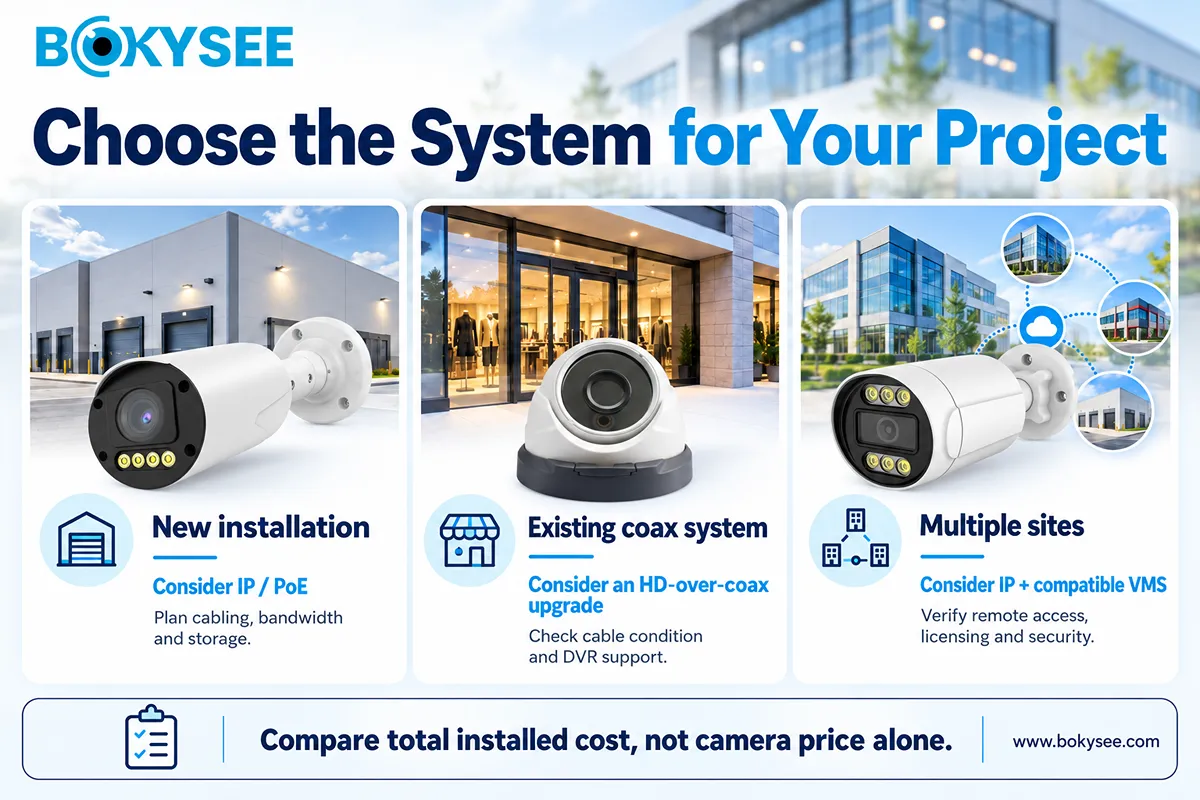
Choosing the proper camera system calls for a clear understanding of the surveillance goals, installation environment, and cost of operations.
A realistic selection process of the proper CCTV system should consider the following.
1: Identify Your Security Requirements
Ascertain the locations to be monitored and what information needs to be captured by the camera. The entrance, cashier area, loading dock, production floor, and warehouse will have varying requirements for both position and quality of imagery.
2: Evaluate Camera Resolution and Coverage
Think about viewing distance, field of vision, lighting conditions, mounting heights, and lens availability. Choose the resolution according to the actual identification needs, not necessarily the maximum specification available.
3: Check Infrastructure and Compatibility
Consider existing coaxial cable, Ethernet pathway, PoE capability, network capacity, and recording equipment. Verify compatibility between the chosen cameras and recorders with respect to video format and other capabilities.
4: Calculate Storage and Total Ownership Costs
Estimate the number of cameras, recording frequency, storage period, storage capability, equipment cost, labor for installation, and maintenance costs. Compare the overall cost of the project rather than just the cost of the cameras themselves.
5: Consider Future Expansion and Cybersecurity
Determine whether further cameras or sites can be included at a future time. Secure authentication, firmware compatibility, permission control, and network security are key to keeping the system reliable and avoiding unnecessary upgrade expenses.
Organizations should change default passwords, apply security patches, and review internet exposure to reduce risks to connected surveillance equipment, following CISA's internet exposure reduction guidance.
Common Mistakes to Avoid When Selecting a Security Camera
The below mistakes can be avoided in order to ensure that you purchase a camera system that works effectively without additional costs.
Choosing Based on Price or Resolution Alone
A cheap camera might not be able to give you the necessary detail of the images when the light is poor. Consider comparing the following factors before you make your decision:
Ignoring Recorder and Equipment Compatibility
However, not all cameras will be compatible with all DVRs, NVRs, or software. It is advisable to check for compatibility beforehand before buying the equipment.
Underestimating Storage and Network Requirements
Lack of storage will reduce the amount of time that your videos are stored for, while insufficient bandwidth will limit the performance of IP video technology.
Related CCTV and IP Camera Guides
Explore these related guides to learn more about camera technologies, surveillance system components, and the factors that influence camera selection.
IP Security Camera Sensor Size Explained: 1/2.7 vs 1/2.8 vs 1/1.8 for Low-Light Surveillance
IP Security Camera Main Stream vs Sub Stream: Best Settings for NVR Recording and Mobile Viewing
How Many IP Security Cameras Can a PoE Switch Support? Complete Power Budget and Bandwidth Guide
How Many IP Security Cameras Can an NVR Handle?
Smart Dual Light IP Camera for Full Color Night Vision: Why It Matters for CCTV Projects
PoE IP Camera vs WiFi Camera: Which Is Better for Installers?
CCTV Camera Selection Guide for Small and Medium Security Projects
What’s Inside an IP Camera? Hardware & Bitrate Explained (2026 Guide)
How to Reduce CCTV Camera Bitrate Without Losing Video Quality (2026 Guide)
Заключительные мысли
When considering whether to go for an IP camera or a conventional CCTV camera, the choice will be guided by the needs and budget of the property owner.
Before committing oneself to the purchase of either type of surveillance system, considerations of factors such as resolution, lens quality, recording ability, networking issues, compatibility and cybersecurity need to be made.
For businesses seeking reliable surveillance solutions, Бокизее provides security camera options designed to meet diverse monitoring requirements. Visit our website to explore our product range and identify suitable cameras for your security projects.
Часто задаваемые вопросы
Q1: Is an IP camera better than a CCTV camera?
Answer: Network-capable IP cameras usually provide higher network integration, resolution choices, and surveillance functions. Analog Системы видеонаблюдения may be cheaper where the existing coax cable can be used. It depends on the specific needs of the project.
Q2: What is the main difference between an IP camera and CCTV?
Answer: An IP camera transmits digitally recorded video over a network, an analog CCTV camera typically transfers its video over a coaxial cable to the DVR unit. Both cameras have the capability of providing efficient surveillance if installed properly.
Q3: Can an IP camera work without internet access?
Answer: Yes. Most IP cameras can be used for local recording and viewing via a local network without needing an Internet connection. But to remotely view them outside the local network would require an Internet connection.
Q4: Do IP cameras require an NVR?
Answer: Not really. Even though Network Video Recorders (NVRs) are typically used in IP cameras, some alternatives that work well are video management software, network attached storage, and built-in camera storage.
Q5: Can I replace analog CCTV cameras with IP cameras?
Answer: True, but the upgrade will demand Ethernet cables, networking devices, and an NVR or equivalent software. There may be cases when the existing coaxial cable network can be repurposed using the appropriate converter systems.
Q6: Which is cheaper: an IP camera system or a CCTV system?
Answer: Upgrading conventional CCTV is likely more economical where compatible cameras, coaxial cables, and the necessary DVR systems have been set up. IP cameras are likely more flexible for future purposes. Consider all the costs involved before making your decision.
Q7: Are IP cameras suitable for factories and warehouses?
Answer: Of course. IP cameras may be used for central monitoring, video recording, and analytics, among others. Customers need to consider their network capacity, camera installation location, camera protection, data storage, and more when choosing





 Russian
 English
 Spanish