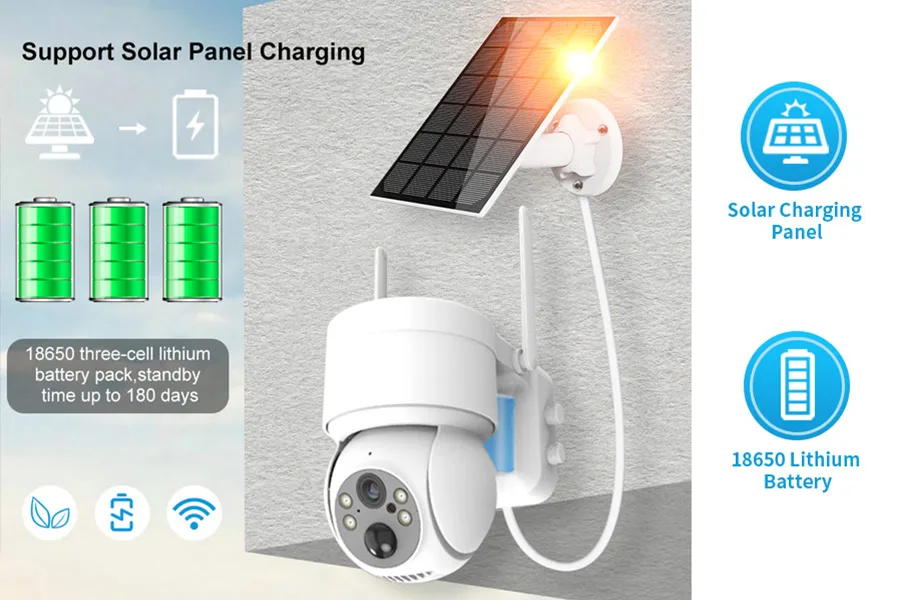
Modern farms often cover large areas that are difficult to monitor continuously. From livestock zones and barns to remote pastures and equipment storage areas, maintaining visibility across agricultural properties presents unique security and operational challenges. A solar panel wireless security camera for farms offers a practical solution by combining renewable power, wireless connectivity, intelligent detection, and flexible deployment without requiring extensive cabling.
This guide explores practical tips for deploying a solar panel wireless security camera for farms effectively and maximizing surveillance performance across agricultural environments.
Evaluating Solar Energy Harvesting Yields
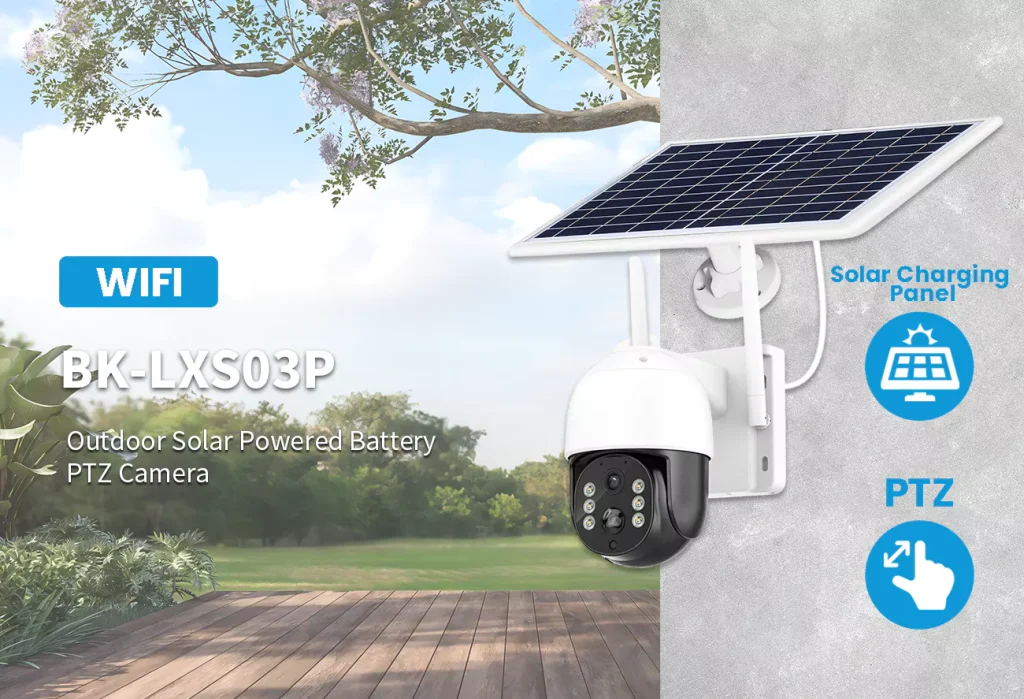
Before installing any solar panel wireless security camera for farms, it is important to identify the most vulnerable locations across the property.
Equipment Storage Areas
Agricultural machinery represents a significant investment. Tractors, harvesters, irrigation equipment, trailers, and fuel tanks are often stored outdoors or inside open-sided structures.
Installing a solar panel wireless security camera for farms near equipment yards provides continuous visibility even in locations where electrical wiring would be expensive or impractical. Cameras with remote viewing capabilities allow managers to check assets without physically visiting the site.
Livestock Corridors and Gates
Unauthorized access frequently occurs through perimeter gates, livestock crossings, and service roads.
A strategically positioned solar panel wireless security camera for farms can monitor vehicle movement, detect activity near entrances, and provide recorded footage for review when necessary.
Remote Perimeter Boundaries
Many farms include isolated sections located far from buildings. Traditional wired systems often struggle to reach these areas.
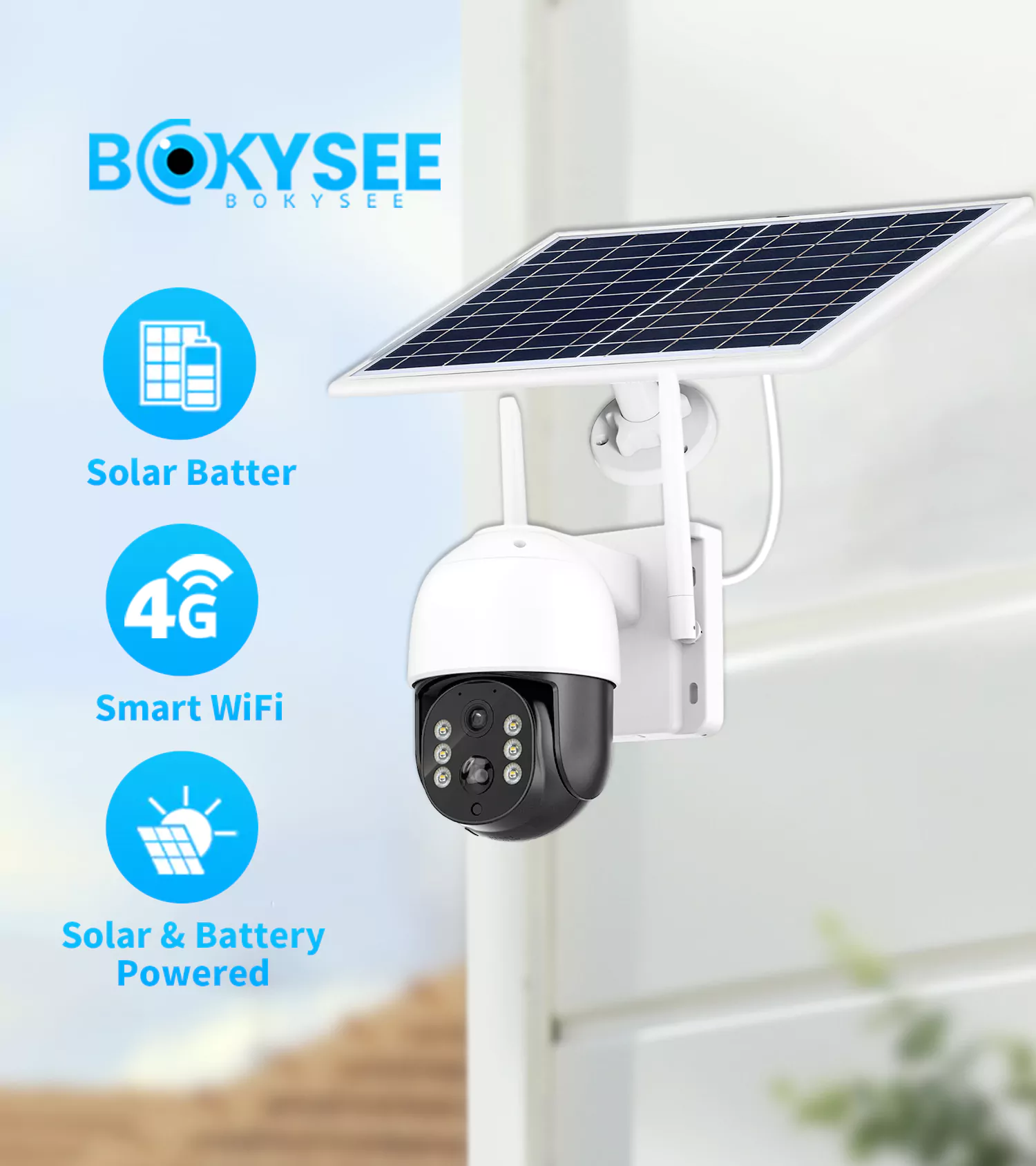
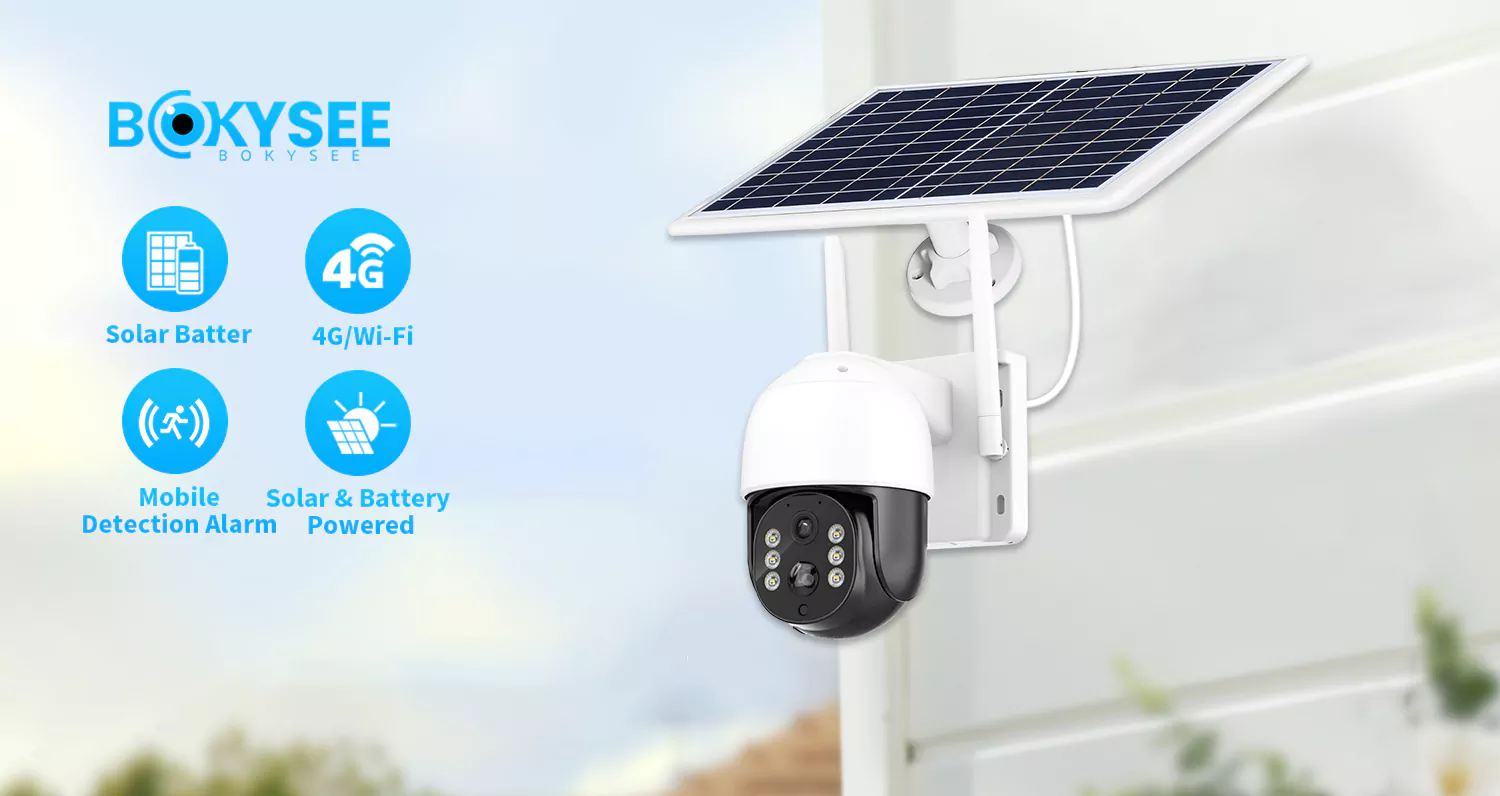
Because a solar panel wireless security camera for farms operates using solar energy and rechargeable batteries, surveillance can be extended to remote boundaries without requiring trenching, power cables, or extensive infrastructure. Bokysee solar camera solutions are specifically designed for locations without power or network access, supporting both WiFi and 4G communication methods.
Feed Storage and Supply Zones
Feed storage areas attract both wildlife and unauthorized visitors. Monitoring these locations helps farm operators track activity while protecting valuable resources.
When selecting camera positions, prioritize elevated viewpoints that provide clear coverage of entrances, loading areas, and surrounding pathways.
Water Sources and Irrigation Facilities
Water pumps, reservoirs, and irrigation controls are often installed far from central buildings. A solar panel wireless security camera for farms offers a practical solution for monitoring these critical operational assets without requiring a nearby power source.
By conducting a vulnerability assessment before installation, farms can ensure that surveillance resources are allocated where they provide the greatest value.
Long-Range Wireless Bridge Transmission Tips
One of the biggest challenges when deploying a solar panel wireless security camera for farms is maintaining stable communication across large agricultural properties.
Understand Site Connectivity Requirements
The communication method should be selected based on farm layout and network availability.
Bokysee solar battery cameras support both WiFi and 4G connectivity, providing flexibility for different deployment scenarios. Farms with existing network infrastructure may choose WiFi-based systems, while remote locations can benefit from 4G-enabled models that operate independently of local internet coverage.
Maintain Clear Signal Paths
Wireless signals perform best when major obstructions are minimized.
Trees, metal structures, grain silos, machinery sheds, and terrain changes can reduce signal quality. When positioning a solar panel wireless security camera for farms, maintain the clearest possible path between the camera and the receiving network equipment.
Elevate Communication Equipment
Mounting cameras and wireless transmission equipment higher above ground level can significantly improve connectivity.
Higher installations reduce interference caused by vehicles, livestock, vegetation growth, and seasonal crop changes.
Consider Future Farm Expansion
A surveillance system that works today should also accommodate future operational growth.
When planning wireless coverage, account for potential expansion areas, additional barns, livestock zones, or equipment yards. A scalable design helps avoid costly reinstallation projects later.
Optimize Data Usage
For 4G deployments, efficient video management helps maintain reliable performance.
Features such as motion-triggered recording, PIR detection, and alarm-based event recording reduce unnecessary bandwidth consumption while still capturing important events. Bokysee solar battery cameras support PIR humanoid motion detection and alarm push notifications, helping improve operational efficiency.
A properly planned wireless infrastructure ensures that a solar panel wireless security camera for farms can deliver dependable monitoring even across extensive agricultural properties.
Your One-Stop OEM/ODM Camera Manufacturer
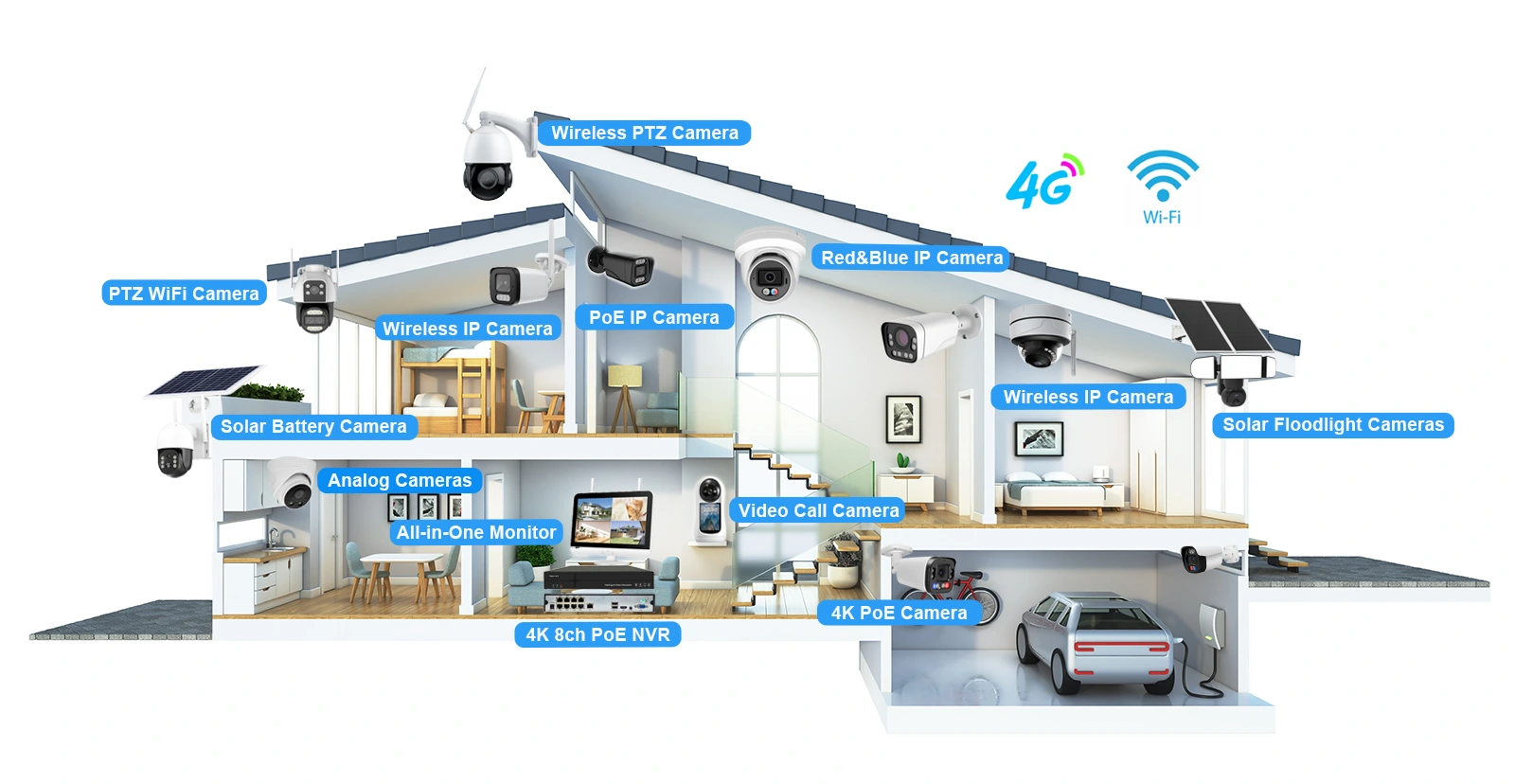
Dust-Proof Ingress Standards for Barns
Barns and livestock facilities create challenging environmental conditions for surveillance equipment.
Understand Agricultural Dust Conditions
Dust accumulation is often more severe inside agricultural structures than outdoors.
Feed processing, bedding replacement, livestock activity, and vehicle traffic continuously introduce airborne particles into the environment.
A solar panel wireless security camera for farms installed inside or near barns should be positioned where direct dust exposure is minimized.
Reduce Exposure Near Feed Handling Areas
Feed grinders, conveyors, and storage systems often generate concentrated dust clouds.
Installing surveillance equipment slightly away from these high-exposure zones helps maintain image quality and reduce maintenance requirements.
Schedule Routine Inspection
Even durable outdoor cameras benefit from regular maintenance.
Inspect camera housings, solar panels, and lenses periodically to remove dust buildup and verify that airflow openings remain unobstructed.
Protect Solar Charging Components
Solar charging surfaces should remain free from heavy contamination.
Cleaning schedules can often be coordinated with routine equipment inspections to reduce maintenance workload.
Monitor Lens Clarity
A dirty lens can significantly reduce image quality.
Checking image sharpness during routine maintenance helps ensure that a solar panel wireless security camera for farms continues delivering useful surveillance footage throughout the year.
Since Bokysee solar security cameras are designed for outdoor monitoring and remote deployment, maintaining clean operating conditions further supports reliable performance in demanding agricultural environments.
Thermal Night Vision for Livestock Monitoring
Livestock movement, predator activity, unauthorized access, and equipment operations often require effective nighttime surveillance.
Monitor Animal Activity Around the Clock
A solar panel wireless security camera for farms provides continuous observation without requiring operators to physically patrol large properties during nighttime hours.
This capability is particularly valuable for farms managing livestock across extensive grazing areas.
Improve Visibility in Low-Light Conditions
Bokysee solar camera solutions support day and night monitoring, helping operators maintain visibility after dark. Certain solar surveillance models also provide IR night vision and full-color night vision capabilities depending on the specific configuration.
Night monitoring becomes especially important around:
- Calving areas
- Livestock shelters
- Feeding stations
- Watering points
- Perimeter fences
Reduce Blind Spots
Strategic camera placement improves nighttime coverage.
When installing a solar panel wireless security camera for farms, consider how shadows, structures, and vegetation affect visibility after sunset.
Combine Motion Detection with Night Monitoring
Motion-triggered alerts help operators focus attention on relevant events.
Bokysee cameras support PIR humanoid motion detection and AI-based human detection functions, allowing the system to respond intelligently when activity occurs.
Support Remote Observation
Nighttime monitoring becomes more efficient when operators can access live video remotely.
Remote viewing functions allow farm managers to verify conditions without traveling across large properties after dark. Bokysee solar camera systems support app-based remote viewing and remote access features.
A properly configured solar panel wireless security camera for farms helps maintain awareness of critical agricultural activities regardless of lighting conditions.
Mounting Tips for Poles and Isolated Trees
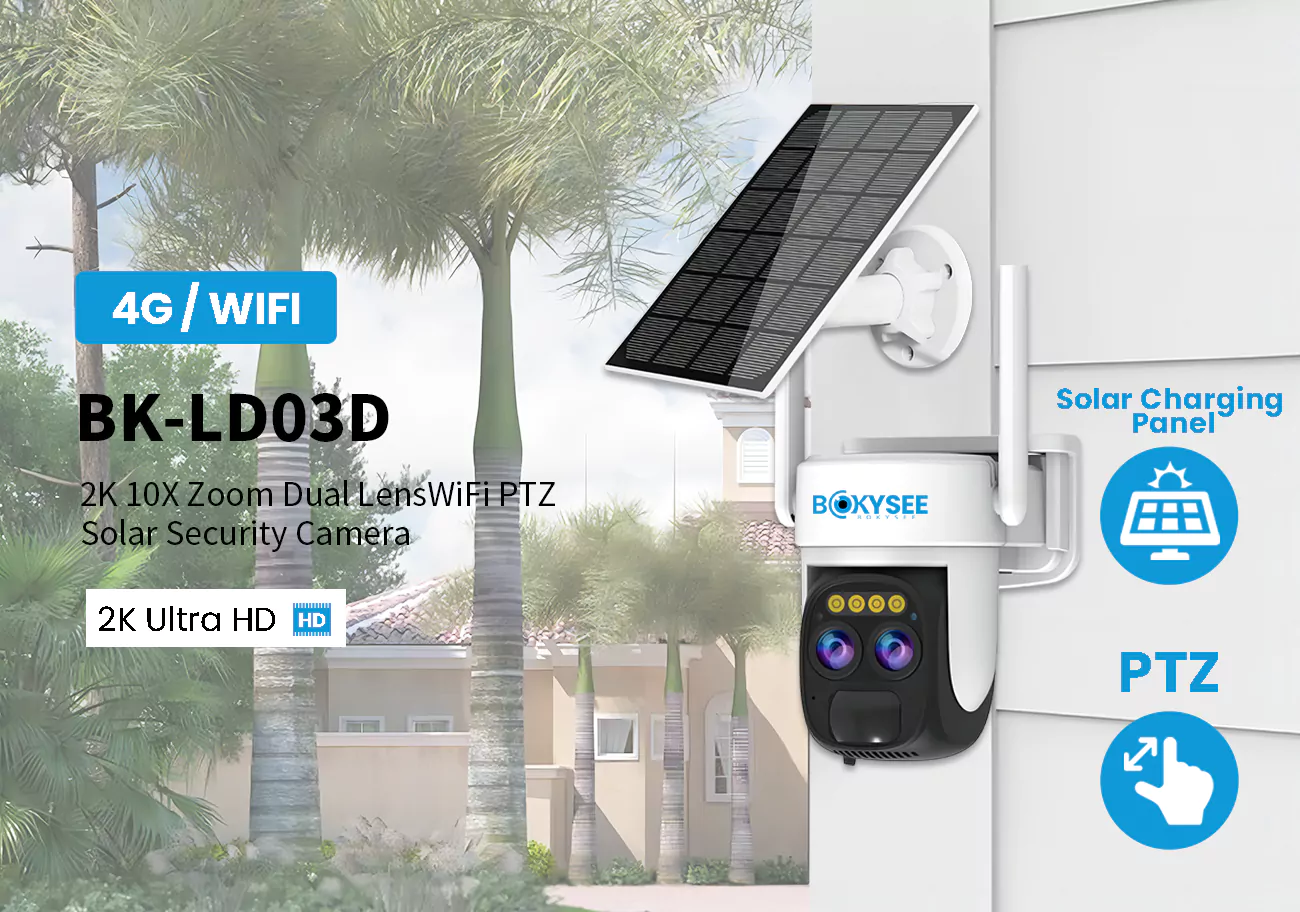
Mounting location has a major influence on surveillance effectiveness, wireless connectivity, and solar charging efficiency.
Pole Mounting Advantages
In most agricultural surveillance projects, dedicated poles provide the most reliable and professional installation solution for a solar panel wireless security camera for farms.
Unlike existing structures that may have limitations, poles can be positioned exactly where surveillance coverage is needed. This flexibility allows farm operators to create optimal viewing angles while maintaining strong wireless communication and maximum solar charging efficiency.
Pole installations are especially useful near farm entrances, livestock corridors, equipment yards, irrigation systems, and perimeter fencing. Since the pole location can be strategically selected, operators can eliminate blind spots that might otherwise reduce surveillance effectiveness.
Select the Proper Mounting Height
Determining the correct mounting height is essential for maximizing the performance of a solar panel wireless security camera for farms.
If the camera is mounted too low, animals, machinery, parked vehicles, or vegetation may block the field of view. Low installations can also increase the risk of vandalism, accidental impact, or tampering.
On the other hand, mounting the camera excessively high may reduce image detail and make it more difficult to identify important activities on the ground.
The ideal height depends on the monitoring objective. Cameras focused on entrances and access points may benefit from a different height than cameras intended to oversee open grazing fields or equipment storage areas.
Before final installation, it is advisable to test camera positioning and verify that key monitoring zones remain clearly visible during both daytime and nighttime conditions.
Consider Livestock Interaction
Livestock behavior is an important factor that is often overlooked during camera installation planning.
Cattle, horses, goats, sheep, and other farm animals are naturally curious and may investigate newly installed equipment. A solar panel wireless security camera for farms mounted within reach of livestock can be subjected to rubbing, chewing, scratching, or accidental impact.
To reduce the risk of damage:
- Install cameras beyond the reach of large animals
- Use sturdy mounting brackets and hardware
- Protect exposed cables and connectors
- Position solar panels where animals cannot easily access them
- Avoid mounting equipment directly on fences frequently used by livestock
Additional protective barriers may be beneficial in areas with high animal traffic. Investing in proper mounting protection can significantly extend the operational lifespan of a solar panel wireless security camera for farms.
Evaluate Tree Stability Carefully
Isolated trees are commonly used as convenient mounting locations because they are readily available and often provide elevated viewpoints across large agricultural areas.
However, tree installations require careful evaluation before a solar panel wireless security camera for farms is attached.
While a mature tree may appear stable, several environmental factors can affect long-term performance. Branches naturally sway during strong winds, creating movement that may introduce image vibration. Over time, tree growth can also alter the camera’s viewing angle or partially obstruct the lens.
Dead or weakened trees should never be used as mounting structures because they may create safety risks and increase the likelihood of equipment damage.
AI-Powered Intrusion Detection Filtering
As agricultural operations continue to expand in size and complexity, surveillance systems are required to monitor larger areas while generating increasing amounts of video data.
Reduce False Alerts Through AI Filtering
AI-assisted detection helps address this challenge by analyzing the characteristics of detected movement rather than simply responding to any visual change.
Instead of treating every movement as a potential threat, an AI-enabled solar panel wireless security camera for farms can focus on identifying patterns associated with human activity. This allows the system to ignore many common environmental disturbances that would otherwise generate unnecessary notifications.
For example, a camera may observe:
- Wind moving vegetation across a field
- Livestock grazing in designated areas
- Changing shadows during sunrise and sunset
- Weather-related movement caused by rain or storms
Without intelligent filtering, each of these situations could potentially trigger an alert. AI-powered analysis helps reduce irrelevant notifications and enables operators to concentrate on events that may require attention.
This capability becomes particularly valuable on farms where environmental activity is constant and monitoring resources are limited.
Utilize Human Detection Capabilities
Solar surveillance cameras support PIR human detection and AI human shape detection technologies. These features are designed to improve detection accuracy by identifying human-related movement more effectively than conventional motion sensing alone.
A solar panel wireless security camera for farms may be installed in locations where animal movement occurs regularly. Livestock such as cattle, sheep, horses, and goats can generate frequent motion events, while wildlife may enter monitored areas during both daytime and nighttime hours.
As farm properties often cover extensive acreage, intelligent detection becomes a valuable tool for maintaining effective oversight across multiple locations.
Improve Operational Efficiency
One of the most significant advantages of AI-powered surveillance is the improvement in operational efficiency. Without intelligent filtering, personnel may spend substantial time reviewing footage that contains no actionable information. This becomes increasingly problematic as surveillance coverage expands and additional cameras are added to the system.
A solar panel wireless security camera for farms equipped with AI-assisted detection helps streamline surveillance management by directing attention toward meaningful events rather than routine environmental activity.
Instead of continuously checking cameras or reviewing large volumes of footage, managers can focus on notifications that have a higher likelihood of requiring intervention.
Strengthen Perimeter Monitoring
Large farms often include multiple entry points, access roads, service gates, and remote boundary areas that can be difficult to monitor through physical patrols alone. A solar panel wireless security camera for farms equipped with AI detection can help strengthen perimeter protection by identifying unusual activity more accurately.
When deployed along boundary lines or entrance points, AI-powered filtering can assist in detecting potential intrusion events while minimizing distractions caused by routine environmental movement.
Solar surveillance cameras support alarm push notifications, enabling operators to receive alerts when detection events occur. When combined with AI-assisted filtering, these notifications become more meaningful and easier to manage.
Rather than receiving constant alerts throughout the day, users can focus on higher-priority events that may require immediate review.
Заключительные мысли
From securing farm entrances and monitoring livestock to overseeing equipment storage areas and perimeter boundaries, a properly deployed solar-powered surveillance system can help farmers achieve more efficient and reliable monitoring with minimal infrastructure requirements.
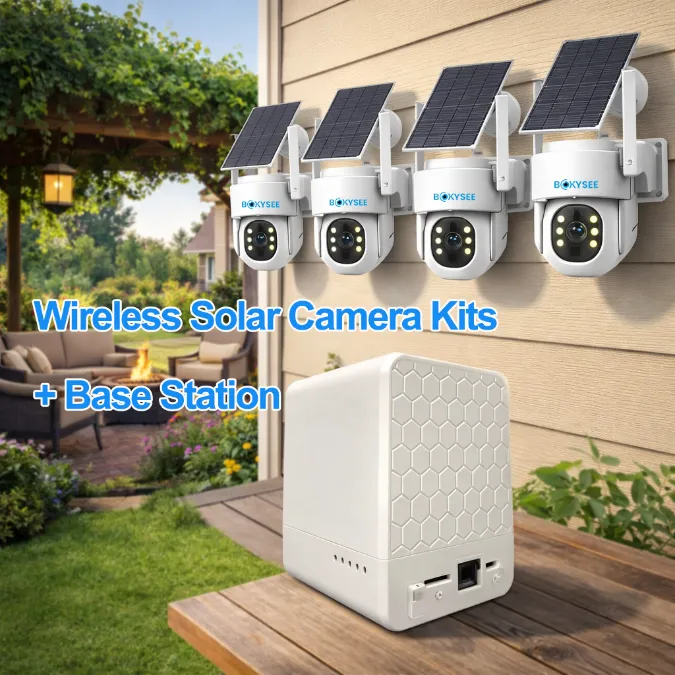
As a professional provider of solar-powered security solutions, Бокизее offers a range of solar battery cameras designed for outdoor and off-grid applications. With features such as solar charging, rechargeable battery operation, PIR motion detection, AI human detection, remote viewing, two-way audio, and flexible WiFi or 4G connectivity options, Bokysee solutions are built to support the diverse monitoring needs of modern agricultural operations.
Часто задаваемые вопросы
What is the best camera placement to secure remote farm gates?
The best location is typically an elevated pole positioned near the gate entrance, providing a clear view of approaching vehicles, pedestrians, and surrounding access roads. A solar panel wireless security camera for farms should be installed high enough to prevent tampering while maintaining strong wireless connectivity and adequate solar exposure.
Can solar cameras filter out large animal motion to prevent false alarms?
Yes. Many modern solar surveillance cameras, including Bokysee models, support PIR human detection and AI human shape detection. These technologies help reduce false alerts by distinguishing human activity from common environmental triggers, such as livestock movement, wildlife, or swaying vegetation.
How do I maintain wireless signal strength across vast agricultural fields?
To maximize signal performance, install cameras in locations with minimal obstructions between the camera and the network source. Elevating a solar panel wireless security camera for farms on poles can improve transmission range. For remote areas where WiFi coverage is limited, 4G-enabled models can provide more reliable connectivity.
Are solar cameras resistant to mud, rain, and direct animal contact?
Solar security cameras are designed for outdoor use and can operate in challenging weather conditions, including rain and dust. However, to minimize the risk of damage from livestock or machinery, cameras should be mounted securely and positioned beyond the reach of animals whenever possible.
Can these cameras monitor livestock in poorly lit barn areas?
Yes. Many solar-powered security cameras support infrared night vision or full-color night vision, allowing them to capture clear footage in low-light environments. This makes them suitable for monitoring livestock shelters, barns, feeding areas, and other locations that require nighttime visibility.
What maintenance is required for solar panels in dusty rural environments?
Routine maintenance is relatively simple. Regularly clean the solar panel surface to remove dust, pollen, mud, and other debris that may reduce charging efficiency. It is also recommended to inspect the camera lens, mounting hardware, and solar panel periodically to ensure optimal performance throughout the year.