Перейти к содержимому
Evaluating a solar vs battery security camera setup comes down to measuring upfront capital against lifetime maintenance overhead. Relying on standalone battery units for remote job sites creates a hidden labor burden of manual swaps every few weeks, driving up your long-term operational costs and increasing downtime risks.
This analysis benchmarks both power configurations to help you eliminate unnecessary site visits. We evaluate automated daily charging systems that achieve a 12 to 24 month break-even point against flexible wire-free models, ensuring your next installation maintains continuous uptime without bleeding your maintenance budget.
Key Differences: Power Source and Charging
Battery units demand manual recharges and higher labor costs, while solar setups require upfront hardware investment to deliver automated, continuous power.
| Особенность | Аккумуляторные камеры | Солнечные камеры |
|---|---|---|
| Primary Power | Internal rechargeable batteries | Solar panels + internal batteries |
| Charging Cycle | Manual swap every 2-6 months | Daily automated recharge |
| Recording Mode | Motion-activated to conserve power | Supports continuous 24/7 uptime |
Primary Power and Charging Mechanics
Battery cameras rely entirely on finite internal power reserves. Every two to six months, teams must manually remove the units or swap the batteries for charging via a wall outlet or docking station. Solar cameras bypass this manual loop. They pair internal batteries with external solar panels, actively converting daylight into power for a daily automated recharge.
The true efficiency of a solar deployment depends heavily on your specific hardware and site conditions. Panel wattage, direct sunlight exposure, and the capacity of the backup battery dictate whether the camera can handle multi-day overcast stretches or continuous nighttime recording without dropping off the network.
Long-Term Performance and Maintenance Requirements
Self-recharging solar configurations support continuous 24/7 uptime for uninterrupted video feeds. Battery models cannot sustain continuous streaming without draining rapidly, so they default to motion-activated recording to conserve energy. This operational limit creates a hidden labor burden. While a pure battery camera costs less at checkout, the constant need for manual site visits to handle battery swaps drives up long-term maintenance overhead.
You pay a premium upfront for solar panels and specialized mounting hardware. This initial capital expenditure pays off quickly in the field. Automated daily charging prevents deep battery discharges, extending the lifespan of the internal cells and drastically reducing the lifetime labor costs associated with manual power management.
Installation Flexibility vs. Power Stability
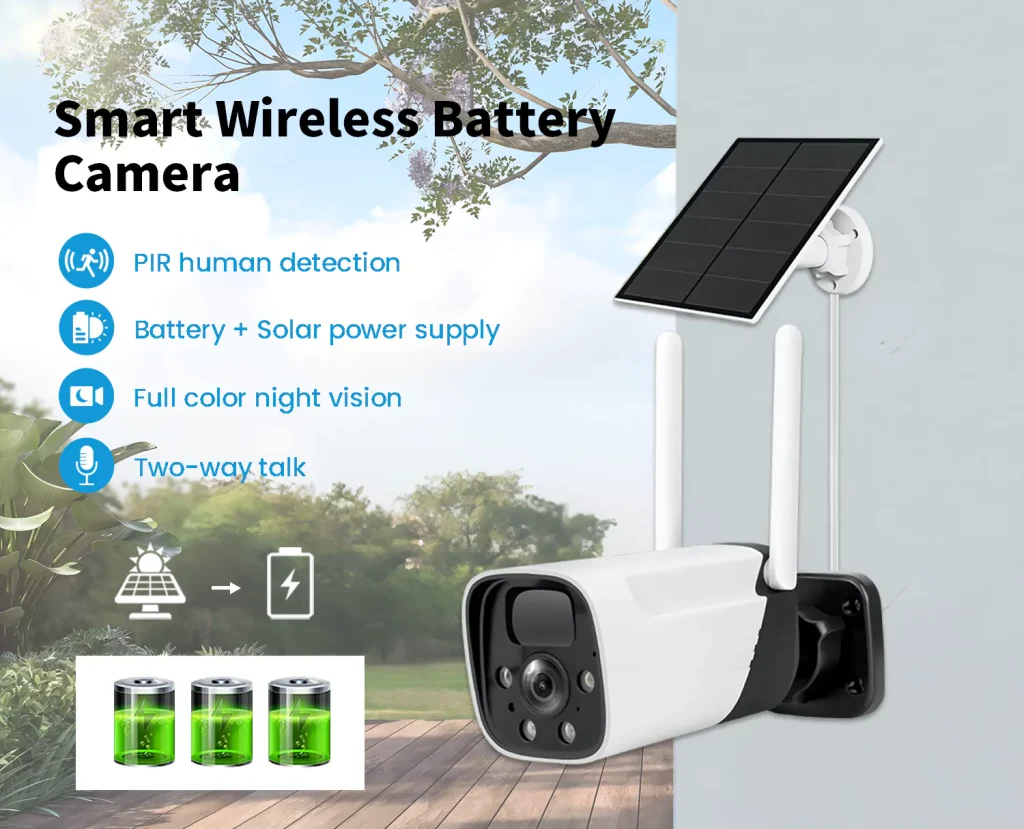
Battery cameras win on fast, flexible deployment in shaded spots, while solar setups sacrifice placement freedom to guarantee uninterrupted 24/7 power for remote job sites.
Camera Placement and Setup Speed
Battery-powered cameras deploy in minutes. Installation teams skip complex wiring and avoid making structural modifications to get these devices online. You can position battery units in shaded areas, under covered patios, or across temporary staging grounds where solar panels fail to function.
Solar cameras demand a stricter approach. Site managers must plan for precise sun exposure to maximize the daily energy output. Mounting solar hardware requires a larger physical footprint, pushing setup times noticeably higher compared to simple battery-only options.
Continuous Operation and Energy Reliability
Modern 2026 solar systems deliver steady, continuous power. This reliable energy stream easily supports heavy-draw features like real-time video streaming and active deterrents. Daily panel charging prevents costly downtime, keeping security networks online across remote builds and unattended equipment yards.
Battery-only models cannot match this operational stamina. A standard battery pack depletes within one to four weeks, depending directly on motion activity and resolution settings. Relying on frequent manual battery replacements creates heavy maintenance burdens and increases the risk of missing critical footage while a unit sits dead.
One-Stop CCTV Solutions for Global Projects
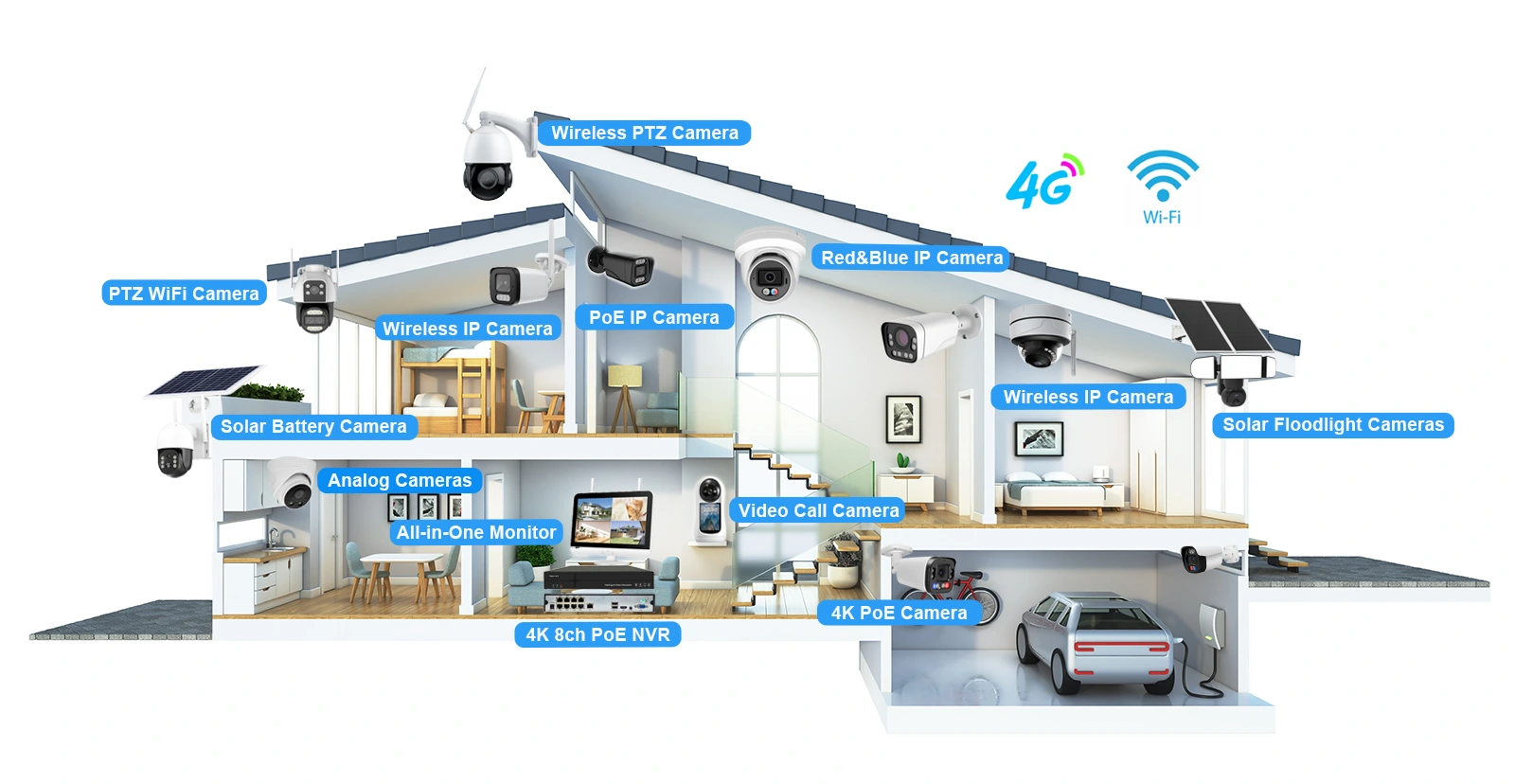
Maintenance Comparison: Long-term Overhead
Solar cameras trade higher upfront costs for minimal long-term maintenance, while battery systems require constant site visits and manual recharges, driving up operational overhead.
Routine Maintenance Tasks and Frequency
The daily reality of managing security systems comes down to physical intervention. You have to account for the labor hours required to keep your cameras online.
- Solar cameras: Require occasional panel cleaning to clear dust and debris, ensuring the system captures optimal energy.
- Battery cameras: Demand manual battery checks and recharges every one to four weeks, depending on motion activity and resolution settings.
- Remote sites: Benefit from solar setups because they operate with minimal physical intervention compared to battery-dependent systems.
Lifetime Costs and Downtime Risks
Initial purchase orders rarely tell the full financial story. The true cost of a камера видеонаблюдения deployment emerges over months and years of active use.
- Battery models: Cost less upfront but generate higher long-term expenses from frequent battery replacements and regular site visits.
- Solar systems: Incur higher initial prices but eliminate recurring battery replacement fees, reducing total lifetime maintenance costs.
- Downtime risks: Heavy usage and cold weather drain standard batteries quickly, increasing the risk of system downtime if personnel miss a recharge cycle.
Cost Analysis: Upfront vs. Lifetime Expenses
Solar cameras require a higher initial investment but eliminate ongoing power costs, allowing buyers to break even within 12 to 24 months compared to battery systems.
Initial Equipment and Setup Expenses
When planning a deployment, the initial capital expenditure heavily favors battery-powered units. These systems provide an affordable entry point for short-term setups because they require minimal hardware out of the box. Солнечные камеры видеонаблюдения demand a 20% to 50% higher initial investment. This premium accounts for the integrated solar panels, specialized mounting hardware, and larger internal batteries required to store captured sunlight.
- Battery Cameras: $50 to $200 upfront per unit.
- Solar Cameras: $150 to $400 upfront per unit.
Long-Term Maintenance and Break-Even Analysis
The financial dynamic flips when evaluating the total cost of ownership over a multi-year deployment. Battery cameras generate significant recurring expenses. Frequent battery replacements and the manual labor required to swap or recharge units add heavily to the baseline budget. Solar cameras eliminate these ongoing power costs and drastically reduce the need for battery replacements, making them highly cost-effective for permanent installations.
- Battery Ongoing Costs: $100 to $500 annually per unit for replacements and manual recharges.
- Solar Break-Even Point: 12 to 24 months to recover the premium upfront price.
Best Use Cases for Battery-Only Cameras
Battery-only cameras excel where power lines fail. They provide unmatched flexibility for remote sites, temporary deployments, and discreet monitoring without expensive infrastructure.
Remote and Off-Grid Locations
When you operate far from standard utility grids, running electrical conduit becomes a logistics nightmare and a budget-killer. Battery cameras solve this exact problem, giving you eyes on remote assets without the heavy trenching costs.
- Agricultural expanses: Monitor large farms, ranches, and rural perimeters where running electrical wiring costs too much.
- Infrastructure-free zones: Deploy cellular-based models on construction sites or vacation homes that lack both Wi-Fi networks and active power lines.
- Structural blind spots: Cover vulnerable building angles directly without relying on nearby electrical outlets.
- Outage protection: Ensure continuous security monitoring during unexpected power outages and severe weather events.
Flexible and Temporary Applications
Security risks shift constantly based on seasonal traffic and project phases. You need equipment that adapts just as fast. Battery-powered units strip away installation friction, letting you move hardware exactly where you need it today.
- Rapid repositioning: Move units quickly to handle seasonal activities, staging zones, or changing property risks.
- Discreet placement: Conceal small, wire-free designs for hidden indoor and outdoor surveillance.
- Subscription-free setups: Save money by combining standalone models with SD cards to bypass monthly cloud storage fees.
This plug-and-play approach keeps your initial capital expenditure low while matching the exact timeline of your temporary projects.
When Solar Power is the Clear Winner
Solar outclasses battery setups in remote, off-grid environments by providing 24/7 continuous power, eliminating manual battery swaps, and driving long-term cost savings through local energy generation.
Continuous Power and Maintenance Benefits
Solar panels change the operational math for security setups by recharging onboard batteries every single day. This constant energy flow lets you run resource-heavy features like live video streaming and two-way audio 24/7. You do not have to worry about the system going dark or scaling back performance to conserve battery life.
This localized power generation removes massive logistical headaches for security personnel while enabling rapid expansion.
- Constant uptime: Daily sunlight recharges batteries to sustain 24/7 live streaming and active deterrents without draining power.
- Reduced labor: Teams perform simple periodic inspections rather than traveling to sites for manual battery swaps.
- Effortless scaling: Managers can deploy multi-camera networks across massive yards since each unit operates independently without wired power limits.
Best Locations and Long-Term Cost Savings
Some environments practically demand solar solutions. Remote construction sites, vast rural farms, and true off-grid locations see the highest returns because running traditional wired infrastructure costs too much or remains entirely impossible.
Buyers face a higher initial invoice for the panels and mounting hardware. But the total cost of ownership drops fast. You save money over time by eliminating recurring battery replacement budgets and dodging heavy electrical wiring fees entirely.
Success depends directly on execution. Installers must position panels at the correct angle to capture maximum sunlight and actively avoid heavily shaded zones. Proper placement ensures the system banks enough power to maintain charging efficiency during overcast periods.
Can You Add a Solar Panel to a Battery Camera?
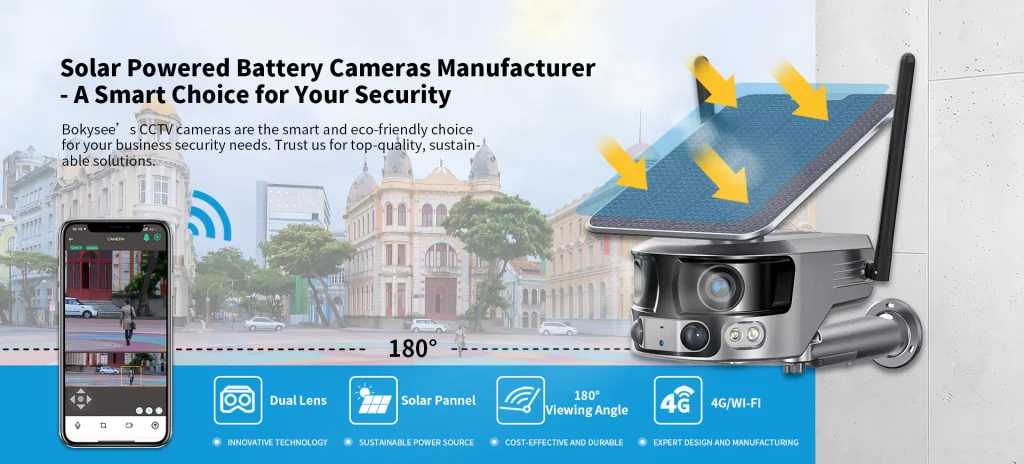
Yes, you can add a solar panel to most battery cameras using official accessories or DIY kits. You must keep a battery installed to regulate the incoming solar charge.
Official Solar Panel Compatibility
Manufacturers design their battery cameras to work directly with native solar accessories. Security camera brands like Ring, Night Owl, and Reolink offer official solar panels that hook up via proprietary plugs or standard USB-C connectors. Sticking to brand-approved hardware guarantees the power output safely matches the internal battery specifications.
- Voltage Matching: You must strictly match the panel voltage to your camera setup (usually 5V, 12V, or 24V) to prevent permanent hardware damage.
- Battery Pre-charging: Insert a fully charged battery into the camera before connecting the panel.
- Trickle Charging: Solar panels trickle-charge the battery to around 80% to preserve cell health, rather than powering the camera directly.
DIY Installation and Best Practices
If you run non-proprietary cameras, you can build a custom solar array. You need to plan your budget carefully for these custom builds. DIY kit costs can reach up to $1,000 in 2026, especially when you integrate cellular models that require active data plans alongside the hardware.
- Hardware Assembly: Gather a compatible solar panel, a dedicated charge controller, a DC converter, and a matching battery pack to construct a stable setup.
- Panel Positioning: Mount the solar panel facing the equator to capture the maximum amount of direct sunlight throughout the day.
- Weather Resistance: Keep panels completely unshaded and choose weatherproof designs to ensure reliable performance during heavy rain or snow.
Performance in Different Geographic Locations
Solar and battery cameras face distinct geographic challenges. Northern latitudes require oversized panels, while cloudy regions rely on advanced MPPT controllers and adaptive protocols to maintain continuous uptime.
Northern and High-Latitude Regions
Operating security cameras in extreme northern latitudes demands specific hardware adjustments. Shorter winter days and lower sun angles require precise panel placement and strict power-saving settings to prevent battery depletion.
- Panel Sizing: Cameras installed above 45° latitude need 23% larger solar panels to capture adequate sunlight.
- Extreme Cold Uptime: Northern field tests recorded 98.6% uptime at minus 22 degrees Fahrenheit, relying on smart power management to sustain operations for 3–5 days without direct sun.
- Low-Light Resilience: Alaskan trials demonstrated 90% uptime across 17 days of minimal sunlight, even though heavy cloud cover drops charging speeds by 14%.
Rainy, Cloudy, and Temperate Zones
Frequent rain and heavy cloud cover force systems to adapt to limited charging windows. Recent 2026 data shows solar cameras handle extended rainy periods using adaptive protocols that prioritize cellular connectivity during low-power states.
- Reserve Power Capacity: Advanced MPPT controllers improve solar conversion rates up to 24%, supplying 84 hours of reserve power on cloudy days.
- Temperate Setup Optimization: Installers direct panels away from tree shade, building overhangs, and nearby structures to maximize daily power yield.
- Shaded Environment Options: Battery-powered cameras operate reliably in shaded urban environments, delivering 3-6 months of power on a single charge.
Часто задаваемые вопросы
What is the main difference between solar and battery security cameras?
The main difference comes down to the power source. Battery cameras run on finite, rechargeable batteries that require manual replacement or recharging every few months. Solar cameras integrate solar panels to continuously recharge their internal batteries, delivering near-24/7 operation with minimal manual intervention as long as they receive adequate sunlight.
Which one is easier to install?
Battery-powered cameras win on ease of installation. You get a wire-free setup that takes minutes, and you can place them almost anywhere, including indoor or shaded areas. Solar cameras require you to mount both the camera and a separate solar panel, meaning you have to plan strategically for sun exposure and obstruction clearance.
Which one has lower maintenance cost?
Solar-powered cameras deliver lower long-term maintenance costs. You pay a higher upfront price for panels and mounting hardware, but you eliminate the ongoing labor and hardware costs of frequent battery swaps. Routine maintenance drops to simple tasks like occasional panel cleaning.
Can a battery camera work as long as a solar camera?
No, battery cameras cannot match the operational duration of solar models. Depending on motion activity and settings, a battery camera typically runs for a few weeks to a few months before it dies. Solar cameras recharge daily via sunlight, allowing uninterrupted 24/7 operation over several years.
When is solar power the better choice?
Solar power is the superior choice for long-term deployments, remote off-grid sites, and unattended areas. If your project demands continuous uptime, real-time monitoring capabilities, and minimal maintenance in an environment with reliable sun exposure, solar cameras easily outperform standalone battery units.
Can you add a solar panel to a battery camera?
Yes. You can plug a solar panel into most battery-powered security cameras using a compatible charging port. In this setup, the panel acts as a trickle charger to maintain battery levels. It extends the camera’s operational life and dramatically reduces the number of times you have to pull the battery for a manual recharge.
Заключительные мысли
While battery-only cameras offer a low initial purchase price, the hidden labor costs of manual recharging quickly erode your operational budget. Deploying a dedicated solar security network is the most effective way to guarantee constant uptime and protect your margins against recurring maintenance visits. You must align your hardware choice directly with the long-term demands and geographic realities of your job site.
Do not risk your remote security deployments on unpredictable power cycles. We recommend scheduling a project review to match our solar-integrated camera systems directly to your environmental conditions. Contact our team to request a wholesale catalog and finalize the power specs for your next installation.







 Russian
  English
  Spanish