Перейти к содержимому
Sourcing PTZ camera wholesale hardware exposes buyers to massive pricing volatility, from crushing 145 percent import tariffs to mechanical failures that destroy profit margins. Without an exact understanding of component costs and supply chain shifts, procurement teams risk burning their budgets on overpriced systems or cheap units that fail in the field.
This analysis benchmarks component variables across current factory-direct pricing tiers. We evaluate the exact base cost differences between Junzheng and Enzhi processors, mechanical durability standards, and total cost of ownership metrics to help you secure reliable units and protect your deployment budget.
Understanding Wholesale PTZ Camera Pricing in Today’s Global Market
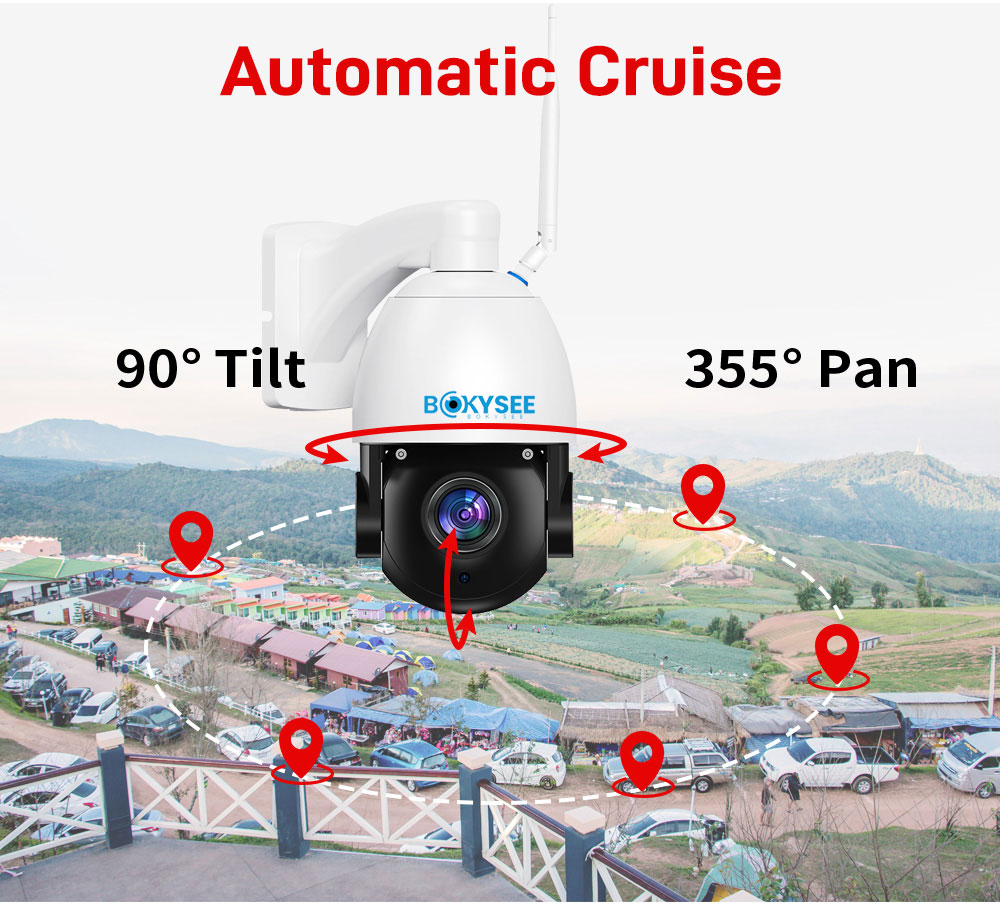
PTZ camera wholesale pricing spans from $6 basic units to $4,200 premium systems, heavily influenced by mechanical complexities, global tariffs, and shifting supply chains toward regions like Vietnam.
Current Wholesale Price Ranges by Category
Wholesale costs for PTZ cameras fluctuate based on internal components, resolution capabilities, and target applications. Buyers sourcing factory-direct options will see distinct pricing tiers tailored to different deployment scales.
- Basic CMOS and CCTV units: $6.50 to $8.50. These low-cost options target high-volume buyers.
- Mid-range IP and HD cameras: $16 to $20. These models integrate features like telematics and Full HD video.
- Entry-level wireless and solar units: Up to $1,472.85. This pricing often applies to single minimum order quantities on major sourcing platforms.
- Premium models: $4,100 to $4,250. These units feature advanced optics designed for high-end surveillance networks.
Supply Chain Dynamics and Manufacturing Expenses
Manufacturers price PTZ cameras higher than fixed models because pan-tilt-zoom functionality requires mechanical parts like motors and gears. These moving components drive up initial production expenses. Wholesalers also factor robust mounting hardware and specialized installation labor into their overall regional pricing strategies to ensure the heavy units remain secure.
Beyond hardware, trade policies and tariffs impact global electronics sourcing. Rising input costs prompt buyers to shift their supply chains toward regions like Vietnam and Mexico to avoid heavy duties. Even with these logistical hurdles, the global market will sustain steady expansion throughout 2026. Rising security needs and competitive factory-direct imports continue to push high-volume wholesale demand.
How SoC Selection Affects PTZ Camera Costs
Junzheng and Enzhi SoCs dictate entirely different PTZ pricing tiers; Junzheng drives premium AI margins, while Enzhi focuses on high-yield, low-cost baseline volume.
| SoC Platform | Raw Chipset Cost | Thermal Overhead | Target Market Bracket |
|---|---|---|---|
| Junzheng (Ingenic) | High (Premium AI) | Advanced Heatsinks Required | Mid-to-High Retail |
| Enzhi | Low (Baseline) | Minimal / Passive | Entry-Level Wholesale |
Base Cost Differences Between Junzheng and Enzhi
The silicon you choose acts as the financial anchor for your entire bill of materials. In the 2026 supply chain environment, shifting from a Junzheng to an Enzhi processor changes the baseline hardware requirements for the whole PTZ unit.
- Raw Component Costs: Junzheng chipsets command a premium due to integrated neural processing units, pushing base silicon costs 15-20% higher than Enzhi equivalents based on 2026 sourcing data.
- Memory Integration: Junzheng architectures typically demand higher bandwidth DDR4 or integrated DRAM packages, adding significant peripheral expenses. Enzhi pairs well with older, cheaper DDR3 modules to aggressively cut costs.
- Thermal Management: Enzhi chips operate at a lower power draw, allowing factories to use basic stamped aluminum heatsinks. Junzheng’s intensive AI workloads require custom thermal pads and heavier cast heatsinks, adding distinct per-unit hardware costs.
You are not just paying for the chip. The supporting cast of components required to keep a Junzheng SoC fed with data and thermally stable multiplies the initial hardware gap on the factory floor.
Production Yields and Final Pricing
Factory floor realities heavily distort the final price tag. Assembly line efficiency and component failure rates determine the true cost of bringing these cameras to the wholesale market.
- Manufacturing Defect Rates: Enzhi platforms boast simpler board layouts, reducing solder bridge defects and pushing first-pass yield rates above 98%. Junzheng’s complex pinouts require tighter manufacturing tolerances, leading to slightly lower initial yields.
- Enzhi Wholesale Pricing: PTZ units utilizing Enzhi processors dominate the entry-level tier, keeping final factory-direct wholesale prices anchored firmly between $16 and $20 for standard mid-range surveillance specs.
- Junzheng Retail Brackets: The advanced AI image processing capabilities of Junzheng chips allow brands to market features like autonomous tracking and facial recognition, justifying premium wholesale rates and pushing retail units into higher pricing brackets.
Opting for Enzhi secures reliable high-volume margins with predictable assembly costs. Stepping up to Junzheng introduces slight manufacturing friction but unlocks the software features required to compete in higher-tier surveillance deployments.
Scale Your Security Brand With OEM CCTV
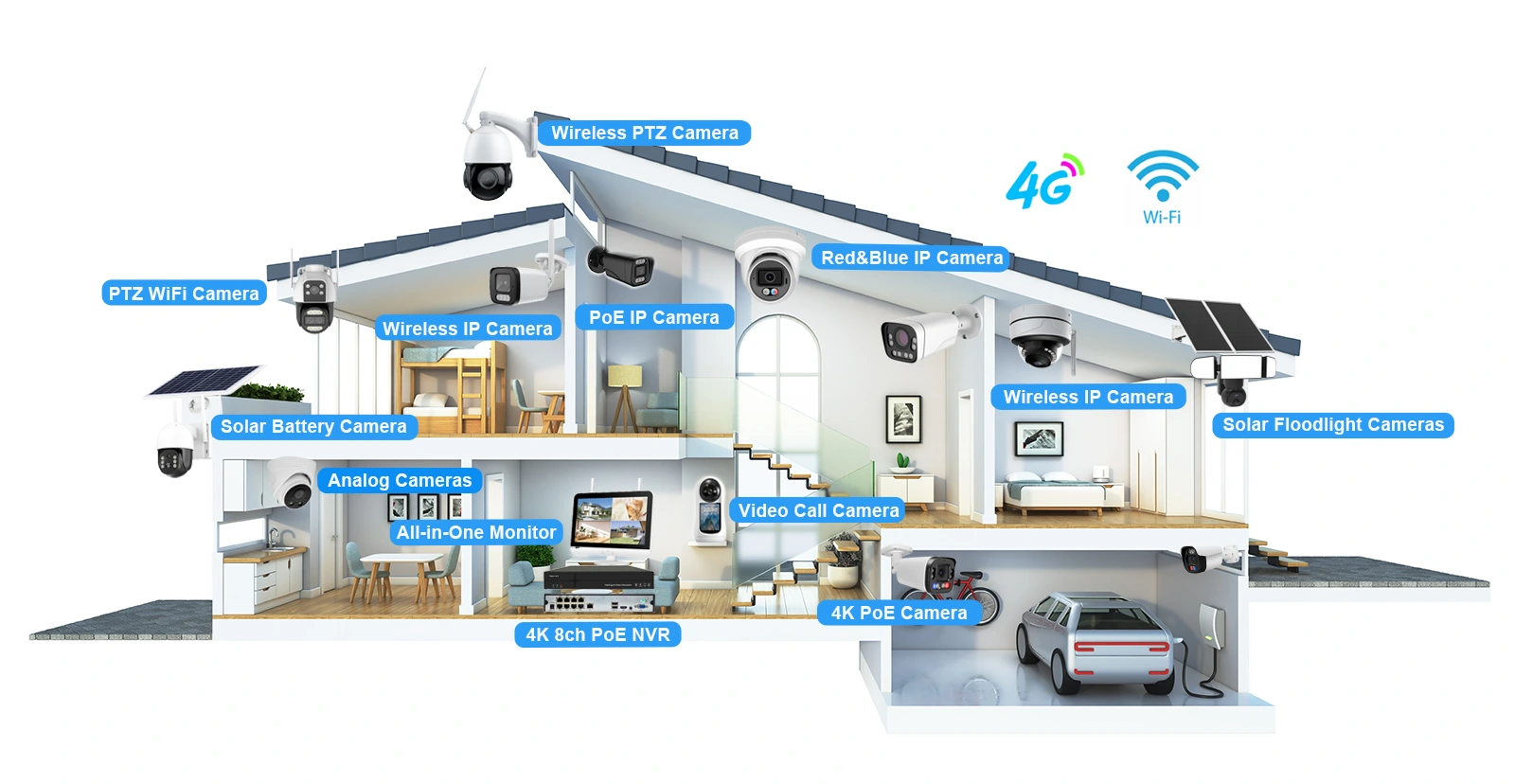
Mechanical Parts and Build Quality: The Hidden Cost Factors
Motorized pan-tilt-zoom functions demand industrial-grade components, pushing initial prices higher than fixed cameras. Factoring in mechanical wear, maintenance, and robust installation is critical for accurate 2026 deployment budgets.
Core Mechanical Components and Durability Standards
Pan, tilt, and zoom functions rely entirely on physical movement. Motors, belts, and gears drive this action, meaning these cameras require industrial-grade materials to survive constant rotation and adjustment. If you opt for weak internal components, the failure rate spikes the moment the camera enters an active surveillance cycle.
- Weather Protection: IP66 ratings seal internal mechanics against harsh environments, rain, and humidity.
- Impact Resistance: IK10-rated housings protect sensitive drive modules from vandalism and environmental debris.
- Acoustic Control: Premium models utilize quiet drive systems to eliminate audible motor noise during active camera movements.
Total Cost of Ownership and Maintenance Realities
Those moving parts fundamentally change your long-term budget. Motorized assemblies push upfront purchase prices significantly higher than standard fixed cameras. You will find a massive pricing spread from basic entry-level units to high-end premium models, largely dictated by the structural integrity of the internal drive system.
You also face a very different maintenance reality. Continuous mechanical motion causes inevitable wear on bearings and drive belts. This friction leads to frequent maintenance cycles and potential system downtime. When you calculate your budgets for 2026 deployments, you must factor in component replacement costs and the robust installation requirements needed to stabilize heavy, moving equipment.
How Monthly Production Capacity Impacts Bulk Order Discounts
Factory production capacity dictates bulk pricing. High-output facilities spread fixed costs efficiently, securing up to 25% discounts for volume buyers who verify capabilities through factory audits.
Connecting Factory Output to Standard Discount Tiers
A manufacturer’s baseline output sets the ceiling for the discounts they can offer. Suppliers align their pricing tiers with volume thresholds to stabilize their supply chains and keep production lines moving efficiently.
- Baseline Output: Facilities supporting small bulk runs offer 5% to 10% discounts for orders of 10 or more units.
- Mid-Tier Production: Consistent output prevents bottlenecks and yields 10% to 15% discounts for orders exceeding 50 units.
- High-Capacity Facilities: Large operations spread fixed costs across massive volumes, scaling to provide 15% to 25% discounts on orders of 100 or more PTZ-камеры.
Regional Production Drivers and Buyer Strategies
Geography heavily influences capacity and cost. High-output regions like China and India utilize local mass production to deliver aggressive pricing for smart city and large-scale surveillance deployments. Global events also shape these supply dynamics. Upcoming broadcast investments, notably the 2026 FIFA World Cup, drive up production volumes and open optimal pricing windows for bulk buyers.
Smart buyers actively verify supplier claims to secure the highest discount tiers. They negotiate capacity proofs, utilizing factory audits to confirm the manufacturer possesses the physical infrastructure to fulfill large deployments without costly delays.
Certifications (CE, FCC, RoHS) and Their Effect on Pricing
Regulatory compliance increases baseline manufacturing costs, but securing CE, FCC, and RoHS certifications allows wholesalers to target professional buyers and capture higher profit margins.
Cost Breakdowns for Compliance Standards
Securing mandatory certifications for PTZ cameras requires capital that manufacturers factor directly into baseline production costs. These expenses vary based on the specific regulatory standard and your target region.
- CE Certification: Requires an investment of roughly 2,000 RMB to meet European safety and compatibility directives.
- FCC Approval: Costs about 3,000 RMB per model to satisfy United States radio frequency limits.
- RoHS Compliance: Reports cost between 500 and 1,000 RMB but expire after one year, forcing regular renewals to maintain market access.
Because these testing and reporting expenses represent a recurring financial burden, manufacturers integrate them into the baseline factory pricing model before negotiating bulk discounts.
Impact on Wholesale Rates and Market Positioning
Suppliers pass certification expenses down to the per-unit price. Fully certified cameras command higher rates than non-certified alternatives because they guarantee immediate market entry and eliminate legal compliance risks for downstream buyers.
Adding advanced features like thermal imaging or 5G WiFi triggers additional certification testing. This extra scrutiny pushes the base cost higher across all volume tiers, making feature-rich models visibly more expensive to source at the wholesale level.
Certified PTZ cameras target professional buyers in 2026. Institutional and commercial clients demand strict regulatory compliance documentation. By supplying fully certified units, wholesalers justify premium pricing and maintain higher profit margins compared to vendors selling uncertified consumer-grade hardware.
Shipping, Tariffs, and Logistics Costs for Wholesale PTZ Orders
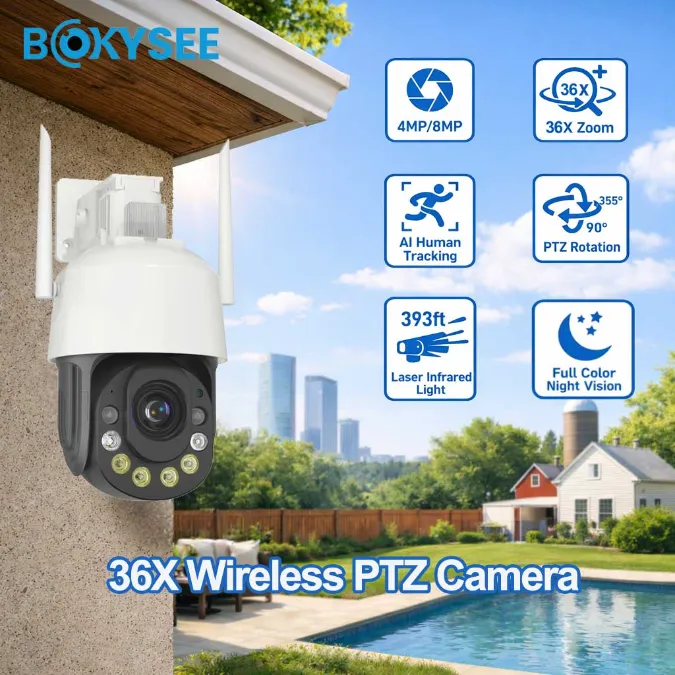
Tariffs up to 145% and eliminated de minimis exemptions drive wholesale PTZ costs sky-high. Procurement teams must navigate massive freight spikes and 12-week delays when sourcing internationally.
Tariff Rates and Customs Impact on PTZ Imports
US Customs classifies multifunctional PTZ dome IP-камеры under HTSUS subheading 8525.80.30. This baseline carries a 10% duty, but the real financial hit comes from steep country-specific markups. Recent trade policies eliminated the de minimis exemption. Buyers now pay full taxes and duties on all shipments, even individual components valued under $800.
- China imports: 44% to 145% total tariffs.
- Vietnam imports: 56% total rate.
- Thailand imports: 46% total rate.
- Japan imports: 34% total rate.
- Cost impact: Integrators face a 20% cost spike on sensors and chips, pushing a standard 50-camera imported system nearly $20,000 higher than domestically sourced alternatives.
Freight Costs and Supply Chain Delays for Bulk Orders
Moving bulk hardware across the ocean introduces severe transit delays spanning 4 to 12 weeks. International sellers also heavily inflate shipping fees, routinely charging upwards of $1,000 on lightweight wholesale parcels to quietly offset their own tariff burdens. When ocean timelines stretch too far, air freight becomes the only fallback, costing two to five times more.
- Ocean freight rates: $3,000 to $6,000 for a 20-foot container holding 200 to 500 PTZ units.
- Landed cost increases: 25% to 60% total cost spikes on Asian imports.
- Sourcing shifts: Procurement teams shift toward US-assembled or USMCA-compliant PTZ systems from Mexico and Canada to escape hikes and secure faster deployment times.
Lower Total Cost of Ownership: Maintenance vs Purchase Price
The true cost of a PTZ camera extends far beyond the initial invoice. Upfront hardware accounts for just half the lifetime expense, making proactive maintenance critical for profitability.
Total Cost of Ownership Breakdown Over the System Lifecycle
Buying a surveillance system requires looking past the immediate sticker price. Over the lifecycle of a deployment, the costs split evenly down the middle.
- Capital Expenses: Upfront hardware and software purchases account for roughly 50% of total costs.
- Operating Expenses: Design, installation, maintenance, and daily operations make up the remaining 50%.
- Municipal Deployments: In large-scale projects operating into 2026, operating costs claim 31% of the total budget, with maintenance representing the largest single component at approximately 20%.
- Cloud vs. On-Premise: Cloud-based management systems increase operating expenses by up to 20% over a standard operational cycle compared to on-premise setups, yet they reduce capital expenses by up to 40%.
Balancing Initial Purchase Price with Ongoing Maintenance
Bargain hunting on upfront hardware frequently backfires. Purchasing cheaper cameras increases long-term expenses through higher energy consumption, increased storage needs, and heavier server demands. Buyers pay for the initial discount through operational inefficiencies over time.
- Annual Maintenance Rates: Routine upkeep typically requires 10% to 15% of the original system installation value, translating to $50 to $200 per camera each year.
- Preventative Savings: Implementing preventative maintenance schedules reduces corrective repair costs by 40%.
- Total Ownership Impact: Proactive servicing lowers overall ownership expenses by 32% compared to reactive repair approaches.
Smart wholesale buyers treat maintenance as a strategic element of system design rather than an unavoidable penalty. Committing to preventative care and high-quality hardware keeps total deployment budgets strictly under control.
Часто задаваемые вопросы
What is the MOQ for PTZ camera wholesale?
MOQ varies by supplier and product type. Standard off-the-shelf models usually start at just one piece, making initial testing easy. If you need OEM packaging or custom branding, expect the MOQ to jump to 500 units.
Do you support OEM/ODM?
Yes, OEM and ODM support is standard across the industry. You can customize branding, packaging, and specific hardware or software features—like AI detection or custom zoom ranges—to build unique private-label product lines.
How is wholesale pricing tiered?
Wholesale pricing relies heavily on volume. Pushing past the 500-unit mark typically drops your per-unit cost by 10 to 15%. Base prices depend on the model tier, and any custom engineering or specific international certifications will add a premium to your final cost.
Can I get samples?
Yes, wholesalers almost always provide sample orders of one to two pieces at standard wholesale rates. This lets you evaluate build quality, pan-tilt-zoom mechanics, and network compatibility before committing to a large run.
What is the lead time?
Standard stock models usually ship within three to five business days. For customized or out-of-stock units, expect a two to four-week wait for assembly, testing, and configuration before the factory ships your order.
What certifications are available?
Wholesale PTZ cameras typically carry CE, RoHS, and FCC certifications to meet core safety, environmental, and electromagnetic standards. If you source specialized explosion-proof models, they will often feature ATEX or IECEx ratings.
Заключительные мысли
Chasing the lowest factory price on a PTZ camera often leads to mechanical failures and a bloated total cost of ownership. Sourcing units built with proven Enzhi or Junzheng silicon and industrial-grade drive motors protects your profit margins from excessive maintenance claims. Balancing upfront hardware investments with long-term structural reliability is the only way to secure a profitable surveillance portfolio in 2026.
Stop guessing on build quality and start validating your supply chain. We recommend requesting a sample unit to test the pan-tilt-zoom mechanics and thermal management firsthand before committing to a volume run. Contact our commercial team to discuss your OEM specifications, production capacity requirements, and bulk pricing tiers.







 Russian
  English
  Spanish