Перейти к содержимому
Sourcing a reliable PTZ Camera System dictates whether your large-scale facility requires multiple redundant units or a single active tracker. Relying on static hardware across expansive warehouses and park projects multiplies your deployment costs and increases the risk of critical blind spots.
This analysis benchmarks current commercial models against demanding 2026 integration standards. We evaluate 4K 60fps sensor capabilities, AI auto-tracking precision, and PoE network stability to help you deploy a highly scalable and automated security architecture.
What Is a PTZ Camera System and How Does It Work?
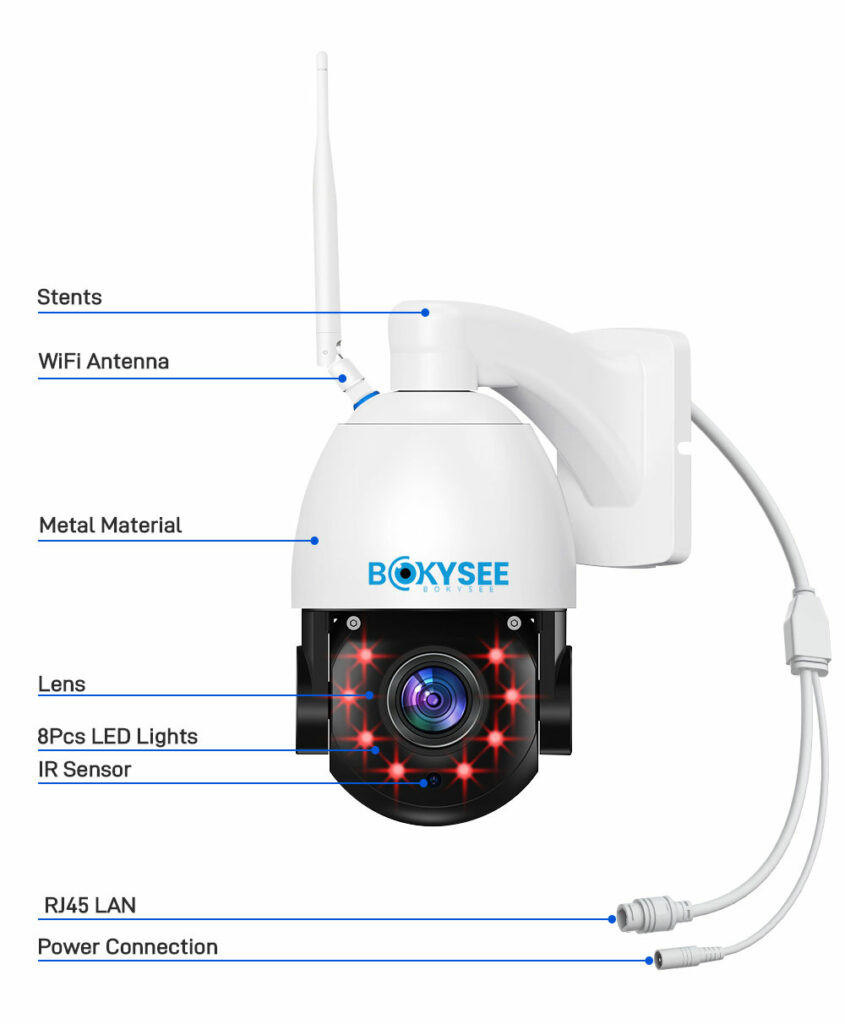
PTZ cameras use motorized pan, tilt, and optical zoom to replace multiple fixed cameras, delivering dynamic, 360-degree surveillance and automated tracking for large commercial spaces.
Core Mechanics of PTZ Cameras
A PTZ system relies on physical motion to cover wide areas, operating across three distinct axes:
- Pan: Horizontal rotation that sweeps from left to right, typically covering 180 to 360 degrees to scan broad environments.
- Tilt: Vertical elevation adjustments to monitor targets positioned up high or down low.
- Zoom: Optical magnification using motorized glass lenses to pull in distant details clearly, supplemented by software-driven digital zoom.
Inside the camera housing, a central control circuit acts as the operational brain. It translates operator commands into electrical signals that drive precision servomotors. These motors physically rotate the camera head while simultaneously adjusting the motorized lens elements to maintain a sharp, continuous focus during active motion.
This mechanical setup delivers a dynamic field of view that drastically outperforms static fixed cameras. While a fixed camera captures a single, immovable angle, a PTZ unit actively scans its surroundings. One PTZ camera easily sweeps across an entire warehouse floor, covering a massive footprint that would normally require multiple stationary units.
Operation and Control Methods
Operators interact with PTZ systems through multiple direct interfaces. In manual mode, security personnel use hardware joysticks, desktop software, or mobile apps to physically steer the camera lens. This real-time control allows operators to follow suspicious activity, zoom in on specific license plates, and actively inspect target zones on demand.
For unmanned monitoring, these systems rely heavily on automated functions:
- Patrol Tours: Operators program specific waypoints into the system. The camera automatically moves between these preset positions on a fixed schedule to scan large areas continuously.
- Auto-Tracking: Built-in motion detection algorithms lock onto moving objects. The camera pans, tilts, and zooms autonomously to keep a person or vehicle centered in the frame as they traverse the site.
Because of this active tracking capability, PTZ systems dominate large-scale security applications. Commercial facilities deploy them for perimeter defense to track trespassers along long fence lines. Logistics companies use them to oversee expansive warehouse aisles, and property managers rely on them for complete parking lot oversight to ensure no blind spots remain during an incident.
Best PTZ Camera System Features to Look for in 2026
In 2026, PTZ systems must operate autonomously. Prioritize AI-driven auto-tracking, 4K 60fps sensors, and native broadcast-level connectivity like NDI|HX to eliminate manual oversight and maximize coverage.
AI Auto-Tracking and Optical Performance
Modern surveillance and live event production rely heavily on automation to reduce headcount. The latest PTZ models integrate advanced optical engineering with autonomous tracking capabilities to handle dynamic environments.
- AI-driven auto-tracking: Systems automatically follow faces, people, or objects without requiring extra hardware. This enables true hands-free operation across live streams, corporate events, and security deployments.
- Hybrid autofocus: By combining phase-detection and contrast AF, the camera achieves rapid, precise focus even when subjects move quickly through complex or crowded environments.
- Optical zoom and movement: Zoom ranges from 3x to 20x deliver close-up details without losing resolution. Variable pan and tilt speeds provide fluid, responsive mechanical adjustments.
Image Quality and Advanced Connectivity
Capturing the event is only half the battle; the system must also deliver that feed cleanly into your existing network or broadcast infrastructure. High-grade sensors and versatile IP standards dictate performance in this area.
- 4K UHD resolution: Outputting at 60fps paired with high dynamic range (HDR) captures detailed video across varied lighting conditions, ensuring professional-grade color accuracy.
- Large sensors and IR LED: Night vision and upgraded sensor sizes improve low-light capabilities. This keeps footage clean and noise-free in dark security environments or dimly lit event spaces.
- Modern connectivity options: Native support for Wi-Fi 6, NDI|HX, and 12G-SDI lets users integrate cameras directly into broad IP networks or complex broadcast workflows.
Premium OEM/ODM Security Cameras for Wholesalers
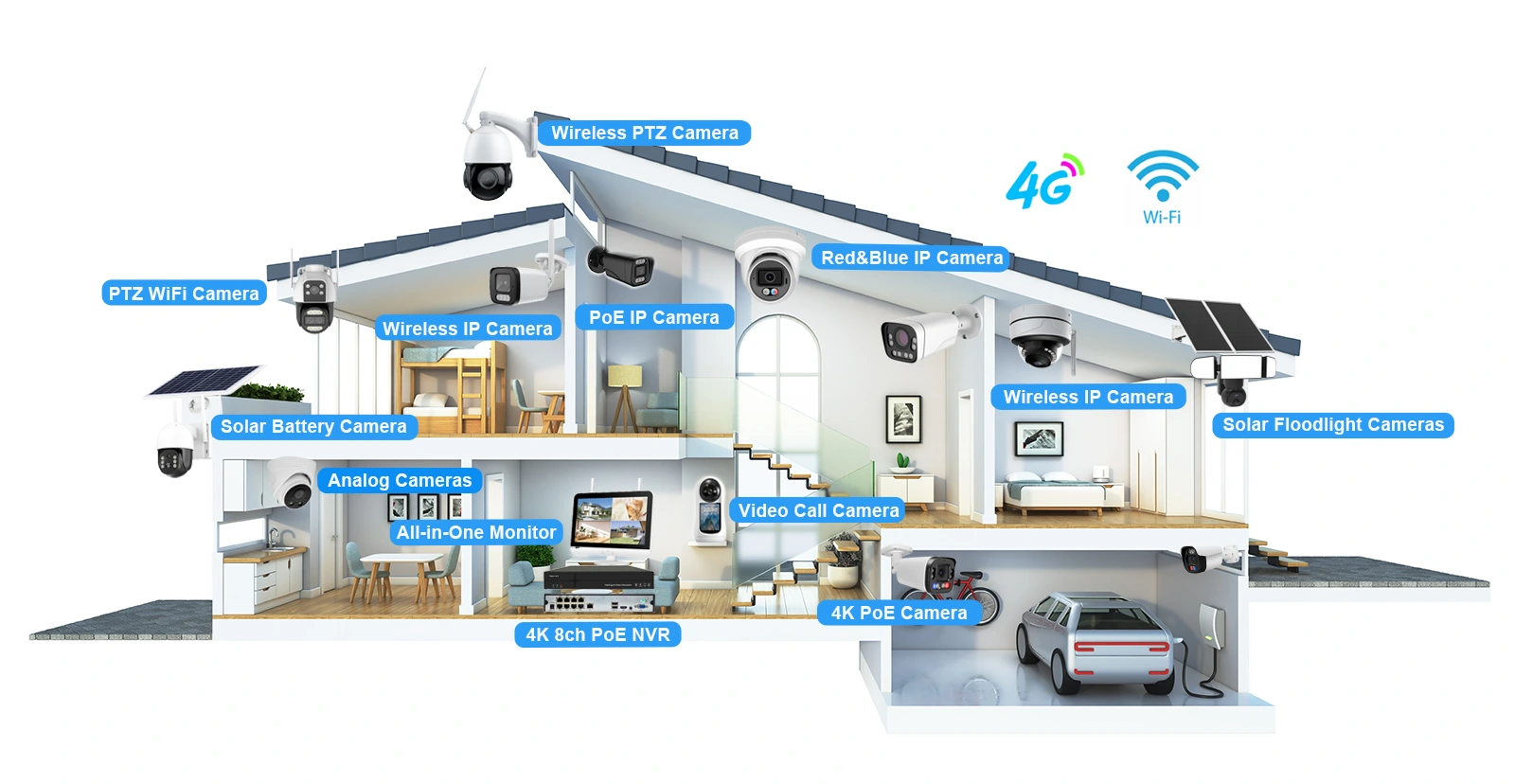
PTZ Camera System vs Fixed Camera: Which One Is Better?
Neither system is universally superior. PTZ-камеры offer dynamic tracking across open spaces, while fixed units provide reliable, continuous coverage for critical static points.
Coverage and Image Quality Capabilities
PTZ cameras give you motorized pan and tilt capabilities that rotate up to 360 degrees. This mechanical flexibility allows you to actively monitor expansive environments like parking lots or warehouse floors with a single unit.
Fixed cameras operate differently by maintaining a static, continuous field of view. To achieve broad coverage without blind spots using fixed units, you must install multiple cameras across the site.
When capturing detail at a distance, PTZ units use motorized optical zoom lenses to record distant subjects clearly without pixelation or distortion. Fixed cameras lack this active zoom capability, relying instead on stable mounting and high-megapixel sensors to maintain consistent high-resolution recording over a designated zone.
Cost Factors and Placement Strategies
The mechanical complexity of PTZ units directly impacts your budget. The internal servomotors and advanced features drive up both the initial hardware purchase price and the long-term maintenance costs compared to simpler fixed models.
Site layout dictates where each camera performs best. You should install fixed cameras at critical static points—such as primary facility entrances or secure storage doors—where continuous, uninterrupted recording is mandatory.
Experienced security professionals rarely rely on just one camera style. They deploy a hybrid strategy that leverages the strengths of both systems. This approach uses fixed cameras to maintain reliable continuous recording at access points, while PTZ units handle active event tracking and dynamic sweeps across large, open spaces.
Wireless PTZ Camera System vs PoE PTZ Camera System
PoE PTZ systems deliver unmatched stability and security for permanent commercial installations, while wireless models offer rapid, flexible deployment for temporary or residential sites.
Connectivity and Installation Differences
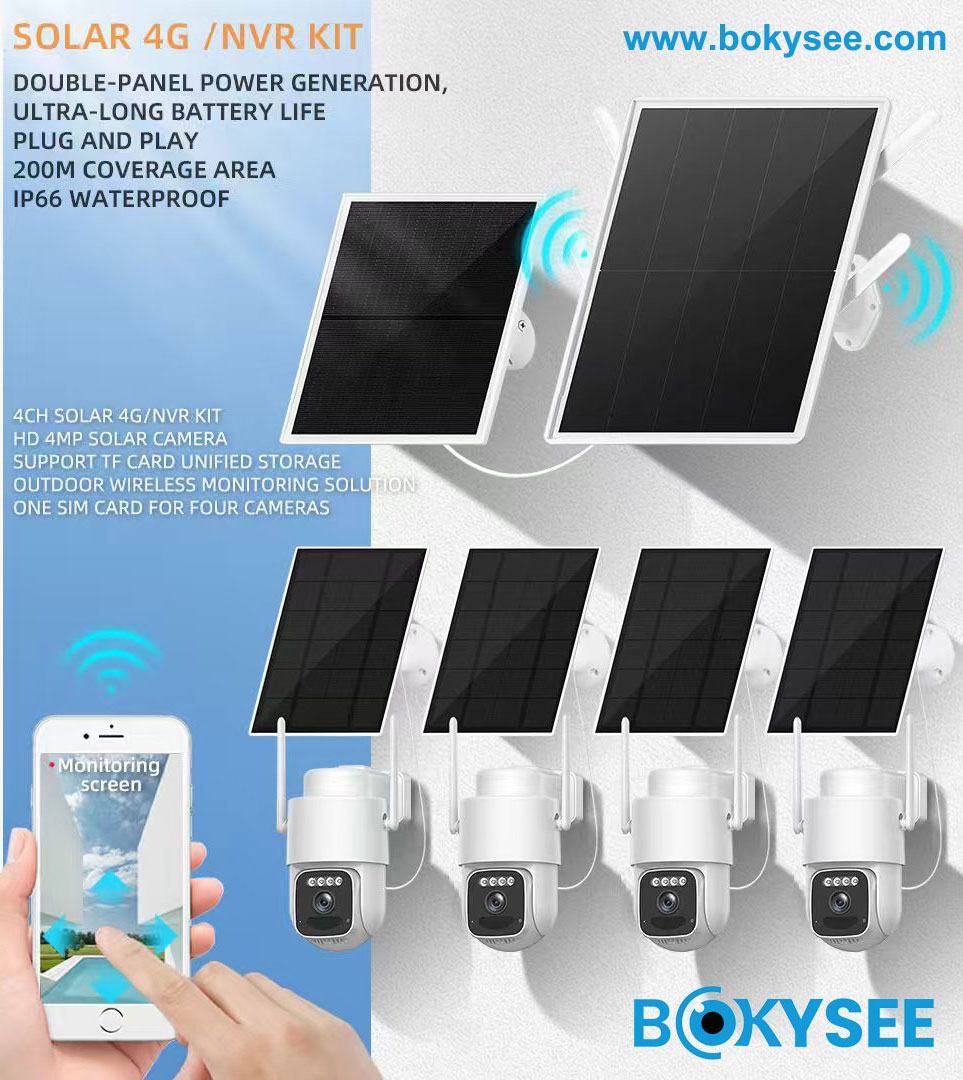
Wireless PTZ systems connect to local WiFi networks, allowing you to set them up quickly without running long cables. Users rely on independent power sources like batteries, solar panels, or standard AC wall outlets to keep these units running.
PoE systems require installers to run Ethernet cables from the camera directly to a central PoE switch or NVR. This single wired connection efficiently delivers both continuous network data and electrical power simultaneously.
These connectivity differences dictate their ideal environments. Wireless options fit small sites or temporary setups perfectly. PoE systems suit new constructions, commercial buildings, and large properties that need permanent infrastructure.
Performance and Security Comparison
PoE systems provide stable, dedicated bandwidth to handle 4K video recording and continuous pan-tilt-zoom operations without lag or buffering. Wireless cameras sometimes experience signal drops or interference from other devices and physical obstacles. This interference severely limits video quality during heavy PTZ motion.
Wired PoE setups offer superior security against network hacking and signal jamming. They keep sensitive footage completely isolated and safe on local NVR storage, bypassing the vulnerabilities of broadcasting data over the airwaves.
Ultimately, buyers choose PoE for large-scale, high-security surveillance. They pick wireless models for flexible residential deployments where running physical cables proves impractical.
Best PTZ Camera System for Warehouse, Farm, Parking Lot & Business
PTZ cameras replace multiple fixed units across large properties. Success requires matching zoom capabilities, weather ratings, and AI tracking to your specific operational environment.
Recommended PTZ Camera Models
Selecting the right hardware dictates system reliability. The market offers distinct configurations built for specific commercial demands. We compiled top models based on optical zoom strength, AI tracking precision, and weather endurance.
| Модель | Разрешение | Zoom/Pan-Tilt | Основные характеристики | Ночное Видение | Weather Rating | Лучший вариант использования |
|---|---|---|---|---|---|---|
| Avalonix IRPTZ4KAD | 8MP Starlight | 25X optical, 360-degree pan | Автоматическое отслеживание | 328ft IR, 164ft color | IP66 | Parking lots, perimeters |
| AvaEye PTZIR2K25 | 4MP Starlight | 25X optical | Tripwire detection | 330ft IR, Starlight color | IP66 | Farm and driveway monitoring |
| Botslab Dual-Lens W315 | Dual 4MP | 16X hybrid, 360° pan | Vehicle recognition, illegal parking monitor | AI-enhanced | Outdoor-rated | Business entrances |
| eufy PoE NVR S4 Max | 4K triple-lens | PTZ triple-lens | Local AI tracking, expandable storage | PoE-supported | Outdoor PoE | Warehouses and retail |
| Reolink TrackMix | 4K/8MP | Dual-lens | Human, vehicle, and pet tracking | Strong low-light | На открытом воздухе | General business use |
Essential Features for Target Environments
Different commercial spaces present unique surveillance challenges. Hardware specifications must align perfectly with your property layout to prevent blind spots and false alarms.
- Parking Lots: Require 360-degree endless panning, high optical zoom (up to 25X), and smart auto-tracking to identify vehicles and humans reliably.
- Warehouses: Need programmable preset patrols to cover expansive interiors and combine broad overviews with precise optical zoom capabilities for inventory or incident checks.
- Farms: Demand strict IP66/IP67 weather-resistant models featuring long-range IR (up to 330 feet) and Starlight performance for effective low-light perimeter monitoring.
- Businesses: Benefit from dual-lens setups for split-screen views, AI-powered illegal parking detection, and active deterrence features like strobes and sirens to control entrances.
How Much Does a PTZ Camera System Cost in 2026?
In 2026, PTZ camera costs range from $300 for basic models to over $22,000 for professional setups, with complete systems requiring an additional 25% to 50% for accessories.
PTZ Camera Price Ranges by Tier
Hardware specifications and target applications divide the 2026 PTZ camera market into three distinct pricing tiers.
- Budget Models ($300–$500): These units provide 12x zoom and basic USB or HDMI connectivity.
- Mid-Range Systems ($800–$3,000): Expect 20x to 30x optical zoom and NDI support for standard commercial and surveillance applications.
- Professional Units ($3,000–$22,000+): Built for rigorous broadcast workflows, these cameras feature 30x or greater zoom and native 4K capabilities.
Complete System Setups and Key Cost Factors
Buyers often budget only for the camera unit itself. A complete, functional setup requires an additional 25% to 50% of the base camera price to fund essential accessories like mounts, specialized cables, and hardware controllers.
- Basic Setups: Expect a final total of $500 to $600 for a fully rigged entry-level system.
- Mid-Range NDI Environments: Deploying a network-ready system costs $1,000 to $1,500, factoring in network switches and professional labor.
- 4K Resolution Upgrades: Pushing your video feed to 4K adds 20% to 40% to your total hardware bill.
Beyond baseline specs, specialized features drive up the final invoice. Adding AI-driven auto-tracking software or long-range color night vision hardware guarantees a higher premium at checkout.
Why Bokysee PTZ Camera Systems Are Built for Real Projects
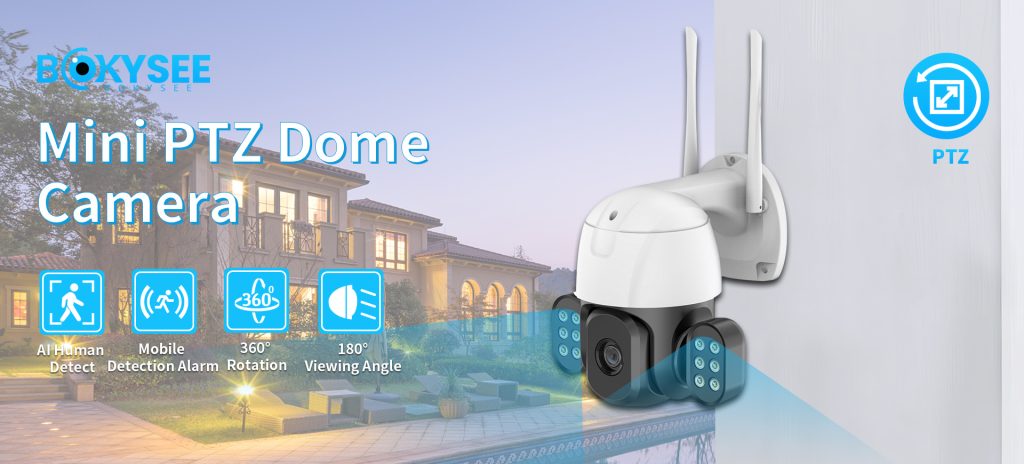
Bokysee PTZ cameras combine rugged IP66 metal housings with 4K imaging and AI tracking to deliver reliable, wide-area surveillance for demanding commercial and industrial sites.
Durable Metal Housings and 4K Ultra HD Imaging
Bokysee engineers these cameras with IP66-rated metal housings to handle extreme physical environments. They easily withstand heavy rain, abrasive dust, and temperature swings from -20°C to 60°C. This specific build quality ensures reliable surveillance for exposed farm perimeters and active construction sites facing unpredictable 2026 weather patterns.
- High-Resolution Sensors: 8MP 4K Ultra HD imaging captures sharp details like faces and license plates from a distance.
- Optical Zoom: 18X optical zoom maintains image clarity on distant targets without pixelation.
- Wide Coverage: 360° pan and 90° tilt capabilities allow operators to monitor massive spaces without installing additional cameras.
AI Tracking and Scalable Network Integration
Managing dynamic commercial buildings and industrial sites requires intelligent monitoring, not just raw video streams. Bokysee integrates AI smart tracking to automatically follow moving people and vehicles across the site. The software actively filters out false alarms triggered by wandering animals or sudden weather shifts, keeping security teams focused on actual threats.
- Flexible Deployment: Installers easily set up these systems using PoE, 4G, or 2.4G WiFi depending on the site’s existing infrastructure.
- Cross-Brand Compatibility: ONVIF compliance guarantees the cameras connect smoothly to industry-standard Hikvision and Dahua NVRs.
- Secure Local Storage: Built-in Micro TF card slots hold up to 256GB of video data directly on the device as a reliable backup.
Часто задаваемые вопросы
What devices are included in a PTZ system?
A standard PTZ system consists of the primary camera unit housing the motors, lenses, and image sensors. You also need control hardware like a dedicated joystick or software interface, a power supply such as a 12V DC adapter or PoE switch, and the necessary cables for network, video, and audio transmission.
How do I choose an NVR?
Choose an NVR that supports your required camera count, resolution, and total incoming bandwidth. Always buy an NVR with more channels than you currently need to allow for future expansion. Look for units featuring built-in Power over Ethernet (PoE) ports to simplify wiring, native 4K resolution support, and robust remote access capabilities.
How much storage is needed?
Storage requirements scale from 6GB to over 6TB depending on your configuration. Your camera count, resolution, frame rate, and recording duration dictate the exact capacity. For instance, a 16-camera 1080p setup requires roughly 19TB to retain 30 days of continuous footage. You can cut these storage costs significantly by configuring motion-triggered recording and using highly efficient video compression formats.
What size area can it cover?
Coverage spans from 100 feet for standard residential units up to 5,000 feet for commercial-grade systems. PTZ cameras actively sweep massive environments like stadiums or parking lots by combining 360-degree continuous panning, 90-degree tilting, and powerful 10x to 30x optical zoom lenses. This sweeping capability allows a single PTZ unit to effectively replace several static fixed cameras.
Does it support remote control?
Yes, remote operation sits at the core of any PTZ system. Operators adjust pan, tilt, and zoom functions off-site using desktop software, mobile applications, hardware joystick controllers, or directly through the NVR menu. These control signals travel over standard IP networks, USB connections, or serial protocols like RS-232 and RS-485.
Can it be customized for projects?
Installers heavily customize PTZ systems to fit the exact parameters of broadcast studios, large-scale surveillance grids, and industrial facilities. You can program automated guard tours, lock in specific preset viewing coordinates, and link the cameras directly to broader Video Management Systems (VMS). Advanced custom setups also tie camera movements to external alarm triggers and AI-driven behavior analytics.
Заключительные мысли
While consumer-grade cameras offer lower upfront costs, deploying professional PoE PTZ systems is the only way to properly secure large commercial spaces. Relying on rugged IP66 metal housings and AI-driven auto-tracking protects your operational budget against weather damage and constant false alarms. This hardware standard guarantees active, reliable coverage that eliminates blind spots across your entire facility.
Do not leave your perimeter defense to chance. We recommend starting with a pilot deployment to test the 4K imaging and autonomous tracking capabilities firsthand. Contact our commercial team today to review your site blueprints and configure the exact hardware specifications for your next project.







 Russian
  English
  Spanish