Ir al contenido


Starlight, full-color, and infrared (IR) night vision use different methods to capture images in low-light conditions. Each affects image color, visibility, and performance in darkness.
This article compares starlight, full-color, and IR technologies in Cámaras IP, explaining how they work and which options suit different outdoor surveillance needs. It helps installers, integrators, and buyers evaluate night vision performance before purchasing.
How Does Night Vision Work in Security Cameras?
Every night vision system is solving the same problem: how to make a usable picture when there is almost no light.
The Core Problem: Light
A camera sensor needs light to form an image, and at night there is very little of it. Night vision technologies differ in how they respond to that shortage. Some add their own light, some boost the sensor’s sensitivity to the faint light that remains, and some do both.
The choice determines whether the picture comes out in color, in black and white, and how far the camera can see. Understanding the light budget of a scene is the first step toward choosing the right one, because no night vision works the same everywhere, and a camera that excels on a lit city street can struggle in a dark field.
Three Approaches, One Goal
Security cameras need enough light to produce clear images. When natural light becomes insufficient, they can increase sensor sensitivity, use infrared illumination, or add visible light. These approaches affect image color, night visibility, and power consumption in different ways.
Some cameras combine these technologies to adapt to changing light conditions. Understanding how each approach works helps explain the differences between starlight, infrared (IR), and full-color night vision.
What Is Starlight Technology in Security Cameras?

Starlight means a sensor sensitive enough to keep color in near-darkness, using whatever faint light the night already has.
High Sensitivity Sensors
Starlight cameras use highly sensitive image sensors and low-light optics to capture color images when some ambient light remains. Their minimum illumination ratings may be as low as 0.001 lux, depending on the sensor, lens aperture, exposure settings, and test conditions. A lower lux rating can indicate stronger low-light sensitivity, but buyers should also compare sample footage, image noise, and motion detail under similar lighting conditions.
The Limits of Starlight
Starlight is not magic in a pitch-black room. It still needs some ambient light to work with, and once the scene goes fully dark the camera must switch to its own IR or white-light illumination to keep recording. The strength of starlight is keeping color and natural detail in the gray zone between dusk and total darkness, where most outdoor crime actually happens. That is also the range where a standard camera has already given up, which is exactly why the technology matters in practice, and why starlight is so common on cameras aimed at streets and building perimeters.
How Does Full-Color Night Vision Work?

Full-color night vision keeps the picture in color by adding visible light, so the camera never drops to black and white.
Visible Light, All Night
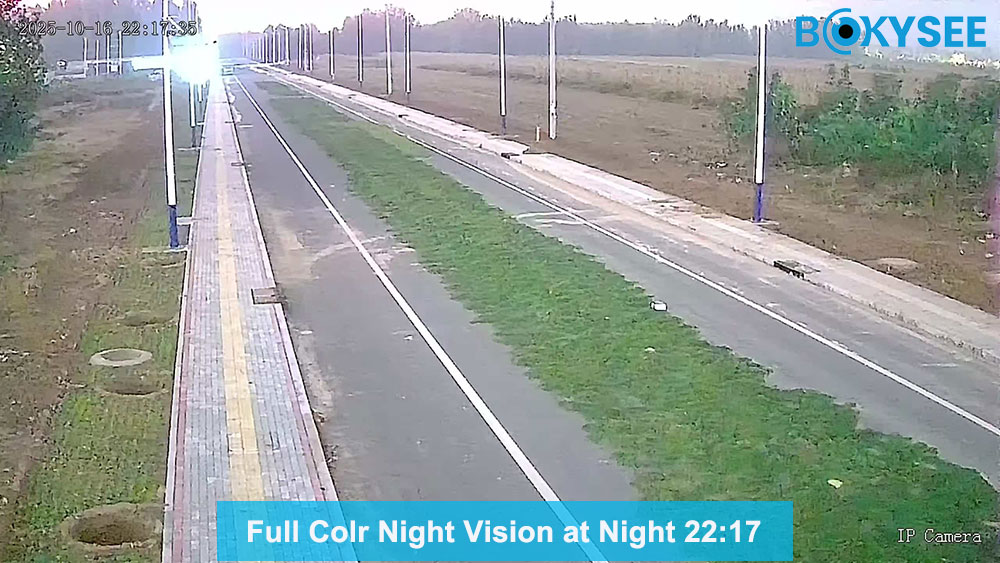
A full-color camera uses a low-light sensor combined with a source of visible light, usually warm white LEDs, to keep the scene lit enough for color capture all night. The light is dim enough not to be blinding but bright enough to reveal colors such as a jacket, a vehicle, or a fence. This is the technology behind terms such as ColorVu and other vendor-branded full-color lines. The result is a picture that looks almost like daylight, which is a big step up from black and white for identifying people and vehicles after an incident.
The Deterrent Bonus
The visible light that powers full-color night vision doubles as a deterrent, because an intruder sees that the camera is lit and active. That is a real advantage over invisible IR, which records without being noticed. The tradeoff is that the light source uses power and may not suit every site, but for entrances, driveways, and perimeters the color detail and the visible presence usually justify it. Some models let the LED brightness follow the ambient light, so the light stays gentle while still keeping the image in color. Our guide to how full color IP cameras work covers the feature set in depth.
How Does Infrared (IR) Night Vision Capture Images in Darkness?

IR night vision works in total darkness by lighting the scene with infrared that the camera sees but the human eye does not.
Invisible Illumination
An IR camera carries a ring of infrared LEDs that bathe the scene in light just beyond the visible spectrum. The camera sensor, which is sensitive to infrared, reads that light and builds an image, but a person standing in the dark sees nothing glowing.
This is why IR cameras can watch a completely black room without giving away that they are there. The IR cut filter inside the camera flips during the day to keep daylight colors accurate, then moves out of the way at night to let the IR light in. A faint red glow from the LED ring is normal and is a sign the IR is active.
Black and White, and Its Cost
Because infrared carries no color information, an IR night image is black and white. That is usually fine for motion detection and identification, but it means details such as clothing color are lost, which can matter when a witness reports a red jacket and the footage only shows gray. IR also has a limited throw distance, so long-range coverage needs high-power IR LEDs or a separate illuminator. The reference for the underlying spectrum is documented under infrared radiation.
Starlight vs Full Color vs IR: Key Performance Differences

The three differ on one axis above all: how much light they need, and what color and discretion they give in return.
Color, Light, and Range Compared
IR wins in total darkness and is the most discreet, but it sacrifices color. Starlight keeps color as long as any ambient light remains, making it the natural choice for urban and semi-lit sites. Full color keeps color around the clock but depends on its own visible light.
Range and image noise also differ, with IR and full-color LEDs pushing farther than starlight alone when the light runs out. The right pick is rarely a single technology but a match between the light source and the site, and most quality cameras now let you set when the camera switches from color to IR so you keep the best image through the whole night.
| Tecnología | Light Source | Image at Night | Mejor para |
|---|---|---|---|
| IR | Invisible IR LEDs | Black and white | Total darkness, discreet watch |
| Starlight | Ambient light only | Color in low light | Semi-lit urban sites |
| Full color | Visible white LEDs | Color all night | 24/7 color and deterrence |
Need night vision that performs on real sites? Bokysee manufactures starlight, full color, and IR cameras across IP, PoE, and 4G lines, with OEM and ODM support for your brand.
Request night vision samples →How to Choose the Right Night Vision Technology for Outdoor Surveillance

Start from the light the site actually has at night, then decide whether you need color, discretion, or deterrence.
Match the Technology to the Scene
A totally dark rural site with no lighting needs IR, because there is no ambient light for starlight and no power-friendly case for running visible LEDs all night. A street, lot, or building with existing lighting can use starlight to keep color without adding its own light.
A storefront or entrance where color detail and a visible deterrent matter should use full color. The same site can even mix technologies across cameras, putting full color at the entrance and IR along a dark rear fence, and our comparison of black light and dual light full color cameras covers the LED variants.
Thinking About Cost and Power
IR is the most cost-effective for pure coverage, starlight adds sensor cost for color in low light, and full color adds both sensor and LED power draw. For solar or battery cameras, that power draw matters, since the LEDs on a full-color camera shorten runtime compared with IR.
Balance the value of color and deterrence against the energy budget, especially on off-grid installs. On mains-powered sites the power concern largely disappears and the decision comes down to image quality and deterrence, which is where full color often earns its premium despite the higher price.
Frequently Asked Questions About Night Vision Technologies
What is the difference between starlight and full color night vision?
Starlight uses a highly sensitive sensor to keep color in existing low light, while full color adds its own visible LED light to keep color around the clock. Starlight needs some ambient light; full color supplies its own.
Why are IR night vision images black and white?
Infrared light carries no color information, so a camera that relies on IR illumination can only produce a monochrome image. The sensor records the scene, but without visible light there is no color to capture.
Which night vision is best for total darkness?
Infrared night vision is the best choice for total darkness, because it supplies its own invisible illumination and does not depend on any ambient light. The image will be black and white.
Does full color night vision act as a deterrent?
Yes. The visible white light that powers full color night vision makes the camera obvious, which can deter intruders. Invisible IR, by contrast, records without being noticed.
Can starlight cameras see in complete darkness?
No. Starlight cameras need at least faint ambient light such as moonlight to hold a color image. In complete darkness they switch to IR or white-light illumination to keep recording.
Does full color night vision use more power than IR?
Yes, generally. Full color night vision runs visible LEDs continuously, which draws more power than IR and shortens runtime on solar or battery cameras. This matters when choosing cameras for off-grid sites.
Final Thoughts on Starlight, Full Color, and IR Night Vision
Night vision uses three main technologies: IR captures black-and-white images in total darkness, starlight preserves color in low light, and full color uses visible light for nighttime color images. Some IP cameras combine these technologies and switch between color and IR modes.
For security camera buyers, sensor sensitivity, lux ratings, and LED specifications offer a better measure of night vision performance than marketing labels. As an Fabricante de cámaras IP, Bokysee offers starlight, full-color, and IR camera solutions for distributors, integrators, and OEM projects.






 Spanish
 English
 Russian