Ir al contenido


The most common failure in solar surveillance is not a bad camera but a bad match between the panel, the battery, and the power the camera actually draws. A camera that works perfectly on a sunny week dies on the first cloudy stretch, and the root cause is almost always the sizing math done before it was installed. The fix is rarely more equipment; it is usually getting the calculation right from the start.
This guide explains how to size a solar panel for a security camera, from daily power consumption to panel wattage and battery capacity, so the system survives the worst weather of the year rather than the best. It is written for installers, integrators, and anyone deploying cameras where there is no mains power.
By the end you will be able to calculate the panel and battery a camera actually needs, and you will know which assumptions cause most solar cameras to run out of power.
The good news is that the sizing method is simple and does not require an engineering background, just honest numbers about the site and the camera. Most failures come from skipping the calculation entirely and trusting a generic kit, which is exactly the mistake this guide is meant to prevent. Spend ten minutes on the numbers up front and the system will repay that effort through every season that follows.
How Does a Solar Panel Power a Security Camera?

A solar camera is three parts in one: the panel harvests energy by day, the battery stores it, and the camera spends it around the clock.
The Charge and Discharge Cycle
During daylight the solar panel converts sunlight into electricity and charges the battery. At night and in poor weather the camera draws from the battery to run its sensor, processor, and night vision. The panel and battery must be sized as a pair, because a large panel with a tiny battery still goes dark overnight, and a large battery with a weak panel simply runs out later rather than never. The two components compensate for each other only within limits, so sizing each side correctly matters.
Why the Balance Matters
The goal is a system where the energy harvested on an average day at least equals the energy consumed over a full day and night, with enough reserve for cloudy periods. When the two sides of that equation drift apart, the camera works intermittently, misses events, or shuts down entirely during the stretch when surveillance matters most. It is a balance, and the rest of this guide walks through each side of it in turn so the numbers stay in line.
What Factors Affect a Solar Camera’s Daily Power Consumption?
Consumption is set by how often the camera wakes, records, streams, and turns on its night lights, not by the panel size.
Recording Mode and Wake Events
A camera that records continuously uses far more energy than one that records only when motion is detected. Every PIR trigger, video clip, and remote live view pulls extra current, so a busy scene with constant motion drains the battery much faster than a quiet one. The number of wake events per day is often the single biggest variable in the energy budget, and it is also the one the buyer has the least control over once the camera is up.
Night Vision and Connectivity
IR LEDs and full-color night lights both add load while they run, and a 4G or WiFi radio draws power every time it transmits. A camera doing frequent cloud uploads over 4G consumes more than the same camera recording locally. These features are useful, but each one has a measurable cost in watt-hours that the panel must replace the next day. When the load is heavy, trimming just one of these behaviors can bring the system back into balance without changing the hardware.
How to Calculate the Solar Panel Wattage Your Camera Needs

Work in watt-hours: multiply the camera’s draw by its run time, then size the panel to replace that energy in the available sun.
The Basic Formula
Start with daily energy use in watt-hours, which is the camera’s average power draw in watts multiplied by twenty-four hours. Then divide that figure by the site’s effective sun hours per day to get the panel output needed, and add a safety factor, usually fifty to one hundred percent, to cover losses and poor weather.
A camera drawing five watts continuously needs roughly one hundred twenty watt-hours a day, which a modest panel can produce in a few good sun hours. The key is using the site’s worst-season sun hours rather than a sunny summer average, because that is the number that decides whether the system survives the year.
A Worked Example
If a security camera draws 5 watts continuously, its daily energy consumption is 120 watt-hours (5W × 24 hours). With four peak sun hours per day, the solar panel needs to provide at least 30 watts under ideal conditions (120Wh ÷ 4 hours). After accounting for charging losses, temperature effects, and a safety margin, a 60-watt panel may be a reasonable starting point.
The exact numbers shift with the camera, but the method stays the same, and our guide to designing an off-grid solar security system works through it in more detail.
| Step | What to Measure | Por qué es importante |
|---|---|---|
| Daily energy use | Camera watts times hours | Sets the energy budget |
| Sun hours | Effective hours per day | Determines panel output |
| Safety factor | Add 50 to 100 percent | Covers clouds and losses |
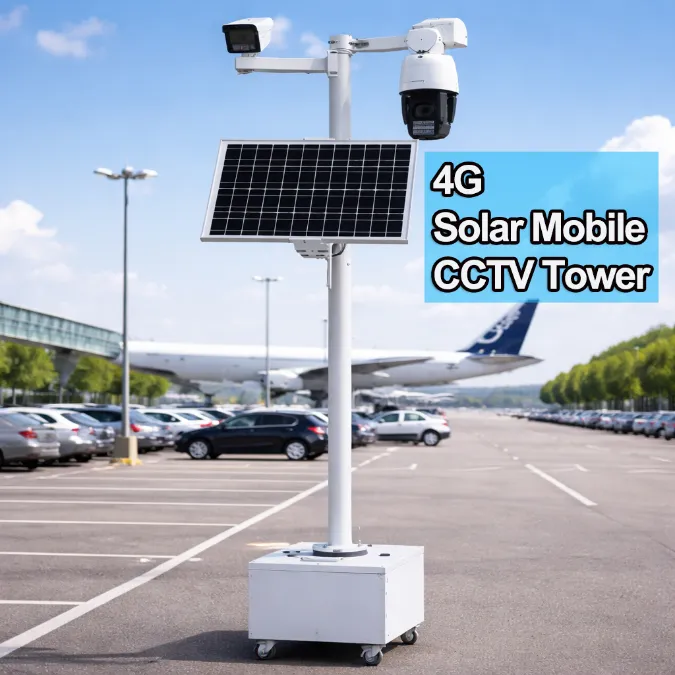
Powering cameras where there is no mains supply? Bokysee manufactures solar cameras and mobile CCTV towers with matched panels and batteries, plus OEM and ODM support for your brand.
Ask about solar solutions →How to Choose the Right Battery Capacity for a Solar Security Camera

The battery must carry the camera through the longest dark or cloudy stretch, not just a single night.
Sizing for Backup Days
Battery capacity is usually measured in milliamp-hours (mAh) or watt-hours (Wh). The required capacity depends on the camera’s daily energy consumption and the number of backup days needed at the installation site.
For example, if a camera consumes 120Wh per day and needs to operate through three consecutive cloudy days, the battery must provide at least 360Wh of usable energy (120Wh × 3 days). The rated battery capacity should be higher to account for the permitted depth of discharge, battery aging, and temperature-related capacity loss. Since not all stored energy is available for use, check the battery’s usable capacity rather than relying on its headline rating.
Cold Weather and Usable Capacity
Lithium batteries deliver less usable capacity in freezing temperatures, so a battery sized for warm weather can fall short in winter just when nights are longest. Build in extra capacity for cold climates, and confirm the battery chemistry is rated for the site’s lowest temperatures. In sub-zero conditions a battery may deliver only a fraction of its rated capacity, so a cold site needs a meaningfully larger battery than the same camera on a mild coast. The battery is often the first component to age, which our guide to how long solar security cameras last explains in more detail.
How Do Sunlight Conditions and Panel Placement Affect Charging?

Placement often matters more than panel size: a shaded panel is the same as a smaller one.
Angle, Orientation, and Shade
The panel charges best facing the sun directly, so orientation and tilt should follow the site’s latitude and season. In the northern hemisphere a south-facing panel tilted toward the sun captures the most energy. Shade from trees, walls, or even a neighboring camera is the silent killer of solar output, because a panel that is shaded for part of the day loses far more than that fraction of its energy. Even a small shadow across one corner can cut output sharply, so site the panel where it stays clear from sunrise to sunset and trim back anything that will grow into the light path over time.
Seasonal Variation
Winter shortens the days and lowers the sun’s angle, cutting effective sun hours at the same time the camera runs longer nights. A system that balances in summer may fail in winter unless it is sized for the worst season. Check the site’s peak sun hours for the winter months rather than the yearly average, because the yearly figure hides the very conditions that cause failures, and our guide to how much sunlight an outdoor solar camera needs covers the seasonal planning.
How to Prevent Power Shortages in Solar-Powered Security Systems

Prevention comes down to three habits: oversize, place the panel well, and keep the load lean.
Oversize and Monitor
An oversized panel is cheap insurance, because a little extra wattage on the best days becomes the difference between surviving and failing on the worst ones. Use a camera that reports its battery level so you can see the daily charge cycle and catch a failing panel or a growing load before the site goes dark. Monitoring turns a silent failure into a service call instead of a gap in coverage, and a battery trend that drops a little more each day is the earliest warning that something is wrong.
Keep the Load Lean
Reduce consumption where it does not hurt coverage: use motion-triggered recording instead of continuous, limit unnecessary live views, and shorten night-light or upload time. Every watt saved on the load side reduces the panel and battery required on the generation side.
A leaner camera also makes the whole system cheaper and more forgiving of bad weather. The reference for solar resource data is published by the National Laboratory of the Rockies for teams that need site-specific sun figures.
Frequently Asked Questions About Solar Panel Sizing
What size solar panel does a security camera need?
It depends on the camera’s daily energy use and the site’s sun hours. Divide daily watt-hours by effective sun hours and add a safety factor, which for most cameras lands on a panel of roughly ten to sixty watts.
How long will a solar camera run without sun?
It depends on the battery capacity and the camera’s draw. A battery sized for several backup days can carry the camera through a cloudy stretch, while a small battery may only last a single night.
Why does my solar camera die in winter?
Winter brings fewer sun hours, a lower sun angle, and colder batteries that hold less capacity, all while nights run longer. A system sized for summer can fail in winter unless it is planned for the worst season.
Does panel placement really matter that much?
Yes. A panel that faces away from the sun or sits in shade for part of the day produces far less than its rating, and placement problems are one of the most common causes of a solar camera running out of power.
Can I use a bigger battery with any solar camera?
Not always. The battery must match the camera’s charging controller and voltage, so check compatibility before upgrading. A bigger battery also needs a panel large enough to refill it.
How do I know my solar camera has enough power?
Watch the battery level across a full charge and discharge cycle. If the battery refills each sunny day and never drops below a safe reserve, the panel and battery are sized correctly for that site.
Final Thoughts on Solar Panel Sizing
Sizing a solar camera correctly is mostly a discipline of arithmetic: measure the daily draw, size the panel to the sun the site actually gets, and size the battery to the longest dark stretch. The cameras that fail are the ones sized on a napkin for a sunny day, and the ones that last are sized for the worst week of the year.
Oversize the panel, place it where it sees the sun, and keep the load lean, and the system will keep running when the weather turns against it. If your product line needs solar power that holds up on real off-grid sites, talk to Bokysee about matched solar panels, batteries, and cameras with OEM support.






 Spanish
 English
 Russian