
Standard visual surveillance exposes industrial facilities to catastrophic blind spots, making thermal security cameras the only viable defense against zero-visibility intrusions and undetected equipment failure. When thick smoke or total darkness neutralizes optical lenses, perimeters become vulnerable to unauthorized access and reactive mechanical downtime that drains operational budgets.
We evaluate the integration of 640×512 thermal resolution sensors with AI threat classification and precise temperature analysis within a 0.5 degree margin, demonstrating how predictive monitoring and early fire detection reduce industrial operational costs by up to 40 percent.
How Thermal Imaging Detects Intruders
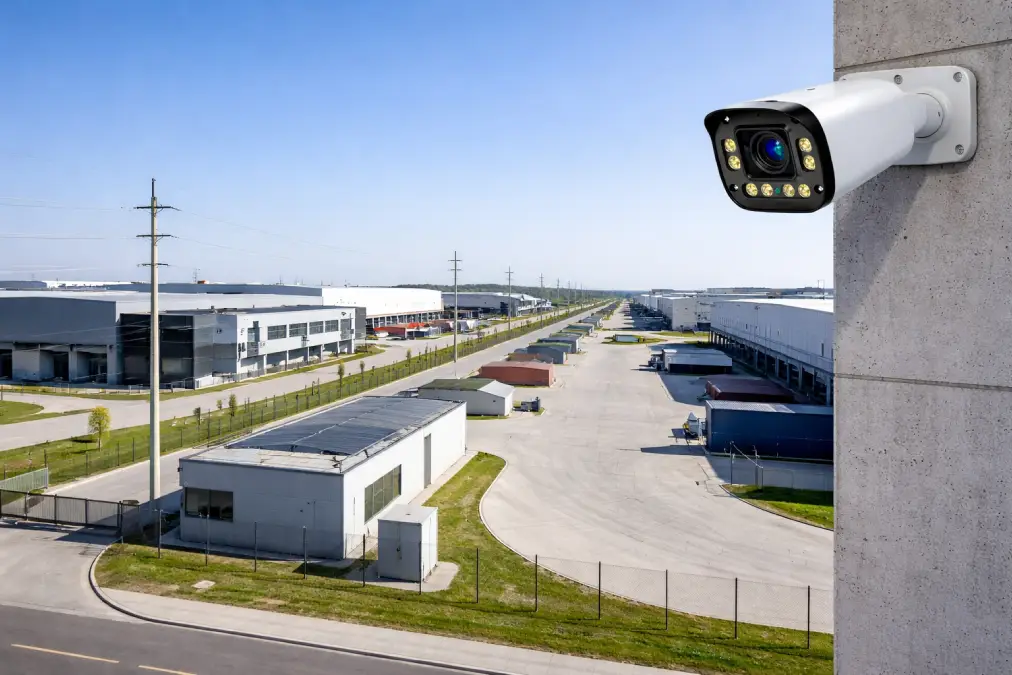
Thermal cameras spot intruders by detecting minute heat variations rather than relying on visible light, ensuring reliable perimeter security in total darkness and harsh weather.
Translating Heat Signatures into Visible Data
Thermal cameras operate in the long-wave infrared spectrum to capture minor temperature variations across a monitored area. Because they read heat instead of reflecting visible light, these systems require distinct hardware configurations.
- Specialized Optics: Lenses use materials like germanium to allow infrared energy to pass directly into the sensors, whereas standard glass blocks it entirely.
- Data Conversion: The internal system processes raw infrared data and converts it into visible thermograms.
- High-Contrast Display: Warm human bodies register prominently, displaying as bright spots against cooler environmental backgrounds.
Identifying Threats in Challenging Environments
This technology excels in conditions that blind standard cameras. Security operators rely on thermal sensors to detect intruders in total darkness without needing artificial illuminators.
- Visual Obstruction Penetration: Thermal sensors cut through smoke, light fog, dust, and dense foliage to maintain visibility over large perimeters.
- AI Threat Classification: Modern security networks pair thermal imaging with AI analytics to accurately classify incoming threats based on heat patterns and movement.
- False Alarm Reduction: The system automatically ignores non-threats like passing animals or wind-blown branches, keeping security responses focused on actual human intrusion.
By filtering out environmental noise, thermal networks deliver a highly accurate perimeter defense system that operates continuously under any weather condition.
Dual-Spectrum: Visual + Thermal Monitoring
Dual-spectrum cameras fuse thermal heat detection with visible-light sensors, ensuring continuous target tracking and exact temperature analysis across demanding industrial and security perimeters.
Core Technologies in Dual-Spectrum Cameras
As of 2026, dual-spectrum systems set the standard for high-risk surveillance by combining thermal sensors for heat-based detection with visible-light lenses. This setup provides detailed visual context in low-visibility conditions. Operators no longer need to switch between separate devices; they receive a single, data-rich video stream.
- High-Resolution Pairing: Security manufacturers pair 4K visible-light sensors with 640×512 thermal resolution to guarantee reliable 24/7 operational capability.
- Algorithmic Fusion: Advanced fusion algorithms overlay thermal and visible data to track targets precisely and analyze temperatures within a +/- 0.5°C margin of error.
- Extreme Durability: Rugged pan-tilt-zoom mechanisms feature IP66/IP67 ratings, allowing devices to function continuously in severe environments ranging from -40°C to +70°C.
Security and Industrial Applications
Thermal imaging easily penetrates fog, smoke, snow, and total darkness. This physical advantage ensures continuous perimeter monitoring exactly when visible-light feeds fail. Remote video monitoring operators rely heavily on these simultaneous visual and thermal feeds to verify incidents immediately and deploy resources efficiently.
- False Alarm Reduction: AI-driven analytics filter environmental noise like moving foliage and shadows, actively lowering false alarm rates for security operations centers.
- Predictive Maintenance: Industrial facilities utilize non-contact temperature measurement to identify failing components and prevent unexpected mechanical downtime.
- Process Control: Thermal data integrated with optical video provides accurate, high-temperature process control for manufacturing plants and energy infrastructure.
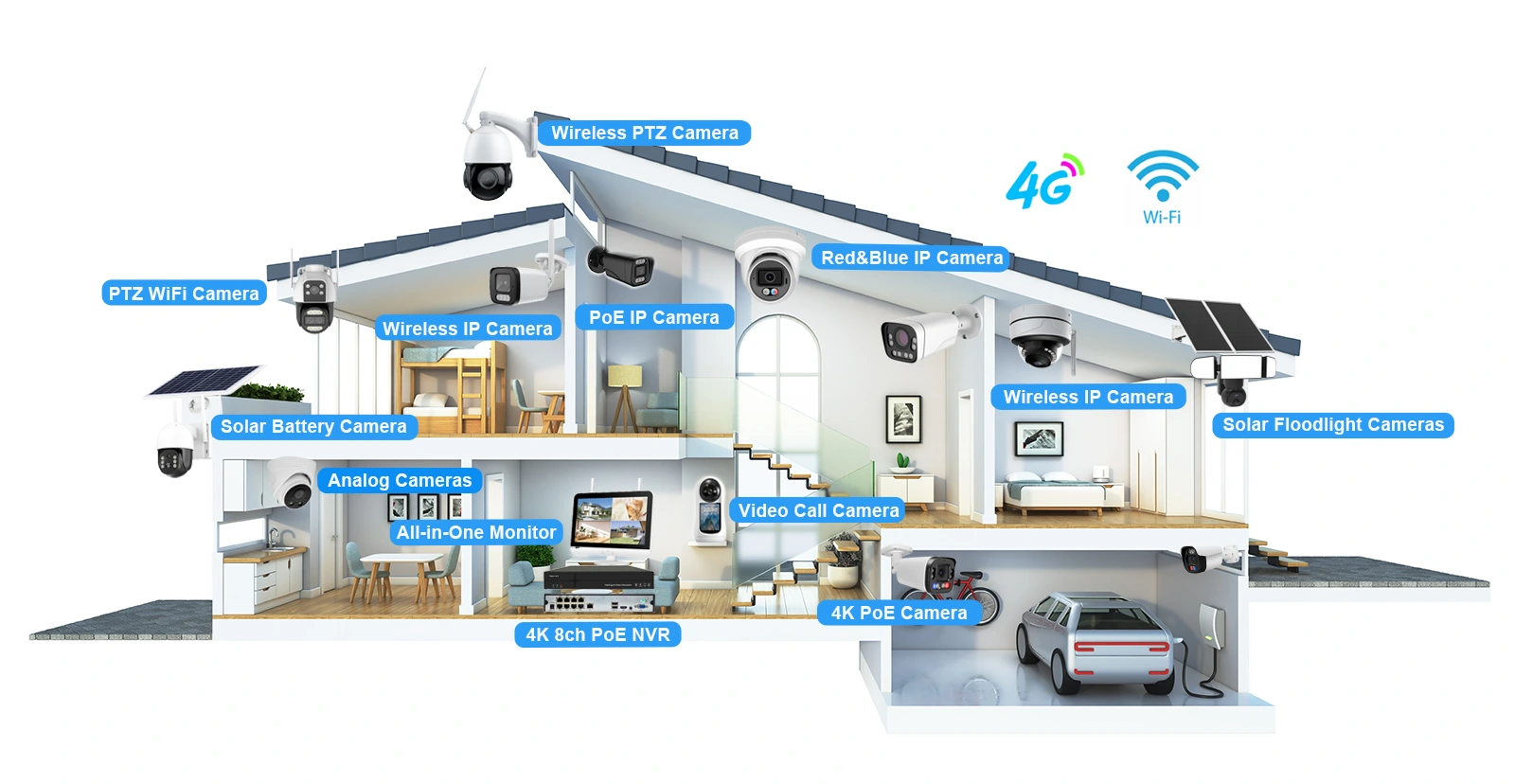
One-Stop Security Camera Solutions for B2B Wholesalers
Early Fire Detection and Overheat Alerts
Thermal security cameras identify surface temperature anomalies and trigger alerts before visible smoke or flames appear, providing crucial response time for high-risk industrial facilities.
Core Detection Mechanisms and AI Analytics
Thermal cameras operate on infrared imaging principles, sensing heat signatures from rising material temperatures long before visible smoke or flames ignite. This capability shifts fire safety from a reactive response to a proactive strategy.
- Heat threshold monitoring: Identifies minor temperature variations and triggers alerts when surfaces exceed predefined limits.
- Hotspot pinpointing: Delivers precise locations and live temperature updates at rapid frame rates up to 125 Hz.
- AI-powered analytics: Distinguishes actual fire risks from harmless environmental disturbances within seconds to cut down false alarms.
Continuous Monitoring and Alert Capabilities
Security networks rely on non-stop monitoring to detect abnormal heat buildup in high-risk zones, such as waste facilities and battery charging stations. By tracking thermal data continuously, these systems prevent minor heat variations from escalating into major hazards.
- Automated shutdowns: Cameras trigger immediate shutdown operations upon spotting a severe thermal anomaly.
- Bi-spectrum imaging: Models combine thermal data with standard optical video, granting security teams immediate visual verification of the scene.
- System integration: The hardware runs autonomously around the clock and links directly into existing alarm panels and suppression systems.
Perimeter Protection in Zero Visibility (Fog/Smoke)
Thermal sensors secure perimeters in total darkness, fog, or smoke by detecting heat signatures rather than light, ensuring continuous threat detection when traditional visible cameras fail entirely.
Thermal Imaging Mechanics in Fog and Smoke
Traditional security cameras become blind the moment dense fog or thick smoke rolls in. Thermal cameras solve this by ignoring visible light entirely. Their infrared sensors capture long-wave (LWIR) or mid-wave (MWIR) infrared radiation emitted directly from heat sources like human bodies or vehicle engines.
Different obscurants interact with thermal waves in specific ways. Smoke completely blocks visible light, but infrared waves easily pass through the particulate matter. Security personnel rely on this mechanic to track intruders attempting to use dense smoke screens for cover.
Fog presents a different challenge because water droplets scatter both light and infrared waves. But fog scatters infrared radiation far less severely than visible light. This reduced scattering makes LWIR sensors highly effective for monitoring outdoor perimeters even during heavy fog events.
Detection Capabilities and Deployment Limits
Modern thermal sensors push perimeter detection ranges to extremes. High-end long-range units detect human and vehicle heat signatures up to 2.5 miles away. We couple these sensors with deep learning analytics to instantly classify the type of intrusion and trigger automated alarms.
A standard industry practice is deploying a hybrid approach. Security teams pair thermal sensors with standard IP cameras. The thermal device spots the active threat through visual obscurants and immediately cues the IP camera to pan, tilt, and zoom for visual confirmation if lighting allows.
While thermal technology dominates low-visibility conditions, operators must account for its physical deployment limits:
- Sensor saturation: Extreme humidity or thick smoke combined with high ambient background heat can overwhelm the detector.
- Physical barriers: Thermal waves cannot penetrate solid walls, glass, or heavy structures.
- Identification limits: The system displays heat blobs and silhouettes, meaning it cannot identify specific faces or read license plates.
AI Integration: Human/Vehicle Filtering
AI integration in thermal cameras processes heat signatures at the edge, accurately distinguishing targets from environmental noise to cut false alarms in zero-visibility conditions.
Edge Processing and Object Classification
Modern thermal cameras process data locally rather than relying on external hardware. Edge-based AI algorithms analyze heat signatures directly on the camera, delivering immediate threat evaluation without server delays.
Manufacturers train these machine learning models specifically on thermal behaviors to maintain high accuracy across different ranges. This targeted training enables the system to reliably differentiate humans and vehicles from animals, moving debris, and normal background environmental heat.
False Alarm Reduction in Complex Environments
Smart filtering technology ignores visual disruptions and operates reliably in total darkness, heavy smoke, dust, and fog. Security teams use these intelligent thermal cameras to protect vast perimeters and critical infrastructure from physical threats while keeping false alarm volumes remarkably low.
This technology is rapidly expanding beyond static perimeter defense. By 2026, commercial vehicle systems will increasingly leverage this edge AI to pinpoint pedestrians and identify unseen obstacles during night driving.
Selecting the Right Thermal Lens Focal Length
Your focal length choice dictates what you see and how far you see it. Match the lens to your site size and required detection distance to ensure total coverage.
Focal Length Categories and Field of View
Security camera focal lengths fall into three main groups: wide-angle, standard, and telephoto. The field of view directly dictates your measurable range. A larger angle captures more area, while a smaller angle resolves distant details.
- Wide-angle lenses: Provide a 45-degree or higher field of view to monitor large areas with limited installation space.
- Standard lenses: Offer an approximate 25-degree field of view to balance area coverage and detail capture.
- Telephoto lenses: Feature a narrow 6-degree to 15-degree field of view, enabling users to detect objects at greater distances with high detail.
Lens Types and Spatial Resolution Options
Users select fixed focal length lenses for static security scenes or variable focal length lenses to adjust magnification dynamically. The optimal setup aligns the focal length choice with specific security needs, deploying wide-angle lenses for perimeters and telephoto lenses for long-distance identification.
- Spatial resolution: Heavily impacts detection capability. Lower spatial resolution values allow cameras to capture finer details at long ranges.
- Aperture (f-number): Lower f-numbers let more infrared radiation reach the sensor, improving camera performance in low thermal contrast outdoor environments.
- Environmental durability: Buyers must prioritize ruggedized, waterproof housings and anti-reflective coatings for exterior installations.
Industrial Use Cases: Power Plants and Refineries
Thermal security cameras shift industrial maintenance from reactive to predictive, saving facilities up to 40% in operational costs while keeping personnel out of hazardous zones.
| Facility Type | Целевое приложение | Operational Outcome |
|---|---|---|
| Power Plants | Coal Bunkers & Conveyors | Prevents spontaneous combustion and belt tears |
| Power Plants | Electrical Systems | Identifies overheating components before failure |
| Refineries | Hazardous Areas | Protects personnel via remote visual inspections |
| Refineries | Pipelines & Flare Stacks | Detects leaks continuously without halting production |
Power Plant Equipment and Electrical Systems
Power generation facilities operate under intense heat and high-voltage conditions. Relying purely on scheduled physical inspections leaves blind spots where equipment fails unexpectedly. Thermal imaging bridges this gap by continuously spotting invisible heat anomalies before they trigger forced outages.
- Material handling safety: Continuous temperature monitoring of coal bunkers and conveyor belts prevents spontaneous combustion and early-stage mechanical tears.
- Boiler efficiency: Operators track thermal integrity on boiler outer walls to identify massive heat loss and deteriorating insulation.
- Electrical fault prevention: Technicians inspect wiring systems, transformers, and circuit breakers for hotspots, avoiding catastrophic electrical breakdowns and resulting fires.
Refinery Safety and Equipment Inspections
Refineries process highly volatile materials under extreme pressure. Keeping production running continuously while ensuring worker safety requires round-the-clock equipment surveillance. Thermal cameras handle both priorities without requiring system shutdowns or site entry.
- Personnel protection: Intrinsically safe cameras limit physical exposure to hazardous operational areas, keeping human workers out of blast or leak zones.
- Uninterrupted monitoring: Real-time flare stack and pipeline leak detection runs continuously, pulling accurate data without disrupting regular production workflows.
- Cost reduction: Predictive maintenance programs using thermal data save facilities 30-40% in operational costs compared to traditional reactive repairs.
Часто задаваемые вопросы
How do thermal cameras work?
Thermal security cameras detect long-wave infrared (LWIR) radiation emitted by objects. Instead of capturing visible light, they use specialized sensors like microbolometers and germanium lenses to measure temperature differences. The camera’s processor translates these heat signatures into a visible thermal image, highlighting warm objects like humans or vehicles against cooler backgrounds. This process allows them to operate effectively in darkness, fog, or smoke.
Can they see in total darkness?
Yes, thermal cameras operate entirely independently of visible light. They map heat emitted by living beings, vehicles, and equipment rather than relying on ambient light or infrared LEDs. This allows them to produce clear images in pitch-black conditions, dense smoke, and light fog, making them ideal for nighttime perimeter monitoring without requiring any external illumination.
Which industries are they best for?
Multiple industries rely on thermal technology for safety and security. The power and energy sector uses them to spot overheating equipment and prevent outages. Manufacturing and industrial plants monitor machinery to catch anomalies early and avoid downtime. They also serve critical infrastructure, logistics hubs, and data centers by providing 24/7 perimeter surveillance and detecting unauthorized access in low-visibility conditions.
What’s the difference from normal cameras?
Standard cameras capture reflected visible light to produce detailed, full-color images, but they struggle in low-light environments without external illumination. Thermal cameras detect invisible infrared radiation to generate high-contrast heat maps. While normal cameras capture fine details like facial features or license plates, thermal cameras excel at spotting hidden threats, operating in zero light, and minimizing false alarms by recognizing distinct heat signatures.
Can they link with alarms?
Yes, you can integrate thermal cameras directly with existing alarm setups. They use onboard video analytics to detect specific events, such as a person crossing a virtual tripwire or a sudden temperature spike indicating a fire risk. When the system detects a verified heat signature, it triggers automated alerts and activates relays, significantly reducing false alarms caused by moving shadows, weather, or visual clutter.
Do you support project customization?
We customize deployments to fit specific site requirements. Security teams can adjust camera placement, lens options, and fields of view to match perimeter layouts and environmental conditions. We also configure detection analytics, thermal palettes, and sensitivity thresholds to focus on relevant threats, whether monitoring a long fence line for intruders or inspecting industrial equipment for electrical hotspots.
Заключительные мысли
Relying on standard visible-light cameras leaves your industrial perimeter blind in bad weather and exposes critical infrastructure to undetected equipment fires. Integrating dual-spectrum thermal cameras with edge AI eliminates costly false alarms and shifts your facility from reactive repairs to predictive maintenance. Settling for inferior surveillance risks operational shutdowns and security breaches that you can easily prevent.
Stop guessing on perimeter protection and verify the hardware directly on your own site. We recommend a technical consultation to match exact thermal focal lengths and AI detection thresholds to your specific facility layout. Contact our engineering team to discuss project customization and lock in a surveillance network that operates reliably in any condition.





 Russian
  English
  Spanish