Ir al contenido
Evaluating do solar cameras work in winter is a critical step to ensure your off-grid surveillance network survives sub-zero temperatures rather than collapsing overnight. Standard lithium-ion batteries lose up to 80% of their usable capacity the moment temperatures hit freezing, creating severe operational liabilities and risking irreversible hardware damage from lithium plating.
This analysis benchmarks cold-climate hardware against extreme environmental stress. We evaluate battery management parameters, IP66 weatherproofing baselines, and steep panel tilt adjustments to help you maintain continuous power generation and prevent winter equipment failure.
The Science of Batteries in Cold Temperatures
Cold temperatures thicken electrolytes and increase internal resistance in lithium-ion batteries, causing severe capacity drops and risking permanent damage from lithium plating when charged below freezing.
How Freezing Temperatures Slow Battery Chemistry
Standard lithium-ion batteries rely on liquid electrolytes to move ions and generate power. When temperatures drop, these liquids thicken or even crystallize. This physical change effectively blocks ion movement and drives up the internal resistance of the cell. As a result, standard lithium-ion batteries lose 70% to 80% of their usable capacity the moment temperatures hit 0°C (32°F). The battery is not necessarily empty; the power is simply trapped behind sluggish chemical reactions.
Capacity Loss and the Danger of Lithium Plating
A temporary capacity drop is a manageable physics problem, but charging a battery in sub-zero conditions introduces severe hardware risks. Pushing a charge into a freezing solar camera battery forces lithium ions to deposit as solid metal on the anode rather than absorbing naturally into the material. Industry professionals call this process lithium plating. This chemical reaction causes permanent capacity degradation and creates internal structural cracks inside the battery cell. Once lithium plating occurs, the damage is irreversible and drastically shortens the operational lifespan of the device.
Snow Accumulation: The Enemy of Solar Panels
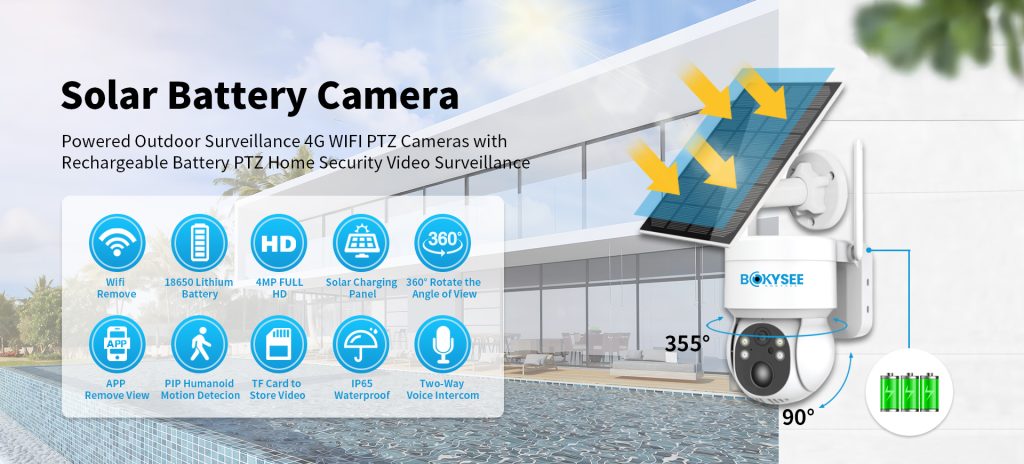
Snow reduces immediate electricity capture and adds structural weight, but proper panel angles and natural melting limit annual energy loss to just 3% in winter climates.
Physical Impact of Snow Coverage
Accumulated snow directly blocks sunlight from reaching your photovoltaic cells, which stops immediate electricity capture. Beyond the power loss, heavy snow buildup places physical stress on the structural integrity of the entire solar array.
You rarely lose all power during a light winter storm. Light penetrates up to three inches of snow, allowing the system to maintain partial energy generation. While complete coverage shuts down production entirely, the total annual energy loss averages a surprisingly low 3% for systems operating in snowy climates.
Natural Snow Shedding Mechanisms
You rarely need to clear panels manually. Solar arrays feature smooth glass surfaces that create minimal friction, actively resisting snow accumulation from the start.
When sunlight penetrates thin snow layers, it heats the panels from the inside out. This internal heating accelerates the melting process. Combine this thermal action with appropriately angled installations, and melting snow simply slides off naturally within hours or days of a storm.
Scale Your Security Business With Custom CCTV
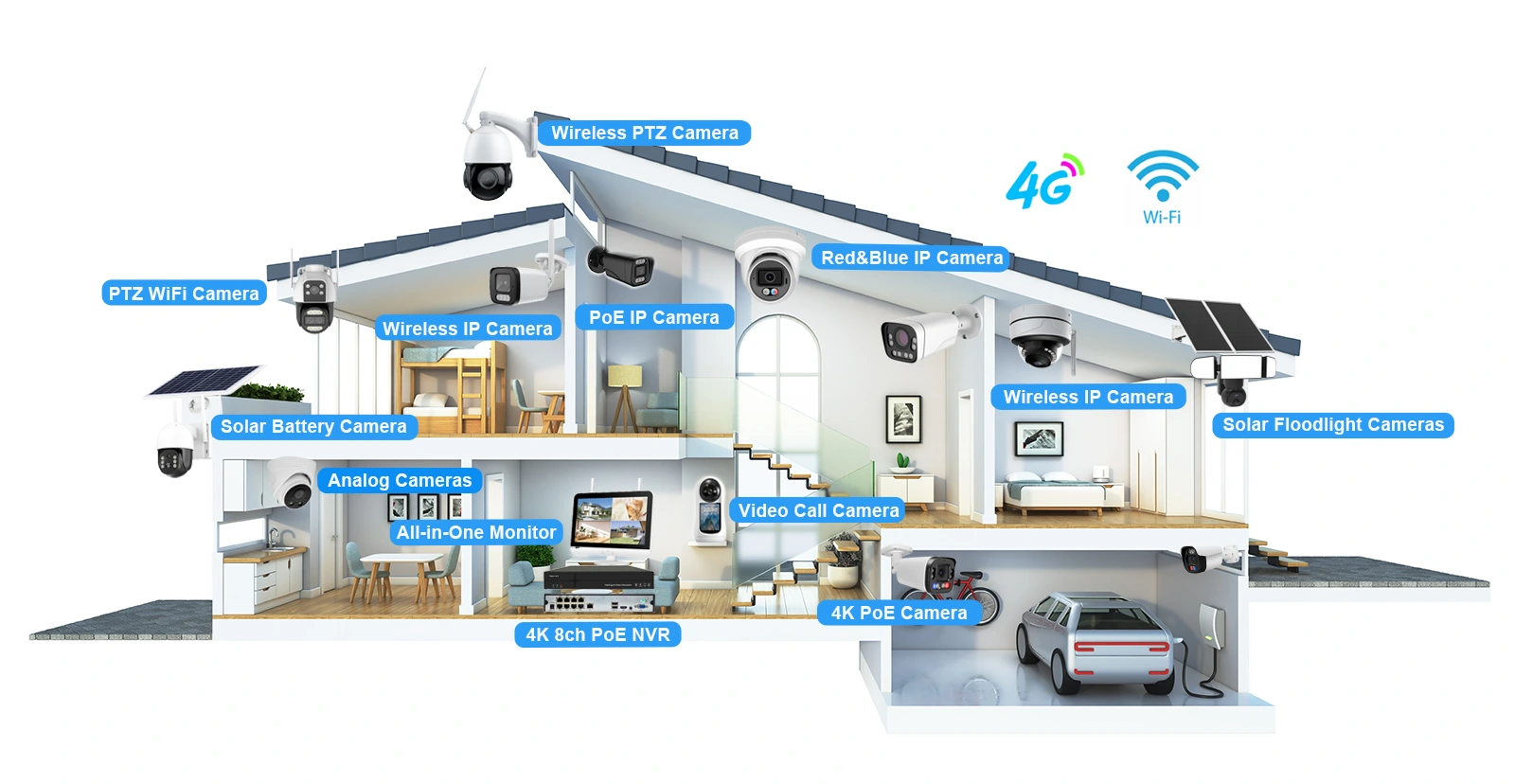
Dealing with Shorter Daylight Hours
Winter’s challenge isn’t the cold—it’s the lack of light. Adapting panel angles and optimizing camera settings prevents system failure during short, overcast days.
How Winter Sun Angles Affect Energy Collection
Cold temperatures actually boost photovoltaic cell efficiency. The real bottleneck during winter is light availability. As the sun drops lower in the sky, it reduces the direct light intensity hitting your solar panels. This lower trajectory, combined with shorter daylight periods, drastically shrinks your total charging window. You have to maximize every available hour of sun to keep systems online.
Standard camera setups usually rely on summer sun trajectories. When winter hits, these configurations capture significantly less energy. A system that runs perfectly in July will drain quickly by December if you leave it in its default position.
Adjusting Solar Panels and Settings for Winter
You can counter shorter days by making targeted adjustments to your hardware and software to capture more light and burn less power:
- Panel Tilt: Tilt solar panels at a steeper angle—adding about 15 degrees to your local latitude—to catch the low-hanging winter sun.
- Orientation: Orient panels to face true south in the Northern Hemisphere and shift their position throughout the season to follow the light.
- Configuración de energía: Activate power-saving modes in your camera settings to minimize energy drain during short, overcast days.
- Hardware Sizing: Install oversized solar panels, up to double the size needed for summer, to create an energy buffer for extended low-light periods.
Winter Battery Maintenance & Heater Modules
Cold weather slows battery chemistry and slashes solar input. Surviving winter requires aggressive power conservation, steep panel angles, and a robust Battery Management System.
Battery Power Conservation and Health
Sub-zero temperatures force lithium-ion batteries to work harder, thickening electrolytes and slowing the chemical reactions that store and release energy. If you let a camera drain completely in freezing conditions, you risk permanent capacity loss. You need to actively manage power consumption to bridge the gap during long winter nights and overcast days.
- Establish a baseline: Charge the camera fully before cold weather sets in to establish a strong starting baseline.
- Optimize modes: Activate power-saving modes and lower motion detection sensitivity to minimize daily energy drain.
- Limit background draw: Adjust connectivity settings to reduce continuous power draw during extended freezing periods.
Solar Panel and System Configurations for Winter
A solar setup dialed in for summer peak sun will fail in January. The winter sun sits lower in the sky, drastically reducing the light intensity that hits standard installations. You have to physically adapt the hardware placement to capture scarce sunlight while protecting the camera body from extreme environmental stress.
- Steep positioning: Mount solar panels at steep 45-to-60-degree angles facing true south to capture low sun and naturally shed snow.
- Surface maintenance: Apply hydrophobic coatings to panel surfaces and regularly clear ice buildup to maintain optimal charging inputs.
- Hardware shielding: Install cameras under eaves in regions dropping below -20°C to shield equipment from harsh wind and direct snow exposure.
- Smart regulation: Depend on an advanced Battery Management System (BMS) to regulate cold-weather charging and protect internal cell chemistry.
IP Ratings: Why Weatherproofing is Essential
IP ratings dictate whether your solar camera survives winter. A baseline of IP66 stops moisture and dust from destroying internal electronics during rapid freezing and thawing cycles.
Understanding IP Ratings for Winter Security
To guarantee continuous operation in harsh climates, you need to understand what the numbers on an Ingress Protection rating actually mean. The first digit focuses on solid particles, and it must be a 6. This ensures complete dust-tight protection against abrasive winter winds. The second digit measures water resistance, which is where cold-weather survival truly happens.
- IP65: Handles heavy rain and standard melting snow without letting moisture reach internal parts.
- IP66: Serves as the ideal baseline for outdoor solar cameras to resist torrential downpours and sudden ice melt.
- IP67: Provides maximum durability, surviving extreme flooding from snowmelt and ensuring operation through severe cold.
Protecting Solar Components from Snow and Ice
Winter weather exposes sensitive electronics to rapid temperature swings that create internal condensation. Tight weather seals stop this freezing moisture from damaging delicate internal components. If housings lack adequate IP ratings, water ingress quickly destroys exposed battery packs and solar panels.
Equipment design works alongside these weather ratings. Pairing steep solar panel angles with high IP ratings encourages natural snow shedding and prevents heavy ice accumulation. Recognizing the demands of cold climates, major security brands equip their 2026 outdoor models with at least IP66 ratings to maintain reliable power delivery during sub-zero storms.
Best Placement for Maximum Winter Sun
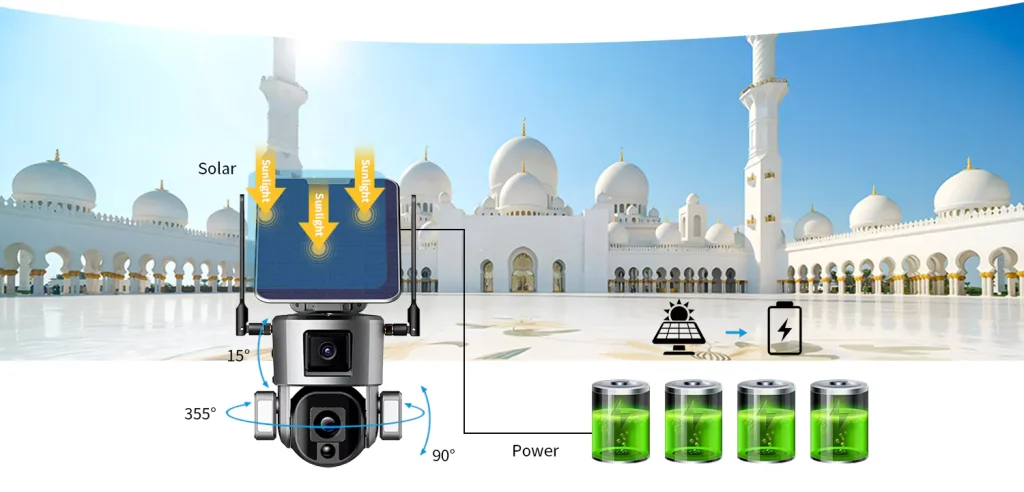
Position solar panels true south in the Northern Hemisphere and increase tilt angles by 15 degrees. Ground mounts and hydrophobic coatings ensure continuous winter power generation.
Optimal Compass Direction and Tilt Angles
Winter brings shorter days and a low sun trajectory. To capture direct sunlight, align your solar equipment precisely based on your location. Point panels true south in the Northern Hemisphere and true north in the Southern Hemisphere. Use a solar pathfinder tool to find the exact true orientation, as magnetic compass readings often introduce alignment errors.
You must adjust the physical tilt of your equipment to maximize energy collection and handle local weather conditions.
- Standard Winter Tilt: Set the panel tilt to your local latitude plus 10 to 15 degrees to match the low winter sun path.
- Snow-Prone Regions: Maintain a steep 45 to 60-degree angle to encourage snow to slide right off the surface without manual intervention.
Managing Shadows and Snow Accumulation
The low winter sun casts long shadows that stretch much further than in the summer months. Obstacles that sit clear of your equipment in July easily block solar panels in December. Trim nearby branches and bushes before the first freeze to maintain a clear line of sight to the sky.
Hardware location and protective treatments heavily influence site uptime and maintenance demands.
- Mounting Strategy: Use ground-mounted setups to allow quick seasonal tilt adjustments and easier manual snow removal.
- Surface Protection: Apply hydrophobic coatings to camera panels in extreme climates to prevent ice and heavy snow buildup.
Features to Look for in a Cold-Climate Camera
Operating solar cameras in freezing temperatures requires specific hardware. Prioritize low-temperature ratings, robust weather sealing, and cold-optimized battery systems to prevent winter shutdowns.
| Característica | Specification Target | Winter Benefit |
|---|---|---|
| Temperature Rating | 14°F (-10°C) or lower | Prevents system shutdowns during ice events |
| Weather Sealing | IP53+ (Magnesium alloy) | Blocks moisture and snow from internal sensors |
| Battery Design | Swappable high-capacity | Counters 30% faster drain in freezing temps |
| Weight Profile | Under 600g | Secures mounting against high winter winds |
Weather Resistance and Temperature Ratings
Standard cameras fail when temperatures drop below freezing. You need specialized equipment designed to handle ice, snow, and rapid temperature shifts without exposing the internal components to moisture.
- Low-Temperature Operations: Prioritize cameras rated for 14°F (-10°C) or colder to prevent system shutdowns when ice forms on solar panels.
- Structural Weatherproofing: Choose magnesium alloy bodies with IP53 or higher weather sealing to block snow and stop moisture from reaching the sensor.
- Condensation Control: Verify the humidity tolerance handles extreme temperature shifts to resist frost buildup on camera lenses.
Power Management and Hardware Durability
Cold weather fundamentally alters battery chemistry and introduces harsh physical conditions. Your hardware must account for faster power drain, severe wind chill, and the need to protect local data files.
- Battery Systems: Select models with swappable high-capacity batteries because freezing temperatures drain battery life up to 30% faster.
- Wind Resistance: Mount lightweight camera bodies under 600g with built-in stabilization to capture steady footage during strong winter winds.
- Data and Optics: Protect video data using extreme-weather memory cards and maintain clear optics with lens heaters or anti-fog wipes.
Quick Fixes for Winter Charging Issues
Adjusting panel angles, clearing snow immediately, and managing battery settings keeps solar cameras online through harsh winters without requiring complete system overhauls.
Adjust Panel Position and Clear Snow
Maximizing winter sunlight means fighting the low sun angle and accumulation directly. Small physical adjustments to your solar setup restore lost charging capacity.
- Optimize the angle: Point solar panels true south. Increase the tilt angle to 30–45 degrees or add 15 degrees to your local latitude. This steep angle catches the low winter sun and forces snow to slide off.
- Clear buildup instantly: Wipe away frost, ice, and snow with a soft cloth right after it accumulates. Thin frost blocks charging entirely. Apply non-stick solar panel coatings to stop ice from sticking to the glass.
- Reposition for extreme cold: If temperatures drop below -20°C, relocate panels under eaves or onto sun-facing walls to cut down on wind and snow exposure.
Manage Battery Temperature and Power Settings
Cold weather slows battery chemistry and drains reserves faster. You need to reduce power draw and protect the cells from freezing temperatures to keep the system running.
- Warm stalled batteries: Bring batteries indoors to warm them above 0°C if the cold stalls the charging process. Charging resumes automatically once the core temperature rises.
- Optimize software settings: Charge batteries to 100% before winter hits. Turn on power-saving modes like ‘Optimal Battery Life’ to balance motion detection needs with lower power drain.
- Install backup hardware: Add 5W or 10W backup solar panels paired with external lithium battery packs. This setup offsets heavy cold-weather power drain and reduces manual maintenance trips.
Preguntas frecuentes
Can solar cameras work in winter?
Yes. They function effectively with the right setup and maintenance. Shorter days, cold temperatures, and snow accumulation present challenges, but optimizing panel placement, cleaning equipment, and activating power-saving modes maintains reliable performance. Major brands engineer these cameras to operate stably right through freezing conditions.
How much does low temperature affect them?
Cold weather primarily impacts battery capacity and charging ability. At 32°F (0°C), capacity drops 10-20%. At -4°F (-20°C), you can expect losses up to 50%. Smart battery management systems automatically pause charging below freezing to prevent permanent damage, resuming the charge cycle once internal temperatures rise.
How should I maintain them in snow?
Regularly wipe snow, ice, and frost from the solar panels with a soft cloth. Even a thin layer drastically cuts power output. To minimize manual cleaning, mount the panels at a steep angle to let snow slide off naturally, and apply a hydrophobic coating to the glass.
What installation angle is best?
The ideal winter angle in northern latitudes falls between 50 and 65 degrees, facing true south. A simple formula is to take your local latitude and add 15 degrees. This steeper tilt catches the low winter sun perfectly and prevents snow buildup from covering the solar cells.
How much does night runtime drop?
Night runtime can drop by 50% or more. Shorter charging hours and cold-induced battery drain cause this reduction. To minimize the impact, upgrade to an oversized solar panel, switch the camera to a low-power photo mode, and reduce motion sensitivity to stretch battery life through long winter nights.
Are there alternatives?
If extreme winter weather renders standard solar setups unreliable, upgrade to models with low-temperature lithium cells or internal heating elements. If sub-zero temperatures persist, switching to a wired security camera is the best way to completely bypass battery drain and solar charging limitations.
Reflexiones finales
While generic solar cameras offer lower upfront costs, deploying purpose-built, cold-rated hardware is the only way to safeguard your projects against complete winter failure. Ignoring baseline specs like IP66 sealing and advanced battery management directly exposes your clients to frozen power reserves and irreversible lithium plating. Sourcing winter-ready equipment protects your profit margins and guarantees continuous site security when temperatures plummet.
Don’t guess on cold-weather reliability—verify it in the field. We recommend starting with a sample order to test our low-temperature battery performance and durable hardware firsthand. Contact our team to discuss exact OEM specifications and secure security systems that thrive in extreme climates.







 Spanish
  English
  Russian