Ir al contenido
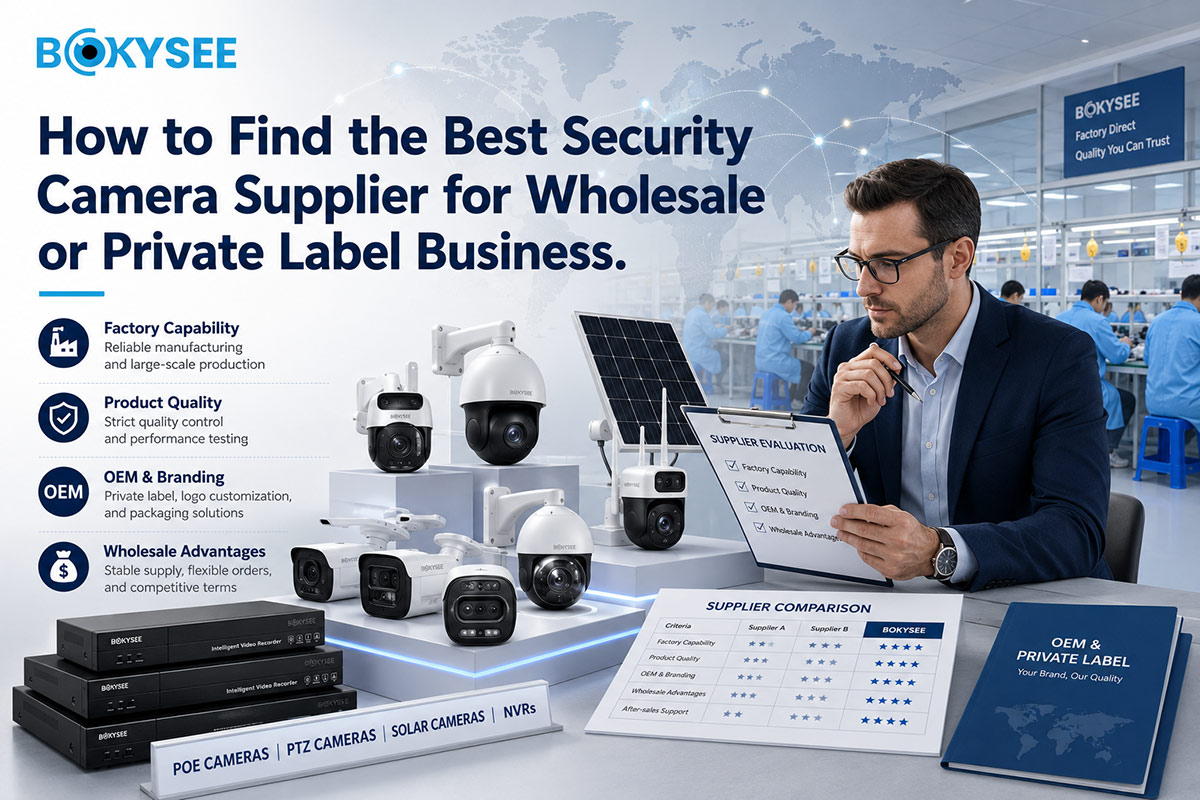
What Defines the Best Security Camera Supplier?
The best security camera supplier is the company that can deliver repeatable product quality, clear technical information, suitable pricing and responsive support throughout samples, bulk production and after-sales—not simply the supplier with the lowest quotation.
For an importer, wholesaler, distributor, installer or private-label brand, a cheap first order can become expensive if the bulk cameras use different components, the firmware is unstable or replacement parts are unavailable. Supplier comparison should therefore cover the complete purchasing lifecycle.
Start with Your Buyer Type and Market Position
A distributor building inventory has different needs from a system integrator buying for one project. An e-commerce seller may prioritize simple WiFi models and retail packaging, while a construction contractor may require PoE cameras, NVR storage calculations and stable delivery dates.
Before requesting prices, define:
· Your customer group: installers, retailers, wholesalers, commercial projects or residential users
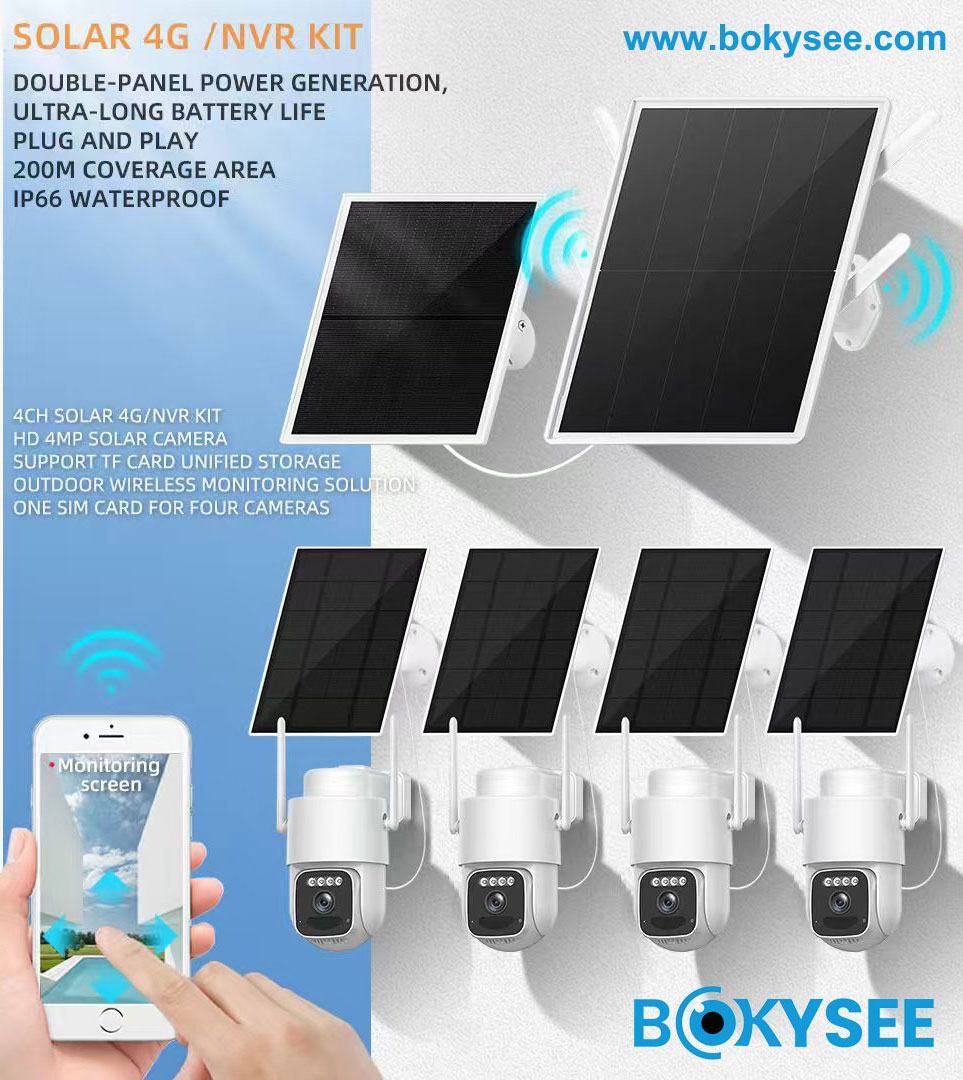
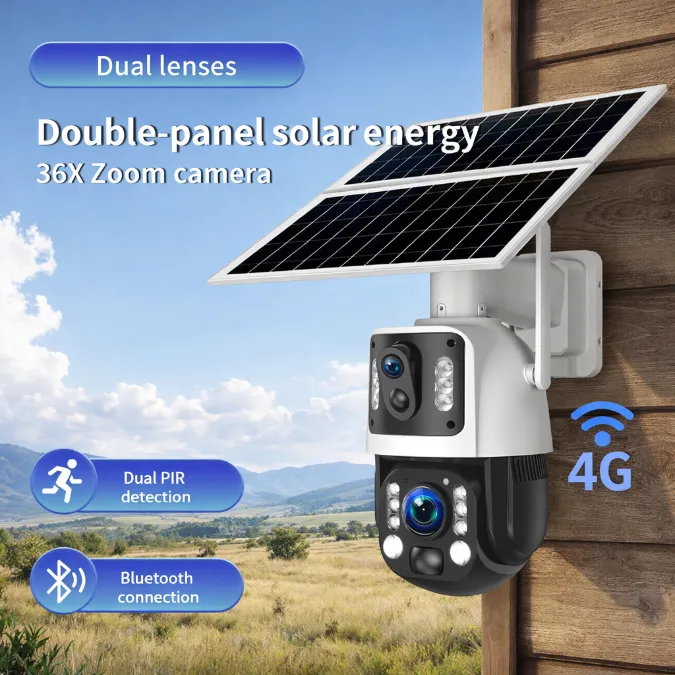
· Target products: PoE, WiFi, 4G solar, PTZ, NVR or complete kits
· Expected quantity per model
· Required certifications
· Branding level
· Target selling price
· Main quality problems experienced with current suppliers
This information helps a factory recommend the right platform rather than sending an unfocused catalogue.
Compare Product Breadth and Technical Depth
A strong B2B supplier should offer enough product breadth to support account growth. Bokysee positions itself as a one-stop OEM and ODM security camera manufacturer with IP cameras, wireless cameras, solar battery cameras, PTZ cameras, NVRs and CCTV kits.
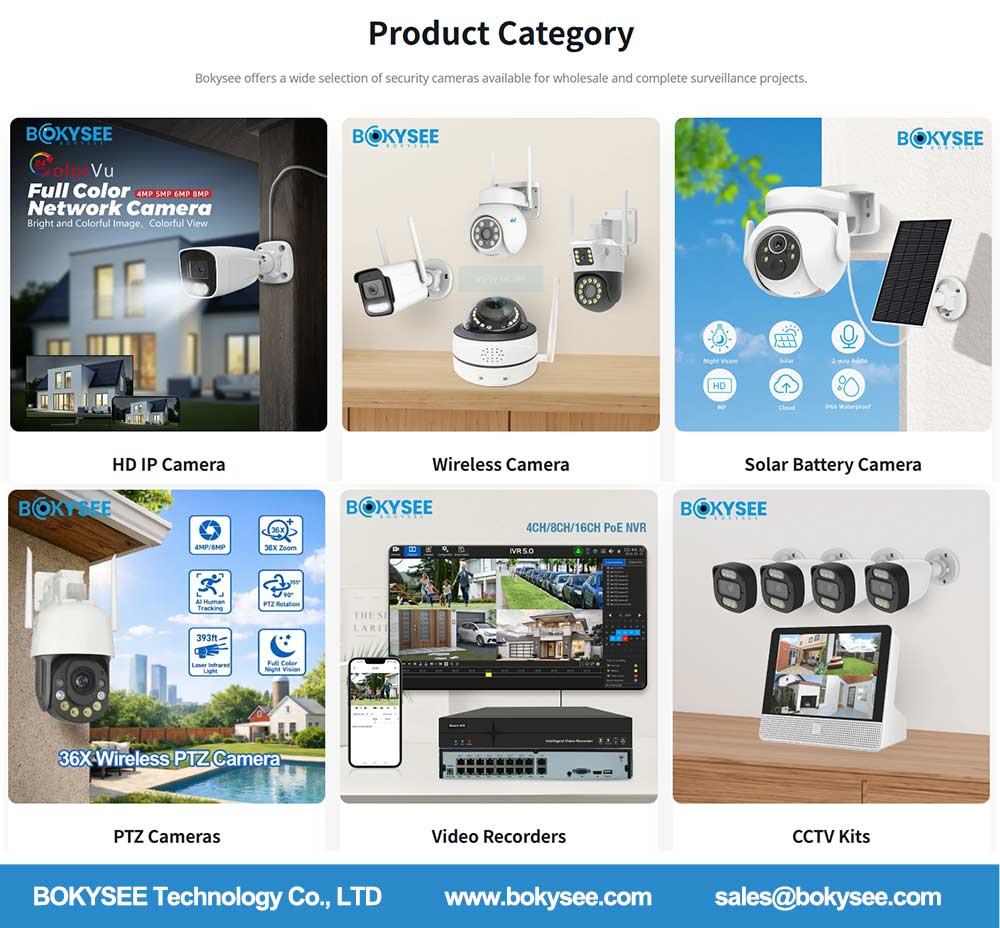
However, a broad catalogue alone is not enough. Ask whether the supplier understands the differences between chipsets, sensors, lenses, night-vision boards, housing structures and recorder bandwidth. A supplier that cannot explain why two 5MP cameras have different prices may be acting only as a reseller.
For a full overview, review Bokysee's security camera product categories and its CCTV manufacturer product range guide. These pages help buyers map product types to residential buildings, commercial facilities, warehouses, farms, construction sites and industrial infrastructure.
Verify Factory and Quality-Control Capability
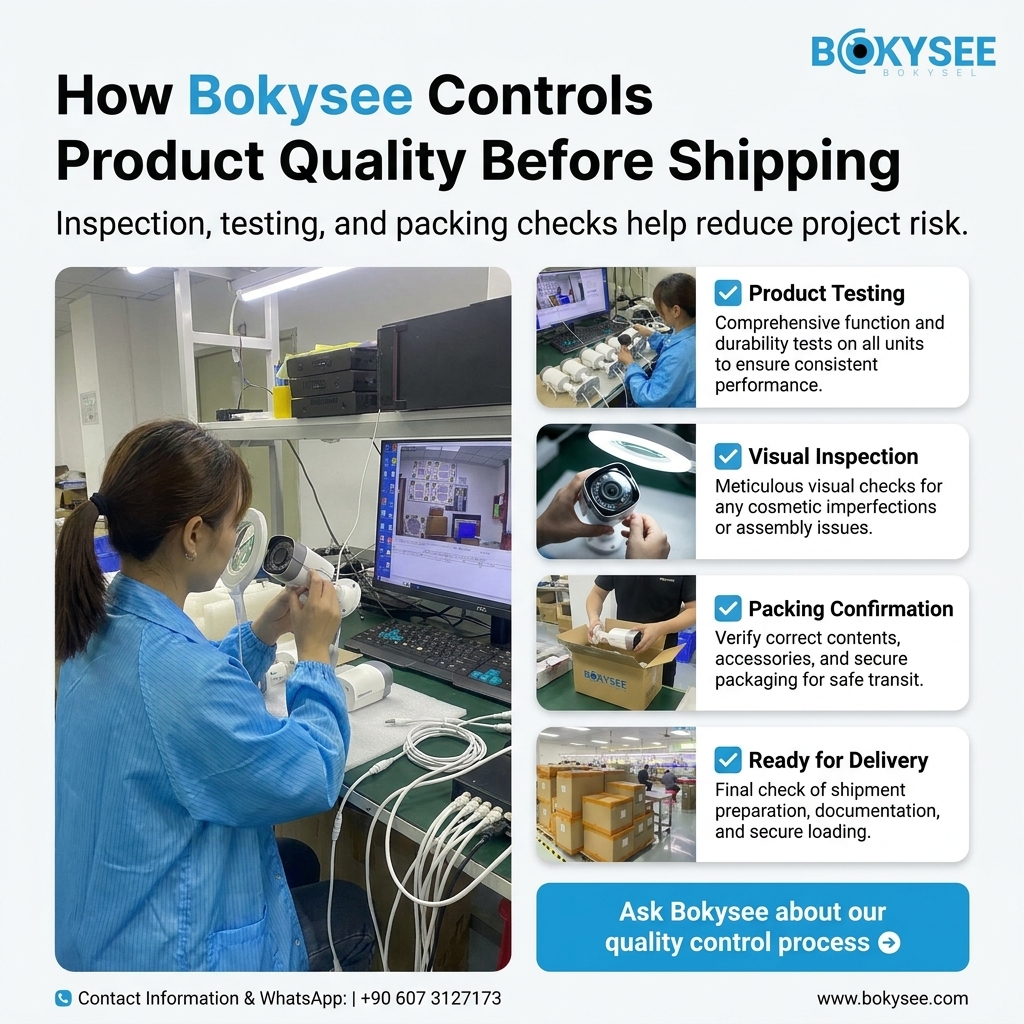
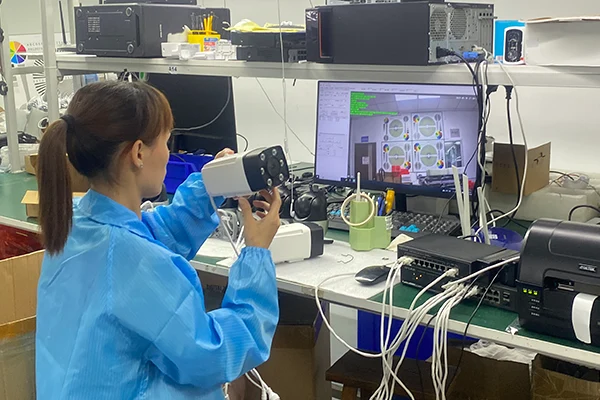
A reliable wholesale CCTV supplier should be able to show production lines, assembly processes, testing equipment and quality records. Request a live factory video call, not only edited promotional footage. Ask to see incoming material inspection, assembly, image testing, ageing tests, packaging and warehouse management.
Bokysee describes its manufacturing workflow in its factory quality-control article y security camera factory tour. These are useful internal pages to review before arranging a live inspection.
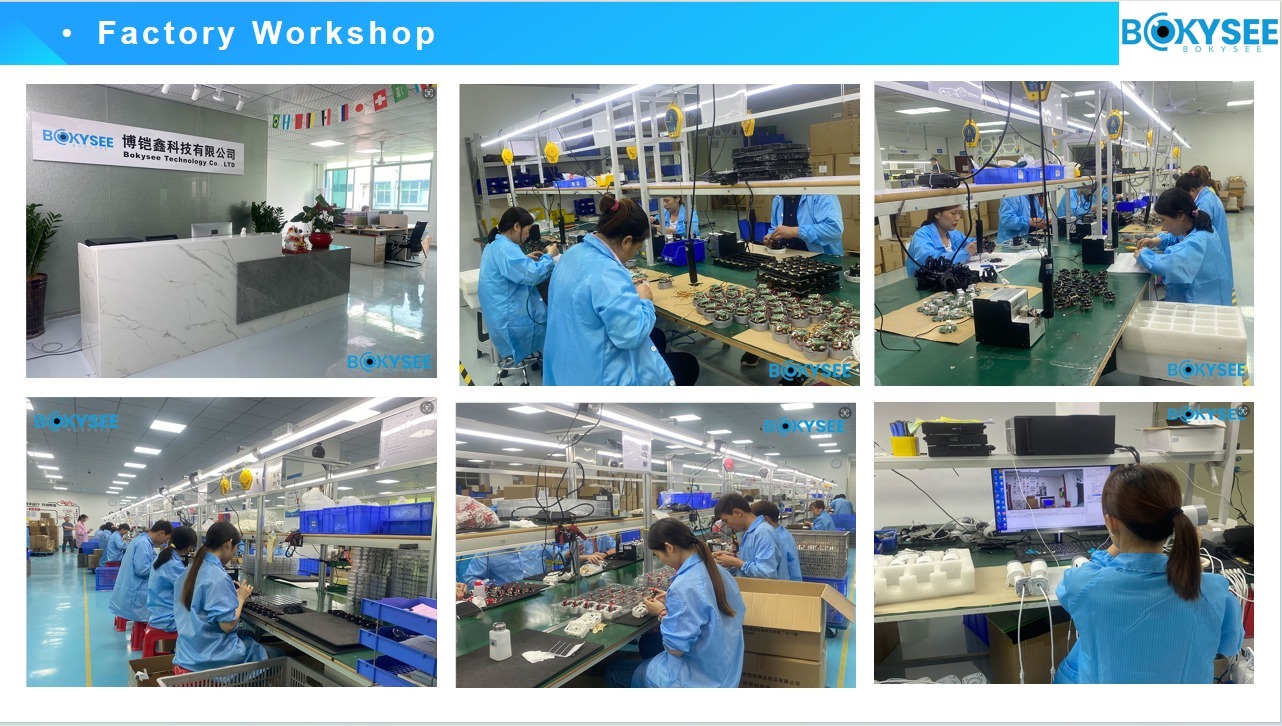
The most important question is whether the approved sample and bulk order use the same chipset, image sensor, lens, PCB, housing and firmware. Ask for this confirmation in the quotation or proforma invoice.
Compare Quotations on an Identical Specification
Wholesale security camera prices are meaningful only when the technical configuration is the same. A 5MP camera can use different sensors, chipsets, housings, microphones and LED boards. One supplier may quote a metal IP66 model while another quotes a plastic housing with a lower-cost platform.
Ask each supplier to quote:
· The exact model and product image
· Resolution and frame rate
· Chipset and sensor, where available
· Lente
· Material de la carcasa
· Night-vision mode and distance
· Audio and alarm functions
· funciones de IA
· ONVIF and RTSP support
· Accessories and packaging
· Warranty
· Price breaks at 50, 100, 500 and 1,000 units
Also confirm whether the quotation is EXW, FOB, CIF or DAP and how long it remains valid. Component costs can change, especially for chipsets, memory and metal parts.
Evaluate OEM, ODM and Private-Label Capability
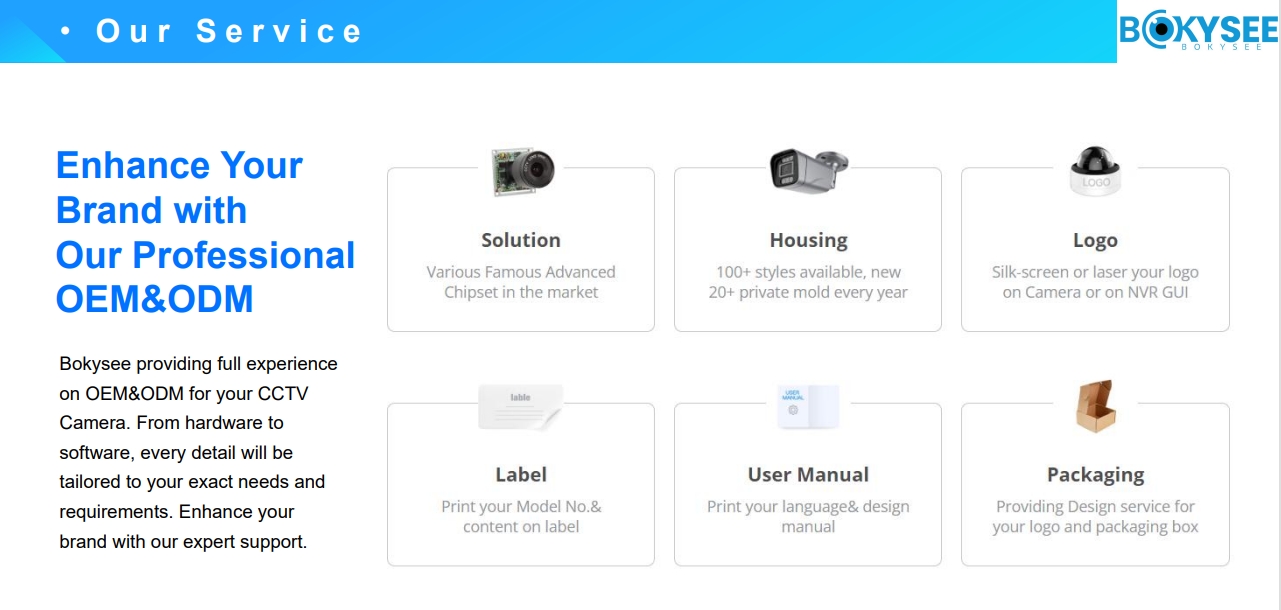
A private-label security camera supplier should clearly separate basic branding from deeper ODM development. Basic services may include laser logos, silk-screen printing, labels, user manuals, neutral packaging, custom boxes and NVR GUI logo customization.
Typical reference quantities vary by process. Laser logos may start around ten units per model; manuals and NVR GUI logos may start around one hundred units; silk-screen printing may require around two hundred units; and a fully customized color box may require approximately one thousand units per design. These are reference levels, not universal guarantees.
De Bokysee OEM and ODM security camera guide explains how distributors and brand owners can move from a neutral sample to branded mass production. Buyers should approve artwork, logo position, labels, manuals and packaging before production.
Check Certification and Market Compliance
Certification should be checked by model and market. CE or RoHS documents may be relevant for Europe, while FCC authorization may apply to RF devices marketed in the United States. Local telecom approval may be required for WiFi or 4G equipment in some countries.
The certificate should match the actual hardware platform, radio module and company information. The EU's technical documentation guidance explains that compliance documentation must show how a product meets applicable requirements. For US wireless devices, buyers can verify FCC IDs through the official FCC ID search.
Do not accept a folder of unrelated certificates as proof that every model is compliant.
Test Samples Before Comparing Suppliers Finally
A serious supplier comparison should include real sample testing. Select two or three representative models rather than testing only the cheapest camera. Check day and night image quality, audio, AI detection, NVR compatibility, network stability, recording and mobile access.
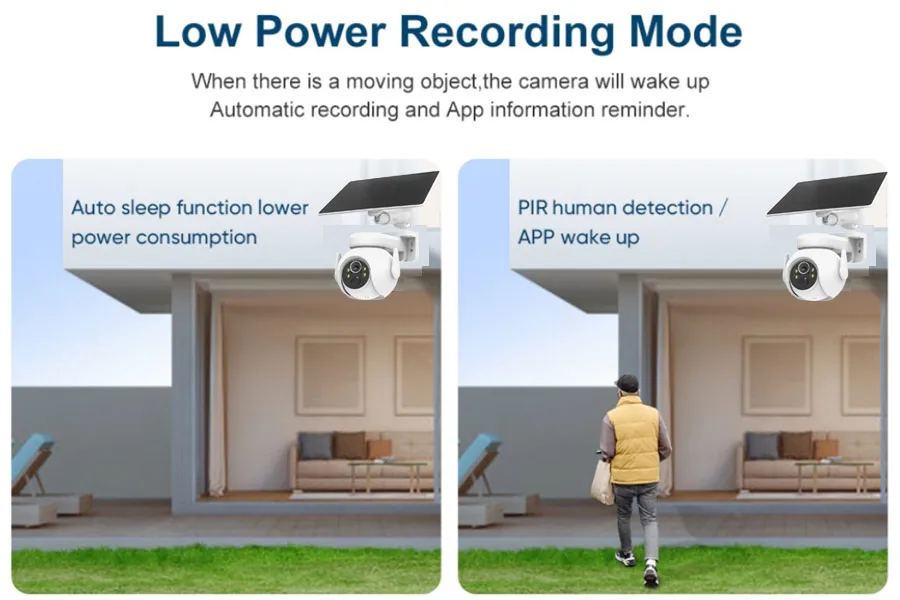
For 4G solar cameras, test local SIM cards, LTE bands, battery endurance and charging. For PTZ cameras, test optical zoom, focus, presets and tracking. For PoE systems, test power budget and continuous recording.
Sample performance is only one stage. Ask how the supplier controls consistency during bulk production and whether inspection photos, testing reports or third-party inspections are available.
Review Warranty and Technical Support
A professional supplier should provide a written warranty, fault-handling process and spare-parts policy. Bokysee generally supports a one-year standard warranty, with longer options available for selected products or confirmed projects. Manufacturing defects may be covered, while installation damage, unstable power, incorrect waterproofing or physical damage are normally excluded.
Distributors should ask about spare mainboards, LED boards, cables, adapters and PTZ driver boards. Remote troubleshooting, configuration guidance and suitable firmware files can reduce local service costs.
Look for Long-Term Distributor Support
The best CCTV camera supplier should help buyers build sales, not only ship cartons. Useful support includes high-resolution product images, catalogues, technical specifications, installation videos, product selection, project quotations and online training.
Market protection or exclusivity should be based on real cooperation, sales ability and stable purchasing rather than promised before the first sample. A sensible path is sample testing, a mixed trial order, repeat orders and then a formal regional plan.
Bokysee describes this approach in its global CCTV brand partner guide.
Maintain a Written Supplier Scorecard
For a disciplined comparison, score each shortlisted supplier on product fit, sample quality, factory transparency, response speed, certification, MOQ, lead time, warranty and long-term support. A written scorecard prevents the lowest price from outweighing every operational risk.
Final Supplier Selection Checklist
Before choosing a supplier, confirm that it can answer five questions clearly:
1. What exact hardware will be supplied?
2. How is bulk consistency controlled?
3. Which certification documents match this model?
4. What happens if a technical problem occurs?
5. Can the supplier support your business as quantities grow?
The best security camera supplier for a distributor is not necessarily the largest factory. It is the supplier whose product range, MOQ, communication and support fit the buyer's actual market.
To compare Bokysee models for wholesale, private label or project use, send your target products, quantity, market and current pain points through the Bokysee inquiry form.







 Spanish
  English
  Russian