Ir al contenido
Commercial security projects increasingly require surveillance solutions in locations where grid power and wired network infrastructure are either unavailable or prohibitively expensive to deploy. Construction sites, agricultural facilities, temporary project areas, parking lots, warehouses, and remote infrastructure installations often face challenges related to electrical access, trenching requirements, and long-term operational costs.
This article examines the capital investment considerations and long-term value factors that help businesses determine whether are solar panel security cameras worth it for commercial security applications.
Assessing Upfront Equipment Costs

When evaluating commercial surveillance investments, many buyers focus primarily on initial equipment pricing. While this is a logical starting point, it is important to understand the full scope of hardware included in modern solar-powered security systems.
Understanding the Initial Investment
At first glance, a solar security camera may appear more expensive than a conventional wired IP camera. However, direct hardware comparisons often overlook the fact that the solar system includes additional infrastructure components that would otherwise need to be purchased separately.
A commercial wired surveillance deployment typically requires:
- Cámaras de seguridad
- Power cabling
- Network cabling
- Conduit materials
- Installation labor
- Power distribution equipment
- Electrical infrastructure connections
By contrast, a solar battery camera consolidates several of these requirements into one system. The integrated approach can significantly reduce overall project complexity while simplifying procurement and deployment.
For buyers asking are solar panel security cameras worth it, the evaluation should focus on total project costs rather than camera unit pricing alone.
Cost Considerations for Remote Projects
Remote monitoring locations often represent the strongest business case for solar-powered surveillance. Facilities located away from utility connections frequently require extensive electrical work before traditional cameras can become operational.
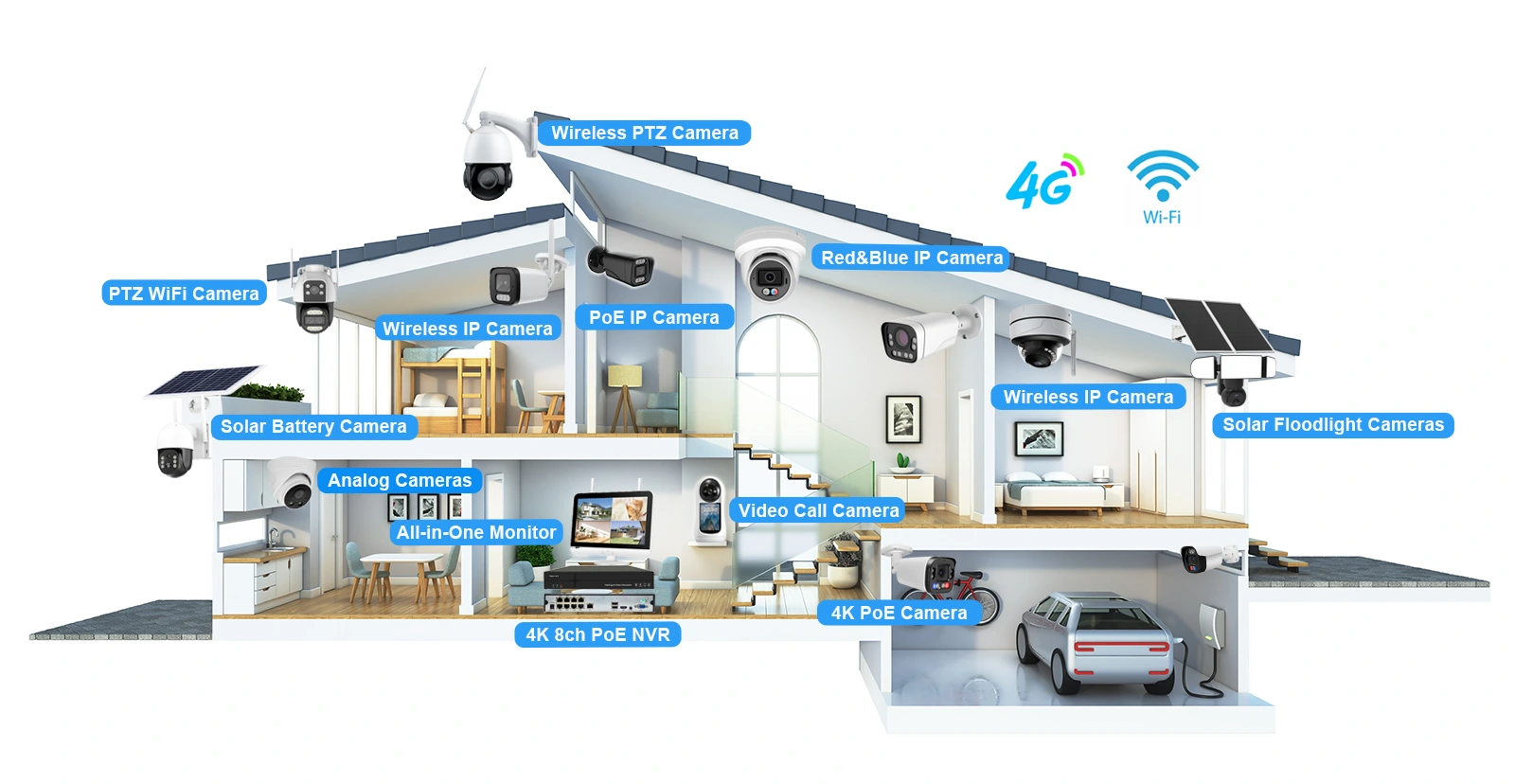
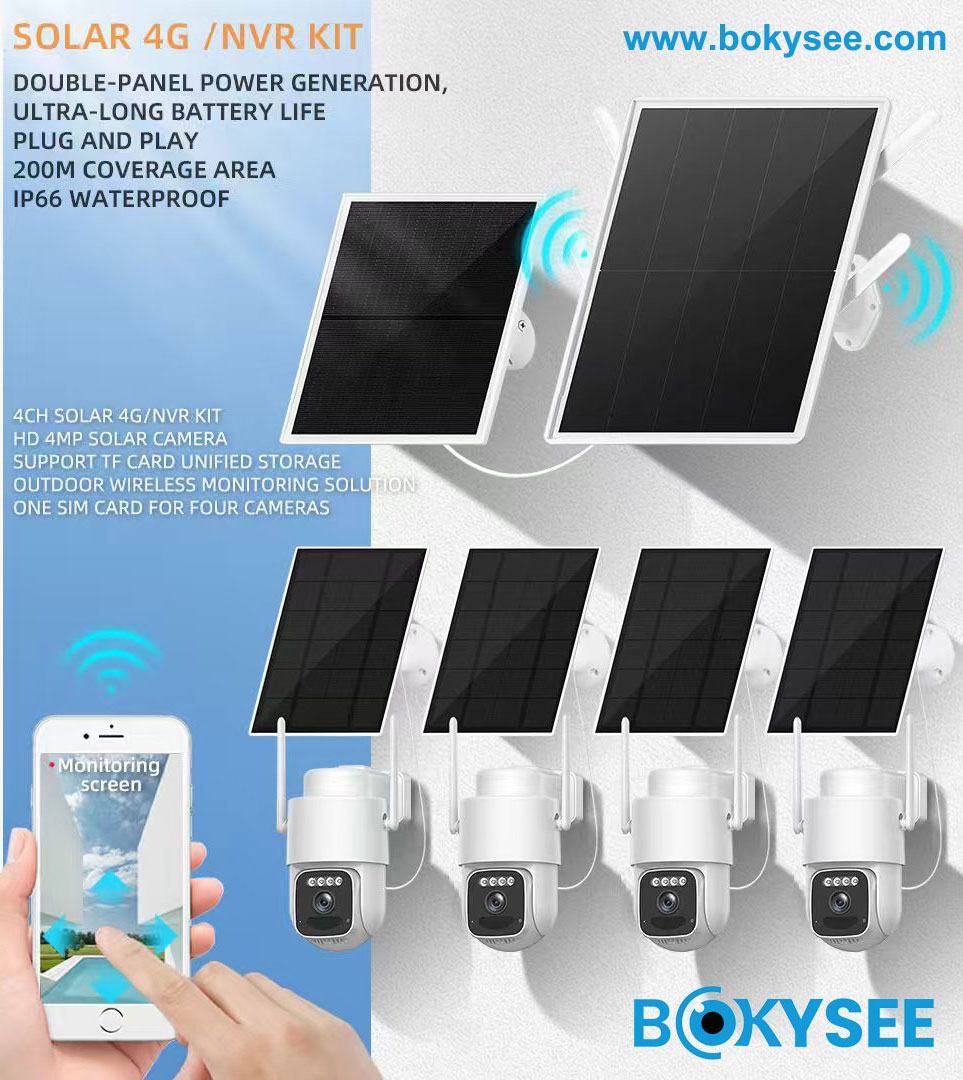
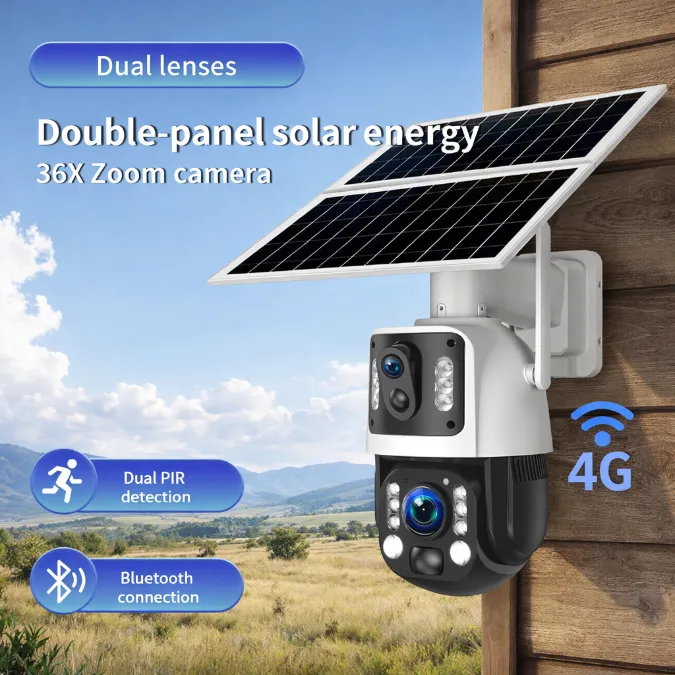
Bokysee solar battery cameras are designed specifically for outdoor monitoring in locations without power or network availability, making them suitable for construction sites, farms, infrastructure projects, warehouses, and other remote commercial environments.
In these scenarios, the premium associated with solar-powered hardware is often offset by substantial savings in infrastructure deployment costs.
Looking Beyond Purchase Price
Organizations that evaluate only equipment costs may overlook operational efficiencies created by solar systems. The real financial comparison should include installation expenses, infrastructure requirements, maintenance considerations, and future scalability.
When those factors are incorporated into the analysis, the question of are solar panel security cameras worth it becomes less about camera pricing and more about long-term project economics.
Eliminating Ground Trenching and Cable Conduit Costs
One of the most significant cost advantages of solar-powered surveillance systems comes from avoiding trenching and underground cable installation.
Reducing Infrastructure-Related Expenses
In conventional surveillance installations, cameras depend on both electrical power and communication pathways. Establishing these connections often requires extensive site preparation, including excavation work, conduit placement, cable installation, and surface restoration. These activities can increase project complexity while extending deployment timelines.
The costs associated with trenching become even more significant as surveillance coverage expands. A camera positioned hundreds of meters away from the nearest power source may require extensive infrastructure development before installation can begin. In many cases, labor and construction expenses surpass the cost of the camera hardware itself.
Cámaras alimentadas por energía solar avoid this challenge by generating and storing energy locally. Because power is produced directly at the deployment location, businesses can dramatically reduce the need for excavation and cable routing activities.
Accelerating Project Deployment
Beyond cost savings, eliminating trenching and conduit installation can significantly accelerate project schedules. Traditional surveillance deployments often require coordination among multiple contractors, including electricians, civil engineering teams, and network specialists. Delays in any stage of the infrastructure process can affect the overall project timeline.
Solar battery cameras simplify deployment by reducing dependencies on supporting infrastructure. Bokysee’s solar-powered solutions are designed for locations without readily available power or network access, enabling faster installation in challenging environments.
This streamlined deployment approach allows businesses to establish surveillance coverage more quickly while minimizing operational disruption. For organizations working under tight project deadlines, the ability to deploy security systems rapidly can provide meaningful operational benefits.
Supporting Dynamic Security Requirements
The elimination of trenching costs is particularly valuable in environments where surveillance needs may change over time. Construction projects provide a clear example. As work progresses, the areas requiring monitoring often shift, making permanent infrastructure less practical.
In these situations, organizations frequently discover that are solar panel security cameras worth it because they provide security coverage without the substantial investment required for fixed electrical and communication infrastructure. The resulting flexibility helps ensure that surveillance resources can adapt to evolving project requirements.
Grow Your Business with OEM/ODM Cameras
Bypassing Municipal Permitting and Power Grid Fees
Infrastructure-related expenses extend beyond construction activities. In many regions, new electrical installations may trigger permitting requirements, inspections, utility coordination processes, or additional compliance obligations.
Minimizing Utility Dependencies
Traditional surveillance installations often rely on connections to existing electrical systems or the creation of new utility infrastructure. Depending on the project scope and local regulations, this may involve coordination with utility providers, scheduling inspections, obtaining permits, or complying with specific electrical standards.
These requirements can introduce delays and administrative burdens that extend beyond the equipment purchase itself. For organizations seeking rapid deployment, infrastructure approval processes may become a significant obstacle.
Solar-powered surveillance systems operate independently of conventional power grids, reducing the need for extensive utility coordination. Because energy is generated and stored locally, organizations gain greater flexibility when deploying cameras in remote or temporary environments.
Supporting Off-Grid Surveillance Strategies
Bokysee’s solar battery cameras are specifically designed for locations where power infrastructure is unavailable or impractical. This capability enables businesses to establish surveillance coverage without relying on traditional utility connections, making solar-powered solutions particularly useful for remote industrial sites, agricultural operations, and temporary projects.
The ability to deploy cameras independently of grid infrastructure can produce meaningful cost savings over time. Organizations avoid many of the expenses associated with extending utility services while also reducing the administrative effort required to manage infrastructure projects.
Improving Economics for Temporary Deployments
Temporary projects often present unique challenges from a cost-benefit perspective. Investing in permanent electrical infrastructure for a site that may only operate for several months can be difficult to justify financially.
Construction sites, seasonal agricultural operations, temporary storage facilities, and short-term infrastructure projects frequently require security coverage without long-term utility commitments. In these circumstances, solar-powered surveillance systems offer a practical alternative by providing operational independence from the power grid.
As businesses assess whether are solar panel security cameras worth it, avoiding infrastructure-related fees and utility dependencies often becomes an important factor in the overall financial analysis.
Simple Relocation Costs vs Rigid Wired Setups
Security requirements rarely remain static throughout the life of a commercial project. Facilities expand, operational priorities shift, and monitoring needs evolve. Consequently, the ability to relocate surveillance assets efficiently can have a substantial impact on long-term investment value.
Challenges Associated with Fixed Installations
Traditional wired surveillance systems are inherently tied to their installation locations. Relocating a camera often requires more than simply moving the device itself. Existing power and network infrastructure may need to be modified, extended, or rebuilt to support the new position.
As a result, relocation projects can involve additional labor, materials, and operational downtime. In some cases, moving a wired camera can approach the cost of installing a new surveillance point altogether.
These limitations can reduce the long-term flexibility of the surveillance investment, particularly in industries where site conditions change frequently.
Flexible Deployment Advantages
Solar-powered systems offer a more adaptable approach. Because they operate independently of fixed electrical infrastructure, they can be repositioned with significantly less effort than conventional wired solutions.
Bokysee’s solar surveillance solutions are designed for outdoor and remote deployments where flexible monitoring capabilities are often required. This makes them particularly suitable for industries such as construction, agriculture, infrastructure development, and industrial operations, where security priorities may shift as projects evolve.
The ability to relocate surveillance assets efficiently allows organizations to respond more effectively to changing operational needs without incurring substantial infrastructure modification costs.
Extending the Useful Life of Security Investments
One of the strongest arguments supporting the idea that are solar panel security cameras worth it lies in their potential for reuse across multiple projects. Rather than remaining permanently attached to a single location, solar-powered surveillance units can continue delivering value as they are redeployed to new sites and applications.
This increased asset utilization improves overall return on investment by enabling organizations to maximize the operational lifespan of their security equipment. Instead of purchasing new surveillance systems for every project, businesses can often reallocate existing resources to meet emerging requirements.
Longevity for Off-Grid Hardware Systems
While deployment flexibility and infrastructure savings are important considerations, long-term value also depends heavily on equipment durability and operational reliability.
Designed for Continuous Outdoor Operation
Solar-powered surveillance equipment is specifically developed for outdoor use, where environmental conditions can be demanding. Exposure to changing weather patterns, temperature fluctuations, and remote operating conditions requires careful attention to hardware design and energy management.
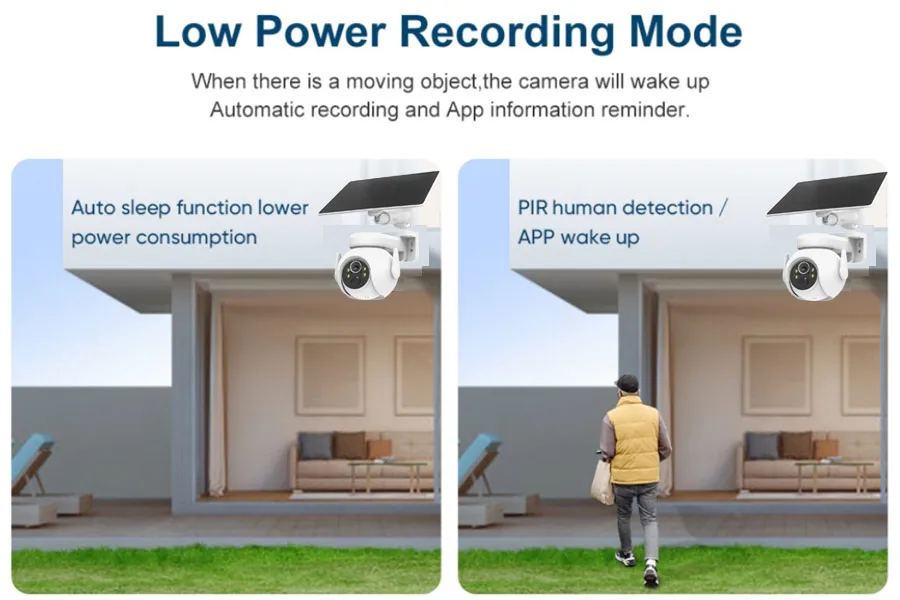
De Bokysee solar-powered security cameras are designed for outdoor monitoring applications and support low-power operation to improve energy efficiency. This approach helps optimize the relationship between solar charging, battery storage, and surveillance functionality, supporting reliable performance in off-grid environments.
The ability to operate independently of external power sources contributes significantly to the practicality of solar-powered surveillance in remote locations.
The Importance of Energy Efficiency
A defining characteristic of solar-powered security systems is their emphasis on energy management. Because power generation depends on solar charging and battery storage, efficient operation becomes essential for maintaining reliable surveillance performance.
Low-power system architecture helps maximize available energy resources while supporting continuous monitoring requirements. Effective energy management can also contribute to longer battery service life, reducing maintenance requirements and supporting overall system longevity.
These advantages become particularly important in remote deployments where frequent maintenance visits may be impractical or costly.
Connectivity for Long-Term Operational Flexibility
Communication requirements vary considerably across commercial environments. Some sites may have access to WiFi infrastructure, while others depend entirely on cellular connectivity.
Bokysee’s solar battery camera solutions support both WiFi and 4G communication options, allowing businesses to select the connectivity method most appropriate for their deployment environment. This flexibility enhances long-term usability by enabling cameras to operate effectively across a wide range of locations and operational scenarios.
When organizations evaluate whether are solar panel security cameras worth it, durability, energy efficiency, and connectivity flexibility collectively contribute to the long-term value equation.
Factory QA Standards Affecting Long-Term Value
The quality of manufacturing processes and quality assurance standards can significantly influence the lifetime performance of commercial surveillance equipment.
Manufacturing Experience and Product Consistency
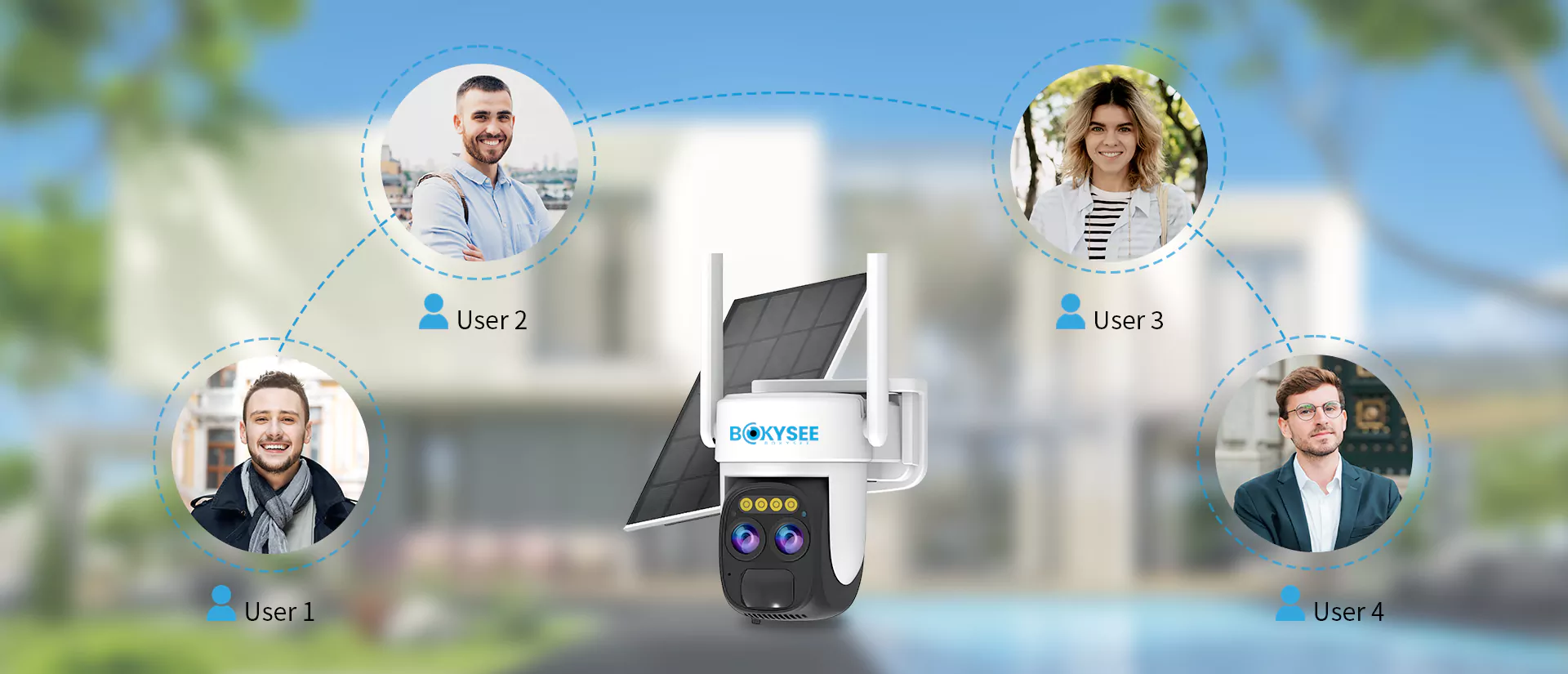
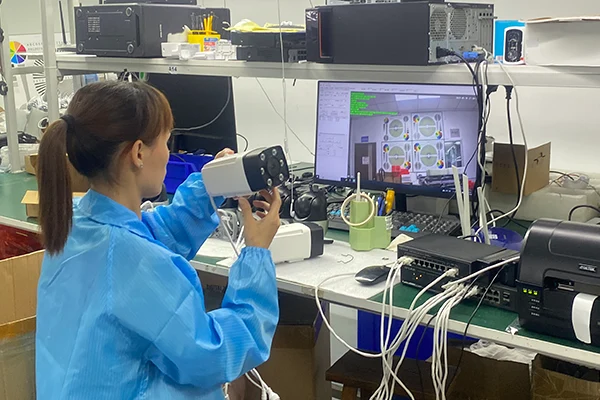
According to information provided by Bokysee, the company has more than ten years of experience in CCTV manufacturing and offers OEM and ODM services for distributors, installers, and project partners worldwide. Its operations integrate research and development, production, marketing, and quality management processes across a broad portfolio of surveillance products, including solar battery cameras.
Manufacturing experience can play an important role in product consistency. Established production processes and ongoing product development efforts help support reliable performance across large-scale deployments, which is particularly important for commercial customers managing multiple surveillance locations.
Quality Management and Compliance Considerations
Bokysee emphasizes quality control as part of its manufacturing approach and states that many of its products comply with CE and RoHS requirements for international markets. Such quality management practices can contribute to product reliability while helping organizations reduce risks associated with premature equipment failure.
Over the lifespan of a surveillance system, reliability often has a greater impact on total ownership costs than initial purchase price alone. Reduced maintenance requirements, fewer service interruptions, and longer operational lifespans can all contribute to improved financial outcomes.
Connecting Quality to Long-Term ROI
Ultimately, the long-term value of any surveillance investment depends on the ability of the equipment to perform consistently over time. Infrastructure savings, deployment flexibility, and operational efficiency all become more meaningful when supported by reliable hardware.
For businesses evaluating are solar panel security cameras worth it, manufacturing quality should be considered alongside deployment economics. A well-designed system supported by strong quality assurance standards can deliver benefits that extend far beyond the initial installation phase, helping organizations maximize return on investment throughout the life of the surveillance deployment.
Reflexiones finales
While solar battery cameras may involve a higher initial hardware investment than some traditional cameras, they can substantially reduce costs associated with trenching, conduit installation, utility connections, permitting processes, and future relocation. Their ability to operate in locations without power or network infrastructure further expands deployment possibilities for construction sites, farms, industrial facilities, warehouses, parking areas, and other remote projects.
Bokysee‘s solar battery camera solutions are specifically designed for off-grid and outdoor monitoring applications, supporting low-power operation along with WiFi and 4G connectivity options. Combined with the company’s manufacturing experience, quality-control focus, and broad surveillance product portfolio, these characteristics contribute to the overall long-term value of the solution.
Preguntas frecuentes
Are commercial solar security cameras cost-effective compared to traditional wired systems?
In many remote or outdoor applications, commercial solar security cameras can be more cost-effective than traditional wired systems. Although the initial equipment cost may be higher, businesses can often reduce expenses related to power infrastructure, cabling, trenching, and installation labor.
How much money can businesses save on civil trenching by choosing solar arrays?
The exact savings vary depending on site conditions, distance from power sources, and local labor costs. However, solar-powered security systems can eliminate or significantly reduce trenching and conduit installation requirements, which are often among the most expensive parts of outdoor surveillance projects.
What is the typical financial payback period for an off-grid industrial camera fleet?
There is no universal payback period because project size, infrastructure requirements, and deployment conditions differ. In locations where extending power and network connections would be costly, the savings from avoiding infrastructure work can help offset the higher upfront investment much faster.
Do solar security cameras require regular component replacements that increase lifetime costs?
Like any surveillance equipment, solar security cameras require periodic inspections and maintenance. However, modern systems are designed for long-term outdoor operation, and routine maintenance requirements are generally limited when the equipment is properly installed and maintained.
How much budget should be allocated for long-term solar camera maintenance?
Maintenance budgets depend on the number of cameras, environmental conditions, and operational requirements. Most businesses should plan for periodic inspections, cleaning of solar panels, and general system checks to help ensure consistent performance over time.







 Spanish
  English
  Russian