 Skip to content
Sourcing a reliable solar ptz camera determines whether your off-grid farm or construction site remains secure or falls victim to unmonitored blind spots. Static surveillance forces operators into permanent coverage gaps, compounding the risk of asset theft across expansive remote perimeters.
This analysis benchmarks current pan-tilt-zoom hardware against strict off-grid performance standards. We evaluate 8-megapixel 4K resolution capacities, 200-meter target identification distances, and active AI tracking mechanisms to help you secure continuous site surveillance without draining backup battery reserves.
What Makes PTZ Different in Solar Applications
PTZ solar cameras combine 360-degree motorized tracking with smart power management to monitor large remote sites without draining backup batteries.
Dynamic Coverage and Motion Tracking
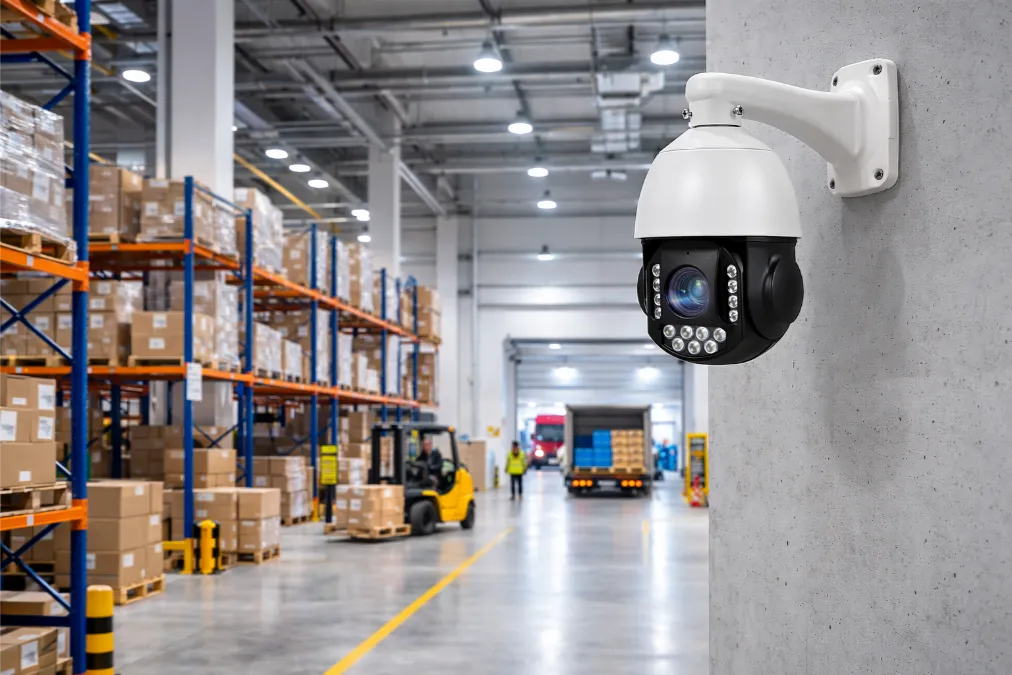
Operators secure expansive sites like farms, warehouses, and construction zones by leveraging motorized camera movements. Unlike fixed cameras that leave permanent blind spots, PTZ units cover massive areas using specific mechanical capabilities:
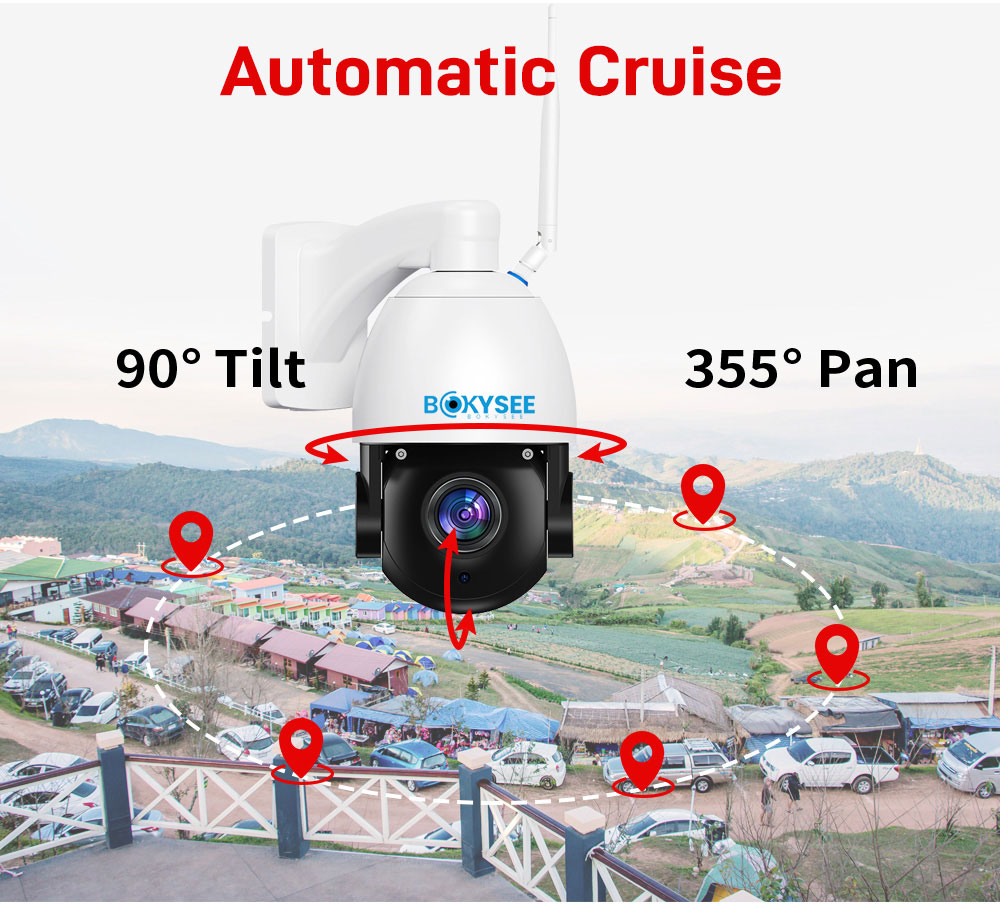
- Horizontal Pan: 360-degree rotation to scan entire perimeters.
- Vertical Tilt: 100-degree adjustment to track targets across uneven terrain.
- Optical Zoom: Up to 40x magnification to identify distant details.
Built-in AI auto-tracking systems detect and follow moving people or vehicles autonomously. Once the software identifies a target, the camera locks on and captures continuous footage without requiring manual operator adjustments.
Power Management for Motorized Controls
Motorized tracking requires heavy energy demands that easily drain standard hardware. To handle the continuous operation of pan-and-tilt motors, these cameras rely on high-capacity rechargeable batteries paired with optimized solar panels. This configuration keeps the equipment fully active for up to 10 days without direct sunlight.
Engineers configure the internal systems to stretch this battery life in off-grid environments. The camera maintains a minimal power draw during standby mode, reserving significant energy spikes strictly for active motion tracking events.
4K Resolution: Capturing Critical Details at Distance
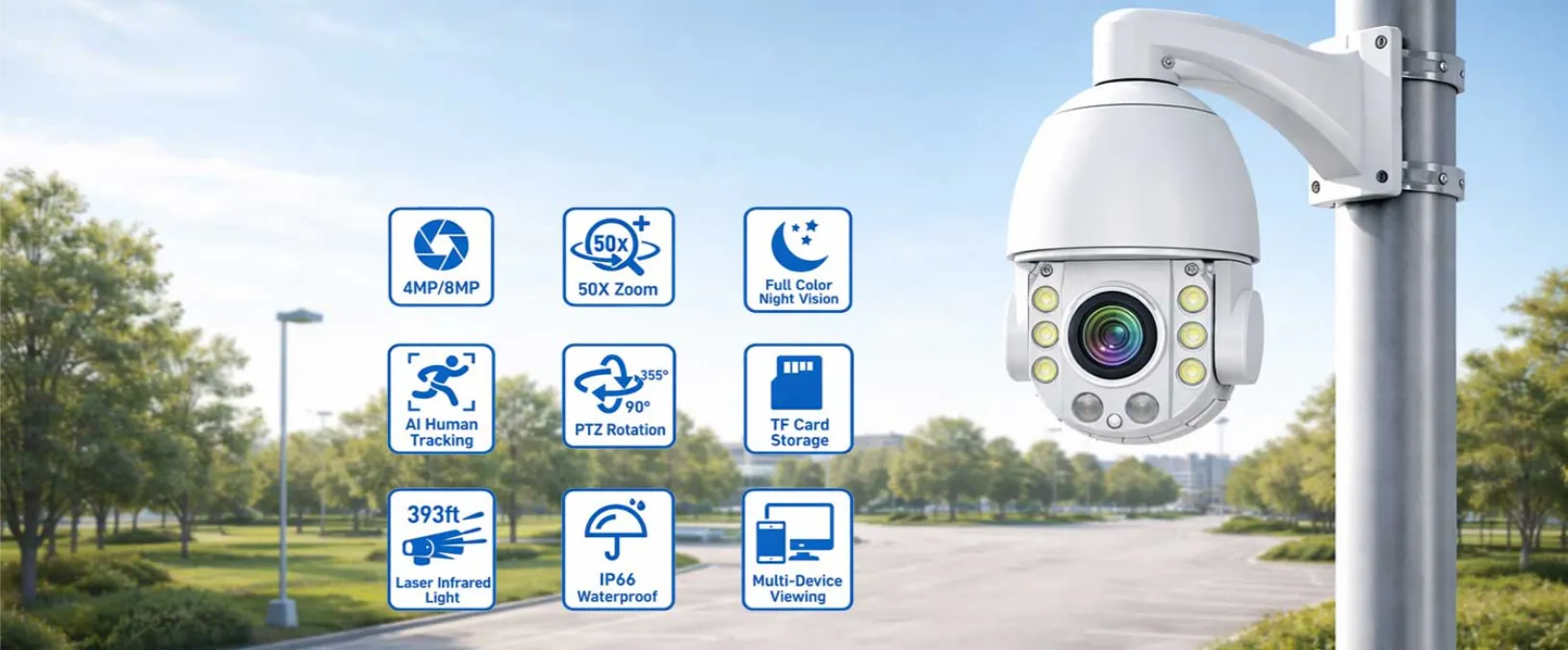
4K solar PTZ cameras combine 8-megapixel clarity with up to 60x optical zoom, capturing precise details like license plates at 200 meters for expansive commercial sites.
| Technical Metric | 1080p Standard | 4K Ultra HD |
|---|---|---|
| Pixel Count | 1920 x 1080 (2MP) | 3840 x 2160 (8MP) |
| Optical Zoom Range | Basic (4x – 10x) | Advanced (25x – 60x) |
| Identification Distance | Up to 30 meters | Up to 200 meters |
Pixel Count and Zoom Ratios
Upgrading to 4K resolution provides 3840 x 2160 pixels, delivering an 8-megapixel output that outpaces standard 1080p hardware. Security operators rely on this pixel density to extract critical visual data from remote locations without losing image sharpness during aggressive pan and tilt tracking across wide, 360-degree zones.
- Resolution Output: 8-megapixel framing ensures clear playback and live remote viewing.
- Optical Capabilities: 25x to 60x zoom lenses allow extreme distance coverage across large perimeters.
- Target Identification: Operators can accurately read license plates and single out facial features up to 200 meters away.
Power Demands and Data Storage
Capturing 8-megapixel frames requires heavy processing power. Manufacturers solve this hardware drain by pairing these cameras with robust 3W+ solar panels and high-capacity battery arrays. This specific power architecture easily sustains continuous 4G or 5G streaming directly from off-grid properties.
Ultra-high-definition video creates massive file sizes. To manage the storage burden, these camera systems apply highly efficient video compression algorithms. This process balances supreme image clarity against strict bandwidth limits, preventing data bottlenecks on cellular networks and maximizing local storage drives.
Commercial and agricultural operators actively deploy these advanced setups for distant property monitoring. This targeted industry demand will push total off-grid solar camera installations past 1.8 million units by 2026.
Grow Your Security Business with OEM CCTV
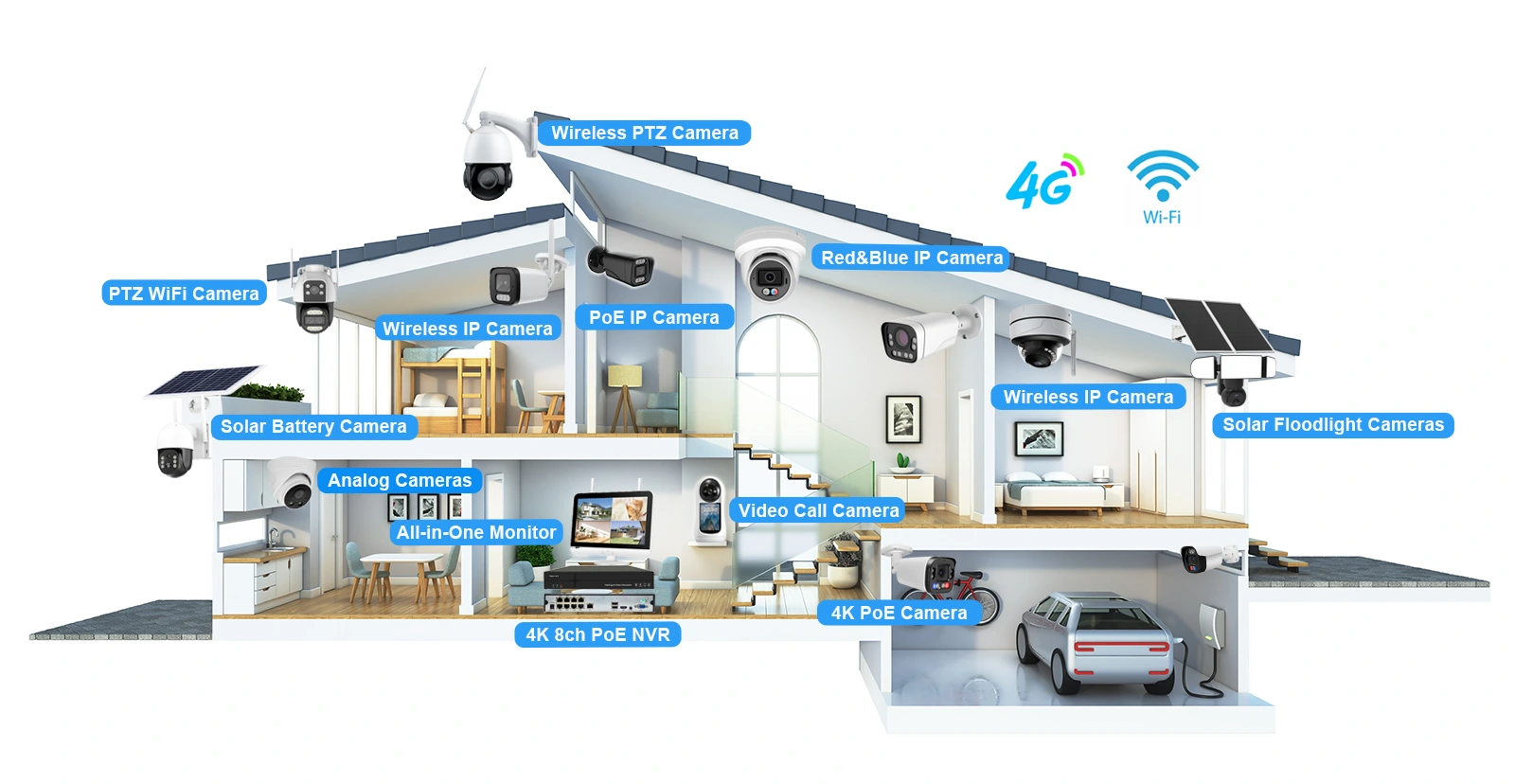
Dual-Lens vs. Single-Lens PTZ Systems
Dual-lens PTZ cameras offer simultaneous wide and zoomed views, while single-lens systems scan mechanically. Your choice dictates hardware complexity, initial costs, and long-term maintenance overhead.
Field of View and Zoom Capabilities
Dual-lens systems solve a common surveillance limitation by simultaneously capturing wide-angle context and zoomed-in details. You secure the full site overview and the tight identification shot at the exact same time. Single-lens setups rely on physical, mechanical movement to scan areas. While effective for tracking a single active target, this mechanical panning risks missing critical events happening just outside the camera’s current frame.
Hardware Complexity and Maintenance Requirements
Adding a second lens directly increases the engineering footprint. Dual-lens cameras contain more internal components, which predictably increases long-term repair costs if a physical part fails in the field. Single-lens units feature much simpler optical pathways. This straightforward design often results in lower initial setup costs and creates a highly reliable system that is easier to maintain over its deployment lifecycle.
AI Auto-Tracking and Human Detection Capabilities
AI deep learning pairs with PIR sensors to lock onto human targets, tracking them across 360-degree zones while filtering out animals to drastically cut false alarms.
How AI Human Detection and Auto-Tracking Work
Modern solar PTZ cameras ditch passive recording for active pursuit. Built-in algorithms rely on deep learning to distinguish human shapes from background noise. When a passive infrared (PIR) sensor detects a thermal shift, the system instantly triggers a motion event and activates the tracking sequence.
- Predictive Targeting: The camera calculates the target’s speed and direction, adjusting the pan-tilt-zoom motors to lock onto the subject.
- Continuous Centering: The AI keeps the intruder dead center in the frame until they physically exit the designated surveillance zone.
- Mechanical Range: Hardware specifications support a full 360-degree horizontal pan and a 90-degree vertical tilt to guarantee a continuous line of sight.
Performance Benefits and Operational Limits
Active surveillance fundamentally upgrades how you monitor large outdoor spaces like parking lots and property perimeters. Dynamic zooming and end-to-end tracking work together to eliminate blind spots entirely, giving you a complete view of an incident as it unfolds.
- False Alarm Reduction: Position-adaptive algorithms filter out non-human objects like wandering animals or passing vehicles, dropping the number of false alerts your security team receives.
- Power Demands: Motorized tracking drains batteries faster. Solar-powered models require optimal sunlight exposure to sustain battery life during repeated tracking events.
- Manual Configuration: Smart tracking does not activate automatically out of the box. Users must explicitly enable these features and set tracking parameters within the camera’s mobile app.
Night Vision Technologies: Full-Color vs. IR
Solar PTZ cameras use infrared for zero-light stealth and full-color sensors to capture identification details in low light. Hybrid models combine both to maximize off-grid security.
How Infrared and Full-Color Systems Work
Night vision hardware dictates how effectively a solar PTZ camera secures a site after dark. You have three primary hardware configurations to evaluate for your off-grid deployments:
- Infrared (IR): Relies on integrated LEDs to capture sharp grayscale images in total darkness (0 lux), detecting heat signatures for long-range, discreet monitoring.
- Full-Color: Amplifies ambient light down to 0.01 lux using highly sensitive sensors and wider apertures, reproducing natural colors without supplemental spotlights.
- Hybrid Systems: Fuses thermal and optical sensors into a single unit, giving solar cameras both zero-light detection and detailed color capability.
Matching Night Vision to Solar PTZ Environments
Solar-powered PTZ cameras prioritize energy efficiency. Operators must accurately match the night vision type to the specific surveillance environment to protect battery life during prolonged overnight operation.
Select IR setups for remote, zero-light perimeters. In wide-open spaces like agricultural fields or industrial fence lines, stealth and long-range detection matter most. The invisible IR beam guarantees intruders remain unaware they are under surveillance.
Deploy full-color technology in retail centers or urban sites. In environments with some ambient lighting, identifying specific details like vehicle colors or an intruder’s clothing directly improves your security response and provides actionable evidence for law enforcement.
Integrating PTZ with Existing NVR/VMS Systems
Connecting solar PTZ cameras to your current NVR or VMS centralizes control, automates tracking, and leverages server-based analytics for robust 24/7 off-grid surveillance.
Configuring NVR Connections for PTZ Cameras
Integrating a PTZ camera with a Network Video Recorder (NVR) requires establishing a reliable physical and data link. Start by matching the connection method to your hardware infrastructure to ensure seamless data flow.
- Network Compatibility: Use PoE injectors, Wi-Fi networks, or direct Ethernet connections to handle power delivery and data transmission simultaneously.
- PTZ Controls: Enable pan, tilt, and zoom capabilities directly in the NVR device settings or map dedicated PTZ ports for analog units.
- Automated Responses: Program viewing presets, continuous movement patterns, and autotracking tied to Intelligent Video System (IVS) triggers like tripwire crossings.
Managing PTZ Operations Through VMS Platforms
Scaling your surveillance network demands a Video Management System (VMS) to coordinate multiple active units. A unified platform removes the friction of logging into individual camera interfaces and unlocks advanced automation.
- Centralized Control: Manage viewing, recording, and directional steering for all PTZ models across one open-architecture interface.
- Server-Based Analytics: Process video feeds at the server level to maximize image quality and maintain performance without relying on local camera-based processing.
- System Unification: Connect your PTZ network with access control panels and intrusion detection alarms to execute immediate, event-triggered camera movements.
Storage Options: SD Card vs. Cloud vs. Local Storage
Balancing cost and reliability in solar PTZ deployments requires a strategic approach. Hybrid storage models offer the best mix of local continuity and secure remote access.
SD Card Storage Requirements
Local SD cards require a one-time upfront cost, which significantly lowers expenses for single-camera setups. This hardware ensures your video recording continues without interruption even during sudden network outages.
Strict capacity limits enforce a first-in, first-out overwrite system. You must deploy industrial-grade SD cards specifically built to withstand extreme outdoor temperatures and repeated daily write cycles.
Physical media keeps your footage off third-party servers, naturally improving data privacy. The main tradeoff involves physical security—if a thief steals or destroys the camera, you permanently lose the local evidence.
Cloud Subscription and Hybrid Models
Cloud storage requires recurring subscription fees and continuous internet access to function correctly. It provides unlimited scalable capacity and allows teams to access live and recorded video remotely from anywhere globally.
A hybrid configuration combines the strengths of both systems. Cameras execute continuous high-resolution recording directly to the local SD card while immediately uploading low-resolution clips to the cloud during motion-triggered events.
Multi-site solar camera deployments rely on these hybrid models to maintain secure off-site backups for critical incidents. This architecture yields specific operational data advantages:
- Data Consumption: Reduces cellular network strain by limiting cloud uploads strictly to verified motion events.
- Footage Integrity: Maintains continuous high-resolution recording locally during total network blackouts.
- Event Redundancy: Secures immediate cloud backups for security breaches before physical tampering occurs.
Evaluating Mechanical Durability of PTZ Rotations
PTZ cameras trade longevity for motion, capping hardware lifespans at 5-10 years. Continuous rotations demand strict management of environmental exposure and solar power stability to prevent early breakdowns.
Key Moving Parts Prone to Mechanical Wear
Unlike static security cameras built entirely from solid-state electronics, pan-tilt-zoom units rely on physical mechanisms to execute dynamic tracking. Moving these heavy lenses across wide areas introduces friction and wear that inherently limits the lifespan of the hardware compared to stationary alternatives.
- Drive Systems: High-torque stepper motors, helical gears, and precision servo motors handle the physical burden of continuous camera movement and require exact calibration to function.
- Slip Rings: These specialized electrical contacts allow the camera to pan a continuous 360 degrees without twisting internal cables. Dirt accumulation inside this component actively degrades data and power signals.
- Lifecycle Expectancy: The friction generated by these mechanical assemblies caps the expected operational life of the unit at 5 to 10 years, depending on usage intensity.
Primary Causes of Early Rotation Failure
Operators often deploy PTZ units in punishing outdoor environments where external forces compound standard mechanical fatigue. Identifying the root causes of wear helps integrators set realistic patrol limits and power thresholds.
- Constant Overstrain: Running continuous panning and tilting cycles directly accelerates the degradation of internal gears and motor assemblies.
- Environmental Intrusions: Heavy winds induce structural hysteresis, while extreme temperatures and fine dust buildup strip away lubricants and spike internal friction.
- Power Deficits: Inadequate solar battery reserves or unpredictable voltage fluctuations deprive the drive components of necessary power. This triggers jerky, stuttering movements that force motors to struggle and eventually strip their gears.
Frequently Asked Questions
What scenarios are best for solar PTZ cameras?
They excel in remote, off-grid, or temporary outdoor environments lacking power infrastructure. Common deployments include farms, construction sites, expansive warehouses, rural driveways, and large venues like stadiums. Their 360-degree pan-tilt-zoom capabilities, wire-free setup, and weather resistance make them reliable for monitoring wide areas dynamically.
How long does a solar PTZ camera run per day?
Under optimal sunlight, these cameras operate continuously 24 hours a day. High-efficiency solar panels recharge the internal batteries daily. During extended low-light or cloudy conditions, fully charged batteries sustain operation for 5 to 7 days. Power-saving modes using motion detection extend standby times indefinitely.
What solar panel size is needed?
Panel size depends on power draw, battery capacity, and local sunlight. Commercial setups often use 100W panels paired with 12V lithium batteries to power the PTZ motors and cellular routers reliably. Basic models use 5W to 10W panels for trickle charging, but 100W+ panels ensure consistent 24/7 performance in demanding environments.
Does it support 4G?
Yes, many models feature built-in 4G/LTE connectivity. They use cellular networks via standard carriers to transmit video data, eliminating the need for Wi-Fi. Users simply need a compatible SIM card and an active data plan to access real-time monitoring remotely.
How does it perform in winter?
Solar PTZ cameras operate reliably down to around 30°F (-1°C), though extreme cold drains lithium batteries faster and slows charging. To maintain performance in winter, position the panels facing south at a steep angle to shed snow and capture low sunlight. High-quality systems use oversized batteries and advanced management systems to offset cold weather challenges.
Can the cameras be OEM customized?
Yes, manufacturers offer extensive OEM services. Businesses request custom specifications, including AI human detection, specialized housing, high-resolution sensors, and branded labels. This allows distributors to tailor the hardware and software completely to their specific market needs.
Final Thoughts
While basic fixed cameras offer lower upfront costs, they leave expensive remote sites vulnerable to severe blind spots and rapid battery drain. Deploying 4K solar PTZ setups with AI tracking guarantees complete perimeter control without relying on fragile grid power. Investing in robust mechanical components and high-capacity solar architecture actively protects your commercial clients from catastrophic security failures and costly maintenance trips.
Stop leaving your off-grid security hardware to chance. We recommend starting with a pilot order to test the AI auto-tracking accuracy and 4K optical clarity in your specific outdoor environment. Contact our engineering team today to discuss custom OEM specifications and secure competitive wholesale pricing for your next large-scale deployment.





 English
  Spanish
  Russian