
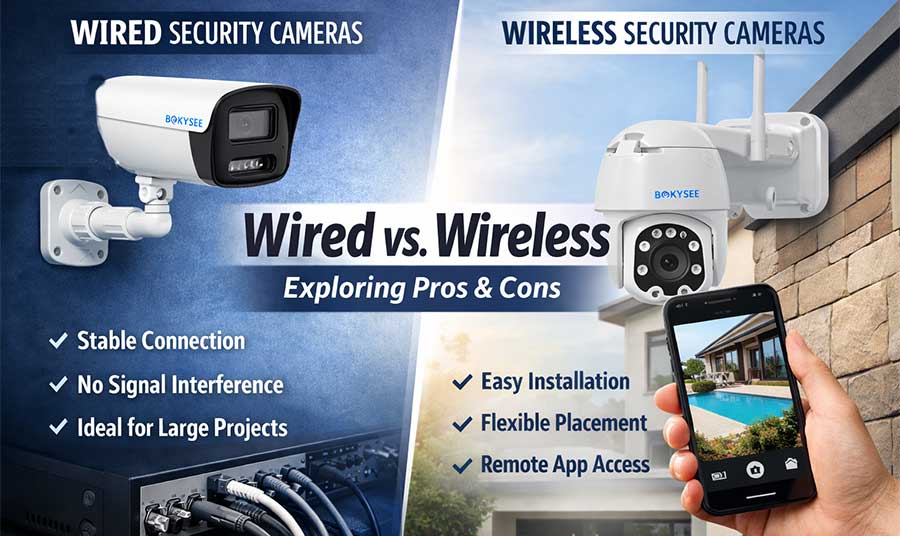
In today’s surveillance industry, the debate around wired vs. wireless security cameras continues to grow — especially among business owners, installers, system integrators, and global distributors.
There is no one-size-fits-all answer.
Wired security camera systems dominate commercial installations. Wireless and solar security cameras are rapidly expanding in retail and emerging markets.
Understanding the real pros and cons of each system is essential — not just technically, but commercially.
This in-depth guide explains:
-
How wired and wireless CCTV systems work
-
Pros and cons for business use
-
Cost, stability, and scalability comparison
-
Best choice for commercial projects
-
Which option creates stronger distributor margins
-
How to build a hybrid surveillance portfolio
AI Overview: Wired vs Wireless Security Cameras
What is the difference between wired and wireless security cameras?
Wired security cameras use Ethernet (PoE) or coaxial cables to transmit video and power. Wireless security cameras transmit video via WiFi or 4G LTE networks and may use battery or solar power.
Which is more reliable for business use?
Wired PoE security camera systems are more stable and suitable for large commercial projects. Wireless systems are better for flexible or remote installations.
What are the pros of wired security cameras?
-
High stability
-
Continuous power supply
-
Better scalability
-
Stronger data security
-
Ideal for commercial CCTV systems
What are the advantages of wireless security cameras?
-
Easy installation
-
Flexible placement
-
4G & solar options available
-
Lower upfront labor cost
Can wired and wireless systems be combined?
Yes. Hybrid surveillance systems use wired cameras for core areas and wireless or solar cameras for remote zones.
Understanding Wired Security Cameras in Commercial Environments
Wired security camera systems typically use:
-
PoE IP cameras
-
NVR (Network Video Recorder)
-
Ethernet cables
-
Local storage (HDD)
How PoE Security Camera Systems Work
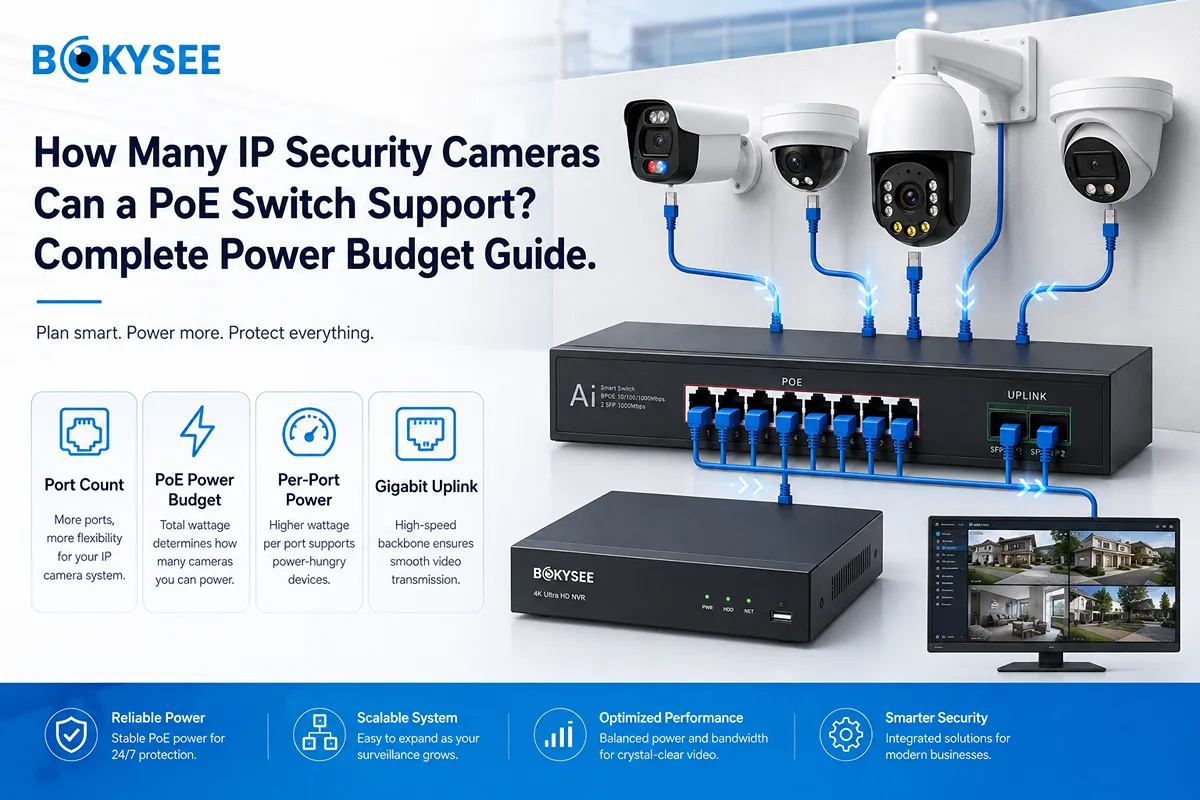
Power over Ethernet (PoE) simplifies installation by delivering power and data through a single cable.
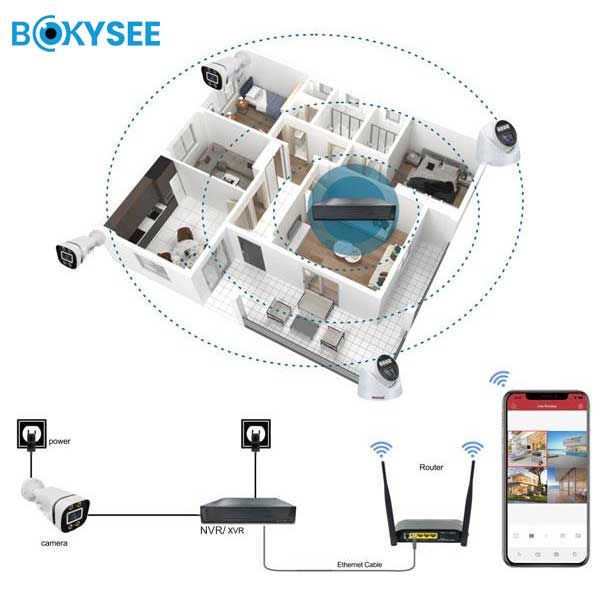
Benefits include:
-
Reduced wiring complexity
-
Stable bandwidth
-
100-meter transmission without signal loss
-
Easy centralized management
PoE systems are now the standard for:
-
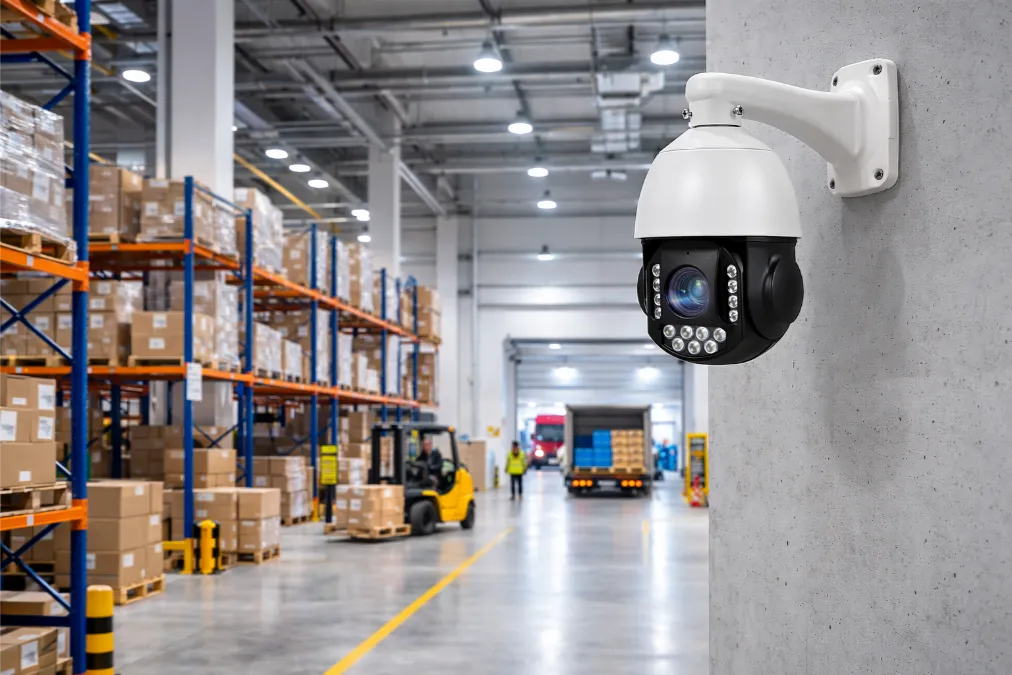
Warehouses
-
Factories
-
Supermarkets
-
Office buildings
-
Logistics centers
Pros of Wired Security Cameras
1. Maximum Signal Stability
Wired systems are not affected by:
-
WiFi congestion
-
Network interference
-
Router instability
For 24/7 commercial surveillance, reliability is critical.
2. Continuous Power Supply
Unlike battery-powered systems, wired cameras operate without charging interruptions.
3. Superior Scalability
PoE systems support:
-
8 / 16 / 32 / 64/ 96/128/196 channel NVR
-
Multi-building architecture
-
Centralized management
4. Enhanced Cybersecurity Control
Closed LAN environments reduce exposure to:
-
Signal interception
-
Wireless hacking
-
External cyber threats
Cons of Wired Security Cameras
-
Higher installation labor cost
-
Cable routing complexity
-
Less flexible relocation
However, for permanent commercial installations, these are long-term investments rather than drawbacks.
Understanding Wireless Security Cameras
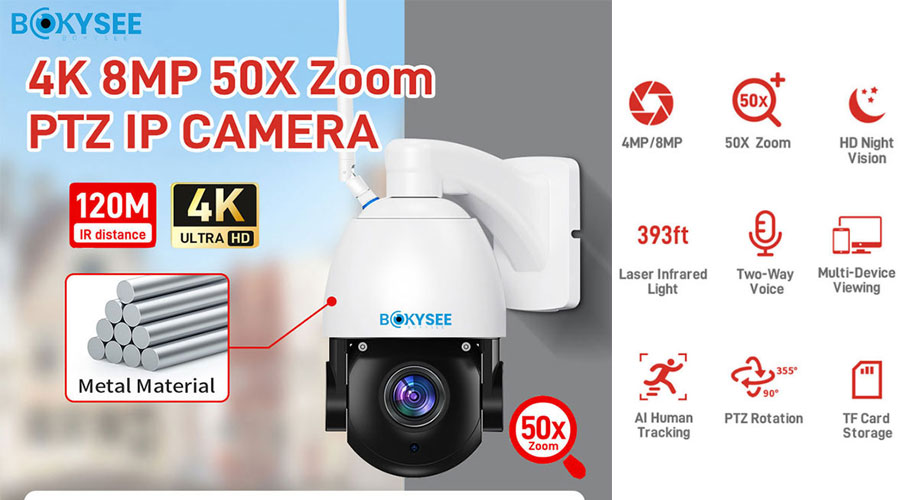
Wireless systems transmit video through:
-
WiFi networks
-
4G LTE SIM card networks
-
Cloud-based platforms
Pros of Wireless Security Cameras
1. Easy & Fast Installation
No network cable required. Ideal for:
-
Retail stores
-
Rental properties
-
Temporary construction sites
2. Flexible Deployment
Cameras can be repositioned easily without rewiring.
3. 4G Solar Security Camera Expansion
One of the fastest-growing segments in global markets is:
-
4G solar security cameras
-
Battery-powered PTZ cameras
-
Dual-lens solar systems
These models are especially popular in:
-
Africa
-
Middle East
-
South America
-
Rural Europe
Cons of Wireless Security Cameras
-
Signal-dependent performance
-
WiFi interference
-
Battery maintenance
-
Limited scalability for large projects
For mission-critical monitoring, signal testing is necessary.
Cost Comparison: Wired vs Wireless CCTV Systems
Equipment Cost
Wired systems: Higher upfront hardware investment
Wireless systems: Moderate hardware cost
Installation Cost
Wired: Higher labor cost
Wireless: Lower labor cost
Long-Term Maintenance
Wired: Stable, minimal intervention
Wireless: Possible battery replacement & network troubleshooting
For distributors, profitability depends on target market positioning.
Commercial Application Comparison
|
Scenario |
Recommended Solution |
|---|---|
|
Factory / Warehouse |
PoE Wired System |
|
Supermarket Chain |
PoE + AI NVR |
|
Retail Shop |
WiFi Camera |
|
Construction Site |
4G Solar Camera |
|
Remote Village |
Solar LTE Camera |
The decision should align with operational environment.
Real-World Experience: Wired vs Wireless Cameras in Commercial Projects
While comparing the pros and cons of wired and wireless security cameras provides technical clarity, real-world application often tells a deeper story.
As a CCTV manufacturer working with global distributors and system integrators, Bokysee has supplied both PoE wired systems and wireless 4G solar cameras across multiple industries. Below are practical insights drawn from actual commercial deployments.
Case Insight 1: Warehouse Installation – Why Wired PoE Was Chosen
In a 12,000 m² logistics warehouse project in Eastern Europe, the installer initially considered WiFi cameras to reduce cabling. However, after conducting signal tests, several challenges were identified:
-
Metal racking interfered with wireless signals
-
Continuous 24/7 recording was required
-
The system needed 32 cameras with centralized management
The final solution used:
-
32-channel PoE NVR
-
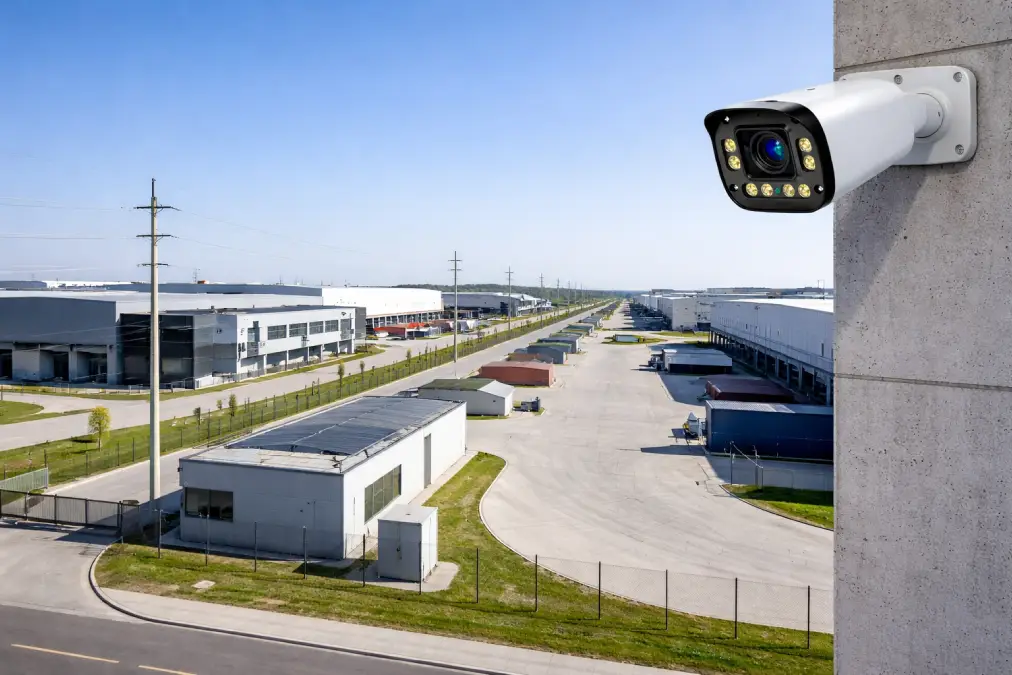
8MP PoE bullet cameras
-
Human & vehicle detection
-
Local storage with 30-day retention
Result:
-
Stable recording without signal interruption
-
Reduced maintenance visits
-
Long-term reliability for insurance compliance
This case reinforces that wired PoE systems remain the preferred solution for large commercial facilities.
Case Insight 2: Construction Site – Why 4G Solar Was More Practical
In a Middle East infrastructure project, installing wired systems was not feasible due to:
-
Lack of fixed electricity
-
Temporary project duration (6–8 months)
-
High labor cost for trenching cables
The solution deployed:
-
4G LTE solar PTZ cameras
-
Dual-lens models with active deterrence
-
Built-in SIM card connectivity
Result:
-
Zero wiring required
-
Remote live monitoring via mobile app
-
Fast installation within 1 day
-
Reduced security incidents
This scenario highlights how wireless solar cameras outperform wired systems in remote or temporary environments.
Technical Validation & Compliance
Beyond practical cases, system credibility must be supported by:
-
CE & RoHS compliance
-
ONVIF compatibility
-
Third-party chipset stability
-
Multi-market export certification
Bokysee products are exported to over 80 countries and undergo strict QC procedures, including:
-
Aging tests
-
Waterproof testing (IP66/IP67)
-
Temperature stress testing
-
Network stability testing
For commercial buyers, these validations reduce procurement risk.
Why Trust Matters in Commercial CCTV Decisions
When choosing between wired vs wireless security cameras, businesses are not only comparing technology — they are managing risk.
Key risk considerations include:
-
System downtime
-
Data security
-
Long-term maintenance cost
-
Compatibility with existing infrastructure
-
After-sales technical support
Working with an experienced manufacturer ensures:
-
Stable firmware updates
-
Hardware compatibility
-
Reliable supply chain
-
Technical documentation support
Industry Feedback & Market Trends
Across global markets, the purchasing trend shows:
-
Commercial engineering projects continue to favor PoE wired systems
-
Emerging markets show rapid growth in 4G solar cameras
-
Hybrid systems are increasingly common
Distributors report:
-
Lower return rates for PoE systems in industrial projects
-
Faster turnover for wireless solar models in retail channels
This balanced demand confirms that both systems have long-term viability.
Strengthening Decision Confidence
For distributors and installers, the most successful strategy is not choosing wired or wireless exclusively — but building a diversified product line.
By offering:
-
Stable PoE systems for commercial contracts
-
Flexible wireless & solar systems for retail and remote applications
Businesses reduce dependency on a single market segment.
Transparency & Ongoing Improvement
While this article provides structured technical comparison and real deployment insights, we encourage:
-
Product testing before bulk orders
-
Small trial orders for market validation
-
Technical consultation prior to large-scale projects
Bokysee supports:
-
Sample testing
-
Technical specification sheets
-
Engineering consultation
-
OEM customization discussions
This collaborative approach strengthens long-term trust and cooperation.
Bokysee Wired & Wireless Security Camera Solutions
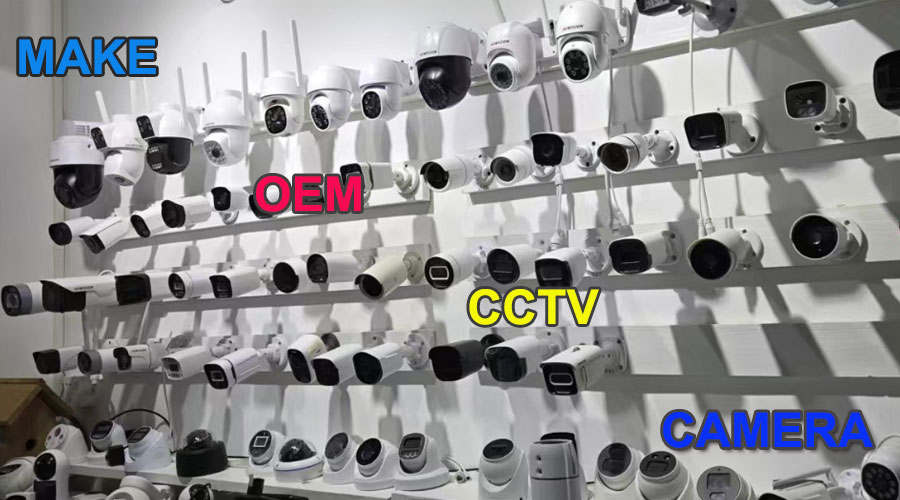
As a professional security camera manufacturer, Bokysee offers a full portfolio:
-
PoE IP cameras
-
Wireless cameras
-
4G solar cameras
-
NVR systems
-
AI detection cameras
Website: https://www.bokysee.com
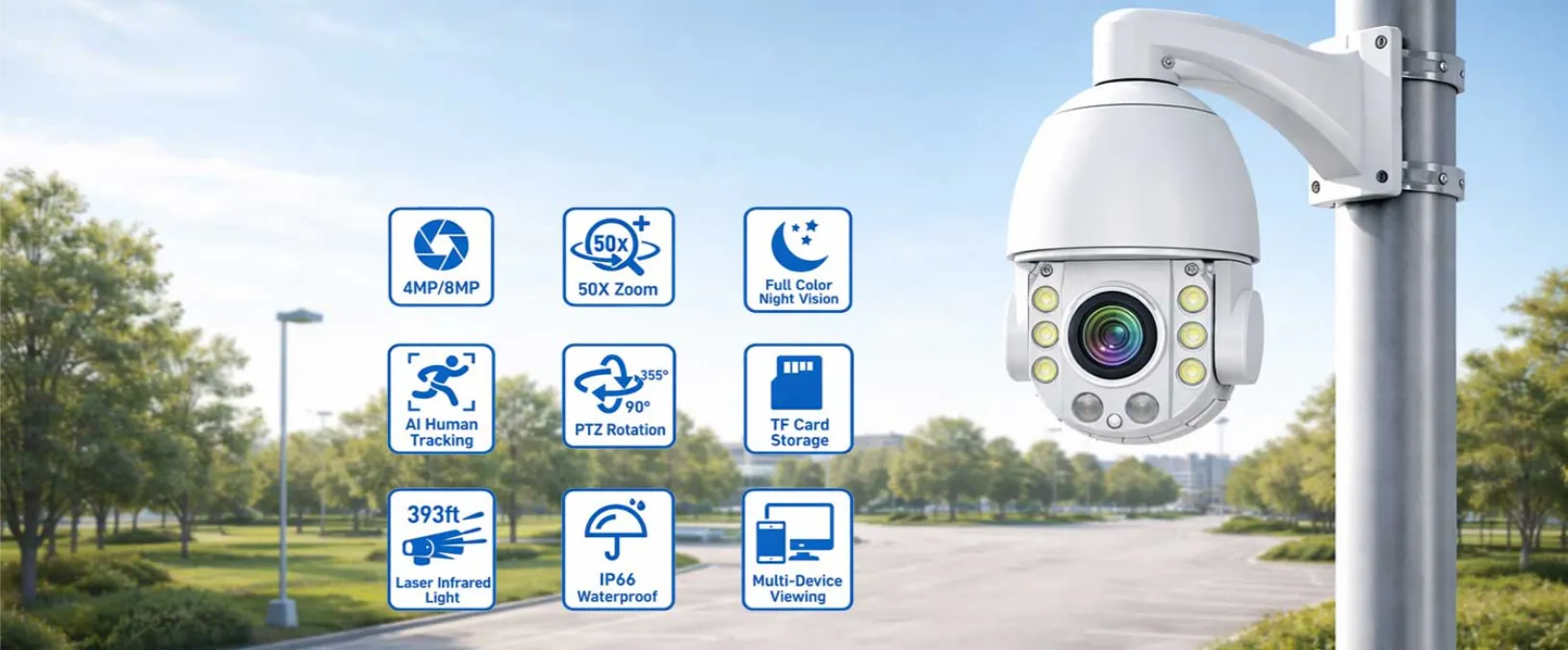
🔵 Bokysee PoE Wired Security Camera Systems
Key Features:
-
4MP / 5MP / 8MP / 4K resolution
-
Metal housing IP66/IP67
-
Smart dual-light full-color night vision
-
Human & vehicle detection
-
Red & Blue alarm deterrence cameras
-
ONVIF compatibility
Ideal for:
-
Engineering projects
-
Government tenders
-
Industrial facilities
🟢 Bokysee Wireless & Solar Camera Solutions
Key Features:
-
4G LTE SIM card support
-
Dual-lens solar PTZ
-
Long battery endurance
-
Tuya platform integration
-
Full-color night vision
-
Active deterrence lighting
Wireless solar models are strong-selling products in emerging markets and create excellent margins for wholesalers.
OEM & ODM Manufacturing Support
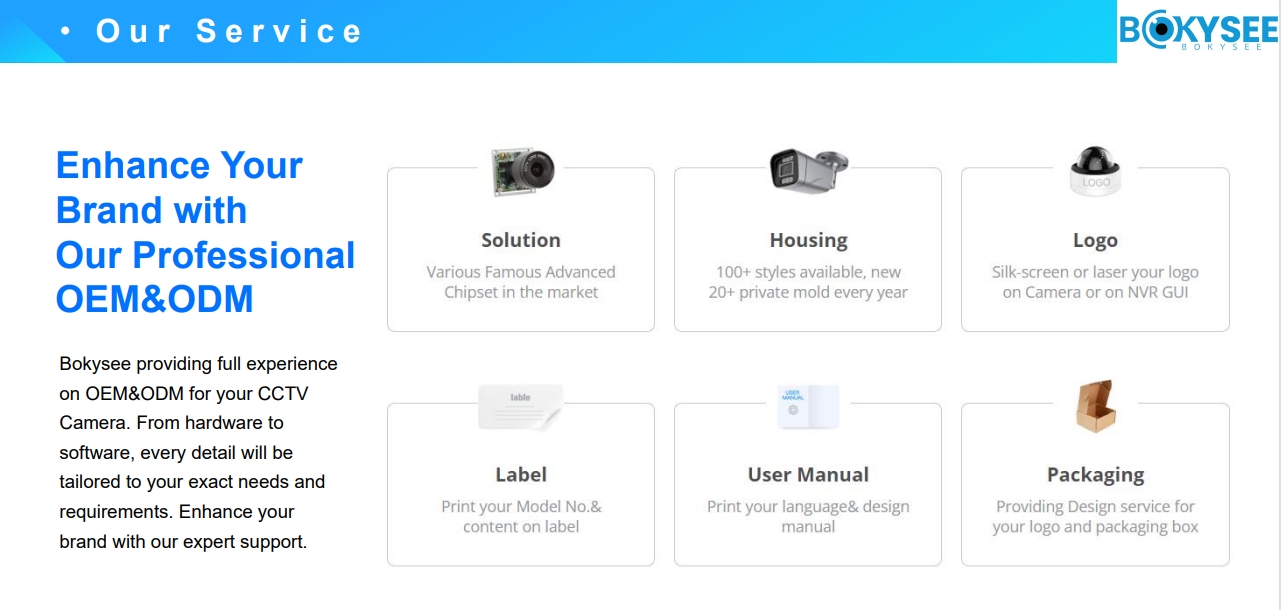
Bokysee supports:
-
Custom logo on camera & NVR
-
Custom packaging & manuals
-
White-label app customization
-
AI feature integration
-
Hardware modification
-
Low MOQ trial cooperation
Factory Strength:
-
10+ years experience
-
6 production lines
-
Strict quality control
-
CE & RoHS compliance
-
Export to 80+ countries
👉 About Us:
https://www.bokysee.com/about-us/
Hybrid Surveillance Strategy: The Smart Growth Model
The most successful distributors combine:
-
Wired PoE systems for commercial projects
-
Wireless solar cameras for retail & remote markets
This hybrid approach:
-
Reduces revenue risk
-
Expands customer segments
-
Increases overall profit margin
Final Conclusion
The comparison of wired vs. wireless security cameras is not about which is superior — it is about which aligns with your business goals.
Wired systems deliver:
✔ Stability
✔ Scalability
✔ Long-term reliability
Wireless systems deliver:
✔ Flexibility
✔ Rapid deployment
✔ Market adaptability
For installers, system integrators, and distributors, the best strategy is diversification — supported by a reliable manufacturing partner.
📩 Build Your Security Camera Portfolio with Bokysee
If you are:
-
A security distributor
-
An installation company
-
A system integrator
-
A brand owner seeking OEM support
Bokysee provides factory-direct wired and wireless CCTV solutions.
👉 Contact Us:
https://www.bokysee.com/contact-us/
You can get support:
-
Product catalog
-
Wholesale pricing
-
OEM customization details
-
Sample testing support
See Also
Comparing Wired And Wireless CCTV Systems: Key Advantages And Disadvantages
Choosing Between Analog And IP Cameras: What You Need To Know
Evaluating PoE And Wireless Cameras For Industrial Use Cases
Advantages And Uses Of PoE Security Camera Systems Explained





 English
  Spanish
  Russian