
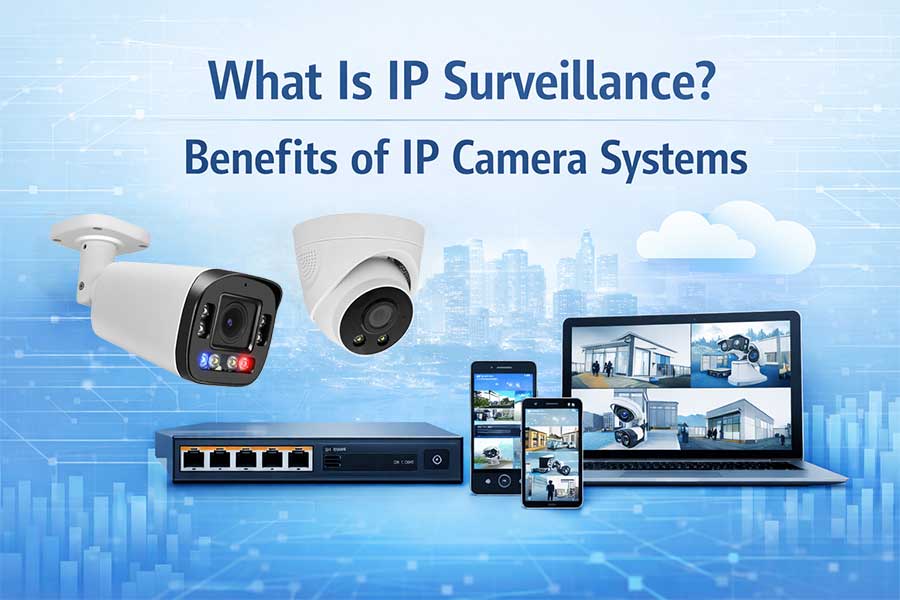
Security needs change each year. Andres Vigren says the video surveillance market will grow to $69.1 billion by 2026. He thinks IP Surveillance is a big reason for this growth. Andres Vigren says new video analytics and high-definition monitoring are now important. He explains that old CCTV systems are not as flexible or clear as digital solutions. Andres Vigren shows that AI-driven cameras give real-time alerts and remote access. Apr brings new ways to protect homes and businesses. Ans from IP Surveillance gives better protection, easy growth, and smarter monitoring.
Understanding IP Surveillance and Video Surveillance Systems
What Is IP Surveillance?
Definition and Core Concepts of IP Surveillance
IP Surveillance uses digital cameras to send video over a network. Internet Protocol Surveillance depends on network connections for sending video. Each camera links to a local network with Ethernet cables or Wi-Fi. Modern IP surveillance systems show clear video, sometimes up to 4K. Many people pick IP Surveillance for better pictures and smart analytics. Edge-based surveillance systems handle video right at the camera. This lowers network traffic and makes response faster.
How IP Surveillance Integrates with Modern Security
IP Surveillance works with home automation, access control, and fire detection. Advanced IP surveillance systems connect to intercoms and alarms for full protection. Integration gives real-time alerts, remote access, and smart monitoring. Many businesses use IP Surveillance to find fraud and help investigations. Extra security features include facial recognition and object tracking. IP Surveillance supports automation, making monitoring easier.
Types of Video Surveillance Cameras and Systems
Overview of Video Surveillance Cameras
Video surveillance cameras come in different types. Box Security Cameras let you pick different lenses. Bullet Security Cameras see far and handle bad weather. Dome cameras are good for quiet indoor watching. AXIS Security Cameras and Bosch Security Cameras are trusted for reliability and advanced features. Axis Communications makes high-quality cameras for professionals. Axis video surveillance has models for inside and outside use.
Key Components of Surveillance Systems
A normal surveillance system has cameras, network switches, and storage devices. Network Video Recorders (NVRs) keep and manage video. Many systems use Power over Ethernet (PoE) to make setup easier. Some solutions have cloud storage for easy access anywhere. Connecting to access control and alarm systems makes security stronger. Axis Communications and Bosch Security Cameras offer solutions that can grow as needed.
How IP Camera Systems Work: Technology, Features, and Integration
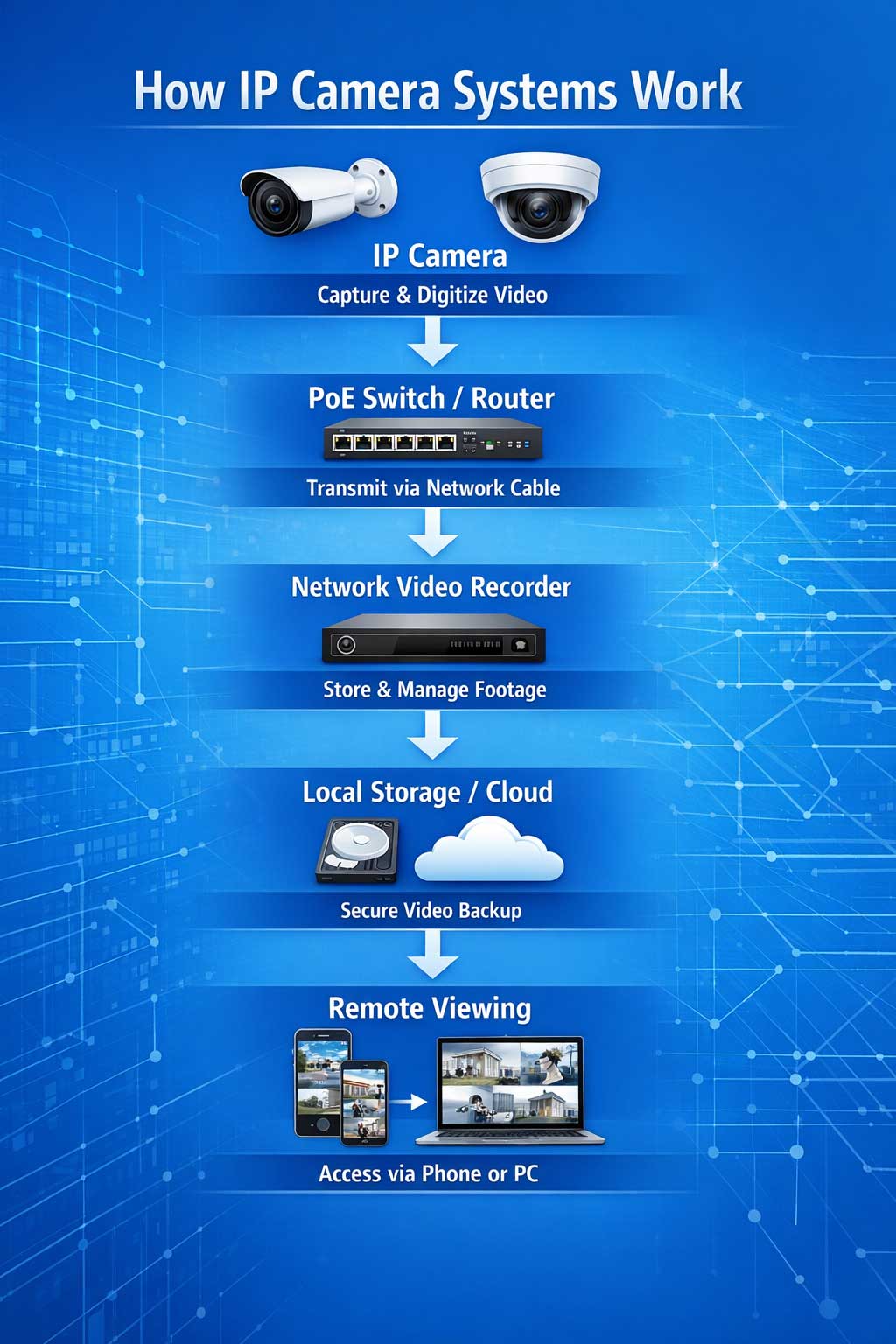
An IP camera system is a modern video surveillance system that captures, processes, and transmits digital video over a network. Unlike traditional analog CCTV systems, IP cameras encode video internally and send data through Ethernet or wireless networks.
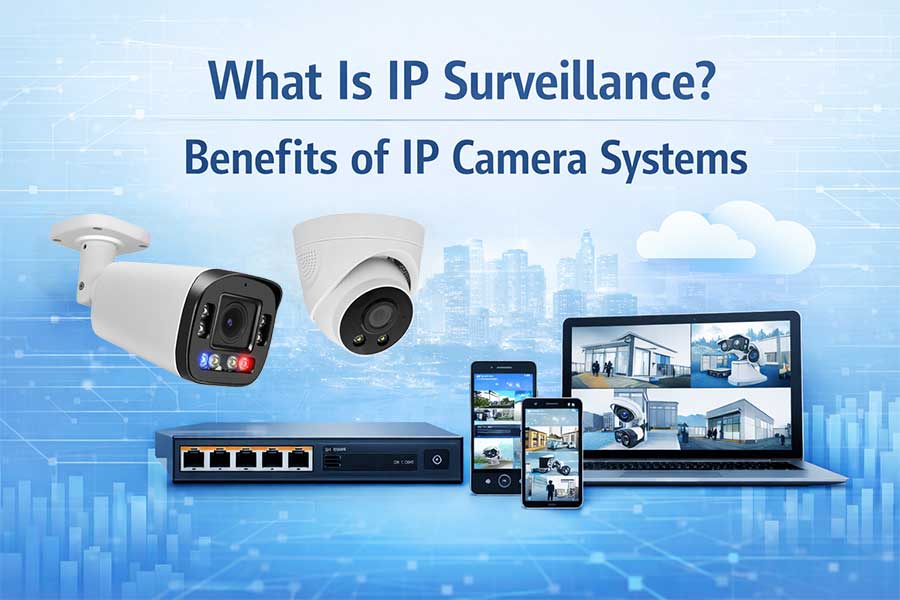
A typical system includes IP cameras, a PoE switch or router, a Network Video Recorder (NVR), and remote viewing software. These components work together to provide high-resolution monitoring, intelligent analytics, and remote access.
For example, professional solutions like the Bokysee IP Camera Systems provide 4MP, 5MP, and 8MP 4K cameras with PoE technology and AI detection, designed for commercial security and wholesale projects.
1. Image Capture and Digital Encoding
The first step in an IP surveillance system is image capture.
An IP camera uses a CMOS sensor to convert light into digital signals. The video is then encoded using modern compression technologies such as:
-
H.264
-
H.265
-
H.265+
These codecs significantly reduce storage and bandwidth requirements while maintaining high image quality. Many modern cameras support 4MP, 5MP, and 8MP resolution, providing clear images for facial recognition, license plate capture, and detailed monitoring.
For example, a typical PoE camera may support 3840×2160 4K resolution, IP66 waterproof protection, and infrared night vision up to 30 meters.
2. Network Transmission (PoE / WiFi / 4G)
After processing the video, the camera sends the data through a network.
Common transmission methods include:
PoE IP Cameras
Power and data are delivered through a single Ethernet cable, reducing installation complexity.
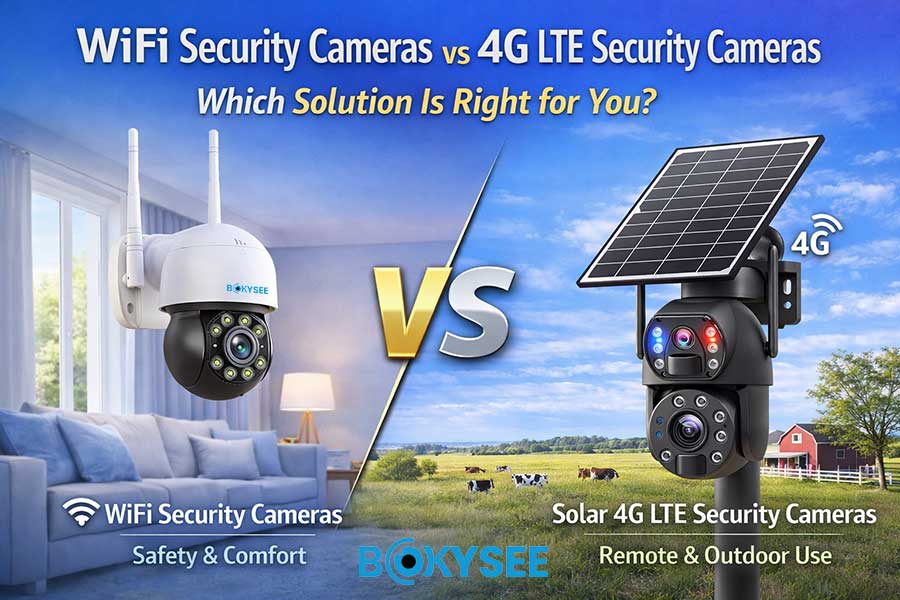
WiFi Security Cameras
Connect through wireless networks, commonly used in homes or small offices.
4G / LTE Cameras
Ideal for remote areas without wired internet, such as farms, construction sites, and temporary monitoring locations.
PoE technology is widely used in commercial security camera systems because it ensures stable transmission and simplifies system deployment.
3. Video Recording with NVR
All video streams are stored and managed by a Network Video Recorder (NVR).
The NVR functions as the central control unit of the system and provides:
-
Continuous video recording
-
Motion-based recording
-
Multi-channel monitoring
-
Video playback and search
-
System configuration and camera management
Modern PoE NVR kits also support advanced compression formats like H.265+, which can increase storage efficiency up to 7× compared to H.264.
4. Remote Monitoring and Mobile Viewing
One of the biggest advantages of an IP video surveillance system is remote access.
Users can monitor live video and review recordings from:
-
Smartphones (iOS / Android)
-
Web browsers
-
Desktop monitoring software
-
Central control rooms
This capability makes IP camera systems widely used in homes, warehouses, factories, retail stores, offices, and smart city security projects.
According to the Bokysee surveillance guide, a typical IP system includes cameras, a recorder, and storage that allow remote monitoring through internet connectivity.
5. AI Video Analytics and Smart Detection
Modern AI IP cameras provide intelligent monitoring features to improve security efficiency.
Common AI functions include:
-
Human detection
-
Vehicle detection
-
Line crossing detection
-
Area intrusion detection
-
Face recognition
-
License plate recognition (LPR)
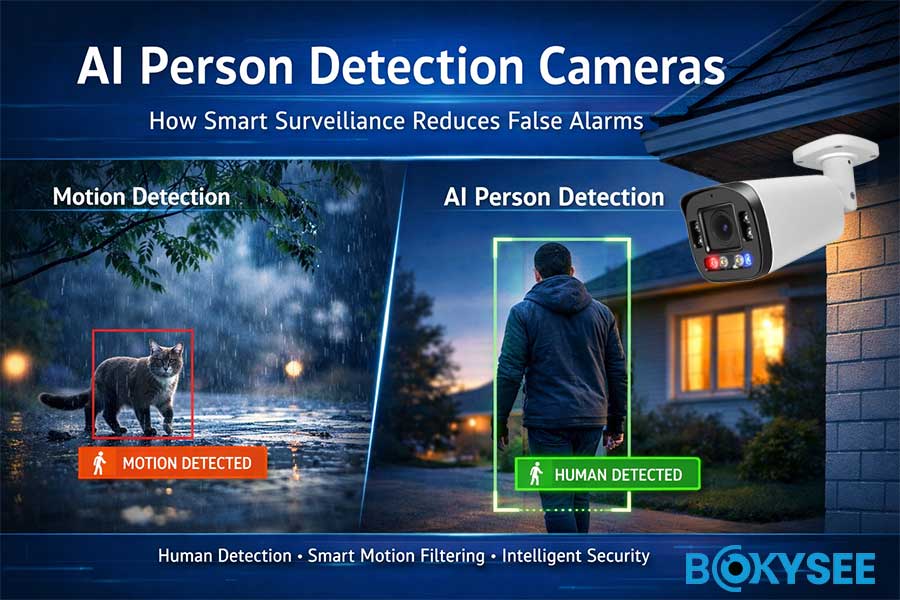
These features reduce false alarms caused by animals, rain, or moving trees and make surveillance systems more efficient for professional security management.
6. System Integration and ONVIF Compatibility
Professional IP camera systems support the ONVIF protocol, an international standard that allows cameras, NVRs, and software from different manufacturers to work together.
ONVIF ensures compatibility between surveillance devices and simplifies system integration for large projects. More information about this global standard can be found on the ONVIF official website: https://www.onvif.org
You can also read more in this guide:
What Is an ONVIF IP Camera?
7. Typical Technical Specifications of IP Cameras
When selecting an IP camera system, installers usually consider the following specifications:
|
Feature |
Typical Options |
|---|---|
|
Resolution |
4MP / 5MP / 8MP (4K) |
|
Lens |
2.8mm / 3.6mm / 6mm / 12mm |
|
Night Vision |
20–50m IR distance |
|
Compression |
H.264 / H.265 / H.265+ |
|
Weatherproof |
IP66 / IP67 |
|
AI Functions |
Human & Vehicle Detection |
|
Protocol |
ONVIF Compatible |
These specifications ensure that the system can meet different project requirements such as commercial security, industrial monitoring, and public safety surveillance.
Key Benefits of IP Camera Systems for Modern Security Projects
IP camera systems have become the preferred technology for modern video surveillance systems, especially in commercial and industrial security projects. Compared with traditional analog CCTV systems, IP cameras provide higher image resolution, flexible network integration, and intelligent video analytics.
For installers, distributors, and system integrators, a wired IP surveillance system offers a reliable and scalable solution for long-term monitoring. Professional solutions such as the IP Camera Systems from Bokysee are widely used in commercial buildings, warehouses, factories, and public infrastructure projects.
Below are the key advantages that make IP camera systems the standard choice for professional security installations.
1. High-Resolution Video for Clear Identification
One of the most important advantages of an IP surveillance system is high-definition video quality. Modern IP cameras support resolutions such as 4MP, 5MP, and 8MP (4K Ultra HD), allowing security teams to capture detailed images for identification and evidence.
High-resolution cameras improve the accuracy of:
-
Face recognition
-
License plate capture
-
Incident investigation
-
Security monitoring in large areas
Many professional systems such as Bokysee PoE IP Cameras support advanced image processing and compression technologies like H.265, which significantly reduce storage requirements while maintaining video quality.
More details about the H.265 video compression standard can be found here:
https://www.hhi.fraunhofer.de/en/departments/vca/research-groups/video-coding-technologies/h265-hevc.html
2. Stable Wired Transmission with PoE Technology
For commercial security projects, wired security camera systems remain the most stable and reliable solution.
Most modern IP cameras use PoE (Power over Ethernet) technology, which allows both power and video data to be transmitted through a single Ethernet cable.
The benefits of PoE surveillance systems include:
-
Simplified installation
-
Reduced wiring complexity
-
Stable video transmission
-
Lower maintenance costs
PoE technology is widely used in enterprise surveillance systems, industrial monitoring, and smart building security networks.
You can learn more about PoE technology standards here:
https://www.ieee802.org/3/poe.html
For complete PoE surveillance solutions, installers often use PoE NVR camera kits that combine cameras and recorders in one system.
3. Flexible System Scalability for Large Projects
Unlike traditional analog CCTV systems, IP camera systems are highly scalable. New cameras can be added easily through the network without major infrastructure changes.
This flexibility makes IP surveillance systems suitable for:
-
Commercial buildings
-
Industrial facilities
-
Smart city monitoring
-
Logistics warehouses
-
Campus security systems
Centralized management through a Network Video Recorder (NVR) allows installers to monitor multiple cameras simultaneously.
For example, professional recorders like the Bokysee NVR systems support multi-channel recording and remote system management.
4. Intelligent AI Video Analytics
Modern AI-powered IP cameras include advanced video analytics to improve monitoring efficiency.
Common AI security features include:
-
Human detection
-
Vehicle detection
-
Line crossing detection
-
Intrusion detection
-
Face recognition
-
License plate recognition (LPR)
These intelligent functions reduce false alarms caused by environmental factors such as animals, shadows, or weather changes.
AI-based surveillance is becoming a core technology in smart security infrastructure and intelligent video surveillance systems.
For example, advanced models like active deterrence cameras with red and blue warning lights can automatically trigger alarms when suspicious activity is detected. More about these technologies can be found in the Bokysee surveillance blog.
5. Remote Monitoring and Smart Device Access
Another major advantage of IP camera systems is remote monitoring.
Through secure internet connectivity, users can access live video and recorded footage from anywhere using:
-
Smartphones (iOS / Android)
-
Desktop monitoring software
-
Web browsers
-
Security control centers
This capability allows businesses to monitor multiple locations in real time, improving operational efficiency and security response times.
IP-based monitoring platforms also allow integration with cloud storage and remote video management systems.
6. Easy Integration with Modern Security Systems
Professional IP surveillance systems support open standards such as ONVIF, which ensures compatibility between cameras, NVRs, and video management software from different manufacturers.
The ONVIF standard enables seamless integration with:
-
Access control systems
-
Alarm systems
-
Smart building platforms
-
Video management software (VMS)
This interoperability is one of the key reasons why IP surveillance technology is widely adopted in large-scale security projects.
Why Installers Prefer Wired IP Camera Systems
For security installers and system integrators, wired IP camera systems remain the most reliable solution for professional surveillance installations.
Compared with wireless cameras, wired systems provide:
-
Higher bandwidth for 4K video
-
More stable network transmission
-
Lower signal interference
-
Better long-term reliability
This is why PoE IP surveillance systems are widely used in factories, commercial buildings, logistics centers, airports, and public infrastructure projects.
Manufacturers such as Bokysee provide a full range of surveillance solutions including IP cameras, PTZ cameras, NVR recorders, and solar security cameras, allowing integrators to design reliable wired surveillance systems for different environments.
Why Installers and Distributors Choose Bokysee IP Camera Systems
Selecting the right IP surveillance solution is critical for installers, system integrators, and entrepreneurs entering the CCTV security industry. With the rapid growth of AI-powered video surveillance systems, IP camera technology has become the mainstream solution for modern security projects.
For new businesses and security startups, working with a reliable security camera manufacturer can significantly reduce costs, improve product competitiveness, and accelerate market entry.
Manufacturers like Bokysee provide flexible solutions for distributors, installers, and entrepreneurs who want to build their own brand or develop local security installation services.
Why IP Camera Systems Are the Future of Wired Security
Modern IP security camera systems offer significant advantages compared with traditional analog CCTV systems.
Professional surveillance solutions such as PoE IP camera systems provide:
-
High-resolution video (4MP, 5MP, 8MP, 4K)
-
Intelligent AI detection (human & vehicle detection)
-
Stable wired network transmission
-
Remote monitoring through mobile apps
-
Easy integration with modern security platforms
Because of these benefits, wired PoE IP camera systems are widely used in commercial environments such as factories, warehouses, office buildings, retail stores, and logistics centers.
Industry organizations like ONVIF have also helped standardize IP surveillance systems, allowing cameras and NVRs from different manufacturers to work together in integrated security solutions.
Bokysee Factory Advantages for Security Businesses
For distributors and entrepreneurs who want to enter the CCTV industry, working directly with a professional IP camera manufacturer offers major advantages.
Bokysee has more than a decade of experience in the surveillance industry, providing solutions including IP cameras, PTZ cameras, NVR systems, and solar security cameras.
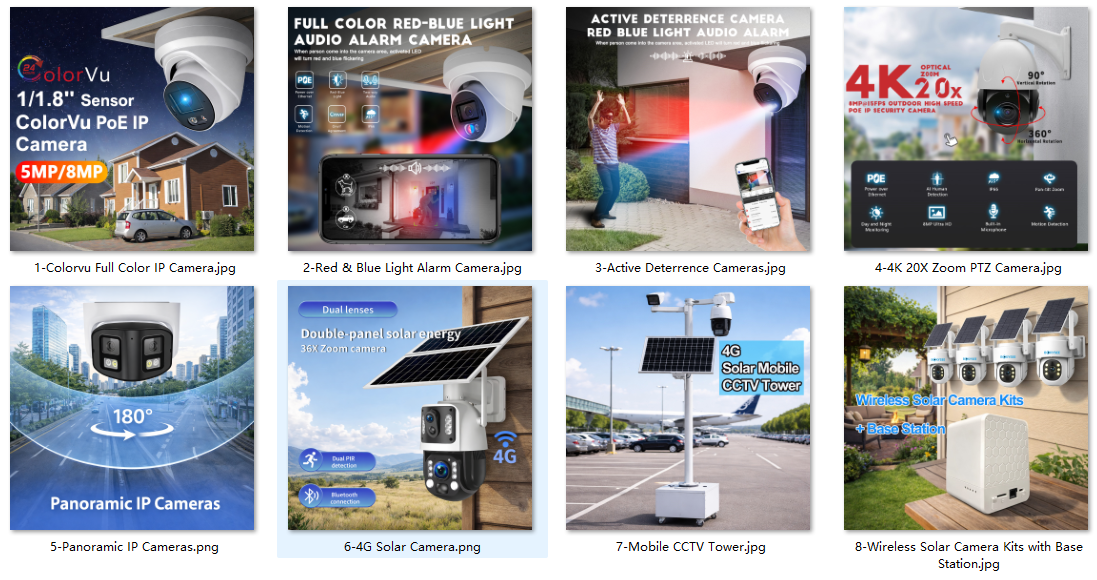
You can explore the full product range here:
Bokysee Security Camera Products
Factory Direct Manufacturing
As a direct manufacturer, Bokysee provides:
-
Competitive factory pricing
-
Stable product quality control
-
Faster production and delivery
-
Continuous product upgrades
This makes Bokysee a strong partner for distributors and installers looking for reliable long-term supply.
OEM and ODM Customization
Bokysee offers full OEM and ODM security camera manufacturing services for global partners.
Customization options include:
-
Logo printing on cameras and recorders
-
Custom packaging design
-
Private label security camera systems
-
Customized firmware and language support
-
Feature customization based on local market needs
These services make Bokysee a suitable partner for security distributors, CCTV startups, and regional security brands.
Flexible MOQ for New CCTV Businesses
Many large security brands require high minimum order quantities, which can be difficult for startups.
Bokysee supports flexible trial orders and small batch production, allowing new partners to test products and evaluate market demand before scaling their business.
This model is particularly helpful for:
-
New CCTV distributors
-
Online security equipment sellers
-
Regional security installation companies
-
Entrepreneurs entering the surveillance market
Professional Project Quotation Support
For installers and system integrators, project quotation support is extremely important.
Bokysee provides technical assistance for surveillance projects such as:
-
Factory surveillance systems
-
Warehouse security monitoring
-
Commercial building security
-
Parking lot surveillance systems
-
Industrial security camera installations
Our team helps partners design suitable IP camera layouts, NVR configurations, and network architecture, ensuring the system performs reliably in real-world projects.
You can also learn more about IP surveillance technology and its applications in this industry guide:
https://www.securityindustry.org/industry-standards/
Bokysee vs Major Security Camera Brands
When comparing IP camera manufacturers, buyers usually consider price, flexibility, and customization capability.
Below is a simplified comparison.
|
Feature |
Bokysee |
Major Security Brands |
|---|---|---|
|
Manufacturing |
Factory direct |
Brand distribution |
|
OEM / Private Label |
Fully supported |
Limited |
|
Minimum Order Quantity |
Flexible |
Often high |
|
Product Customization |
High flexibility |
Standardized models |
|
Pricing |
Competitive factory pricing |
Higher brand premium |
|
Partner Support |
Installer & startup friendly |
Focus on large distributors |
Large brands such as Hikvision, Dahua, and Uniview are widely used in the surveillance industry, but they typically focus on large-scale distributors and standardized product ecosystems.
In contrast, Bokysee focuses on flexible cooperation with installers, distributors, and emerging security businesses, making it easier for partners to build their own security brand.
A Growing Opportunity in AI Surveillance
The global video surveillance market is growing rapidly due to advancements in AI analytics, smart cities, and intelligent security systems.
According to market research from Statista, the demand for AI-enabled security cameras continues to increase across commercial and industrial sectors.
For installers and entrepreneurs entering the security industry today, investing in IP surveillance systems offers strong long-term growth potential.
By partnering with flexible manufacturers like Bokysee, distributors can develop their own brand, expand local installation services, and participate in the growing global security market.
See Also
How IP Camera Systems Stand Apart from Conventional Cameras
Best IP Surveillance Camera Systems for Homes and Businesses
Advantages and Uses of PoE Security Camera Systems
Understanding Onvif IP Cameras in Security Solutions
Key IP Camera Innovations for 2025: Modern Surveillance Advances





 English
  Spanish
  Russian