Skip to content
This analysis benchmarks current hardware mechanics against emerging AI tracking standards to help you build a scalable security infrastructure. We evaluate technical parameters like 30x optical zoom thresholds, sub-pixel motor accuracy, and 60W PoE++ power distribution to eliminate operational liabilities.
What is a PTZ Camera?
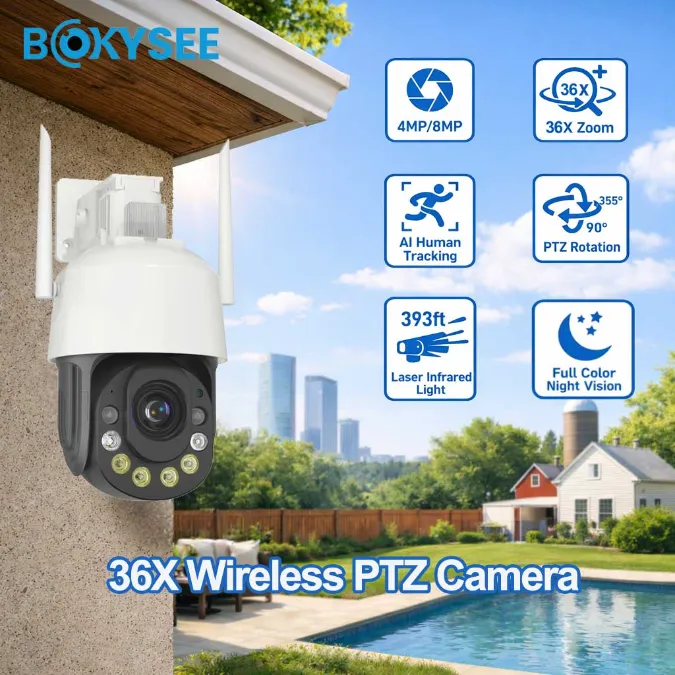
A PTZ (Pan-Tilt-Zoom) camera is a motorized surveillance unit that mechanically rotates and magnifies to actively monitor large areas without losing image quality.
Core Mechanics: Pan, Tilt, and Zoom
Unlike fixed cameras that stare at a single spot, PTZ units physically move to track activity. Precision servomotors and dedicated control circuits drive this mechanical movement, giving you active command over your surveillance zone.
- Pan: The base rotates horizontally up to 360 degrees to scan wide environments.
- Tilt: Vertical adjustments push up to 180 degrees, allowing you to capture elevated viewpoints or monitor the ground below.
- Zoom: Motorized lenses drive optical magnification, bringing distant objects into sharp focus without the pixelation associated with digital zoom.
Key Features and Practical Applications
Hardware mechanics are just the baseline. Operators manage these cameras remotely through software interfaces or physical joysticks. You can configure automated patrol paths, lock in preset viewing angles for quick recall, or let AI-driven tracking follow moving subjects autonomously. Coupled with high-definition sensors, built-in infrared technology delivers clear video feeds up to 300 meters in complete darkness.
This flexibility makes PTZ units the standard for active monitoring across multiple industries.
- Security Deployment: Guard teams actively monitor expansive areas like facility perimeters, commercial parking lots, and vast warehouses.
- Broadcast Production: Media crews rely on smooth mechanical movements for live event coverage and sports broadcasting.
- Education and Training: Universities and corporations use auto-tracking features to capture distance learning sessions and presentations without a dedicated camera operator.
The Mechanics of Pan, Tilt, and Zoom Precision
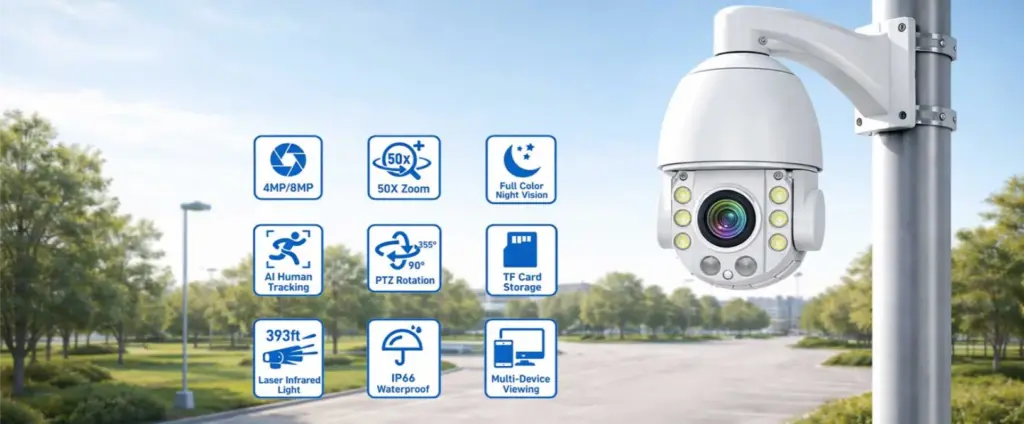
Pan, tilt, and zoom precision relies on exact motor control and continuous calibration. These systems work together to deliver sub-pixel accuracy and distortion-free magnification for professional surveillance.
Motor Systems Driving Pan, Tilt, and Zoom
Stepper motors serve as the mechanical muscle behind camera movement. Gear-based and belt-driven designs manage the horizontal rotation, allowing units to achieve a full 360-degree sweep. For vertical viewing ranges, these exact motor setups drive tilt adjustments up to 135 degrees to track elevated or lowered targets.
The zoom function relies entirely on physical hardware rather than software manipulation. Optical lens elements physically shift inside the housing to increase magnification. This mechanical adjustment maintains sharp image clarity across long distances, completely bypassing the pixelation problems caused by digital software interpolation.
Calibration Methods for Positional Accuracy
Continuous camera operation naturally introduces mechanical offsets and hardware drift over time. Systems counter this physical wear using static and dynamic calibration models. These embedded calibration protocols correct alignment errors in real time and eliminate rolling shutter effects that distort high-speed video feeds.
Speed and positioning demand tight integration between hardware and onboard logic. Servomotors pair directly with tracking software to lock onto and follow moving targets. These automated systems operate at rotation speeds ranging from a subtle 0.024 degrees up to a rapid 500 degrees per second, securing sub-pixel accuracy throughout the entire tracking maneuver.
Complete OEM/ODM Security Camera Solutions
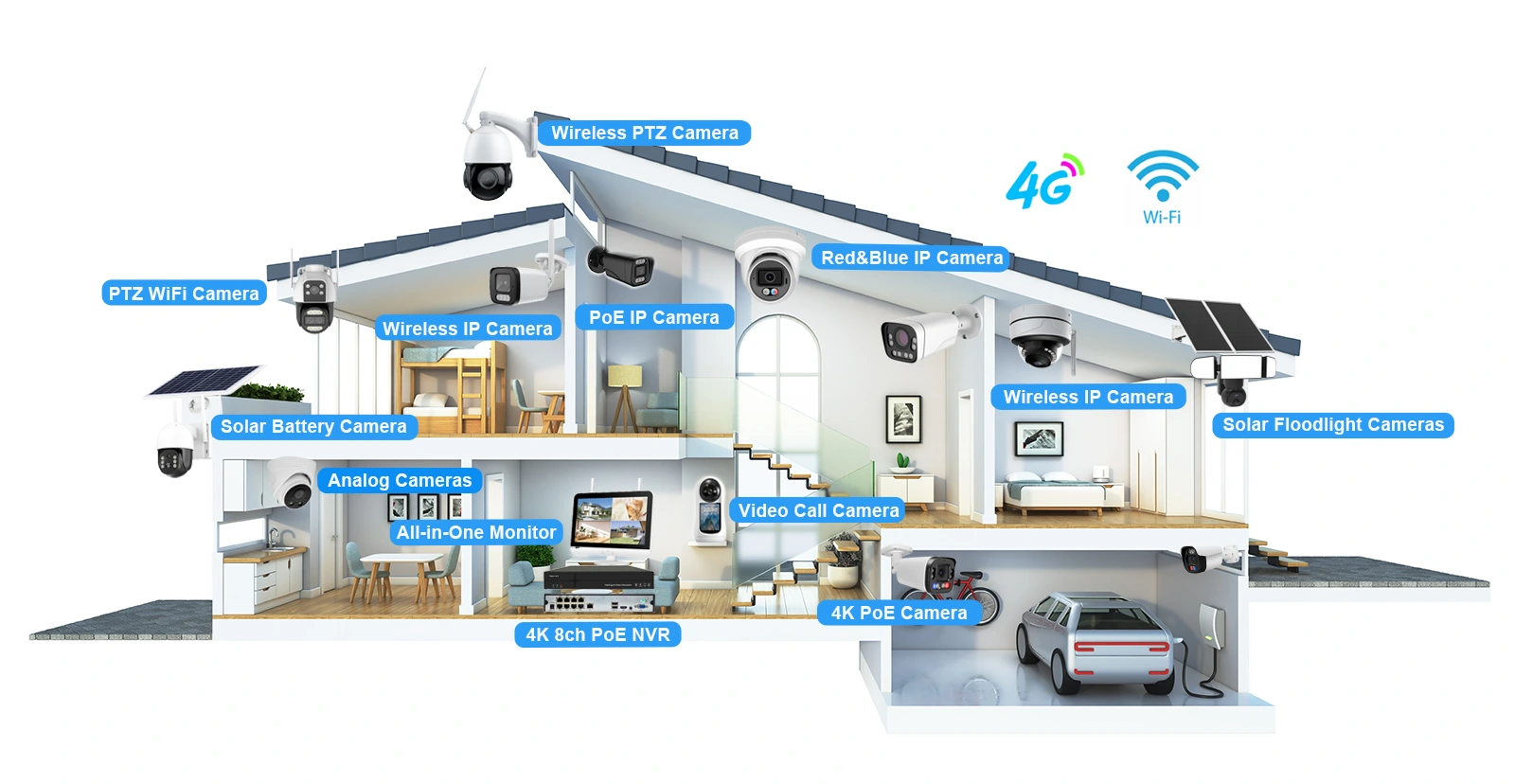
Optical Zoom vs Digital Zoom Explained
Optical zoom uses physical lenses to magnify subjects without losing detail, while digital zoom stretches pixels through software and reduces image clarity.
How Optical Zoom Magnifies Subjects
PTZ cameras rely on optical zoom to physically shift lens elements and narrow the field of view before light hits the sensor. This hardware-driven approach captures distant targets with absolute clarity.
- Mechanical Adjustment: Internal motors physically align the lens to magnify the target.
- Resolution Preservation: The camera maintains full image quality without pixelation.
- Threat Identification: Security teams accurately recognize vehicles and personnel from extreme distances.
The Mechanics of Digital and Hybrid Zoom
Digital zoom completely bypasses physical hardware. It relies on software algorithms to crop and enlarge a specific section of the sensor image. This process forces pixels to stretch, instantly reducing overall detail and producing grainy footage that limits effectiveness for critical investigations.
- Pure Digital Zoom: Enlarges existing pixels via software, severely degrading image sharpness.
- Hybrid Zoom: Applies optical magnification up to its physical limit before switching to digital extension.
Hybrid systems provide a practical middle ground. They balance high-resolution clarity with extended reach, giving operators maximum distance without immediately sacrificing usable evidence.
The Rise of AI Tracking and Human Detection
Edge computing and AI algorithms allow modern PTZ cameras to autonomously track subjects in real time, driving rapid adoption across security and professional broadcasting.
Core Technologies Behind Human Detection
Modern PTZ cameras process thousands of frames per minute using onboard edge computing. They analyze facial features, body posture, and clothing details instantly. Built-in algorithms execute real-time adjustments for pan, tilt, and zoom functions, removing operator delay. Simultaneously, these systems manage exposure and noise reduction to keep the image sharp in challenging lighting conditions.
Operators utilize specialized tracking modes to fit their specific environment. Zone monitoring restricts the camera’s attention to predefined areas, while auto-framing maintains optimal subject composition without any manual input.
Market Expansion and Real-World Applications
Organizations across industries now demand predictive tracking to replace manual monitoring. This operational shift drives massive market growth and changes how facilities deploy visual equipment.
- Market Projection: Analysts expect the global AI camera market to reach $18.96 billion in 2026, fueled heavily by commercial demand for predictive tracking.
- Security Deployment: Teams use these cameras to track intruders autonomously across restricted zones, drastically reducing the screen-monitoring workload for human guards.
- Broadcasting & AV: Professional video production sectors rely on autonomous systems to follow presenters and manage complex multi-participant scenes with exact precision.
Powering Your PTZ: PoE++ vs Solar Systems
PoE++ delivers stable, high-wattage power over existing cables for urban sites, while solar provides essential off-grid independence for remote perimeters despite higher upfront costs.
How PoE++ and Solar Systems Supply Power
PTZ cameras require serious power to drive motors, stabilizers, and infrared heaters, easily demanding 40W or more. PoE++ handles this by delivering up to 60W or 100W over existing Ethernet cables. The system uses auto-classification to optimize efficiency, matching power output exactly to the device needs. This guarantees up to 90W of usable input right at the camera, even after standard cable losses.
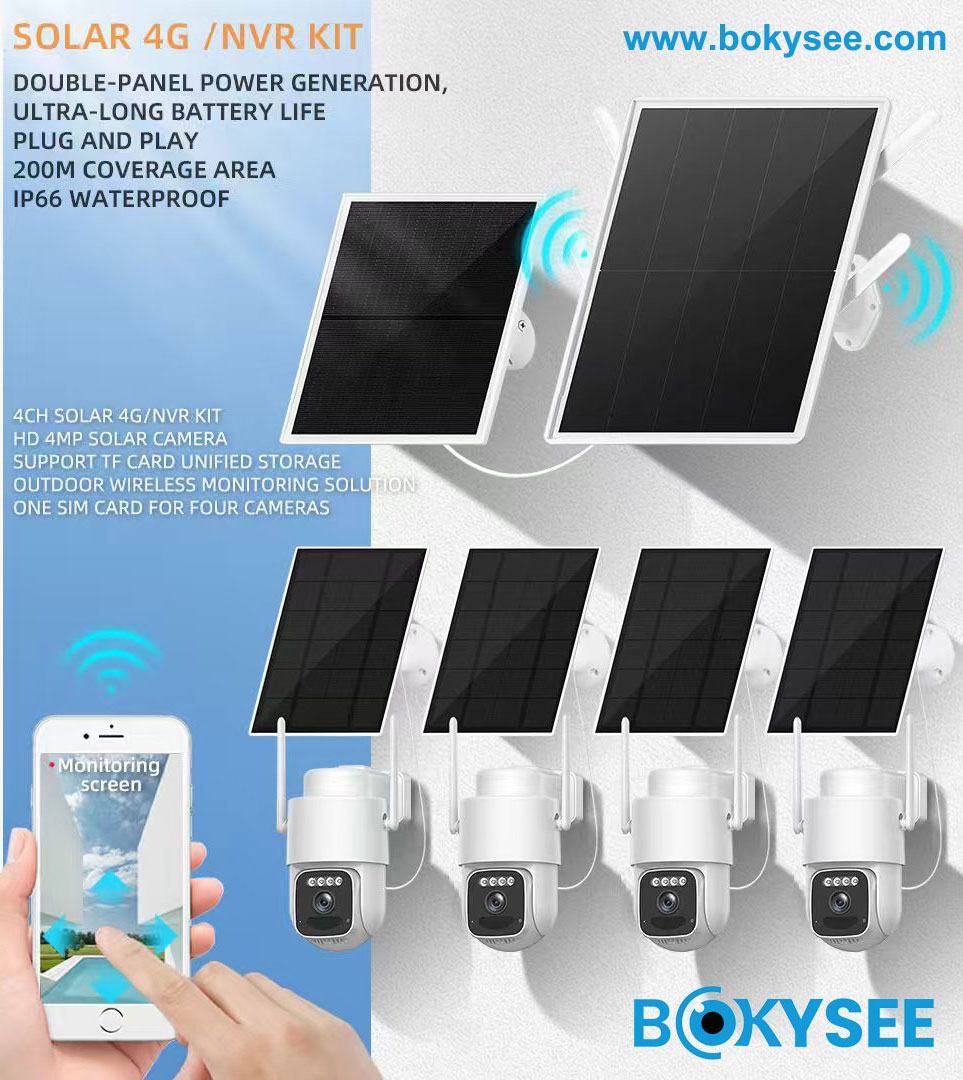
Remote areas lacking grid access rely on solar setups. These installations use solar panels, deep-cycle batteries, and charge controllers to convert DC power to meet standard PoE++ demands. Because a PTZ pulls a continuous 40W to 60W draw, you must build off-grid systems with heavily oversized batteries and panels to support the camera through nighttime operation and cloudy conditions.
Choosing Between Wired PoE++ and Off-Grid Solar
The decision between wired power and solar comes down to site infrastructure and reliability expectations. Grid-dependent PoE++ guarantees consistent power for urban, multi-camera sites. You deploy a simple Ethernet infrastructure that requires almost zero ongoing upkeep. Solar installations require a different approach with distinct financial and operational trade-offs.
- Maintenance: Solar demands complex panel mounting, regular surface cleaning, and scheduled battery replacements, unlike set-and-forget Ethernet wiring.
- Weather Risks: Weather-dependent solar setups risk severe performance dips during heavy snow or persistent cloud cover.
- Financial Structure: Wired setups offer much lower upfront hardware costs. Solar requires high initial spending for panels and batteries but entirely eliminates ongoing electricity fees.
- Ideal Deployment: Select PoE++ for structured, networked locations needing stable data and power. Reserve solar for isolated property perimeters that prioritize grid independence.
Choosing PTZ for Different Industries (Retail/Industrial)
Retail PTZ prioritizes AI auto-tracking and crowd monitoring for theft prevention, while industrial setups demand rugged, weatherproof builds with long-range 30x optical zoom for expansive areas.
| Deployment Type | Primary Focus | Key Technologies | Typical Coverage Areas |
|---|---|---|---|
| Retail Stores | Theft prevention, foot traffic management | AI auto-tracking, motion alerts, object detection | Shop floors, aisles, checkout stations |
| Industrial Facilities | Asset protection, perimeter monitoring | 360-degree pan, 30x optical zoom, low-light sensors | Warehouses, outdoor parking, campuses |
Retail Store Deployments
Retail environments face dynamic security challenges, from organized retail crime to unpredictable foot traffic during sales events. Deploying a single PTZ camera across shop floors and aisles allows security teams to actively manage open spaces, successfully replacing multiple fixed cameras.
- Wide-area coverage: Sweeps across large retail floors to monitor cashier zones and high-value merchandise without blind spots.
- AI auto-tracking: Locks onto suspicious individuals and follows them through crowded aisles.
- Real-time alerts: Uses edge-based analytics for motion and object detection to actively prevent theft.
Industrial Facility Deployments
Industrial sites like enterprise campuses, ship-from-store warehouses, and manufacturing plants require robust surveillance built for massive footprints. These environments demand hardware optimized for long-range visibility and extreme durability.
- Continuous 360-degree pan: Scans sprawling warehouse corridors and perimeter fences with zero interruption.
- 30x optical zoom: Captures sharp details like license plates or worker ID badges across large enterprise campuses.
- Weatherproof designs: Shields motorized mechanics from dust, heavy rain, and temperature fluctuations in outdoor parking lots.
- Low-light sensors: Ensures reliable video capture during night shifts on dimly lit manufacturing floors.
Factory Insights: How Bokysee Builds 60k Units/Month
Over 150 skilled workers and strict three-stage quality controls enable Bokysee to reliably manufacture 60,000 PTZ cameras monthly for wholesale buyers across 80 countries.
Production Scale and Assembly Lines
Bokysee staffs six dedicated production lines with over 150 skilled workers. This focused infrastructure maintains a reliable baseline output of 60,000 units per month. The factory floor leverages optimized automation and fast mechanical changeovers to keep assembly operations moving efficiently.
These streamlined processes let production teams switch from manufacturing complex PTZ variants to NVR systems rapidly. This operational flexibility ensures the facility meets high-mix global demand without stalling the assembly line or delaying wholesale bulk orders.
Three-Stage Quality Control Systems
High volume means nothing if the hardware fails in the field. The factory enforces a strict three-stage quality inspection on every single shipment. Technicians explicitly test and verify the precise pan-tilt-zoom mechanics alongside long-range imaging stability before authorizing any batch for release.
Plant operations also integrate AI vision inspection tools directly into the standard workflow. These automated systems catch microscopic defects and drastically reduce overall quality costs. This rigorous testing protocol guarantees Bokysee ships reliable hardware tailored for wholesale distributors and demanding B2B projects active in 80 countries.
Frequently Asked Questions
What is a PTZ camera?
A PTZ (pan-tilt-zoom) camera uses mechanical motors to pan horizontally, tilt vertically, and zoom optically. This setup allows a single unit to monitor large, dynamic areas. You can control these cameras manually via a joystick or software, or configure them to run automated patrols for hands-free surveillance.
How do PTZ cameras differ from fixed cameras?
PTZ cameras physically move to cover massive areas and rely on optical zoom to capture distant details like license plates or faces. Because they adjust their field of view, they only record where they currently point, which introduces potential blind spots. Fixed cameras lock onto a single static scene to deliver continuous, uninterrupted coverage 24/7 without any mechanical wear.
Are PTZ cameras better for home or commercial use?
These cameras perform in both environments but dominate in commercial settings like retail parking lots, industrial warehouses, and large campuses. For residential use, they make sense only in expansive outdoor spaces like long driveways or large acreage. You should avoid installing them in small rooms, narrow corridors, or standard suburban backyards where a fixed camera does the job efficiently.
Do PTZ cameras feature auto-tracking?
Many modern models incorporate computer vision and AI algorithms to automatically lock onto and follow moving subjects, such as people or vehicles. Not every unit includes this capability, though. Basic models and older analog systems require manual operation through a joystick or network video recorder (NVR) interface.
How effective is the night vision on a PTZ camera?
High-end PTZ cameras deliver serious night vision performance, capturing usable footage anywhere from 330 feet to over 2,600 feet in total darkness. They achieve this using adaptive IR LEDs that adjust intensity based on zoom level. Premium models also pack low-light CMOS sensors to capture color in near-dark conditions, while specialized units use laser IR technology for extreme-range identification.
What are the main installation requirements for a PTZ camera?
You need to mount the camera high enough—typically 8 to 12 feet off the ground—to maximize the field of view and prevent physical tampering. The mounting location must be free of walls or beams that block the mechanical pan and tilt path. For power and data, Power over Ethernet (PoE++) is the industry standard, allowing you to run a single Cat6 cable to handle heavy motor draw, video transmission, and network connectivity.
Final Thoughts
Relying on static cameras or cheap digital-zoom hardware exposes your commercial sites to severe blind spots and unusable evidence. Upgrading to AI-driven PTZ systems with true optical magnification and rigorous three-stage factory quality control provides the only reliable defense against active security threats. Your operational security depends on deploying commercial-grade mechanics that perform flawlessly under pressure.
Don’t guess on camera reliability—verify it at your own facilities. We recommend requesting a sample unit to test the optical precision and automated AI tracking firsthand. Contact the Bokysee wholesale team to discuss bulk pricing, OEM specifications, and your upcoming project requirements.







 English
  Spanish
  Russian