 Skip to content
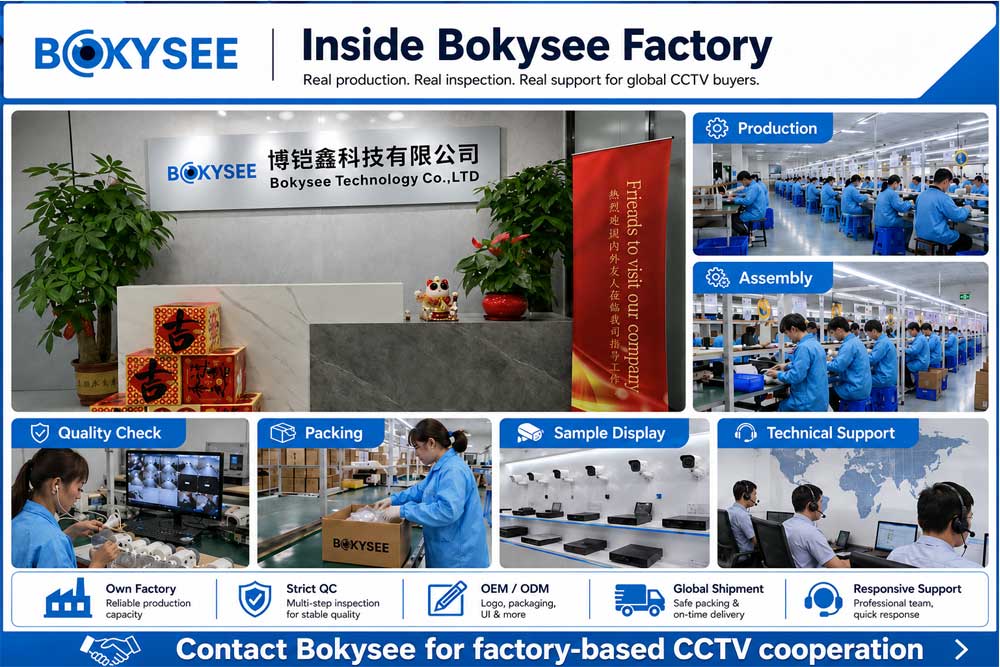
For CCTV installers, distributors, system integrators, and project buyers, product quality is not only about how a camera looks when it arrives.
It is about how the camera performs after installation.
A good CCTV camera should provide stable image quality, reliable night vision, smooth recording, proper NVR compatibility, and long-term operation in real project environments. If the product is unstable, the buyer may face customer complaints, extra maintenance visits, project delays, and higher after-sales cost.
This is why factory quality control matters.
At Bokysee, quality control is not treated as one final inspection step. It is part of the full production process, from material preparation and assembly to function testing, aging test, packaging, and shipment preparation.
This article explains how CCTV camera quality control works inside Bokysee factory and why overseas B2B buyers should care about the factory process behind the product.
Why CCTV Camera Quality Control Matters for B2B Buyers
For end users, a CCTV camera is judged by simple results:
Can it see clearly?
Can it record reliably?
Can it work at night?
Can it stay online?
Can it last after installation?
For B2B buyers, the question is deeper.
You need to know whether the supplier can deliver consistent product quality across samples, trial orders, and bulk orders.
A sample may work well, but bulk order consistency is what really affects your market reputation.
Poor quality control can create many hidden costs:
| Quality Issue | Buyer Impact |
|---|---|
| Unstable image quality | More customer complaints |
| Poor night vision | Lower project satisfaction |
| Weak housing or assembly | Higher failure risk |
| NVR compatibility issue | Longer installation time |
| Missing label or wrong packaging | Distribution and delivery problems |
| Unstable batch quality | More after-sales pressure |
For installers and wholesalers, every return is not only a product problem. It may also mean extra labor, replacement cost, lost time, and weaker customer trust.
That is why choosing a CCTV camera manufacturer should not only be about price. Buyers should also check how the factory controls quality before shipment.
Inside Bokysee Factory: From Components to Finished CCTV Cameras
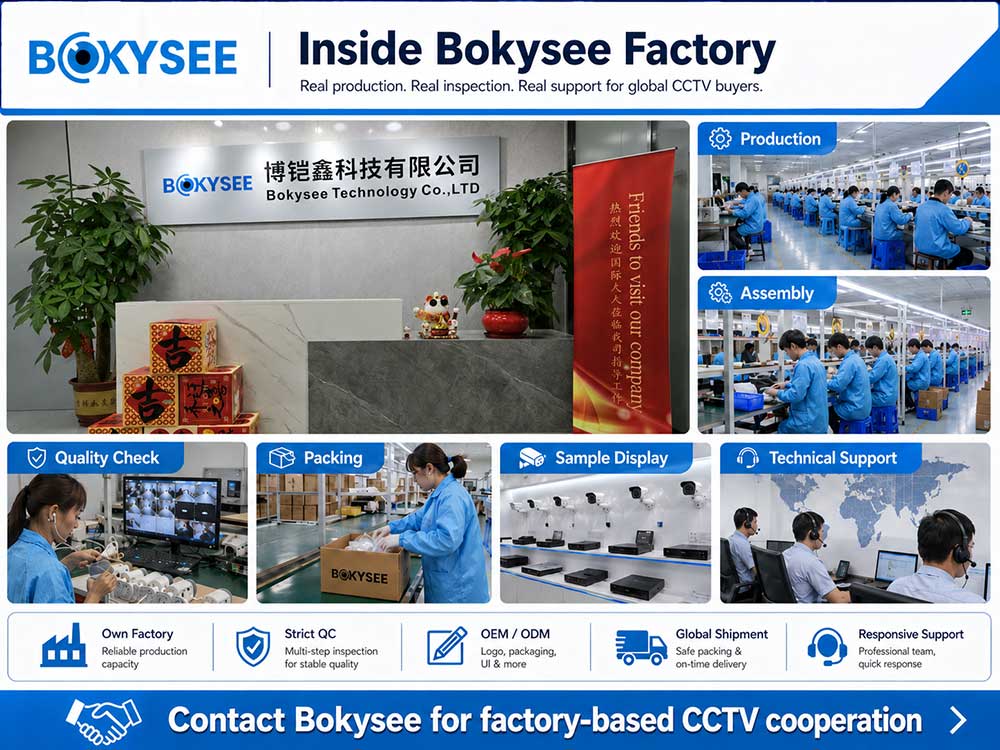
A stable CCTV camera starts before final assembly.
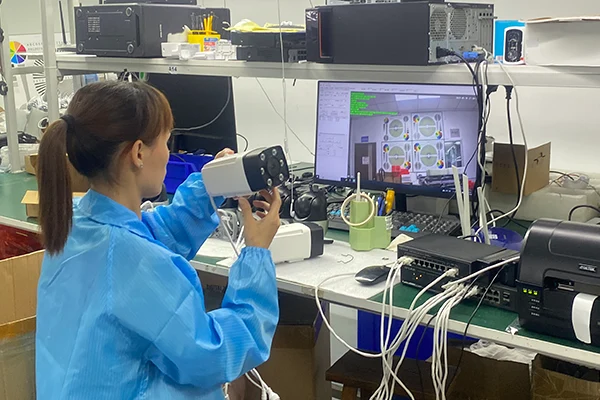
Inside the factory, the production process usually includes material preparation, component inspection, PCBA assembly, lens and housing assembly, cable connection, function testing, aging test, final inspection, packaging, and shipment preparation.
Each step affects the final product.
For example, if the lens is not properly installed, the image may not be clear. If the LED board is unstable, night vision may not perform well. If the housing is not assembled correctly, outdoor waterproof performance may be affected. If the firmware or network setting is not checked, installers may face extra configuration work on site.
This is why a professional CCTV camera factory needs a clear workflow.
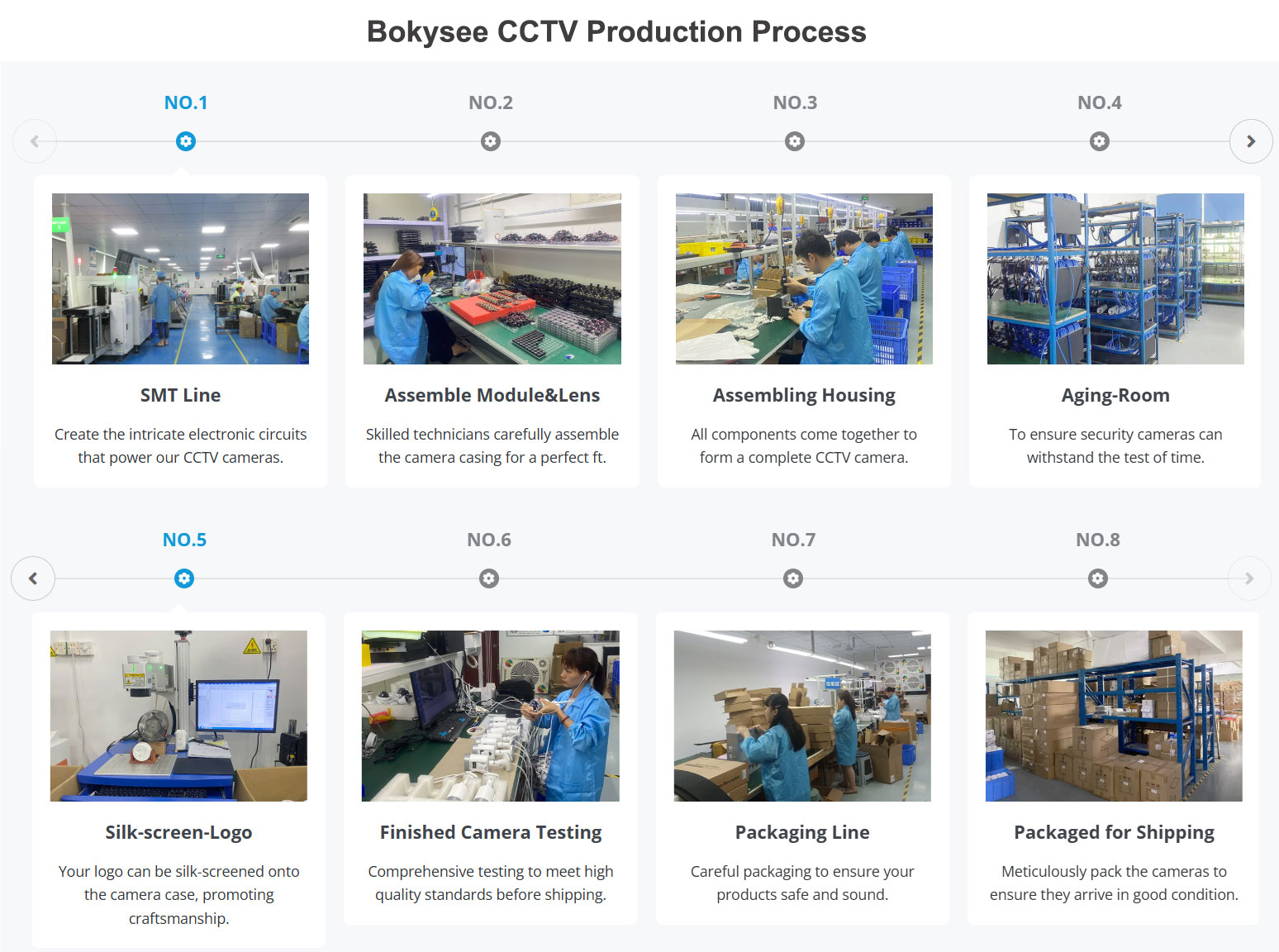
A typical Bokysee production process includes:
-
Material and component preparation
-
Camera assembly
-
Firmware and function setup
-
Image and night vision testing
-
Network and app connection testing
-
Aging test and stability check
-
Final inspection
-
Packaging and shipment preparation
This process helps reduce basic production errors before the products leave the factory.
For overseas buyers, factory workflow transparency is important because it shows that the supplier understands project reliability, not just product sales.
Key CCTV Camera Quality Inspection Steps Before Shipment
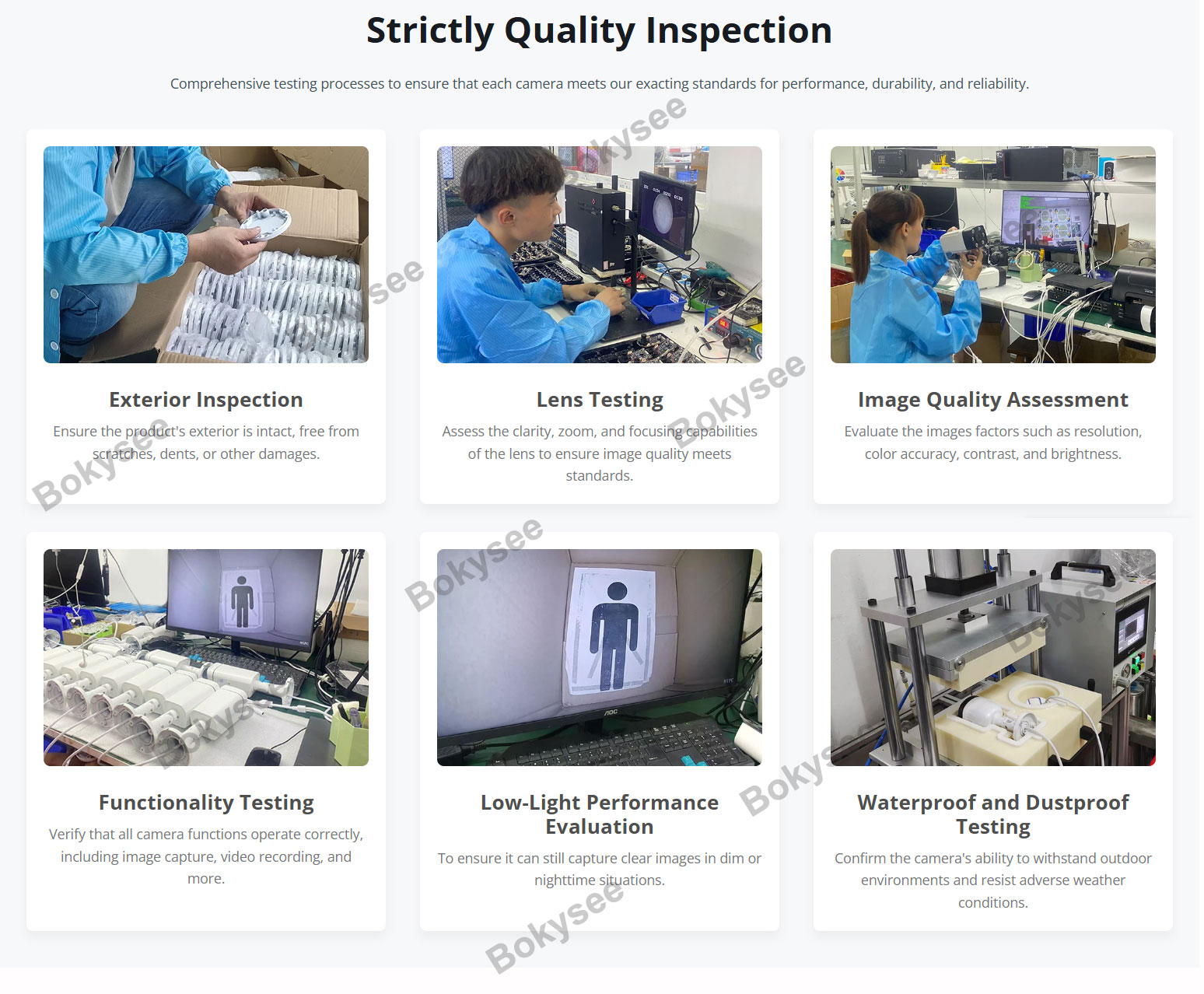
Before CCTV cameras are packed for shipment, several inspection steps are important.
These checks help confirm that the product can meet basic project requirements.
Image Quality Check
The camera image should be clear, stable, and properly focused. The inspection team needs to check whether the lens, sensor, and image settings work correctly.
For project buyers, image quality is one of the most visible product results. If the image is blurry or unstable, the end user will notice immediately.
Night Vision Check
Night vision is critical for many CCTV projects, especially entrances, warehouses, parking lots, perimeter areas, and outdoor scenes.
Depending on the product model, the factory may check IR night vision, smart dual light, white light, or full color night image performance.
A camera that works well during the day but performs poorly at night can create serious project dissatisfaction.
Network and Connection Check
For IP cameras, network connection is a key part of product performance.
The camera should be able to connect properly, stream video smoothly, and work with the required app or NVR environment.
For PoE IP cameras, power and data connection should also be checked carefully.
Audio and Alarm Function Check
If the camera supports audio, two-way talk, human detection, alarm light, or siren function, these features should be tested before shipment.
For active deterrence cameras, alarm light and trigger function are especially important.
Housing and Appearance Check
Appearance inspection is also necessary.
This includes checking the housing, lens cover, screws, cable, bracket, label, and surface finish. For outdoor cameras, housing quality is closely related to durability and long-term performance.
A professional buyer does not want products that look unfinished, inconsistent, or difficult to sell in the local market.
Aging Test, Function Test, and Stability Check for IP Cameras
For CCTV cameras, short testing is not always enough.
A camera may turn on normally, but stability problems may appear after working for a longer time. This is why aging test and long-time operation check are important in CCTV camera quality control.
What Is an Aging Test?
An aging test means the camera is powered on and kept running for a period of time before shipment. The goal is to check whether the camera can work stably under continuous operation.
For project buyers, this matters because CCTV cameras are usually expected to run 24/7.
If a product fails during basic aging test, it is better to find the issue inside the factory, not after installation at the customer site.
What Functions Should Be Checked?
For IP cameras and PoE cameras, important test points may include:
-
Power-on performance
-
Video streaming
-
Image clarity
-
Night vision
-
Network connection
-
App or software access
-
NVR connection
-
Motion or human detection
-
Audio function
-
Reset and configuration
-
Long-time operation stability
For B2B buyers, these checks help reduce after-sales risk and improve confidence before placing repeat orders.
Why Stability Matters More Than One Specification
Many buyers compare products by resolution, lens, LED quantity, or price.
These specifications are important, but stability is what keeps the project running.
An 8MP camera with unstable connection may create more problems than a properly selected 4MP or 5MP camera with stable performance.
For installers, stable products reduce site revisits.
For distributors, stable products reduce return rate.
For project contractors, stable products protect delivery schedules.
That is the real value of factory testing.
Packaging, Labeling, and Shipment Preparation for Wholesale Orders
Quality control does not end after camera testing.
For wholesale buyers and OEM/ODM customers, packaging and shipment preparation are also part of the product experience.
A good CCTV camera supplier should make sure the products are packed correctly, labeled clearly, and prepared for safe delivery.
Why Packaging Matters
Security cameras may travel a long distance before arriving at the buyer’s warehouse or project site. Poor packaging can lead to damage, missing accessories, or customer complaints.
Good packaging helps protect:
-
Camera housing
-
Lens and front cover
-
Bracket and accessories
-
Power or cable parts
-
Product labels
-
User manuals
-
Outer cartons
For distributors, packaging also affects how the product is presented in the local market.
OEM/ODM Packaging Readiness
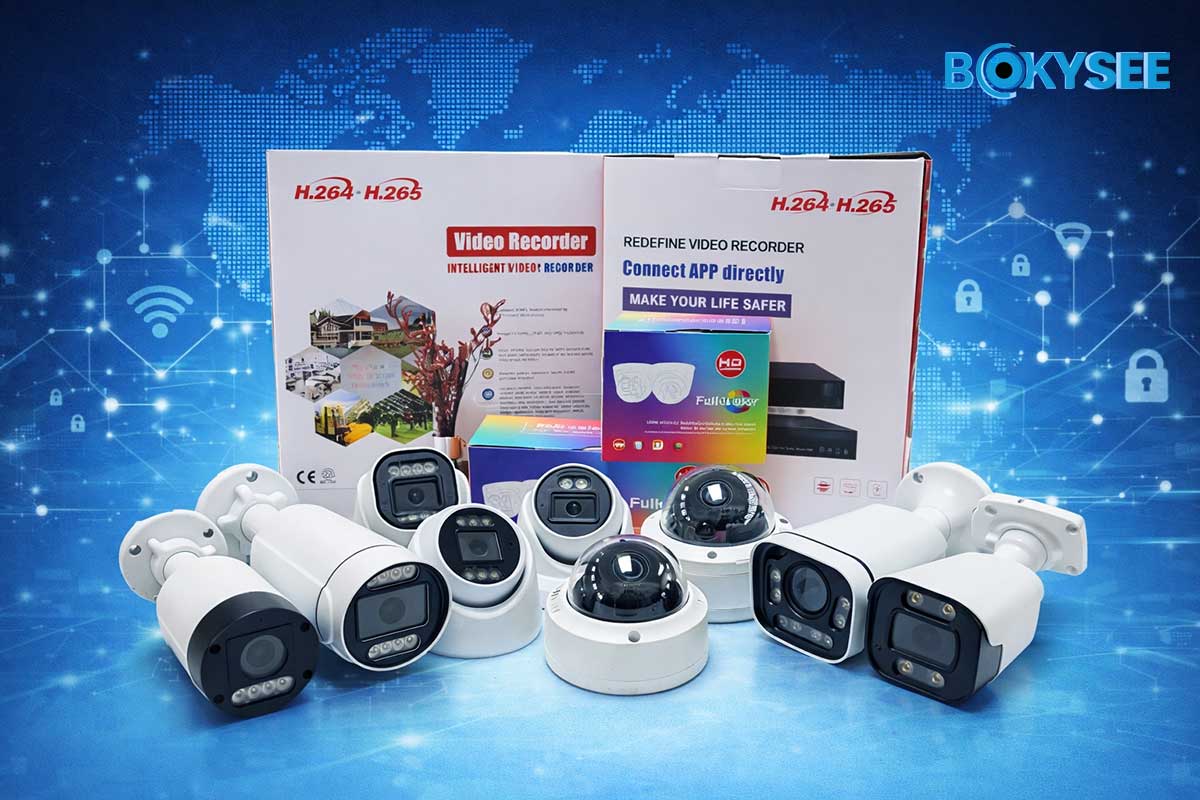
Many B2B buyers need custom branding.
This may include logo labels, product stickers, neutral packaging, custom color boxes, user manuals, or market-specific product information.
Before shipment, the factory should check whether the right label, model number, quantity, and packing method are used.
For OEM/ODM buyers, packaging mistakes can create serious distribution problems. That is why packaging confirmation should be part of the quality control process.
Shipment Preparation
Before shipment, the factory should confirm order quantity, carton condition, packing list, product models, and customer requirements.
For overseas buyers, this helps reduce communication errors and improves delivery efficiency.
How Factory Transparency Builds Long-Term Supplier Trust
In B2B CCTV business, trust is built through consistency.
A buyer may place a sample order first. If the sample performs well, they may move to a trial order. If the trial order is stable, they may consider bulk orders or OEM cooperation.
At every stage, factory transparency matters.
Buyers want to know:
-
Is the supplier a real manufacturer?
-
Can the factory maintain stable quality?
-
Are products tested before shipment?
-
Can the supplier support project requirements?
-
Can they communicate clearly about production and delivery?
-
Can they support long-term cooperation?
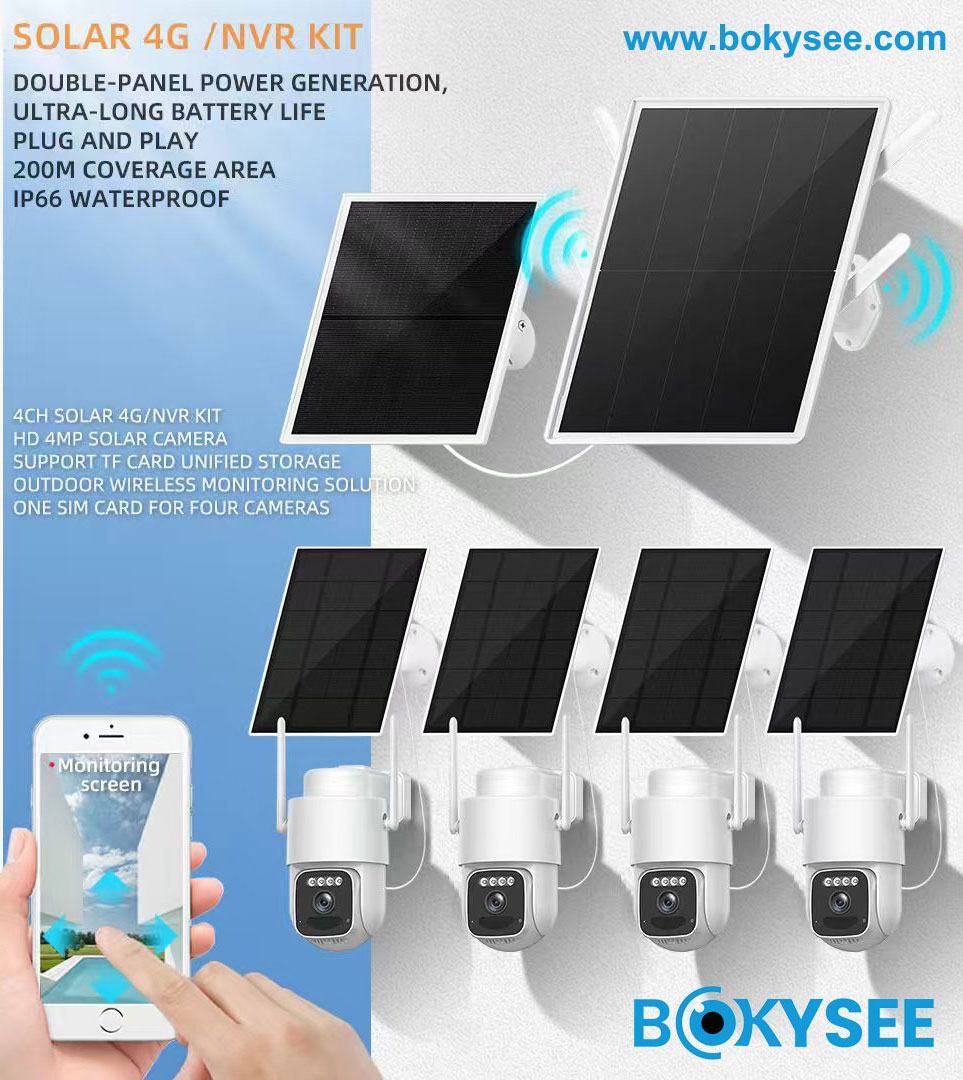
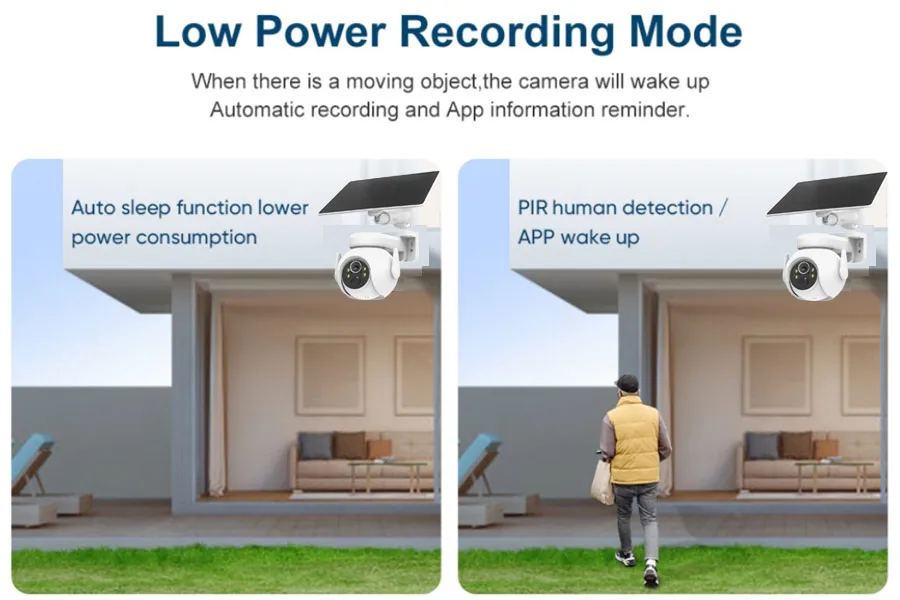
Bokysee works as a CCTV security camera manufacturer and one-stop CCTV solution provider for overseas B2B buyers. Our product range includes IP cameras, PoE cameras, PTZ cameras, smart WiFi cameras, solar battery cameras, NVRs, DVRs, and CCTV kits.
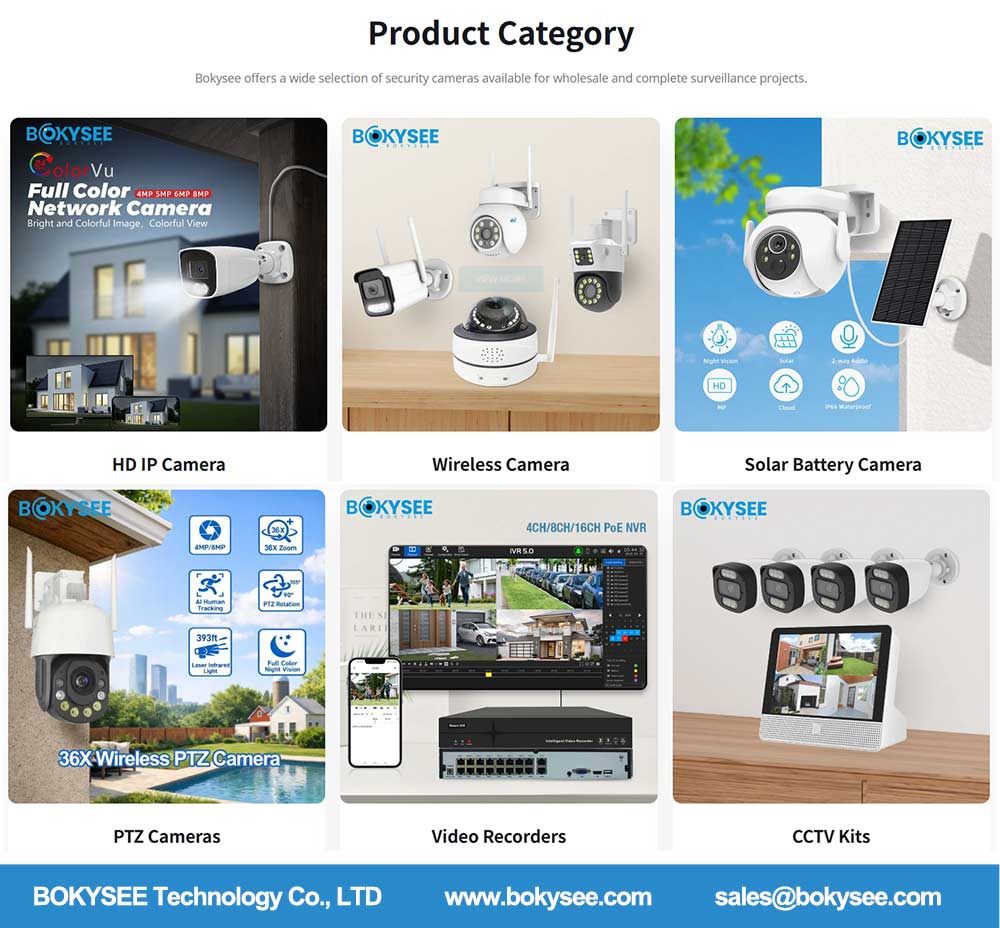
For installers, distributors, wholesalers, and project buyers, we understand that product quality is connected with project success.
Factory transparency helps buyers reduce risk before cooperation. It also helps build confidence for future orders, OEM/ODM branding, and project supply.
When buyers can see the workflow behind production, they can better understand the value behind the product.
FAQ of CCTV Camera Quality Control
1. Why should buyers care about CCTV camera factory quality control?
Because factory quality control affects product stability, return rate, installation efficiency, and customer satisfaction. For B2B buyers, poor quality can create extra after-sales cost and damage local market trust.
2. What should be tested before CCTV cameras are shipped?
Important checks include image quality, night vision, network connection, NVR compatibility, audio, alarm function, housing appearance, labeling, and packaging.
3. What is an aging test for CCTV cameras?
An aging test means the camera runs continuously before shipment to check stability. It helps find potential problems before the product reaches the project site.
4. Is packaging part of quality control?
Yes. Packaging affects product protection, delivery safety, and market presentation. For wholesale and OEM orders, correct labels, manuals, boxes, and carton information are also important.
5. Can Bokysee support OEM/ODM quality requirements?
Yes. Bokysee can support OEM/ODM needs such as logo, label, manual, packaging, and product selection based on order requirements. For deeper customization, project details and quantity should be confirmed in advance.
Final Thoughts
For CCTV project buyers, quality control is not a small factory detail. It is part of project reliability.
A good camera should not only look good in a catalog. It should work reliably after installation, connect properly with the system, provide clear images, and reduce after-sales pressure.
That is why B2B buyers should care about how a CCTV camera is produced, tested, inspected, packed, and shipped.
Inside Bokysee factory, quality control is connected with each step of the workflow, from assembly and function testing to aging test, final inspection, packaging, and shipment preparation.
For installers, distributors, system integrators, and project buyers, this means more confidence before placing orders and more support for long-term business growth.
Need a reliable CCTV camera manufacturer for your project or wholesale business?
Send Bokysee your product list, target market, project requirements, or OEM/ODM needs. Our team can help recommend suitable IP cameras, PoE cameras, PTZ cameras, solar cameras, NVRs, and CCTV kits for your business.
See Also
choose best cctv camera for home security manufacturers
how to choose the best cctv supplier for your needs
all the types of wired security cameras complete project guide
how full color ip cameras work benefits night vision security
Key Differences Between IP Camera Systems And Traditional Models







 English
  Spanish
  Russian