Skip to content


A CCTV lens determines how much of a scene the camera can capture and how large distant objects appear in the image. Even cameras with the same resolution can produce different viewing angles when they use different focal lengths and sensor sizes.
This article compares three common CCTV lens types: fixed, varifocal, and motorized zoom. It explains how each works, how focal length affects the field of view, and how to match a lens to different surveillance distances. Explore Bokysee IP cameras for camera options across different lens configurations.
The comparison helps installers, distributors, and project buyers evaluate when a fixed lens is sufficient, when a manual varifocal offers more installation flexibility, and when remote zoom adjustment is worth the additional cost.
What Are Fixed, Varifocal, and Motorized Zoom Lenses?

The three names describe one thing: how much the field of view can be changed after the camera leaves the factory.
Why the Lens Choice Comes First
Lens type is usually the first decision because it sets the camera’s whole job. A fixed lens commits you to a single view, a varifocal gives setup flexibility, and a motorized zoom adds remote control. Picking the lens after the sensor is putting the cart before the horse, since no sensor upgrade can recover a scene the lens never framed.
Fixed Lenses
A fixed lens has a single, permanent focal length, such as 2.8mm, 3.6mm, or 4mm, and its field of view cannot be changed. It is the simplest and most affordable option, ideal when the scene and mounting distance are known in advance. The tradeoff is that the coverage is locked in, so the camera must be positioned to match the lens rather than the other way around. Because there is no adjustment mechanism, a fixed lens also has fewer parts to fail or drift over years of exposure.
Varifocal Lenses
A varifocal lens has an adjustable focal length, usually written as a range such as 2.8 to 12mm or 5 to 50mm. The installer tunes the field of view once during setup and then locks it in place. This gives flexibility at install time while keeping the cost below a motorized design, which is why varifocal lenses are so common on bullets and domes used across varied sites. The range is what matters: a wider range covers more framing options but tends to cost more and can trade a little optical quality at the extremes.
Motorized Zoom Lenses
A motorized varifocal lens uses a built-in motor to adjust focal length and focus through the camera interface or compatible recorder. It allows installers to fine-tune the view remotely without touching the camera. Motorized lenses are available on both fixed-position cameras and PTZ models, although PTZ cameras also add pan and tilt functions for remote area coverage.
Fixed Lens vs Varifocal Lens: Key Differences

The real question is flexibility: a fixed lens is set for life, while a varifocal lets the installer correct the view on site.
Cost and Simplicity
Fixed lenses are cheaper to build and have no adjustment mechanism to drift or be bumped, which makes them the most reliable option over the long term. For a standardized install where every doorway or aisle needs the same wide view, a fixed lens removes an entire failure point and keeps unit cost down across a large fleet. The savings compound when the camera count runs into the dozens, which is why fixed lenses remain the default for high-volume indoor deployments.
Flexibility at Installation
A varifocal lens earns its cost on sites where the exact distance and framing are only clear once the installer is up the ladder. Rather than swapping cameras or remounting to fix coverage, the installer adjusts the lens to widen or narrow the view in place. That flexibility reduces rework and makes a single varifocal model cover situations that would otherwise need several fixed focal lengths in stock. For a distributor or integrator, that means fewer SKUs to hold and fewer return trips to the site.
| Aspect | Fixed Lens | Varifocal Lens |
|---|---|---|
| Field of view | Fixed at one angle | Adjustable within a range |
| Setup | No adjustment needed | Tuned once during install |
| Best for | Standardized, known scenes | Varied sites needing flexibility |
Manual Varifocal vs Motorized Zoom: How Do They Compare?

The difference between the two is when and how you adjust the view: by hand at install, or by software at any time.
Manual Varifocal in the Field
A manual varifocal is set with a small adjustment ring or screw on the camera body, normally once during installation and never again. It is the workhorse for fixed-position cameras that need a custom view, because it gives the installer exact control without the cost of a motor. The downside is that any later change means a trip back to the camera. For most fixed installations, that tradeoff is acceptable, since the view rarely needs to change once the site is commissioned.
Motorized Zoom in the Field
A motorized zoom lens can be adjusted remotely while the camera is live, which is what makes it the heart of a PTZ camera. Operators widen the view to scan an area and then zoom in on a subject without anyone touching the hardware.
On fixed-position cameras, motorized zoom allows installers to adjust the viewing angle and focus remotely, which is useful for cameras mounted on poles, high walls, or hard-to-reach locations. Operators can also make later adjustments if the surveillance area or project requirements change.
How Does Focal Length Affect the Camera’s Field of View?

Focal length trades width for reach: a short focal length sees wide, and a long focal length sees far but narrow.
Short Focal Lengths and Wide Views
A short focal length such as 2.8mm produces a very wide field of view, often beyond one hundred degrees, which is ideal for covering a whole room, a doorway, or a parking bay from close range.
The wide view comes at the cost of detail, so a 2.8mm lens will not identify a face or plate across a parking lot. It is the right choice when the goal is seeing everything in a space rather than reading something specific. The optical principle behind the tradeoff is the focal length relationship between lens, sensor, and viewing angle.
Long Focal Lengths and Reach
A long focal length such as 12mm or 50mm produces a narrow, magnified view that captures detail at distance, which is what license plate and perimeter cameras rely on. The tradeoff is a narrow field of view, so the camera must be aimed precisely. This is why the same focal length that reads a plate at the gate would be almost useless pointed at a wide yard. Our guide to choosing a security camera lens focal length works through these numbers in detail.
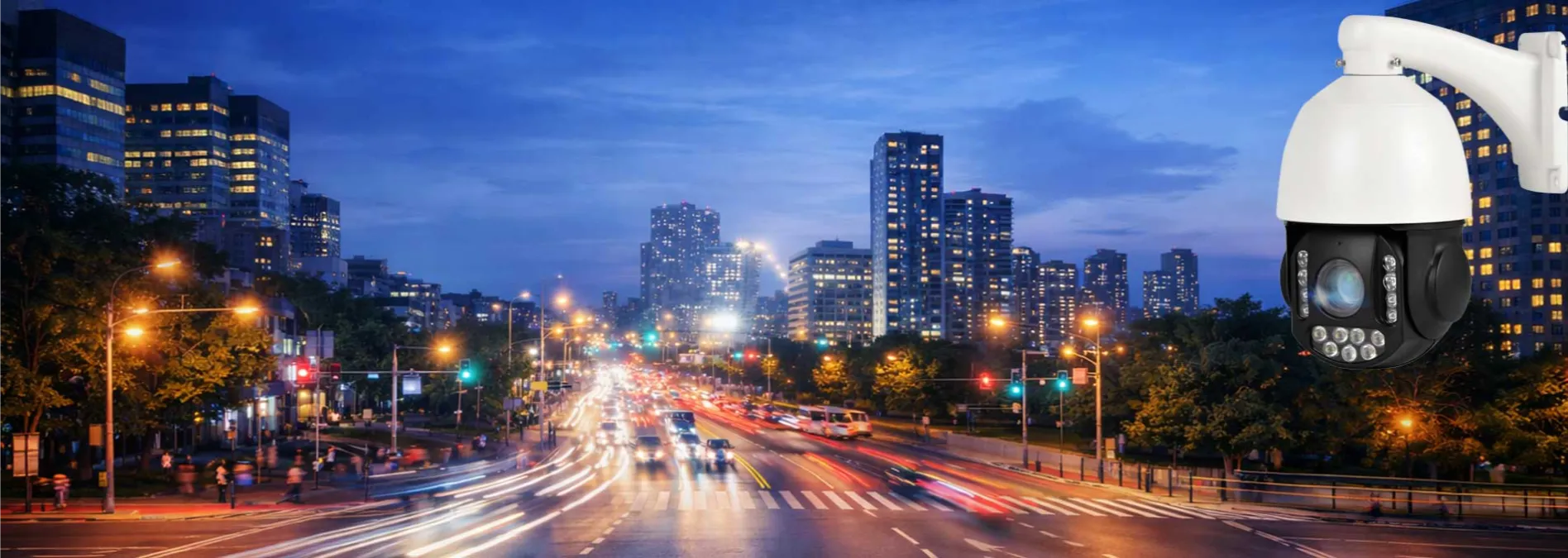
Need cameras with the right lens for every distance? Bokysee manufactures fixed, varifocal, and motorized zoom cameras across bullet, dome, and PTZ lines, with OEM and ODM lens options for your brand.
Request lens specifications →Which Lens Type Is Best for Bullet, Dome, and PTZ Cameras?
The form factor often points to the lens: fixed and varifocal suit fixed cameras, while motorized zoom belongs on PTZ.
Bullet and Dome Cameras
Bullet and dome cameras are usually fixed-position, so they carry either a fixed lens or a manual varifocal. A fixed lens suits standard indoor coverage, while a varifocal is the go-to for outdoor bullets and domes where the installer needs to dial in the exact view after mounting. The lens choice here is really a question of how much setup flexibility the site requires, and both options are common enough that neither is hard to source.
PTZ Cameras
PTZ cameras depend on a motorized zoom lens because the whole point is to change the view on command. The optical zoom range, such as 20x or 50x, determines how far the camera can reach while keeping image detail. A PTZ without a good motorized zoom lens is just an expensive fixed camera, so the lens is the single most important spec on the whole unit. When comparing PTZ models, look at the optical zoom first, because digital zoom on top of it only crops the image rather than adding real detail.
How to Select the Right Lens for Different Surveillance Distances

Start from the distance and the detail you need, then work backward to the focal length and lens type.
Matching Lens to Distance
For close, wide coverage such as a doorway or small room, a short fixed focal length is usually perfect. For mid-range coverage where the target distance varies, a varifocal lens gives the installer room to frame it correctly. For long-range identification such as plates or perimeter fences, a long focal length or a motorized zoom is required to reach the target without losing detail. The same logic applies to the rest of the camera, which our guide to how IP security cameras work walks through component by component.
A Practical Selection Checklist
- Measure the distance from the camera to the area that must be covered.
- Decide whether the site needs a wide view or detailed identification.
- Choose fixed for known scenes, varifocal for flexible framing, and motorized zoom for remote or PTZ control.
- Confirm the focal length range covers the measured distance before ordering.
Frequently Asked Questions About CCTV Lens Types
What is the difference between a fixed and varifocal lens?
A fixed lens has one permanent focal length and field of view, while a varifocal lens can be adjusted across a range. A varifocal lets the installer tune the view during setup, which a fixed lens cannot do.
Is a motorized zoom lens better than a varifocal lens?
A motorized zoom is a varifocal lens with a motor, so it can be adjusted remotely instead of by hand. It is better when the view changes often or the camera is hard to reach, but it costs more than a manual varifocal.
What focal length lens do I need for a wide area?
A short focal length such as 2.8mm gives a wide field of view and covers a large area from close range. The tradeoff is less detail at distance, so it suits general coverage rather than identification.
Which lens is best for license plate recognition?
A long focal length lens, typically 12mm or more, is needed to capture plate detail at distance. LPR cameras often use a varifocal or motorized zoom so the view can be aimed precisely at the capture zone.
Do PTZ cameras always have motorized zoom lenses?
Yes. A PTZ camera relies on a motorized zoom lens to change the field of view on command. The optical zoom range of that lens is one of the main things that determines how far the camera can reach.
Does a longer focal length mean a better image?
Not exactly. A longer focal length magnifies distant objects but narrows the field of view, so it is better for reach, not overall quality. The right focal length depends on matching the view to what the camera needs to capture.
Final Thoughts on Fixed, Varifocal, and Motorized Zoom Lenses
Fixed, varifocal, and motorized zoom lenses serve different surveillance needs. Fixed lenses suit standard coverage, varifocal lenses offer flexibility during installation, and motorized zoom lenses allow remote adjustments. The right option depends on the monitoring distance, required field of view, and project requirements.
As an IP camera professional manufacturer, Bokysee offers fixed, varifocal, and motorized zoom cameras for security brands, distributors, and system integrators, with OEM and ODM support. Contact Bokysee to discuss lens configurations for your product line and surveillance projects.






 English
 Spanish
 Russian