 Skip to content
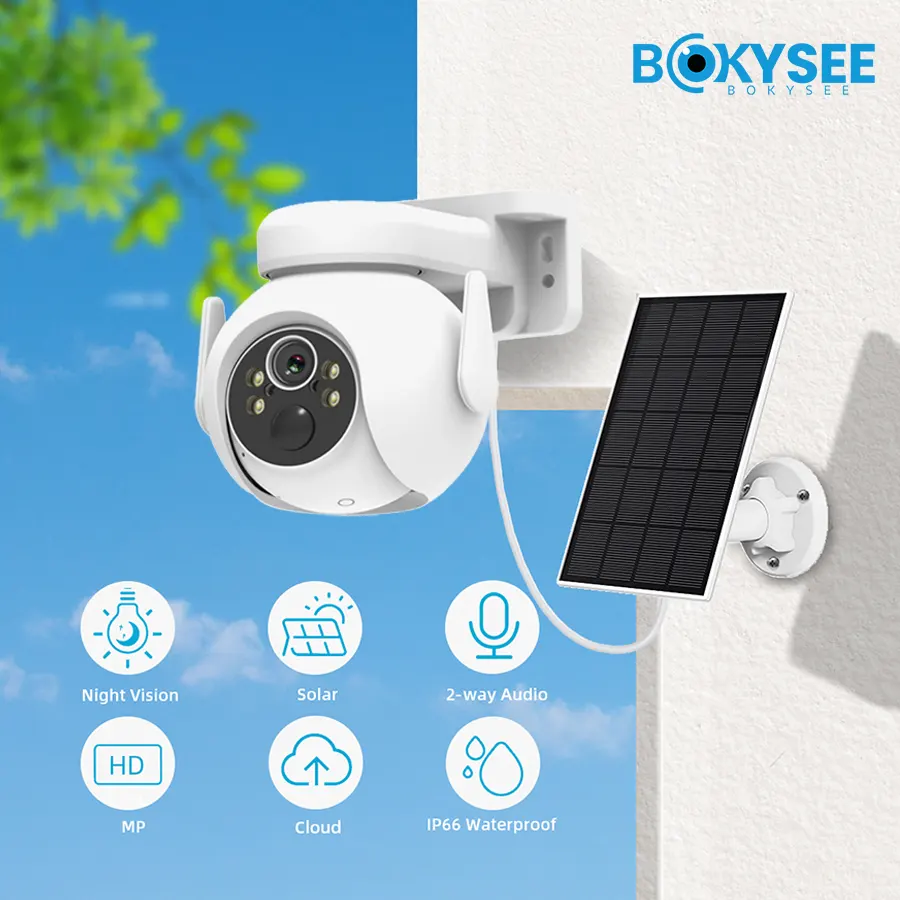
Few product categories promise as much freedom as the solar security camera: no cables, no electrician, no trenching across a driveway. But before you invest in a fleet of them for a home, farm, or project site, one practical question comes up fast: how long do solar security cameras actually last?
The honest answer: a solar security camera is three products in one — an imaging unit in a sealed housing, a solar panel, and a rechargeable battery — and each part ages at a different speed. Most systems deliver dependable service for two to five years, but the battery may need attention far sooner, while a quality panel can outlive the camera itself.
The sections below look at how long each component can last, what shortens its service life, and what you can do to keep the system working reliably.
Which Part of a Solar Security Camera Wears Out First?

The battery is usually the first component to show noticeable aging, while the panel and camera housing tend to last longer.
The Rechargeable Battery: The First Component to Age
Many solar security cameras use lithium-based rechargeable batteries, which gradually lose capacity as they go through repeated charge and discharge cycles.
The first symptom is rarely a dead camera. It is shorter runtime: the unit that once ran four overcast days starts flagging low battery after two, or shuts down during the second night of bad weather. Winter usually exposes the problem first, because cold temporarily reduces usable capacity on top of the permanent loss.
The Solar Panel: Slow, Predictable Degradation
The panel usually ages more slowly. Crystalline silicon modules commonly show annual degradation below 1%, so a well-built panel can continue producing useful power after the camera itself needs replacement.
In practice, day-to-day panel problems come from the environment, not old age: dust, pollen, bird droppings, snow, and new shade from growing trees all cut charging output long before cell degradation does.
The Camera Body, Lens, and Seals
The camera itself — sensor, lens, IR LEDs, and circuit board — typically has no moving parts to fail, so it tends to last three to five years or more. What usually gives way first is not the electronics but the weatherproofing.
UV exposure and repeated heat cycles make plastic housings brittle and compress the rubber gaskets that keep moisture out. Once a seal lets in humidity, condensation fogs the lens and slowly corrodes the board. When you compare solar battery cameras, housing quality and ingress protection ratings are a better predictor of lifespan than the spec sheet’s resolution numbers.
How Long Do Solar Panels and Batteries Last?
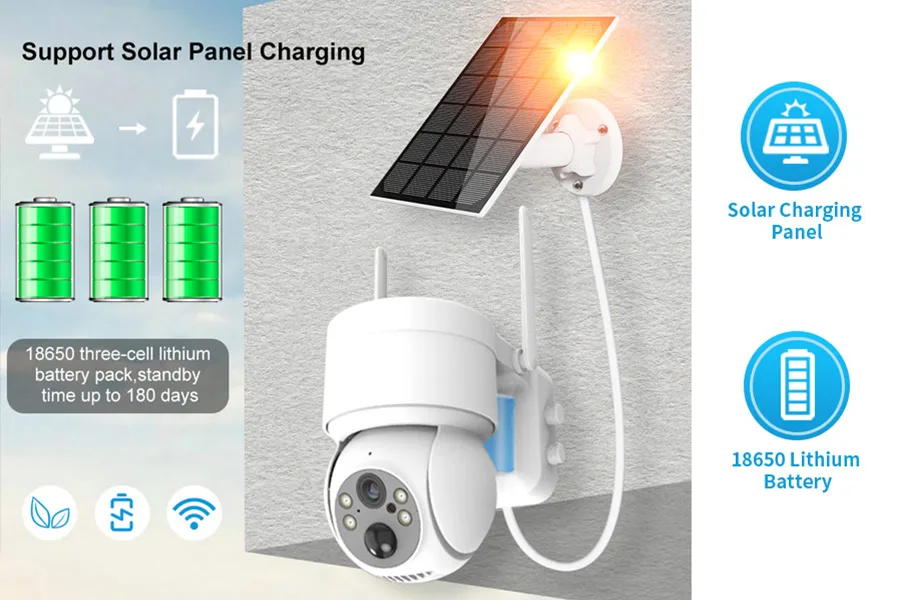
The battery may need attention within roughly one and a half to three years, while a properly installed solar panel can continue producing useful power for many years.
Typical Solar Panel Service Life
Solar panels generally degrade much more slowly than rechargeable batteries, so their useful service life can extend well beyond that of the camera’s battery. However, small panels used on security cameras face different conditions from larger rooftop systems, including heat, weather exposure, and physical impact.
The small panels used on security cameras face a harder life than rooftop arrays: they get hotter, take more knocks, and use cheaper encapsulation. Even so, five to ten years of useful output is a realistic expectation from a properly mounted panel, and external panels paired to the camera by cable usually last even longer because they can be sized and angled properly.
Typical Battery Cycle Life
Most solar cameras use lithium-ion or lithium iron phosphate batteries, but their cycle life varies by battery chemistry, depth of discharge, temperature, and charging conditions. In a healthy installation the battery tops up every sunny day and only discharges partway, so those cycles are shallow and the battery ages gently.
Shallow daily cycles stretch real-world life to somewhere between one and a half and three years before you notice the shortfall. Deep daily cycles — caused by chronic undercharging, heavy recording schedules, or long winters — can cut that roughly in half.
Component Lifespan Comparison
| Component | Typical Service Life | Main Aging Factor |
|---|---|---|
| Rechargeable battery | 1.5–3 years | Charge cycles, heat, deep discharge |
| Solar panel | 5–10+ years | Encapsulation quality, UV exposure |
| Camera body and lens | 3–5+ years | Housing seals, temperature cycles |
Note: These are typical service-life ranges, not fixed lifespans; actual performance varies with climate, usage, installation, and component quality.
What Can Shorten the Life of a Solar Security Camera?
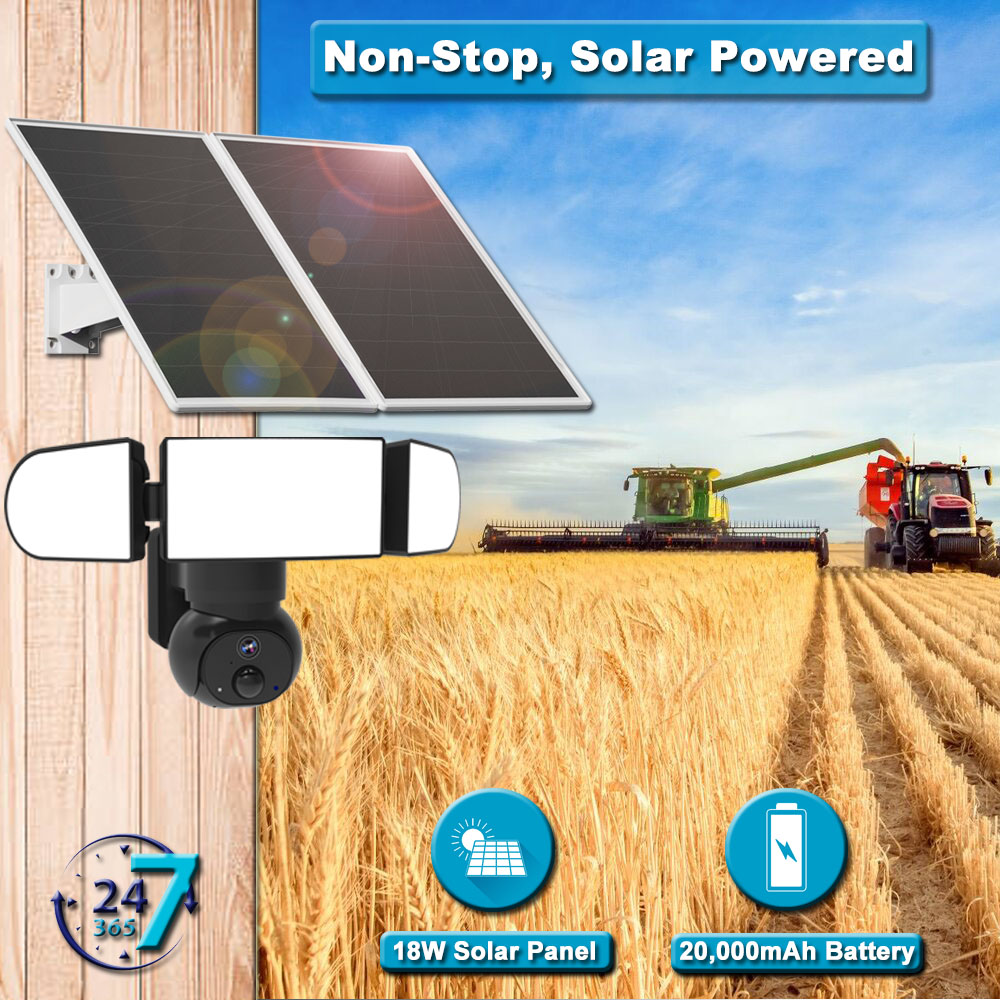
Most premature failures are not random — the same handful of environmental and usage factors show up again and again.
Extreme Heat and Cold
Heat can accelerate lithium-battery aging. A camera exposed to direct summer sun may operate well above the surrounding air temperature, increasing stress on the battery over time.
Cold works differently: it does not permanently damage a healthy battery, but it temporarily slashes usable capacity and slows charging. Outdoor cameras have different operating-temperature ratings, so check the specification for the specific model. Repeated freezing and thawing can also place additional stress on housing seals over time.
Frequent Deep Discharges
A battery that is drained nearly flat every night and refilled every morning ages much faster than one that hovers in the middle of its range. Deep discharge is usually a system-design problem rather than a battery problem: an undersized panel, a shaded mounting spot, or a recording schedule that never lets the camera rest.
Poor Panel Placement and Shading
Chronic undercharging keeps the battery at a low state of charge, which is exactly the condition that degrades lithium cells fastest. Before blaming the hardware, check the obvious: a panel mounted flat against a north-facing wall (in the northern hemisphere), shaded by an eave at midday, or coated in grime may be delivering a fraction of its rated output.
Weak Housing Seals and Low-Quality Components
Look for IP65 or IP66 ingress protection on any outdoor unit, and treat cheaper unmarked housings as a warning sign. Budget models often cut corners on gasket material and UV stabilizers, so the housing that survives one summer may crack in the second or third.
Once moisture enters, failure follows a predictable script: fogged lens, flaky behavior in humid weather, then corrosion at the charging port and connector. Water damage of this kind is the most common reason solar cameras die years before their rated life.
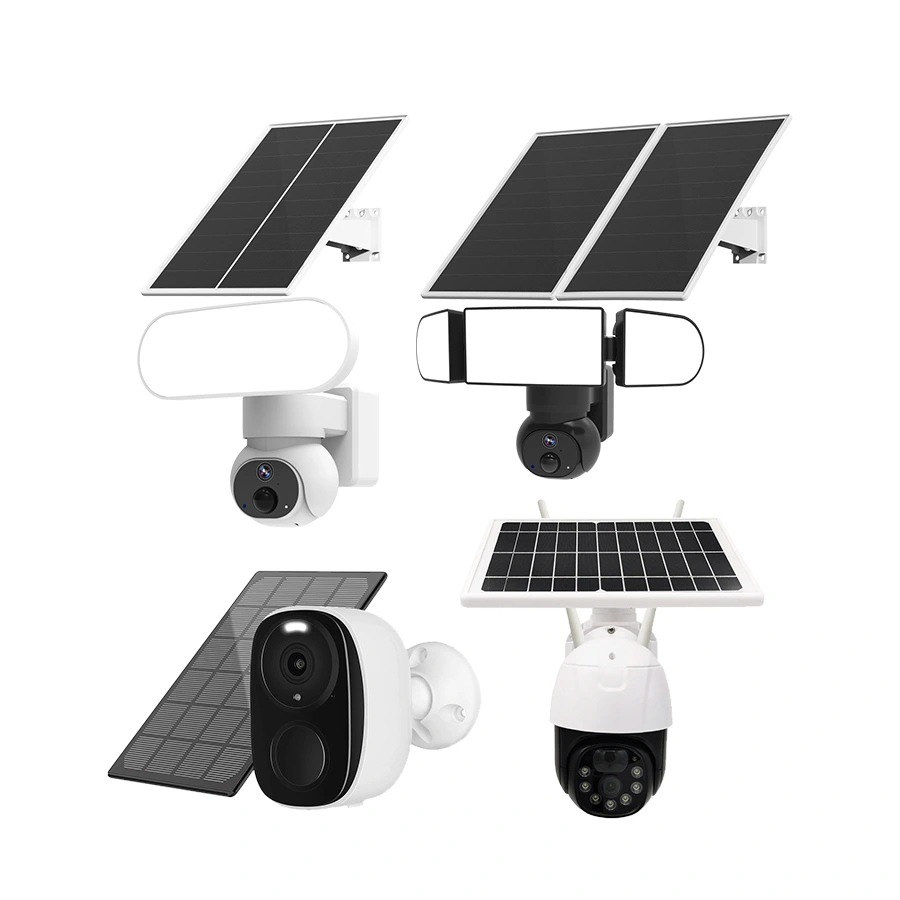
Sourcing solar security cameras for projects or distribution? Bokysee manufactures solar battery cameras with weather-sealed IP-rated housings, replaceable battery designs, and matched solar panel options — with OEM and ODM support for your brand.
Explore OEM/ODM Solutions →How Can You Make a Solar Security Camera Last Longer?
A few simple habits — keeping the panel clean, adjusting power-hungry settings, and checking the installation seasonally — can help maintain performance over time.
Position and Clean the Solar Panel Regularly
Tilt the panel toward the midday sun for your hemisphere instead of leaving it flat, and wipe the surface every few weeks — dust and pollen films are nearly invisible and still cost real charging power. Recheck the mounting spot each season, because trees grow and new structures appear.
If you are sizing a larger deployment, this complete guide to designing an off-grid solar security system walks through the power-budget math that keeps batteries in the healthy middle of their range.
Avoid Full Battery Drain
When a long overcast spell is forecast, reduce the load instead of letting the battery bottom out: lower motion-detection sensitivity, shorten clip length, or pause continuous features you do not need. For installations that may face extended periods of low sunlight, make sure the camera has a compatible backup charging method or battery replacement option.
Inspect Seals and Mounting After Extreme Weather
After storms, heat waves, or freezing snaps, spend two minutes per camera: check for hairline cracks in the housing, confirm cable glands are seated, and retighten mounts that have worked loose. A cracked gasket replaced in week one costs almost nothing; the same crack ignored for a season costs the camera.
Fine-Tune Recording Settings and Firmware
Default settings are usually tuned for demos, not endurance. Switch to PIR-triggered recording rather than continuous capture where the application allows, drop resolution where identification distance does not require it, and keep firmware current — power-management improvements arrive quietly in updates and directly extend daily runtime.
When Should You Replace a Solar Security Camera?

Replace on evidence — missed events, dead batteries, water marks — not on the calendar alone.
The Battery No Longer Holds Charge
When runtime collapses despite a clean panel and reasonable weather, the battery has reached end of life. On models with replaceable battery packs or external battery units this is a cheap fix; on sealed all-in-one designs it usually means replacing the camera, which is worth checking before you buy in the first place.
Water Damage or Housing Failure
A permanently fogged lens, corrosion at the port, or visible cracks in the housing mean the weatherproof envelope is gone. Field repairs rarely hold; replacement is the reliable path.
Falling Night Image Quality
IR LEDs dim and sensors degrade gradually, so night footage gets grainier over the years. If clips from your camera no longer support identification at the distances you need — and settings changes do not help — the imaging hardware has aged out, and an upgrade brings better resolution and smarter detection along with it.
Frequently Asked Questions About Solar Security Camera Lifespan
Can solar security cameras work at night?
Yes. The panel charges the built-in battery during daylight, and the battery powers the camera and infrared night vision after dark. A healthy battery typically carries a camera through several nights of standby with motion-triggered recording, so short overcast spells do not interrupt coverage.
Do solar security cameras work in winter?
Yes, but with reduced charging. Shorter daylight, a lower sun angle, and snow on the panel all cut daily input, so the battery runs closer to its floor. Tilting the panel steeper, brushing off snow, and easing recording settings keep most systems running through the season.
Can extreme weather damage a solar security camera?
Sustained heat ages the battery, hail can crack a panel, and storms work mounts loose. Housings rated IP65 or IP66 handle rain and dust well, but mounting hardware should be checked after severe weather, and units in hail-prone regions benefit from a bracket that lets the panel angle away from the sky.
Do solar security cameras need WiFi to work?
No. WiFi models need a router in range for live view and alerts, but 4G LTE cameras with a data SIM work anywhere with cellular coverage, and both types keep recording to local storage without a network. The solar power system is completely independent of connectivity.
Are solar security cameras suitable for remote locations?
Yes — that is their strongest use case. Farms, construction sites, ranches, and remote infrastructure get surveillance without trenching power lines, and pairing the camera with 4G connectivity removes the network cable as well. The trade-off is that maintenance visits, mainly panel cleaning, must be planned.
What are the disadvantages of solar security cameras?
The main ones: charging depends on weather and panel placement, the battery is a wearing part with a one-to-three-year horizon, small onboard panels recharge slowly in low sun, and up-front cost runs higher than wired cameras. For most off-grid sites these trade-offs still beat the cost of running power.
Final Thoughts
A solar security camera does not have one fixed lifespan. The battery, panel, and camera body age at different rates, with actual service life affected by climate, installation, usage, and maintenance.
Before buying, check the battery design, IP rating, panel setup, and expected operating conditions. Bokysee supplies solar battery cameras and complete solar CCTV kits for installers, distributors, and project buyers, with OEM and ODM support for brands. Explore Bokysee’s solar security camera solutions to find an option that fits your next project.






 English
  Spanish
  Russian