 Skip to content
What Should a Full-Range CCTV Camera Manufacturer Provide?
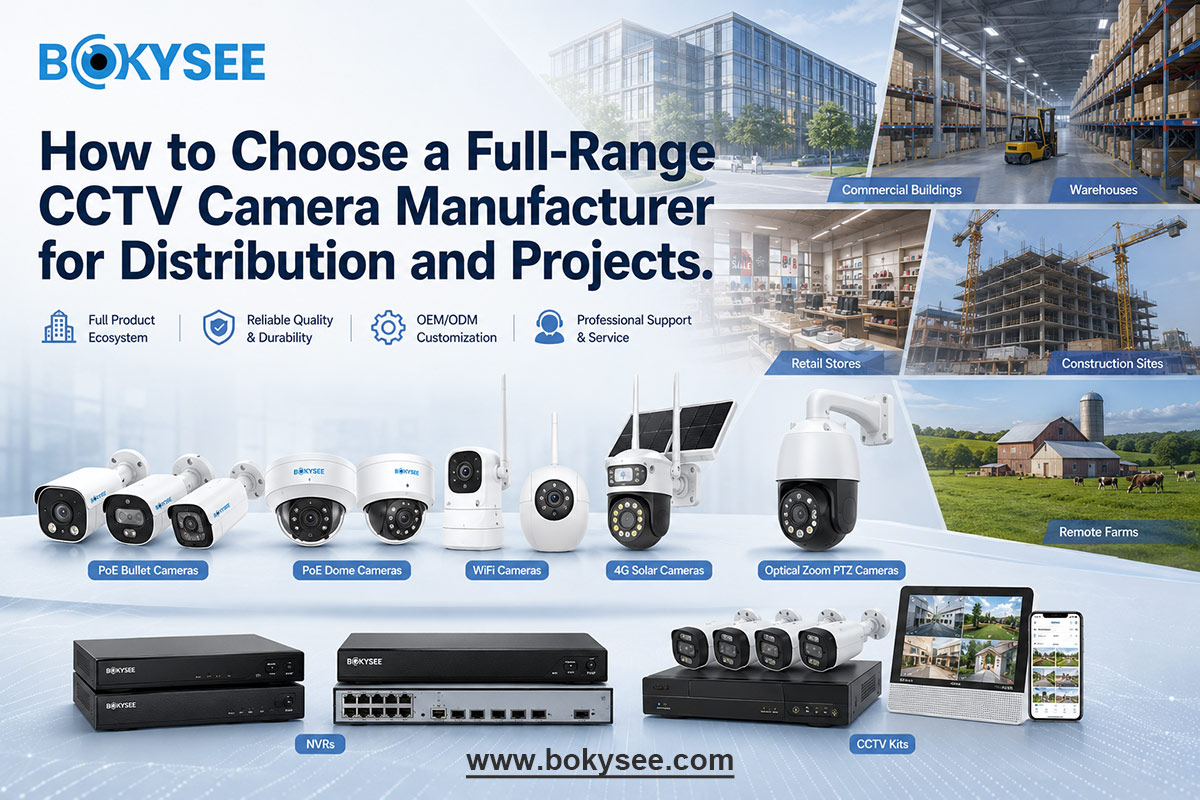
A full-range CCTV camera manufacturer should supply compatible cameras, recorders, accessories and project solutions from one controlled source, while still allowing buyers to select the correct hardware for each application. For distributors and system integrators, the value of a one-stop supplier is not simply a large catalogue. The real value is fewer compatibility problems, easier quality control, consolidated shipping and one technical team responsible for the complete system.
A buyer serving homes, shops, warehouses, construction sites and industrial customers cannot rely on one camera type. The supplier should cover wired, wireless and off-grid requirements without forcing the buyer to manage several unrelated factories.
Core PoE IP Cameras for Professional Installations
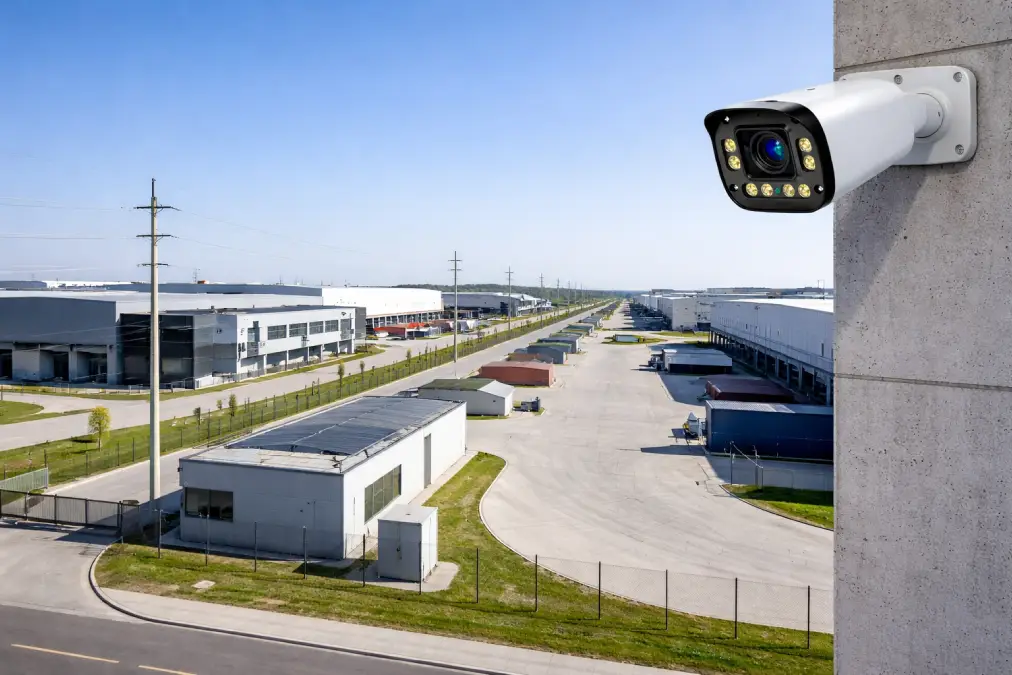
PoE IP cameras are the foundation of many commercial CCTV systems. A professional manufacturer should provide bullet, dome, turret and PTZ housings with multiple resolutions and lens options.
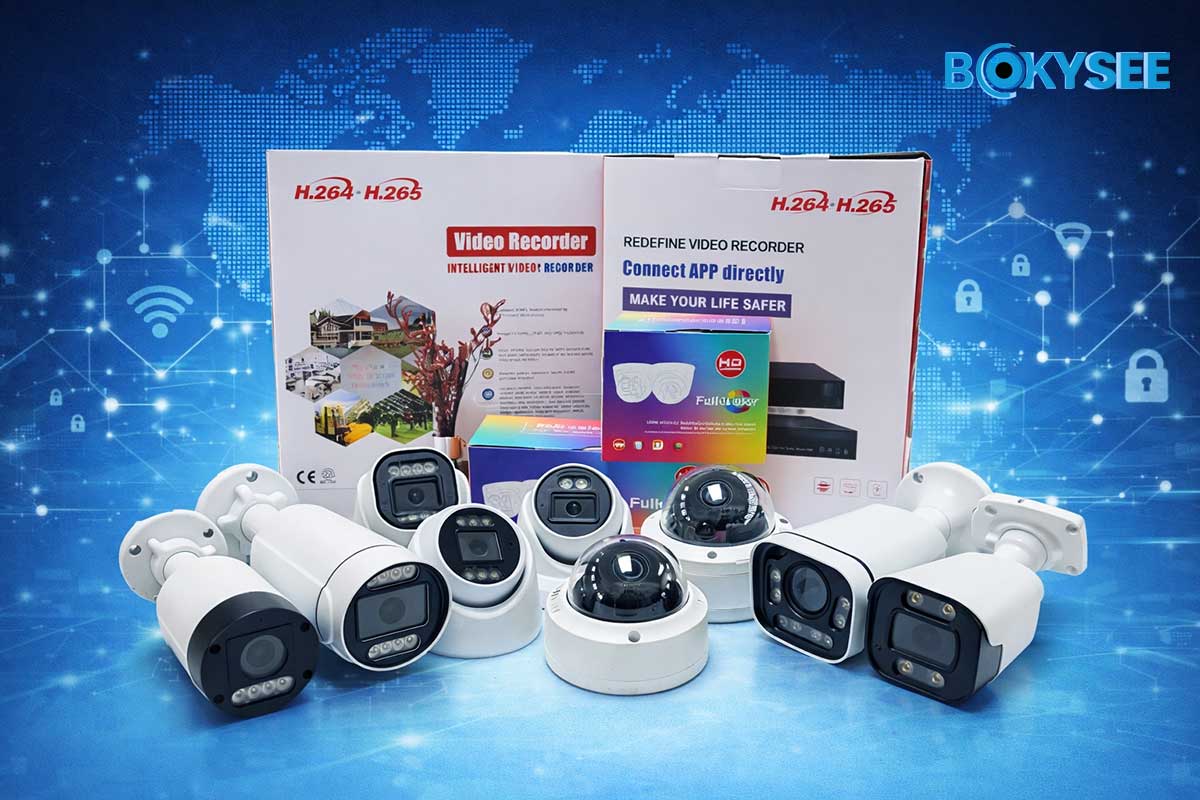
Typical specifications include 4MP, 5MP and 8MP resolution, 2.8mm or 3.6mm fixed lenses, H.265 compression, built-in audio, dual-light night vision, human and vehicle detection, ONVIF and RTSP. Outdoor models should use suitable waterproof construction and properly protected network connections.
Bokysee's IP camera product category includes PoE and network camera options for residential buildings, retail stores, offices, warehouses and middle-scale commercial projects. For distributors, the most practical starting range normally includes a cost-effective 4MP or 5MP model, an 8MP upgrade model and one active-deterrence or AI camera.
Wireless Cameras for Residential and Light Commercial Buyers
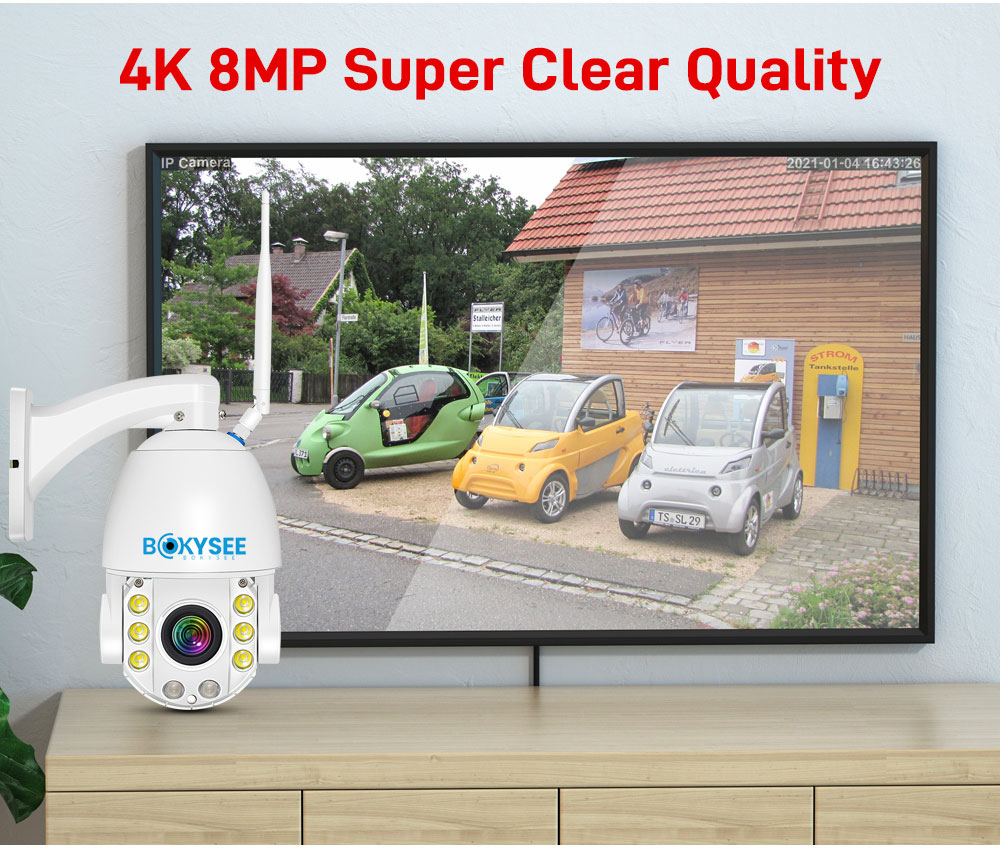
A full-range supplier should also offer WiFi cameras for customers who prioritize simple installation. These may include indoor pan-and-tilt cameras, outdoor bullet cameras, WiFi PTZ models and wireless NVR kits.
The buyer should not select WiFi products based only on mobile-app screenshots. Check antenna performance, connection recovery after power loss, local storage, two-way audio, night vision and router capacity. For retail distribution, packaging clarity and installation instructions are also important because the end customer may install the camera without a professional technician.
Bokysee's wireless camera range is designed for homes, apartments, shops and light commercial projects. Distributors can combine these products with PoE models to serve both DIY buyers and professional installers.
4G and Solar Cameras for Off-Grid Projects
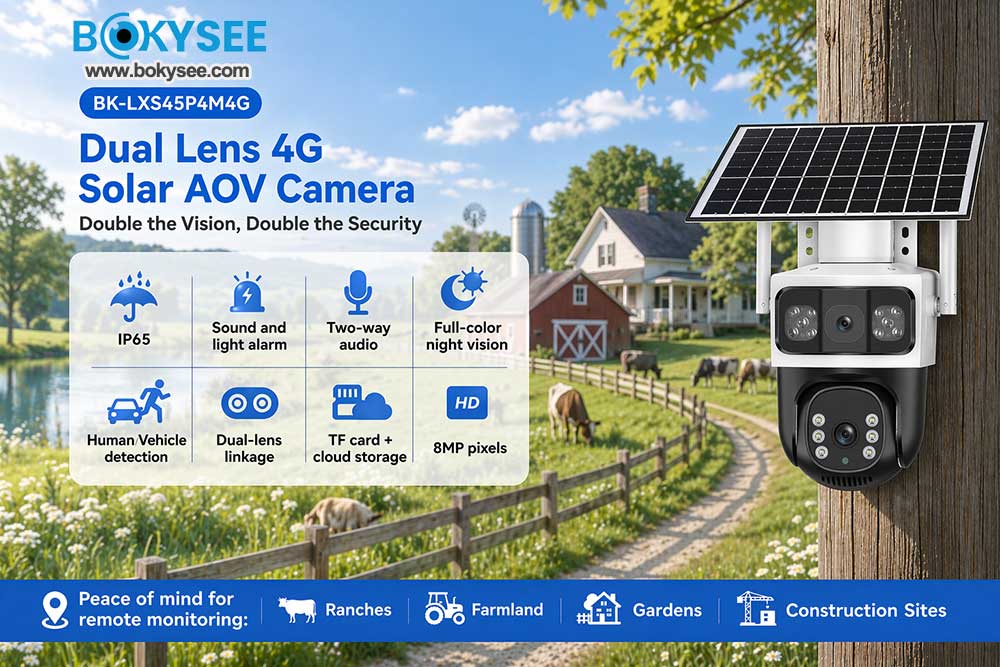
A one-stop security camera supplier should provide off-grid monitoring options for farms, construction sites, mining areas, road projects, solar plants and temporary facilities. These products require more technical evaluation than standard wired cameras.
Buyers should check LTE bands, battery capacity, solar-panel output, PIR sensitivity, standby current, recording mode, local storage and weather resistance. A camera designed mainly for event recording should not be sold as a continuous-recording solution without confirming the energy budget.
The Bokysee solar battery camera category includes WiFi and 4G solar cameras, dual-lens options and external solar-panel systems. For larger remote sites, buyers may also consider a solar 4G NVR security camera kit rather than independent cameras.
PTZ Cameras for Wide-Area and Long-Distance Monitoring
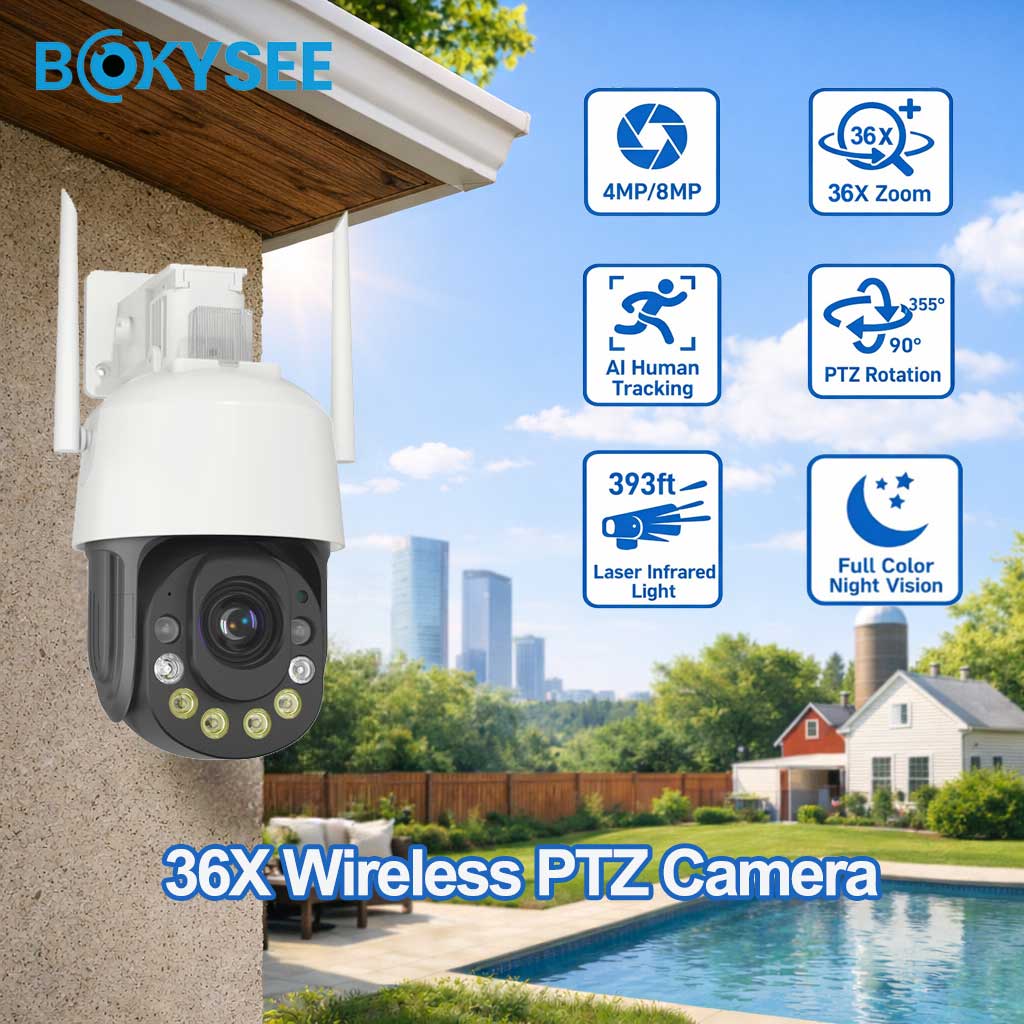
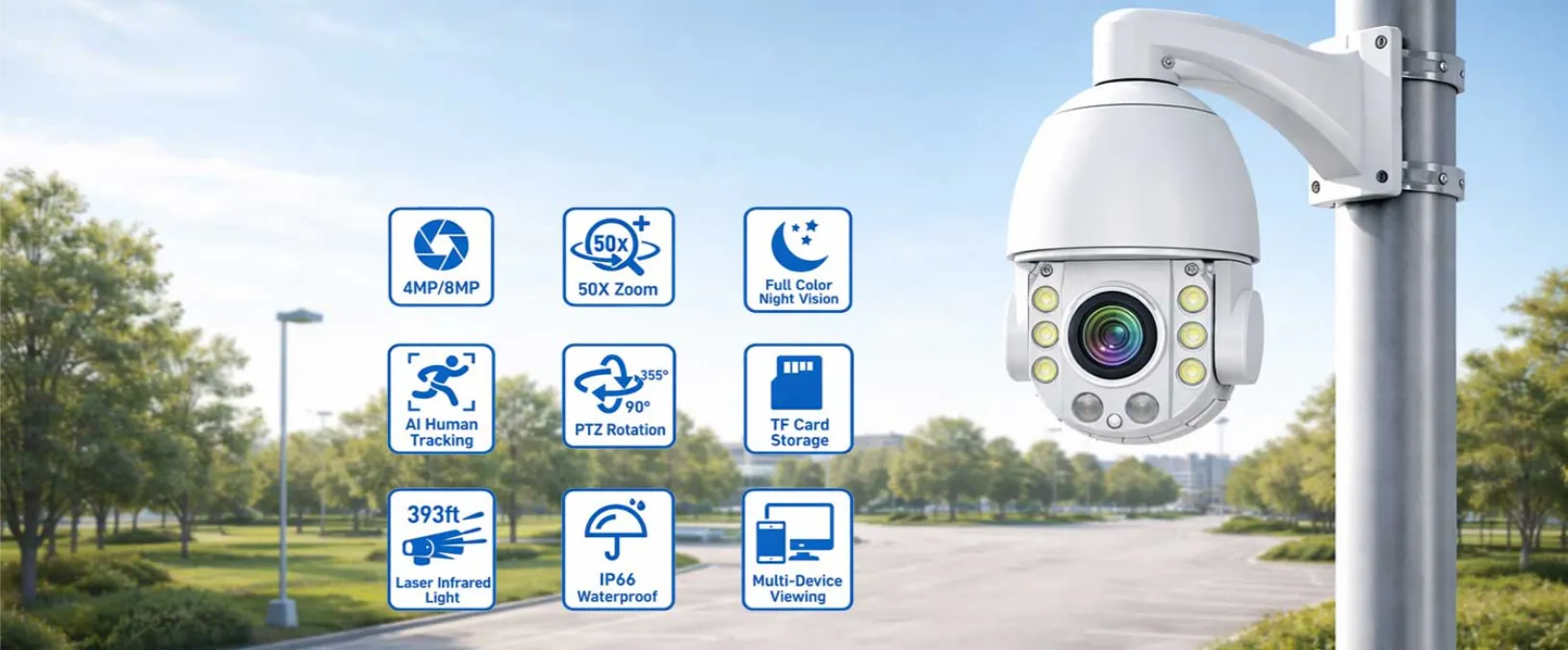
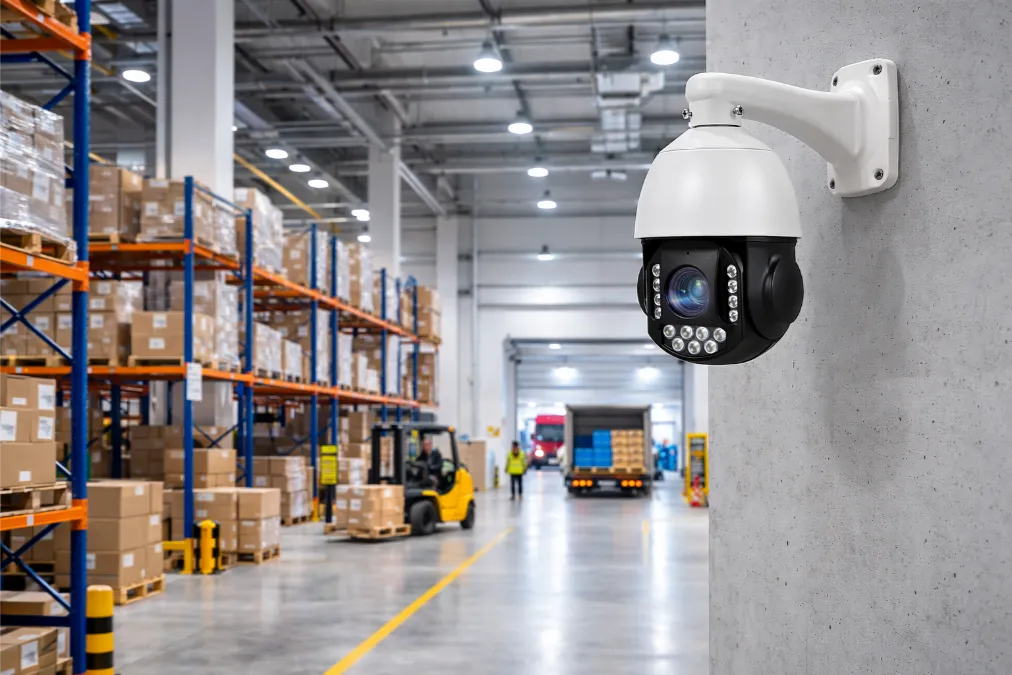
PTZ cameras extend a manufacturer's product range into parking lots, factory yards, residential compounds, campuses and infrastructure projects. A complete range may include mini PTZ, 4X zoom, 18X zoom and long-range 20X to 36X optical zoom cameras.
Important functions include preset positions, patrol routes, auto tracking, power-failure memory, infrared distance, white-light illumination and PoE, WiFi or 4G connectivity. System integrators should also confirm whether PTZ commands work through the selected NVR or VMS.
Bokysee's PTZ camera solutions cover fixed-site and remote applications. For project planning, a PTZ camera is best used together with fixed overview cameras so that important areas remain continuously recorded while the PTZ moves.
NVRs, DVRs and Storage Architecture
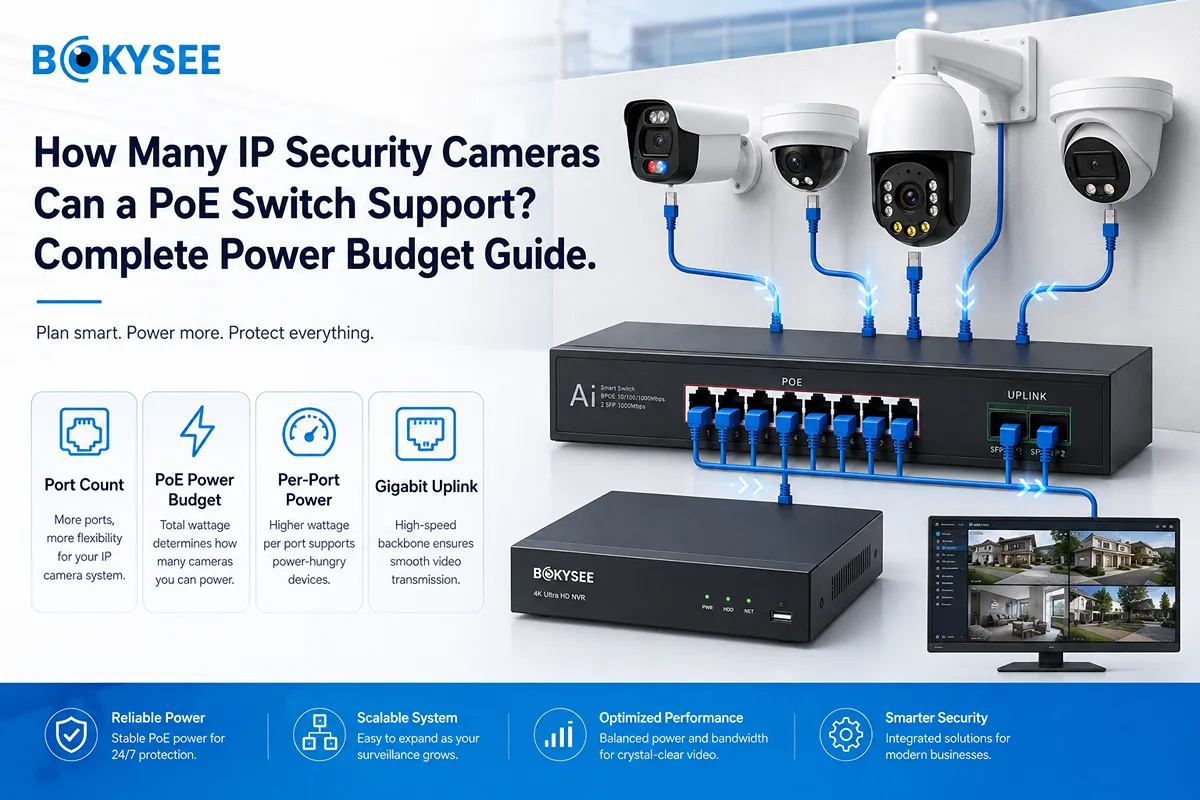
A camera manufacturer serving professional buyers should understand recording, not only image capture. The recorder range should include four-, eight-, ten- and sixteen-channel NVRs, PoE NVRs, wireless NVRs and appropriate DVR/XVR solutions for analog upgrades.
Buyers should compare incoming bandwidth, decoding channels, maximum resolution, hard-drive capacity, RAID requirements, remote access and smart search. The recorder must match the total bitrate of the cameras. An NVR that accepts eight channels may still have playback or decoding limits at 8MP.
Bokysee's video recorder category includes DVR and NVR platforms with AI-related options and NVR GUI logo customization for eligible OEM orders.
Complete CCTV Kits for Repeatable Installations
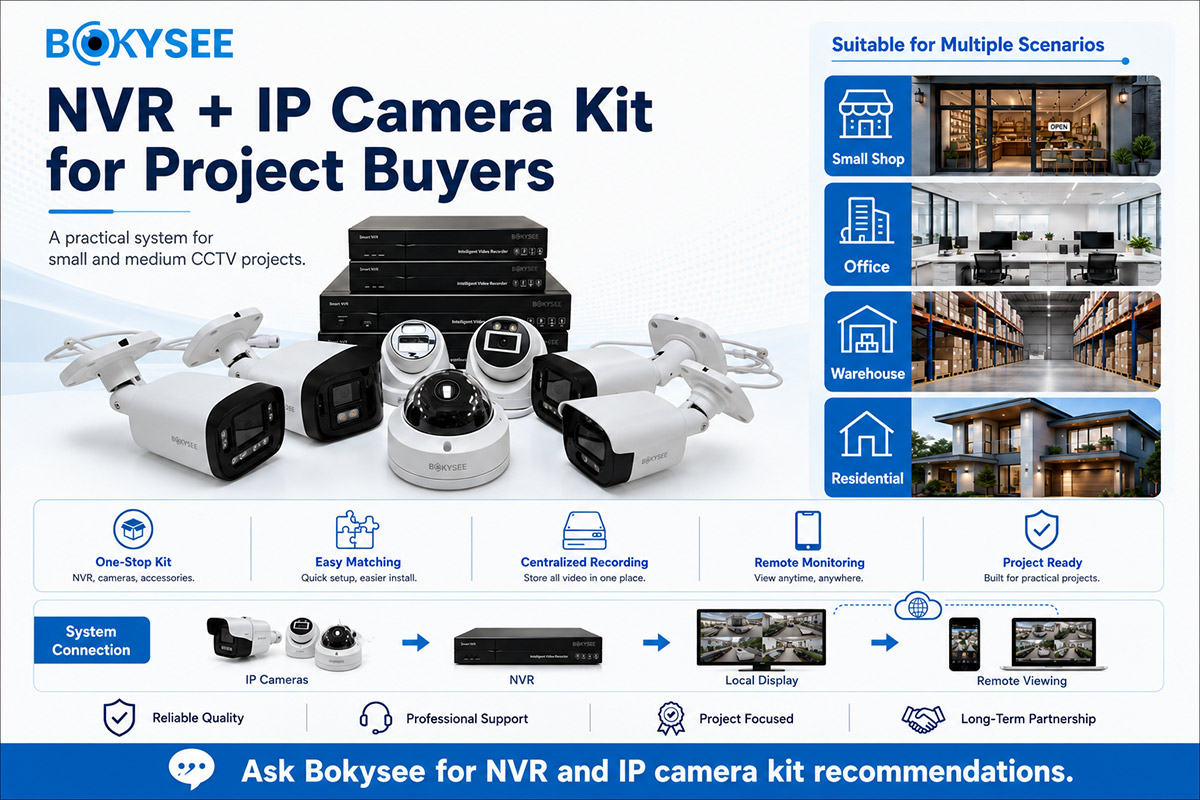
CCTV kits are useful for distributors and installers that sell standard packages. A four-camera home kit, eight-camera shop kit or sixteen-camera warehouse package can simplify quoting and installation.
A professional CCTV kit supplier should confirm that cameras, NVR, power supplies, cables and software have been tested together. The buyer should also know which items are included, the cable length, whether a hard drive is installed and how additional cameras can be added.
Kits are especially useful for e-commerce, retail stores, small installers and repeat franchise projects. Larger integrators may prefer to build customized systems from individual camera and recorder models.
AI Functions and Application-Based Configuration
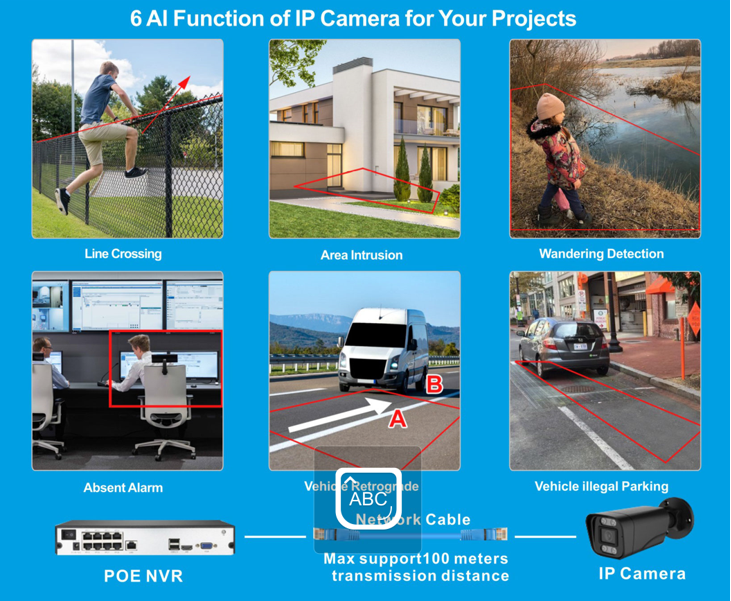
A full product range should include practical AI functions, but buyers should avoid choosing features only for marketing. Human detection and vehicle detection can reduce false alarms in homes, shops and warehouses. Line crossing, area intrusion, wandering and illegal parking may be useful in industrial and commercial projects.
Ask whether AI processing occurs in the camera, NVR or both. Cross-brand ONVIF integration may support live view and recording but not every smart event. If AI alarm linkage is essential, test the exact camera and recorder combination.
Interoperability and Open Protocols
For system integrators, ONVIF, RTSP and H.265 support are important. ONVIF defines profiles for interoperability, but official conformance and real-world compatibility are not identical concepts. The official ONVIF Profile S page explains basic IP video streaming, while Profile T covers features including H.264/H.265 streaming and certain events.
Bokysee provides an internal ONVIF connection guide for mixed-brand NVR systems. Buyers should still test the intended NVR, camera firmware and required functions before ordering in volume.
OEM and ODM Capability Across the Product Range
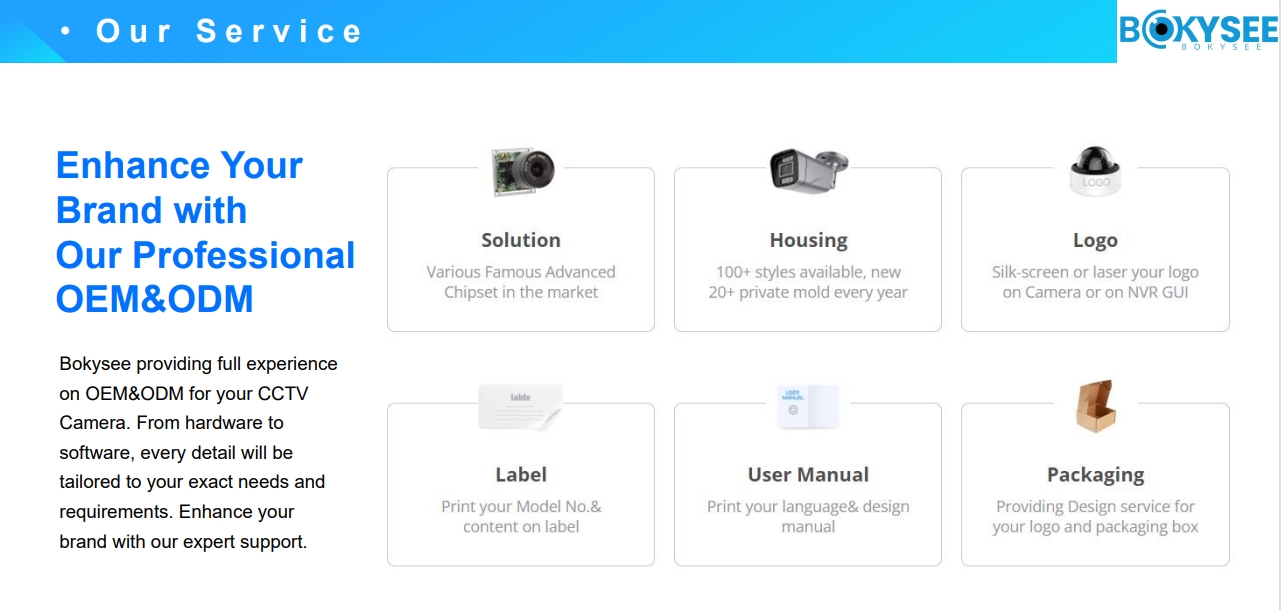
A full-range manufacturer should apply branding consistently across cameras, NVRs, labels, manuals and packaging. Common options include laser logos, silk-screen printing, customized model labels, neutral boxes, custom color boxes and NVR GUI logo customization.
MOQ varies by process. Laser logos may begin around ten units per model, manuals or NVR GUI logos around one hundred units, silk-screen printing around two hundred units and custom packaging around one thousand units per design. New housings, tooling or major hardware changes require a separate ODM evaluation.
Bokysee's OEM and ODM service overview is relevant for security brands that want one visual identity across multiple product categories.
Certification and Target-Market Compliance
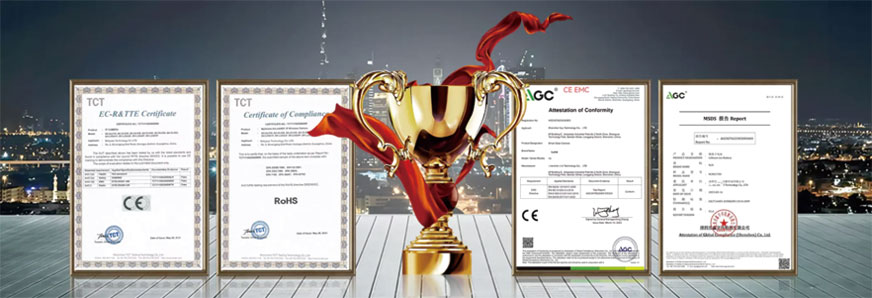
A manufacturer may have different certification coverage across product platforms. Buyers should request documents for the exact model, wireless module and power adapter. CE and RoHS may apply in Europe, while FCC authorization may be relevant for US radio-frequency devices. Country-specific telecom approval may apply to WiFi and 4G equipment.
The official EU CE marking guidance and FCC equipment authorization page help importers understand the underlying responsibilities. A certificate should never be treated as a generic logo that can be copied to every product.
MOQ and Product-Range Planning for New Distributors
A new distributor does not need to launch every available model. Begin with samples or a mixed trial order that covers the main customer groups. For example, select one PoE bullet, one PoE dome, one WiFi camera, one 4G solar camera, one PTZ and one NVR kit.
Standard samples may start from one to ten units per model. Regular OEM quantities often begin around one hundred to two hundred units per model, depending on customization. A focused range makes technical support, inventory and marketing easier.
Final Recommendation
Choose a CCTV manufacturer that can build a coherent system, not just supply isolated cameras. The supplier should understand connection methods, recording, storage, compatibility, certification and application design.
Bokysee's one-stop positioning is intended for distributors, wholesalers, installers, OEM brands and small-to-medium project partners. To receive a product-range proposal, share your market, buyer type, target price level and main applications through the Bokysee contact page.
See Also
Understanding Full Color IP Cameras And Their Key Advantages
Emerging IP Camera Innovations In 2025 For Better Security
Essential Guide To Purchasing 4G Security Cameras
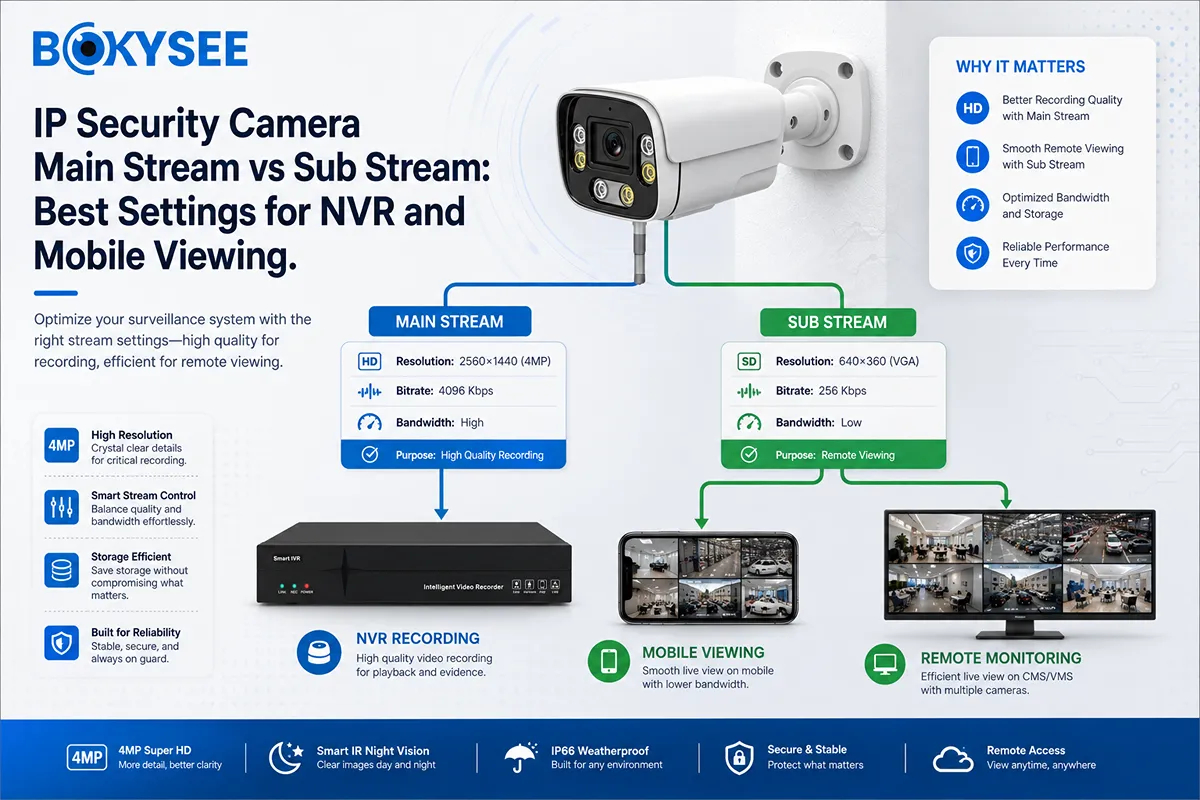
Guide To Encoding Settings For Bokysee IP Cameras
Key Differences Between IP Camera Systems And Traditional Models





 English
  Spanish
  Russian