
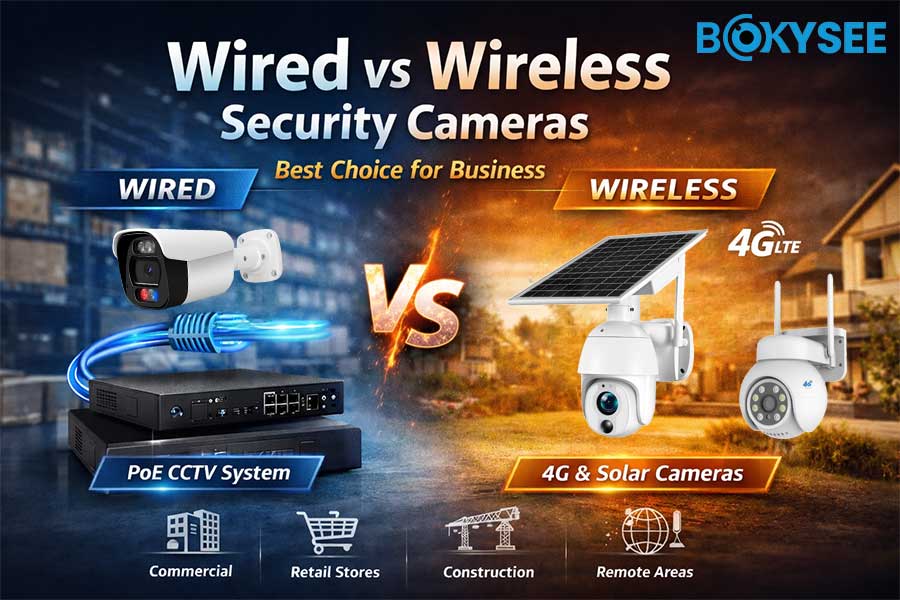
AI Overview: Quick Answers Before You Decide
What is the main difference between wired and wireless security cameras?
Wired security cameras use Ethernet (PoE) or coaxial cables for data transmission and power supply. Wireless security cameras transmit video via WiFi or 4G networks and may use adapters, batteries, or solar panels for power.
Which is more reliable for business use?
Wired PoE systems are more stable and scalable, making them ideal for commercial projects. Wireless cameras are better for flexible, small-scale, or temporary installations.
Is PoE better than WiFi for CCTV systems?
For long-term 24/7 surveillance, PoE is generally more reliable. WiFi systems offer convenience but depend heavily on network quality.
Can installers combine wired and wireless cameras?
Yes. Hybrid deployments are increasingly common in modern surveillance projects.
What Are Wired Security Cameras?
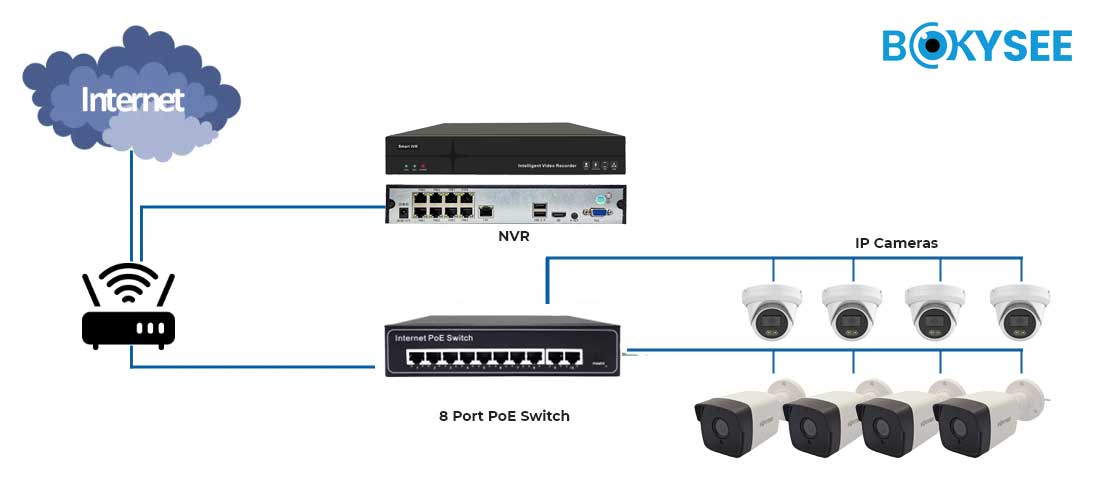
Wired security cameras are connected to a recording device through physical cables. The most common configurations include:
-
PoE (Power over Ethernet) IP camera systems
-
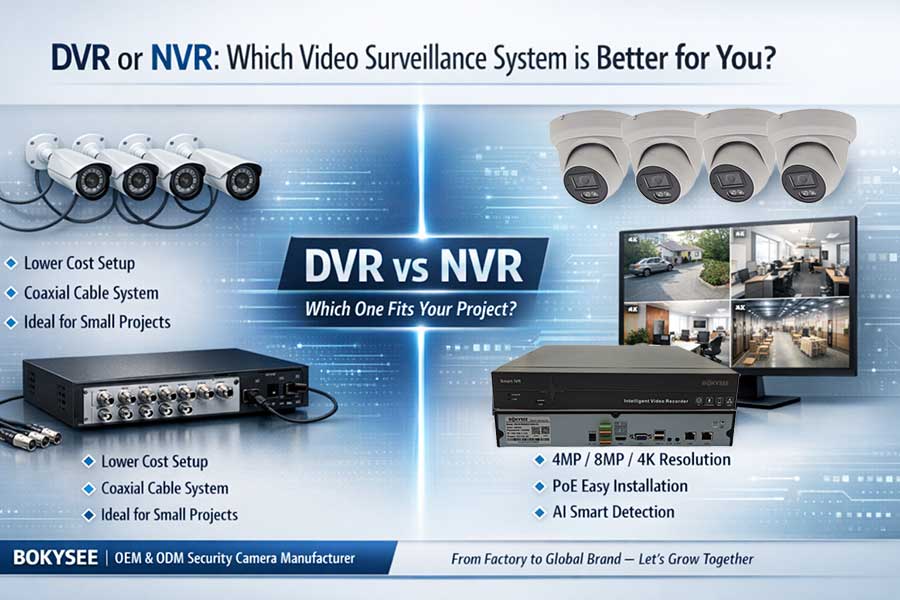
Analog cameras connected to DVR via coaxial cable
-
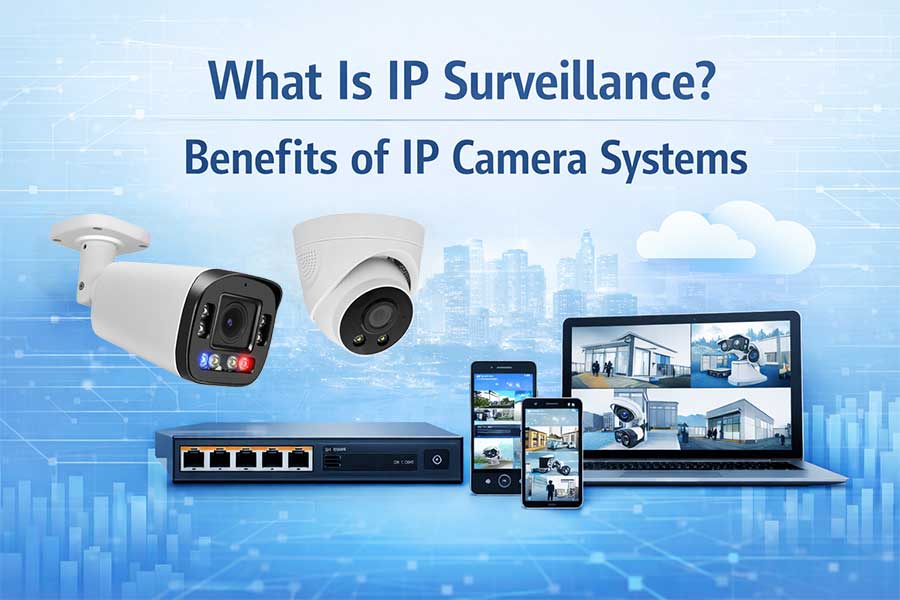
IP cameras connected to NVR through network switches
Today, PoE IP camera systems dominate the global commercial CCTV market because they combine power and data transmission in a single cable.
How PoE Wired Systems Work
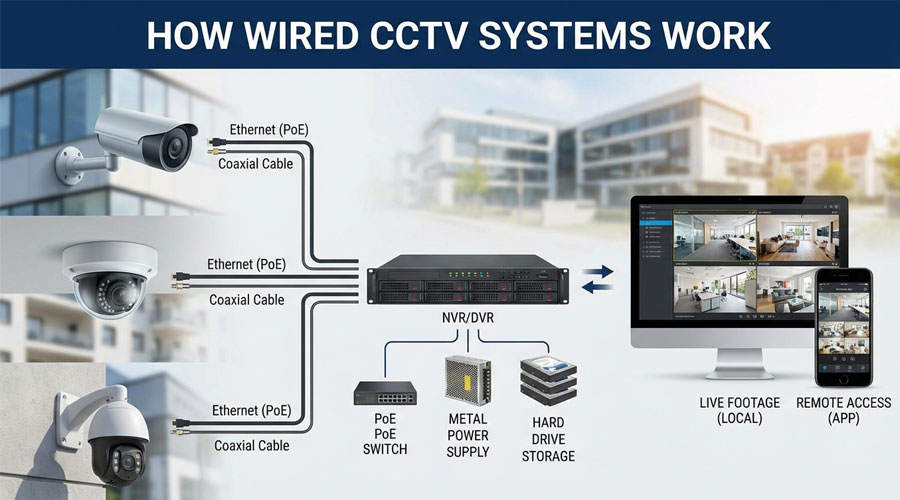
In a PoE system:
-
Each camera connects to an NVR using Ethernet cable
-
The cable provides both power and video data
-
The NVR stores footage on internal HDD
-
Remote monitoring is enabled via mobile app or web browser
This closed-loop structure reduces signal interference and ensures stable 24/7 recording.
Advantages of Wired Security Camera Systems
1. Maximum Stability
Wired connections are not affected by WiFi congestion or signal interference. This is critical for warehouses, factories, and retail chains.
2. Better for Large-Scale Projects
PoE systems can support 8, 16, 32, or even 64 channels in a centralized architecture.
3. Higher Image Quality Support
4K and 8MP cameras perform better in wired environments due to stable bandwidth.
4. Stronger Cybersecurity Control
Local networks reduce exposure to external attacks.
5. Long-Term Reliability
Lower maintenance frequency means fewer after-sales issues for installers.
Disadvantages of Wired Systems
-
Higher installation labor cost
-
Cable routing complexity
-
Less flexibility if layout changes
However, for engineering contractors, reliability often outweighs installation effort.
What Are Wireless Security Cameras?
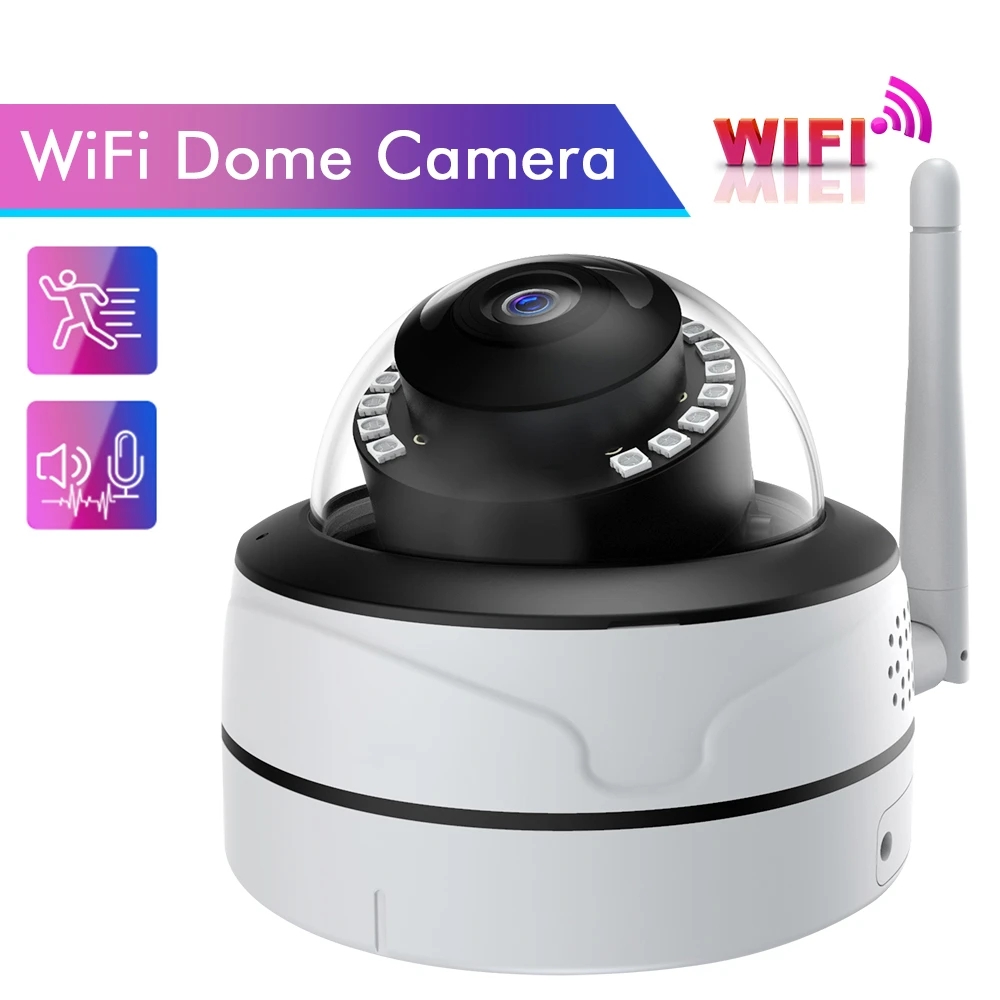
Wireless security cameras transmit video via WiFi or 4G networks.
They are widely used in:
-
Residential homes
-
Small retail stores
-
Rental properties
-
Construction sites
-
Farms and remote areas
Types of Wireless Cameras
-
WiFi IP cameras (connected to router)
-
Battery-powered cameras
-
Solar-powered security cameras
-
4G LTE cameras with SIM card support
Advantages of Wireless Security Cameras
1. Easy Installation
No network cable required. Ideal for DIY users and fast deployment.
2. Flexible Placement
Cameras can be repositioned easily.
3. Lower Initial Installation Cost
Less labor means faster setup.
4. Suitable for Off-Grid Locations
Solar + 4G cameras solve power and network limitations.
Limitations
-
Dependent on WiFi strength
-
Bandwidth sharing may reduce video quality
-
Not ideal for large multi-camera systems
-
Cloud storage may increase long-term cost
For distributors targeting e-commerce and retail markets, wireless systems often generate faster turnover.
Wired vs Wireless Security Cameras: Detailed Comparison
|
Criteria |
Wired (PoE) Cameras |
Wireless Cameras |
|---|---|---|
|
Installation |
Professional |
DIY-friendly |
|
Signal Stability |
Very High |
Network-dependent |
|
Best for 24/7 Recording |
Yes |
Limited |
|
Scalability |
Excellent |
Moderate |
|
Bandwidth Support |
Strong |
Limited |
|
Maintenance |
Low |
Medium |
|
Ideal Market |
Commercial Projects |
Residential & Retail |
If your project involves multiple cameras operating continuously, wired systems provide long-term performance advantages.
If mobility and quick installation are priorities, wireless systems are more practical.
Application-Based Decision Guide
For Commercial Buildings & Industrial Projects
Recommended:
-
4MP to 8MP PoE IP cameras
-
AI human & vehicle detection
-
NVR centralized storage
-
ONVIF compatibility
Suitable for:
-
Factories
-
Logistics centers
-
Supermarkets
-
Office complexes
-
Government facilities
Stability and centralized management are key.
For Small Businesses & Retail Stores
Recommended:
-
WiFi IP cameras
-
Full-color night vision
-
Two-way audio
-
App-based remote control
This setup reduces installation complexity and fits tight budgets.
For Remote & Rural Locations
Recommended:
-
4G LTE solar cameras
-
Battery-powered PTZ cameras
-
Dual-lens solar models
These systems operate without wired internet or power grid access.
Bokysee Wired & Wireless Security Camera Solutions for Global B2B Buyers
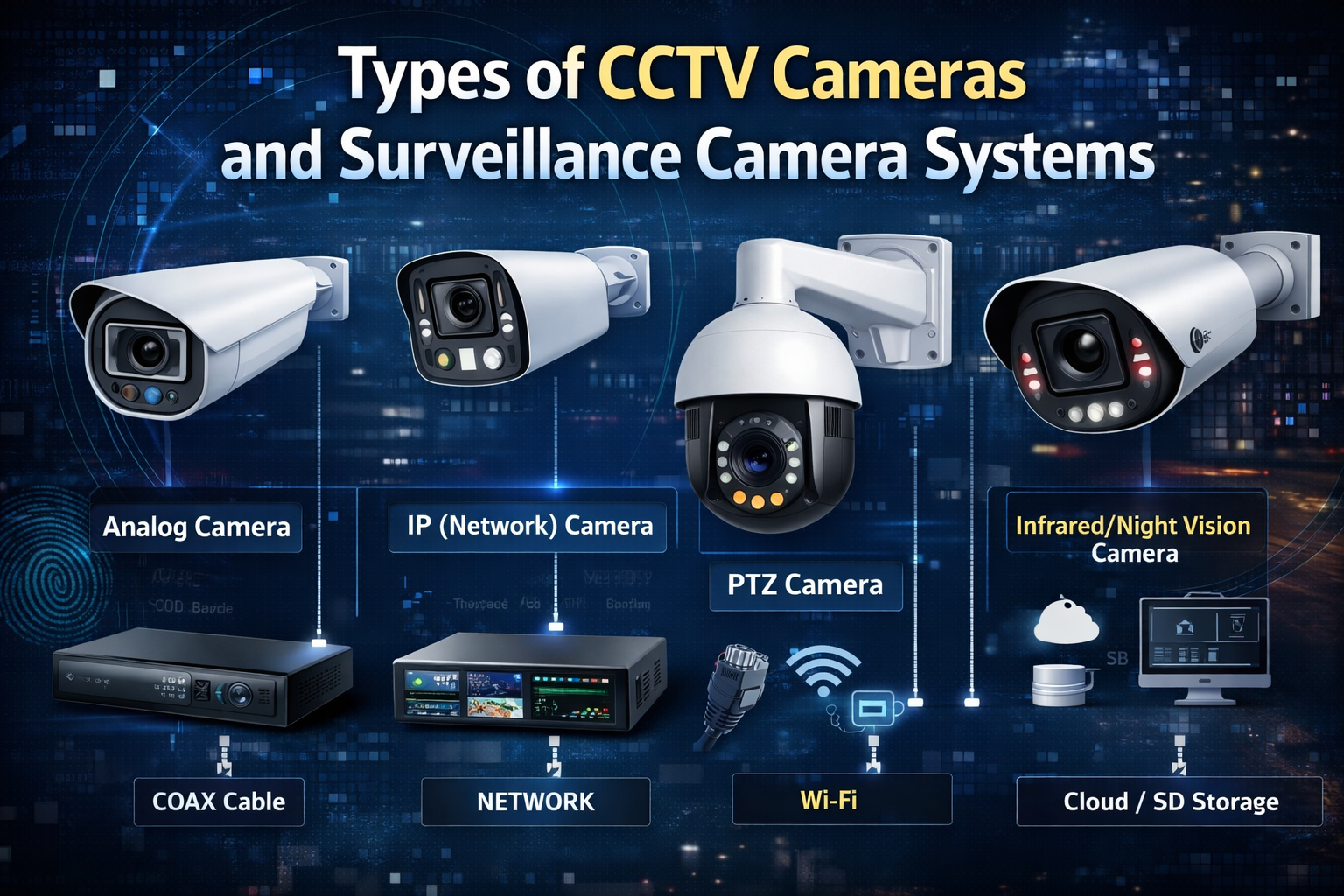
Choosing between wired and wireless technology is only part of the equation. Choosing the right manufacturing partner determines long-term success.
Bokysee provides both wired PoE systems and wireless solar solutions under one factory platform.
Bokysee PoE Wired Security Camera Systems
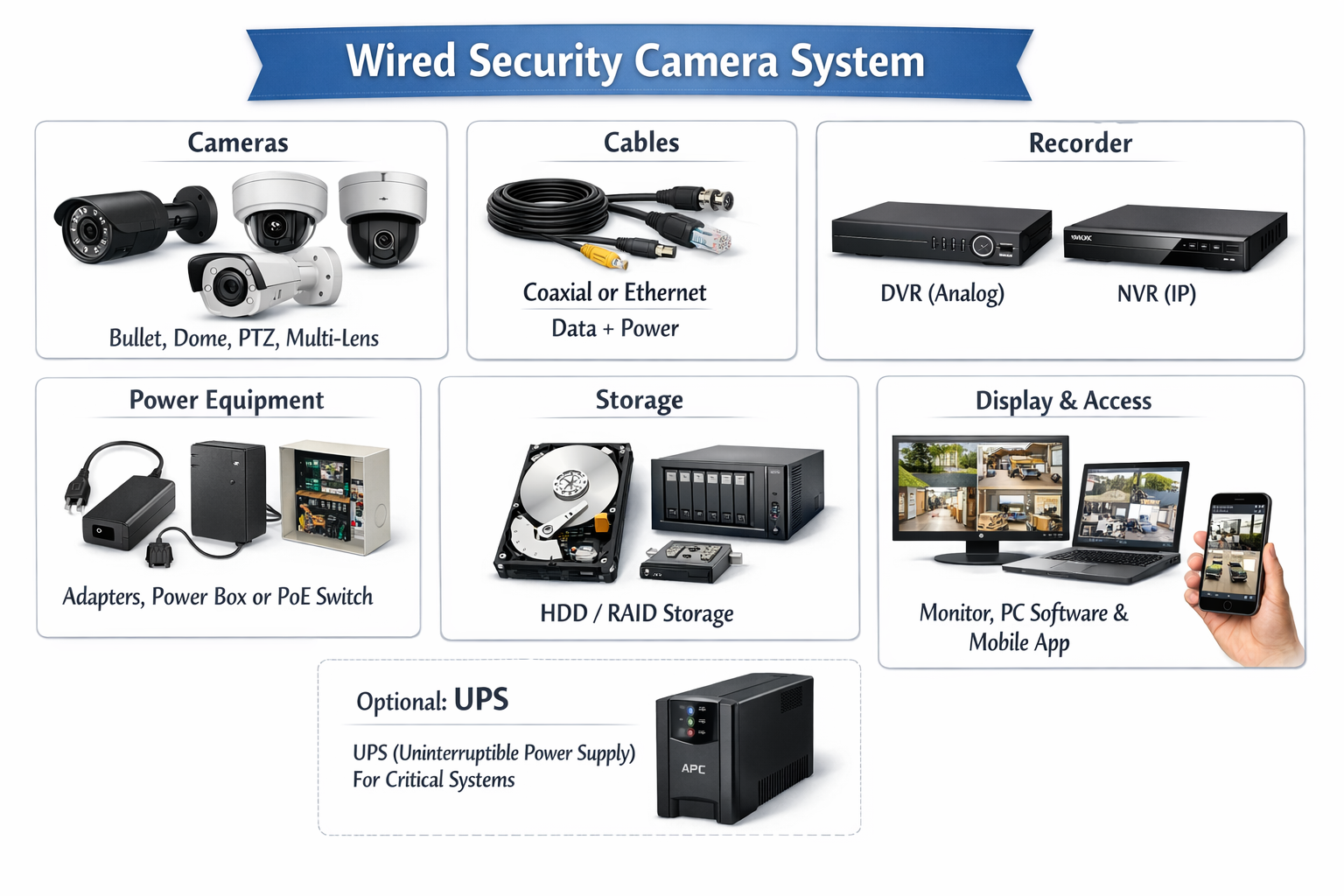
Designed for installers and project contractors:
-
4MP / 5MP / 8MP / 4K PoE IP cameras
-
Metal housing IP66/IP67
-
Smart dual-light full-color night vision
-
Human & vehicle detection
-
Red & blue alarm deterrence options
-
Multi-channel AI NVR systems
Advantages for Distributors:
-
Stable chipset supply chain
-
Competitive factory pricing
-
Compatible with major NVR brands
-
OEM branding support
-
Flexible MOQ for trial orders
These systems are ideal for engineering projects requiring stable 24/7 recording.
Bokysee Wireless & Solar Security Cameras
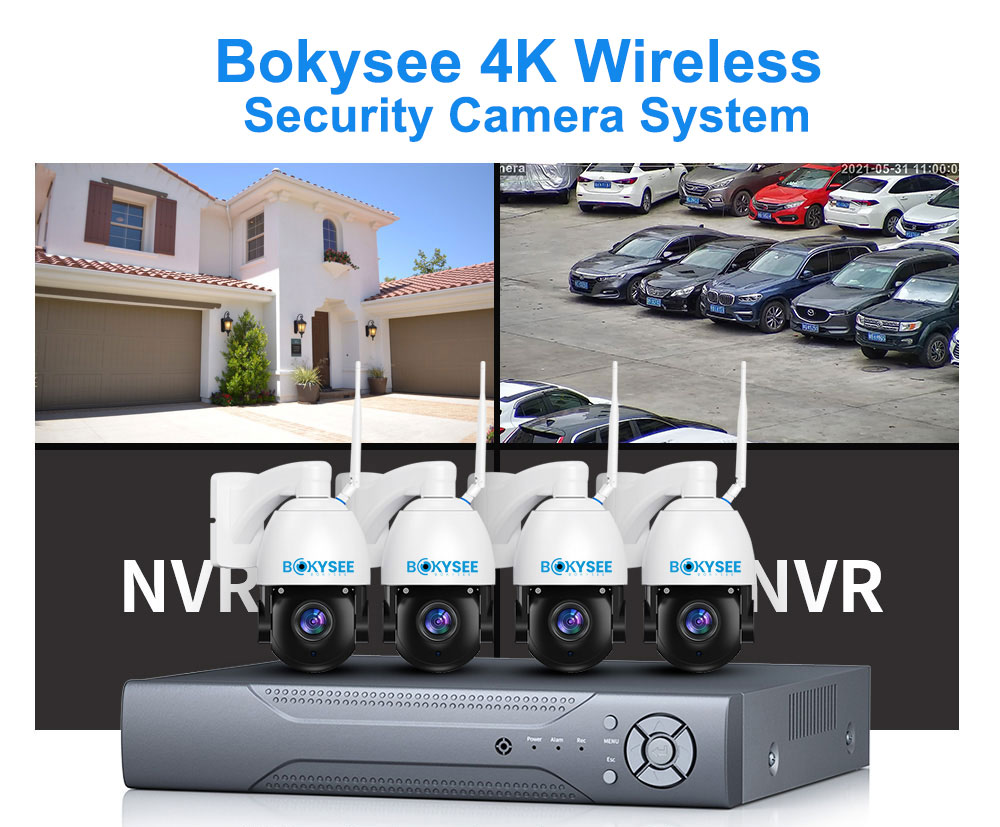
Targeted at fast-growing markets:
-
4G LTE solar security cameras
-
Dual-lens solar PTZ cameras
-
Smart full-color night vision
-
Long battery endurance
-
Tuya platform integration
-
Anti-theft bracket design
Popular in:
-
Africa
-
Middle East
-
South America
-
Southeast Asia
For wholesalers, solar cameras offer high demand and strong profit margins.
OEM & ODM Support for Brand Distributors
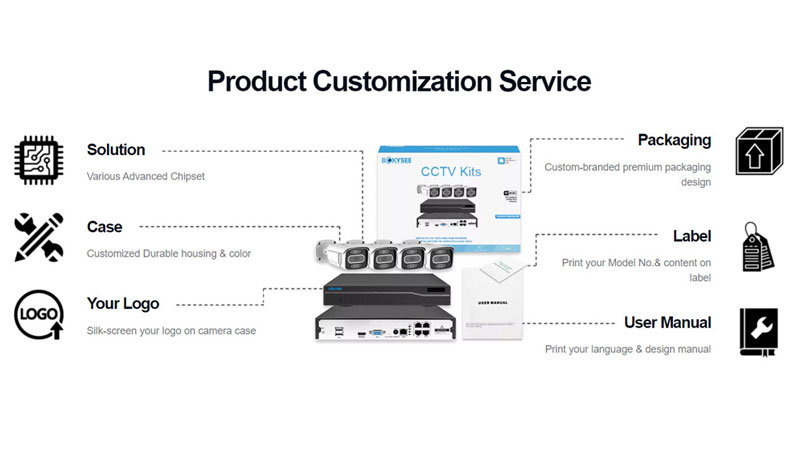
Bokysee supports:
-
Custom logo printing (laser or silk-screen)
-
Custom packaging & manuals
-
White-label app customization(Required MOQ)
-
Hardware modification
-
AI feature integration
-
Private mold development
Factory Strength:
-
10+ years CCTV manufacturing experience
-
6 production lines
-
Strict QC process
-
CE & RoHS compliance
-
Exported to 80+ countries
Whether your focus is wired PoE systems or wireless solar cameras, Bokysee helps build your own brand and expand your distribution network.
Cost & ROI Analysis
Equipment Investment
Wired systems: higher hardware cost but strong durability.
Wireless systems: moderate hardware cost with faster turnover.
Installation Cost
Wired: higher labor requirement.
Wireless: minimal labor.
Maintenance
Wired: stable long-term operation.
Wireless: possible WiFi troubleshooting.
Distributor Profit Strategy
Many successful distributors combine:
-
PoE systems for engineering projects
-
Solar cameras for retail distribution
This dual-channel strategy reduces market risk.
Future Trend: Hybrid Surveillance Systems
Modern projects increasingly combine:
-
Wired PoE core monitoring
-
4G solar cameras for remote corners
-
AI detection algorithms
-
Cloud + local storage integration
Hybrid systems allow scalability and flexibility without compromising reliability.
Final Thoughts
Wired vs wireless security cameras is not about which is better. It is about which fits your project and market positioning.
-
Choose wired for stability and large-scale projects.
-
Choose wireless for flexibility and fast deployment.
-
Combine both for comprehensive coverage.
For installers, distributors, and project contractors seeking long-term cooperation, Bokysee provides factory-direct wired and wireless security camera solutions with OEM & ODM support.
Building the right product portfolio today determines your competitive edge tomorrow.
FAQ
-
Are wireless cameras completely cable-free?
They transmit video wirelessly but still require power unless battery or solar-powered. -
Do PoE cameras require internet?
No. They can record locally without internet access. -
Which system lasts longer?
Wired PoE systems generally have longer stable lifespans. -
Can I expand my system later?
Yes. Wired systems are easier to scale. Hybrid solutions are also common. -
Which system is better for distributors?
Wired systems provide stable project revenue. Wireless solar cameras offer faster retail turnover.
See Also
Choosing Between Analog And IP Security Cameras For You
Exploring The Advantages And Disadvantages Of CCTV Systems
Comparing PoE And Wireless Cameras For Industrial Use





 English
  Spanish
  Russian