Skip to content
Deploying a solar powered security camera for construction site is critical to stop equipment theft from eroding project margins. Wired systems are useless on unpowered, dynamic sites, where fixed positions and vulnerable cables leave assets exposed. Each security gap translates directly into financial loss and project delays.
This analysis benchmarks the specifications for true off-grid reliability. We evaluate mission-critical features like IP66+ durability, 4G LTE connectivity, and AI-powered filtering that distinguishes human threats from site noise. These specs determine if a system can actually protect your assets.
Vulnerabilities of Unpowered Construction Sites
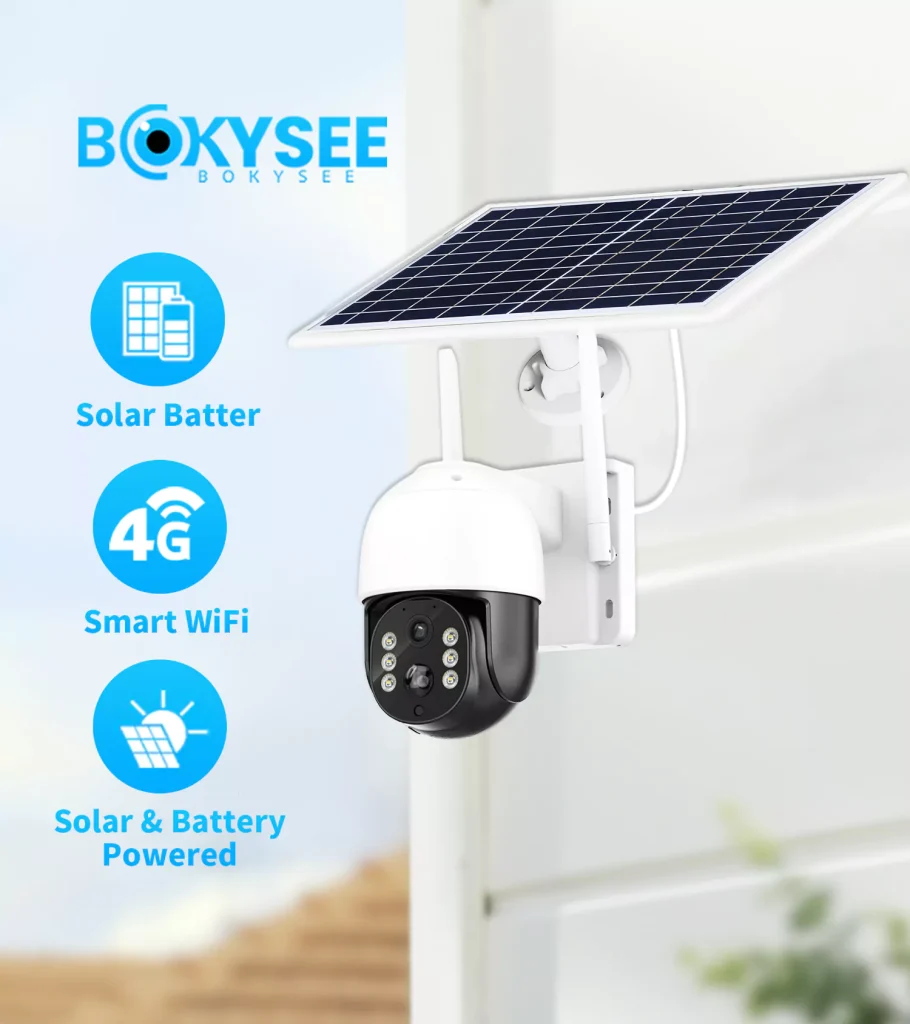
Unpowered jobsites are prime targets. Weak perimeters combined with no electricity for standard cameras or lights create the perfect environment for after-hours theft and vandalism.
Weak Perimeters and Uncontrolled Access Points
Most construction projects start as open spaces before any real security is in place. Even when fencing goes up, it’s often incomplete. Unfinished sections, temporary driveways, and gates left open for deliveries provide a clear invitation for unauthorized entry. Intruders don’t need sophisticated methods when they can just walk on site. Once inside, stacked materials, heavy machinery, and temporary structures create numerous blind spots, giving thieves plenty of cover to operate without being seen from the road.
Lack of Power for Lighting and Surveillance
Without electricity, your standard security playbook is useless. Conventional floodlights, alarm systems, and connected surveillance cameras simply can’t operate. This plunges the entire site into darkness after hours, which is exactly what criminals want. It dramatically increases the risk of theft and vandalism going completely undetected until the crew shows up the next morning. Site trailers and temporary offices are especially vulnerable. They often contain valuable documents, laptops, and tools but rely on grid power for security, making them easy targets for a quick break-in.
Limitations of Traditional Wired CCTV Deployments
Wired CCTV is built for stable, finished buildings, not chaotic job sites. Its reliance on fixed power and cabling makes it too slow, expensive, and inflexible for construction.
High Costs and Complex Infrastructure Requirements
Traditional CCTV systems demand stable power and a fixed network connection at every camera location. This is a non-starter for most construction sites, especially in the early phases before permanent utilities are live. Running coaxial or Ethernet cables across an active site isn’t just difficult; it’s often impossible without major civil works.
The installation process itself is a major cost and time sink. It requires professional technicians for labor-intensive tasks like trenching, running conduits, and pulling wires. These upfront expenses add up quickly and delay the activation of your security. You can’t just deploy cameras; you have to coordinate the cabling work with every other trade on site, which slows everything down.
Operational Inflexibility and Vulnerability on Dynamic Sites
Construction sites are not static. Risk areas, access points, and material storage zones change weekly, if not daily. Wired cameras are fixed in place. Moving one isn’t a simple adjustment; it requires rerouting cables and redeploying mounts, which is expensive and creates downtime. This inflexibility makes them a poor fit for adapting to the fluid nature of a job site.
Exposed cables create another serious problem: they are extremely vulnerable. Heavy machinery can accidentally sever them, and thieves can intentionally cut them to disable cameras without anyone noticing. The centralized recorder (DVR or NVR) also presents a single point of failure. If it’s stolen or destroyed in a fire or act of vandalism, all recorded footage from every connected camera is lost instantly.
Grow Your Brand with Custom CCTV Solutions
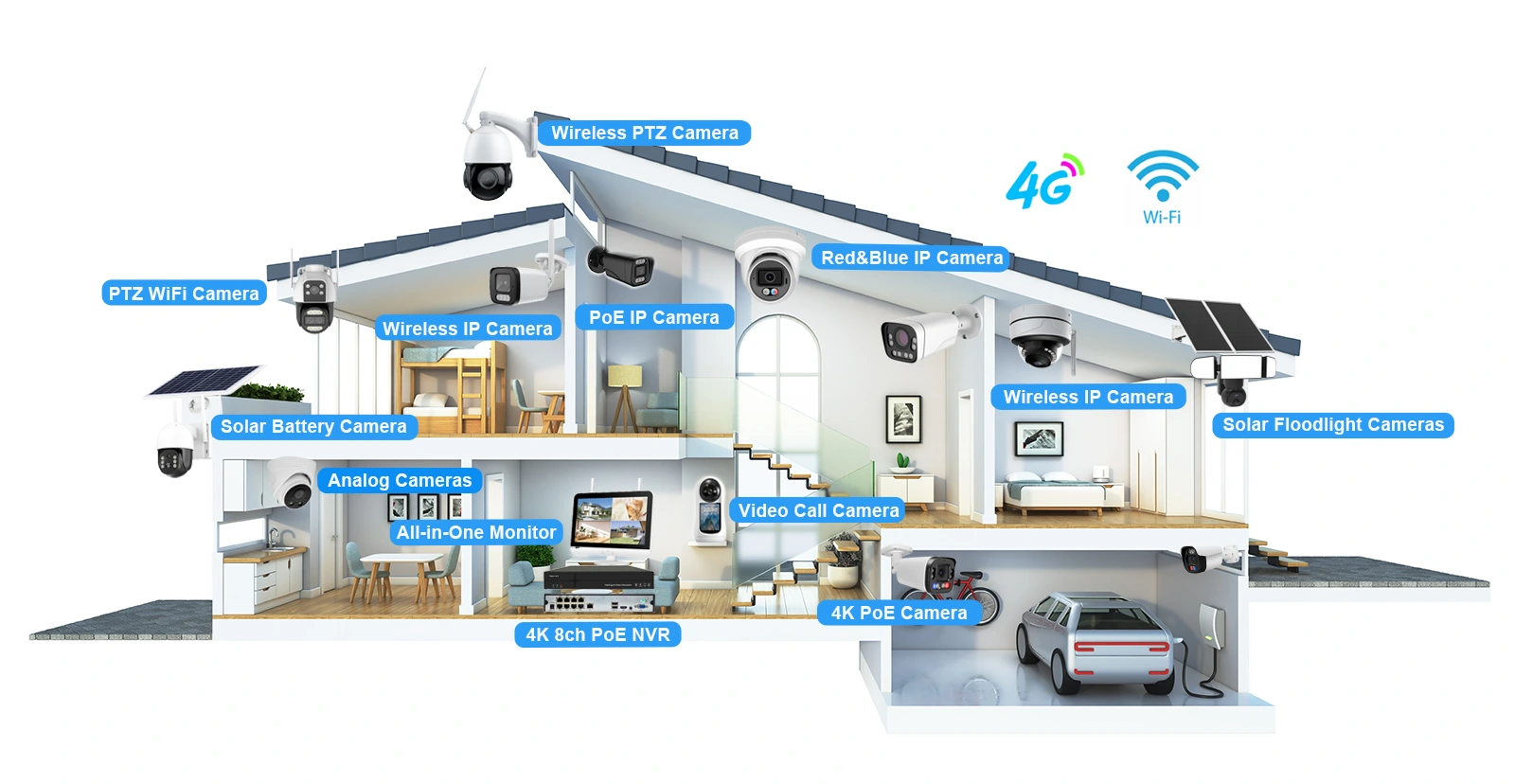
Mobile Security Advantages for Dynamic Projects
Mobile security units provide fast deployment, off-grid power, and remote access, directly cutting site crime and improving project oversight without fixed infrastructure.
| Advantage Category | How It Works on a Jobsite |
|---|---|
Functional Advantages: Rapid Deployment and Off-Grid Operation |
|
Risk Mitigation and Project Management Benefits |
|
Harsh Environment Durability and IP Ingress Standards
Cameras on construction sites need high IP ratings (IP66+) to block dust and water, plus physical durability for impacts, vibration, and extreme temperatures across the entire system.
Defining IP Ingress Ratings for Construction Environments
IP (Ingress Protection) ratings tell you how well a device is sealed against solids and liquids. The first digit covers solid particles like dust, and the second covers liquids like rain. For a construction site, you want the first digit to be a ‘6’, which means it’s completely dust-tight. This is critical because site dust isn’t just dirt; it’s fine, abrasive particulates like cement and gypsum that can wreck electronics.
For the second digit, a ‘5’ resists low-pressure water jets, a ‘6’ handles powerful jets, and a ‘7’ can survive temporary immersion. Given the exposure to heavy, wind-driven rain and occasional site washdowns, the baseline for any serious construction camera is IP65. But for long-term, reliable deployment where you can’t afford failures, IP66 or IP67 is the real standard. Anything less is just asking for trouble.
Key Durability Features Beyond Ingress Protection
A high IP rating doesn’t mean much if the camera system itself is flimsy. The entire unit—camera, solar panel, battery box, and mounts—has to withstand the physical abuse of a construction site. This isn’t a backyard camera; it’s industrial equipment.
- Housing and Mechanical Design: The camera body should be metal or high-impact, UV-stabilized plastic with corrosion-resistant finishes. Mounting hardware needs to be robust enough to handle high winds and constant vibration from heavy machinery without loosening over time. All cable entries must use weatherproof glands to prevent seals from failing.
- Electronics and Power System: Components need a wide operating temperature range, typically from -20°C to +60°C (-4°F to 140°F), to function through freezing nights and direct summer sun. The batteries, charge controllers, and wiring must all be outdoor-rated and protected within their own weather-resistant enclosures.
- System-Level Durability: The solar panel frames need to be rated for local wind loads. The battery box should be lockable and impact-resistant. Every part of the system has to match the camera’s durability, otherwise you just have a different point of failure.
Off-Grid Connectivity: 4G LTE and Edge Recording
4G LTE connects remote sites that lack wired internet, while edge recording captures footage locally to ensure reliability and cut down on data costs.
For job sites without established infrastructure, getting reliable security video used to be a major headache. You can’t run ethernet cables across a muddy, active construction zone. This is where a combination of 4G LTE and edge recording comes in. It’s a practical solution built for how construction sites actually operate: temporary, remote, and constantly changing.
The Role of 4G LTE for Remote Site Access
Cellular connectivity is the backbone for any modern, off-grid surveillance system. It solves the fundamental problem of getting data off a site that has no broadband connection.
- It acts as the primary link for sending video clips and critical alerts from sites that have no access to traditional internet or Wi-Fi.
- Cellular networks provide coverage that extends for miles, reaching distant entry gates and fence lines that are far beyond the practical range of any on-site Wi-Fi router.
- Modern video compression like H.265 makes it possible to transmit clear, high-quality footage over a 4G connection without incurring massive data charges.
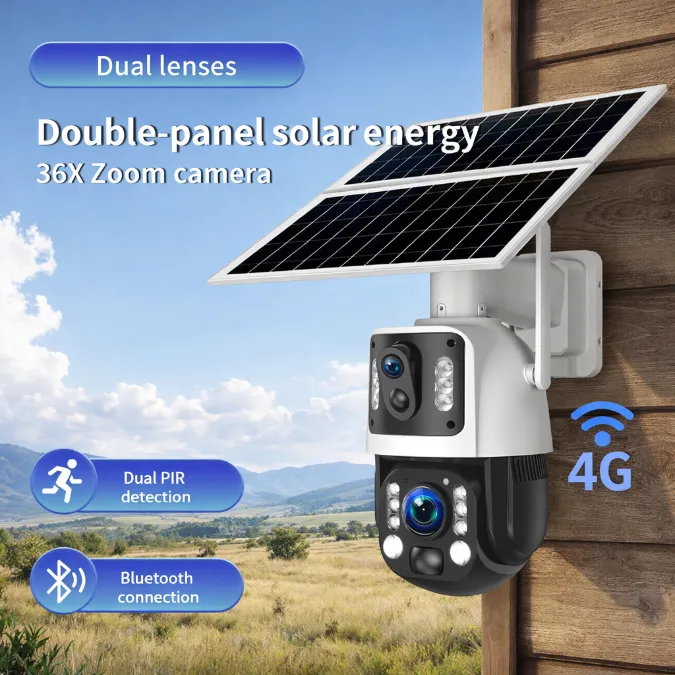
- When you pair 4G with solar power, the entire camera system becomes completely wire-free. This makes it perfect for temporary projects and undeveloped locations where running cables isn’t an option.
Edge Recording for Data Resilience and Efficiency
Relying solely on a cellular connection is risky. Job sites are full of signal interference from metal structures and heavy machinery. Edge recording adds a necessary layer of reliability and helps control operational costs.
- Video is recorded directly to local storage, like an SD card or a small solid-state drive. This guarantees footage is captured even if the cellular network is down or congested.
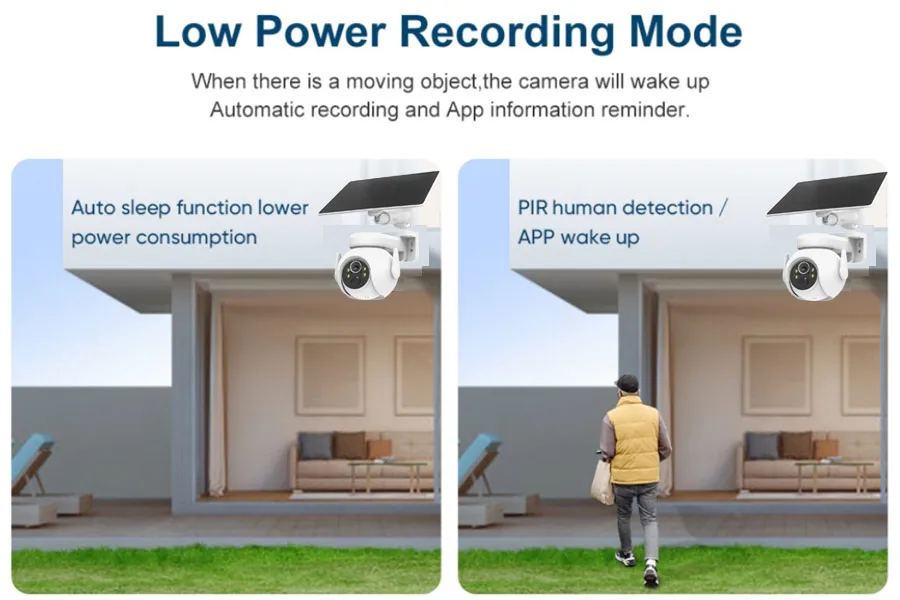
- On-device analytics can distinguish between a person and a waving tree branch. This intelligence filters out false alarms and dramatically reduces the amount of unnecessary data sent over the cellular network.
- The system works on a “store-and-forward” basis. If the connection drops, it saves footage locally. Once the network is back online, it syncs the important event clips to the cloud.
- It significantly lowers monthly data bills by only transmitting critical event clips or thumbnails, rather than a constant, high-resolution video stream.
Human and Machinery Intrusion AI Filtering
AI filtering stops the noise from animals or weather, focusing alerts on what matters: people or machinery where they shouldn’t be, after hours or during the day.
Filtering for Human Intrusion and Safety
The system’s AI is trained to distinguish human shapes from non-threats. This means it can ignore motion from animals, weather events, or wind-blown debris, focusing alerts only on relevant human activity. This cuts down on the false alarms that plague basic motion sensors, ensuring that when an alert comes through, it needs attention.
Security alerts are triggered based on context and pre-defined rules. A person detected walking on a public sidewalk might be ignored, but the same person detected inside a perimeter fence or near high-value materials after work hours will trigger an immediate event. This rule-based logic makes the system smart about what constitutes a genuine threat.
During the workday, these same human detection models can serve a dual purpose for safety compliance. The system can be configured to flag workers who are not wearing proper PPE in designated zones or to issue an alert if someone enters a hazardous area, like the swing radius of a crane or an active excavation site.
Filtering for Machinery and Vehicle Misuse
Beyond people, the detection models can identify specific classes of vehicles and heavy equipment. The system recognizes objects like trucks, excavators, loaders, and forklifts, allowing it to track their movement and use on site. This is critical for asset protection and preventing unauthorized operation.
An intrusion event is registered when machinery is operated or moved in a restricted area or outside of scheduled hours. For example, if an excavator starts up at 2 a.m. in the equipment yard, the system flags it as a potential theft in progress. This provides a layer of security specifically for high-value mobile assets.
Rapid Installation and Site Relocation Logistics
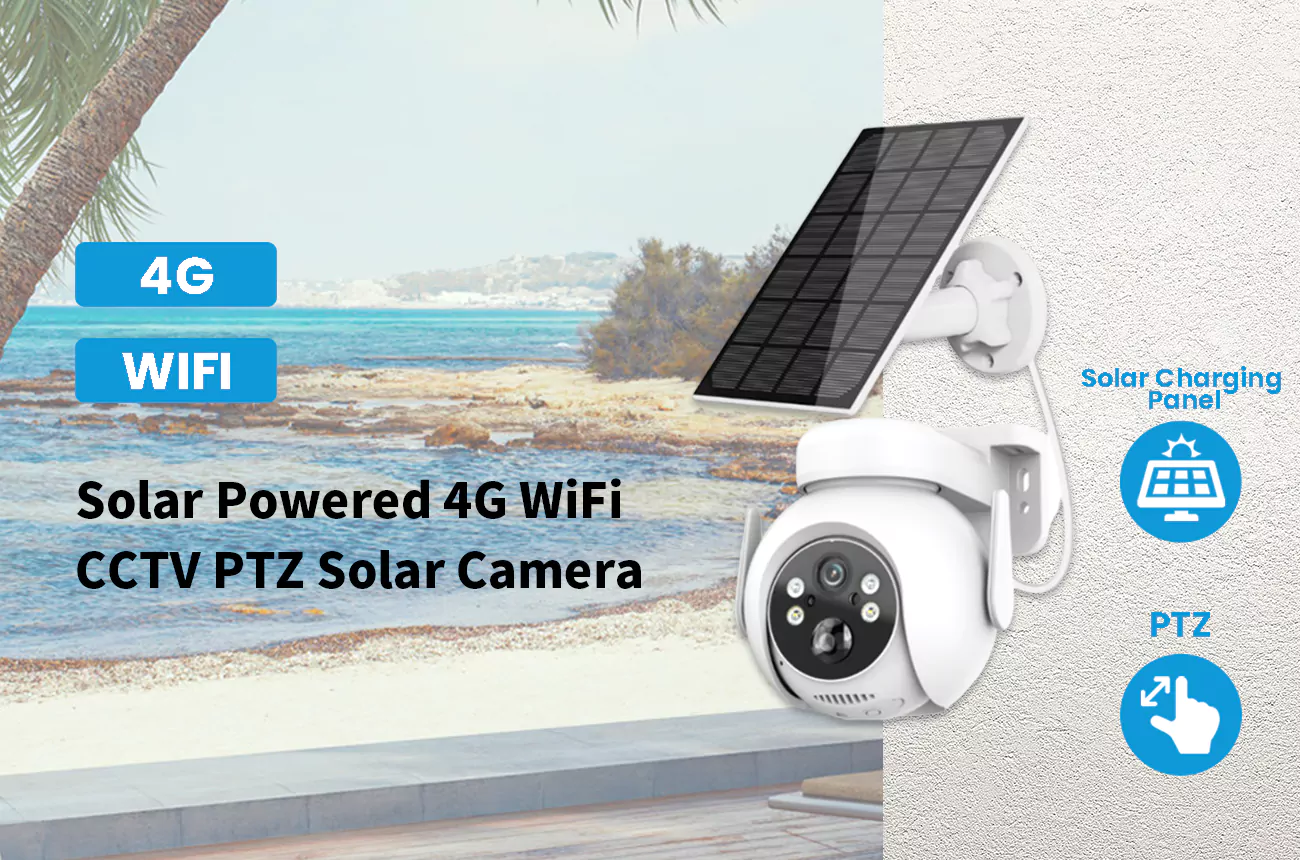
Solar-powered cameras are built for speed. They deploy in minutes without trenching or grid power and can be moved easily as the job site evolves.
Streamlined Installation Process
The whole point of a solar-powered security camera is to get it running fast, without waiting for utilities. Because each unit has its own solar panel, battery, and cellular modem, you can skip the electricians and network engineers. There’s no trenching for power cables or data lines. An entire deployment can be completed in minutes, not days.
The process is straightforward. First, you pick a spot with good sun exposure and a clear view of the risk area—like a gate, fuel tank, or materials laydown yard. Then, you mount the unit. For trailer-based systems, this means positioning the trailer and extending the mast. For pole-mounted units, you just use simple clamps or brackets. Hooking it up is plug-and-play: connect the battery, then the solar panel. Once it’s powered on, the camera connects to the cloud via its cellular link, and you can aim it and set up alerts from a mobile app. A trained crew can get a unit live in 10 to 30 minutes.
Flexible Relocation for Evolving Job Sites
Construction sites are never static. Walls go up, cranes move, and access roads shift. A camera with a perfect view one week might be staring at a concrete wall the next. Solar-powered systems are designed for this reality. Relocating them is a core part of their function, not a costly afterthought.
Moving a trailer-based unit is as simple as lowering the mast and towing it to a new location. A pole-mounted camera can be unclamped and re-attached to a different pole or fence section in minutes. The key is that you don’t have to redo any infrastructure. There are no cables to pull or trenches to dig. You just move the hardware and maybe update its label in the monitoring software. This agility allows security coverage to follow the project’s progress, protecting new high-value areas as they emerge without disrupting site operations.
Quality Control: Factory Aging and Reliability Tests
Factory aging and reliability tests replicate years of job site abuse in just a few days. The goal is simple: find and remove any weak units before they ship.
Factory Burn-In (Aging) Process
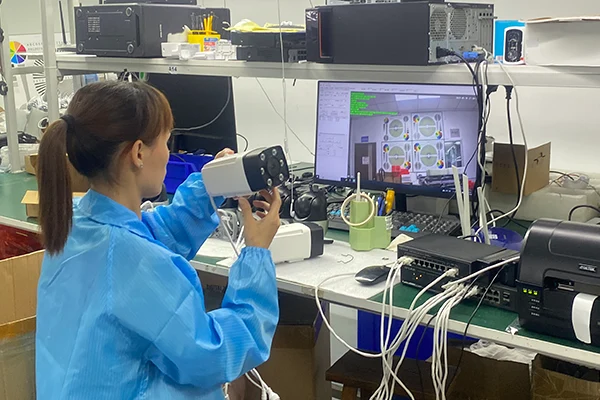
The burn-in process is designed to catch early-life component failures. We run the cameras under stressful conditions to see what breaks. A camera that can’t survive this test has no business on a construction site.
- Cameras operate continuously for 24 to 72 hours in a high-temperature chamber, typically between 50-70°C, to accelerate potential component degradation.
- Automated systems monitor each device during the test. They look for specific anomalies like unexpected reboots, current spikes, or sudden drops in connectivity.
- A unit passes only if it completes the entire aging period with zero functional errors. Any sign of physical damage or overheating results in an automatic failure.
Environmental and Mechanical Reliability Testing
After surviving the burn-in, cameras go through physical abuse tests that simulate the real-world conditions of a job site. This is where we verify the product’s physical resilience.
- We verify IP66 or higher waterproof ratings by blasting the camera housings with high-pressure water jets. This ensures they can handle driving rain and dust common on construction sites.
- Thermal cycling exposes the units to extreme temperature swings, from as low as -20°C to as high as 70°C. This tests the integrity of seals and materials against expansion and contraction.
- Vibration and drop tests confirm the camera can withstand constant shocks from nearby heavy machinery and the occasional impact during installation or relocation.
Frequently Asked Questions
What makes a solar security camera system suitable for construction sites?
A solar security camera is suitable for construction sites when it combines autonomous power, robust wireless connectivity, and ruggedized hardware. Key features include a solar panel with a battery backup lasting several days, an integrated cellular modem for remote access, a weather-resistant housing that can withstand dust and extreme temperatures, and high-resolution day and night cameras with infrared illumination.
How can installers mount solar camera rigs to temporary site fencing?
Installers can mount solar camera rigs to temporary fencing using clamps, brackets, or U-bolts on rigid sections of the fence. To ensure a clear view and reduce tampering, the camera and panel are often positioned on a mast or standoff arm above the fence line. The solar panel needs an unshaded view of the sky, and if the fence is too flexible, a fence-adjacent pole is used for better stability.
Can off-grid solar cameras survive high dust levels on excavation sites?
Yes, off-grid solar cameras can operate reliably in high-dust environments if they are properly designed and maintained. Survival depends on using cameras with dust-tight IP66 or IP67 ratings, oversizing the solar panel and battery to compensate for reduced power generation, and scheduling regular cleaning for the camera lens and panel. Mounting the camera at least 12-15 feet high also helps avoid direct dust and mud splatter.
What is the typical motion detection range for industrial site cameras?
The typical motion detection range for industrial and construction site cameras is around 30 to 50 feet. Some higher-end solar security systems designed for large perimeters can extend this range up to 115 feet. The actual effective range varies based on the sensor quality, mounting height, target size, and environmental factors like dust or bad weather.
How many days of backup battery power do jobsite solar systems require?
Jobsite solar security systems typically require about 3 to 5 days of backup battery power. This level of autonomy ensures the camera can operate continuously through multiple overcast days, weekends, or periods when dust might cover the solar panel. For remote sites or winter conditions, a 5-day backup is often the standard.
Do construction site security cameras require special data security setups?
Yes, they require special data security setups because they are often located on unmanned sites, transmit video over public cellular networks, and capture sensitive project information. Essential security measures include using encrypted video transmission, unique and strong device passwords, secure cloud storage with role-based access controls, and proper management of the cellular SIM cards to prevent misuse.
Final Thoughts
While generic cameras offer lower upfront costs, only hardware built to industrial standards can survive a job site. Units that pass factory aging tests and meet IP66+ ratings are the only defense against system failures that erode your profits and damage your reputation with clients.
Don’t risk your business on unproven hardware. We recommend starting with a sample kit to test the build quality, AI performance, and system reliability for yourself. Contact our team to configure a system for your specific application.







 English
  Spanish
  Russian