
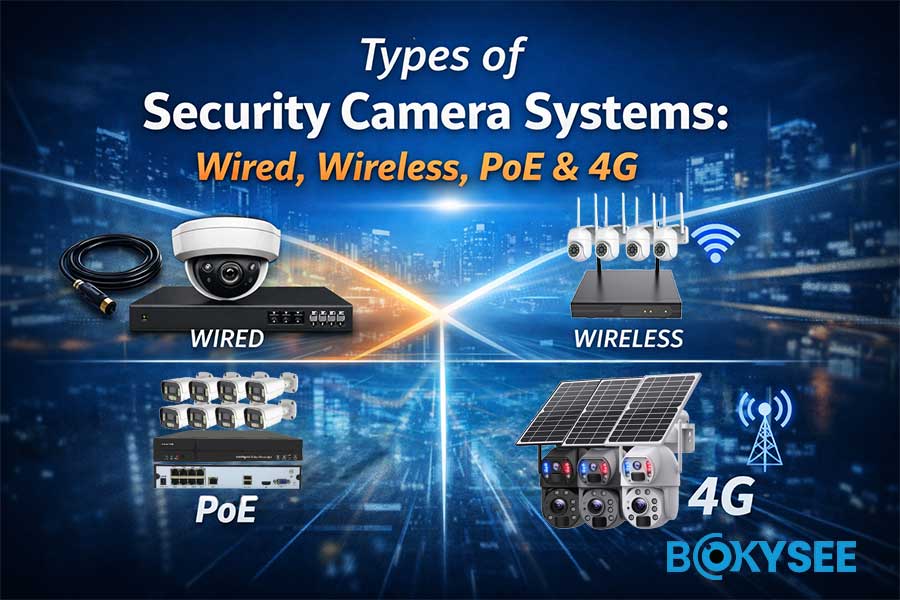
Choosing the right security camera system is no longer just about video quality. Today, buyers, installers, and distributors must consider connection type, installation environment, scalability, and long-term reliability.
With so many options available, understanding the different types of security camera systems is the first step toward building a stable and cost-effective surveillance solution. In this guide, we break down the most common systems—Wired, Wireless, PoE, and 4G security camera systems—and explain where each one works best.
Whether you are protecting a home, retail store, warehouse, or a remote site, this article will help you make an informed decision.
What Are the Main Types of Security Camera Systems?
Security camera systems are typically classified based on how cameras connect to power and transmit video data. The most widely used types of security camera systems today include:
-
Wired security camera systems
-
Wireless (WiFi) security camera systems
-
PoE (Power over Ethernet) camera systems
-
4G / LTE cellular security camera systems
Each system type serves a different purpose and installation scenario. Understanding these differences is essential for installers, system integrators, and distributors who want to offer the right solution to their customers.
As a professional CCTV camera manufacturer, Bokysee develops all four system types, allowing partners to choose flexible configurations for residential, commercial, and industrial projects.
Wired Security Camera Systems for Stable and Large-Scale Installations
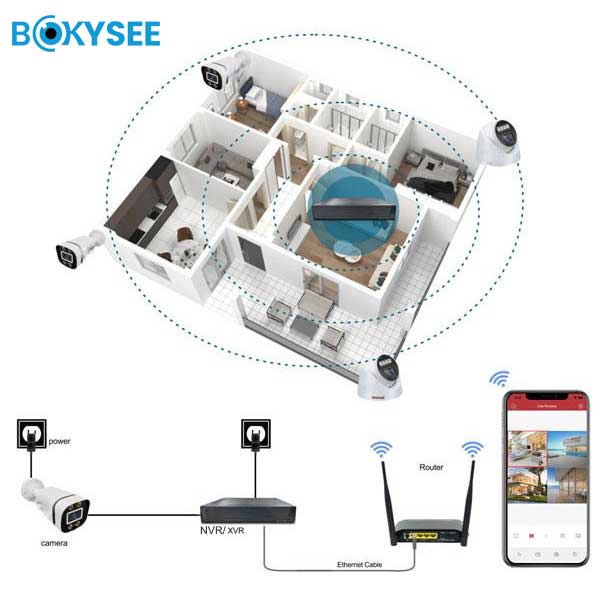
Wired security camera systems are one of the most traditional and reliable surveillance solutions. These systems use physical cables to transmit video signals and power between cameras and recorders.
How Wired Security Camera Systems Work
A wired system usually consists of:
-
Security cameras (analog or IP)
-
Cables (coaxial or Ethernet)
-
A recorder (DVR or NVR)
-
Centralized power supply or adapters
-
Storage (hard drives)
Video data is transmitted through cables directly to the recorder, making wired systems highly stable and resistant to interference.
Advantages of Wired Security Camera Systems
Wired security camera systems remain popular for good reasons:
-
Stable and uninterrupted signal
-
Ideal for 24/7 continuous recording
-
Not affected by WiFi congestion
-
Better for large properties and multi-camera projects
These systems are commonly used in factories, warehouses, office buildings, shopping malls, and retail chains.
Bokysee Wired Camera Solutions
Bokysee offers a full range of wired IP camera solutions designed for professional projects, including:
-
4MP, 5MP, 6MP and 8MP wired IP cameras
-
Metal housing with IP65 / IP66 waterproof ratings
-
Wide dynamic range (WDR) and low-light imaging
-
Compatibility with mainstream NVR brands such as Hikvision and Dahua
For installers and distributors, wired systems remain the backbone of many long-term security projects.
Wireless Security Camera Systems for Flexible and Fast Deployment
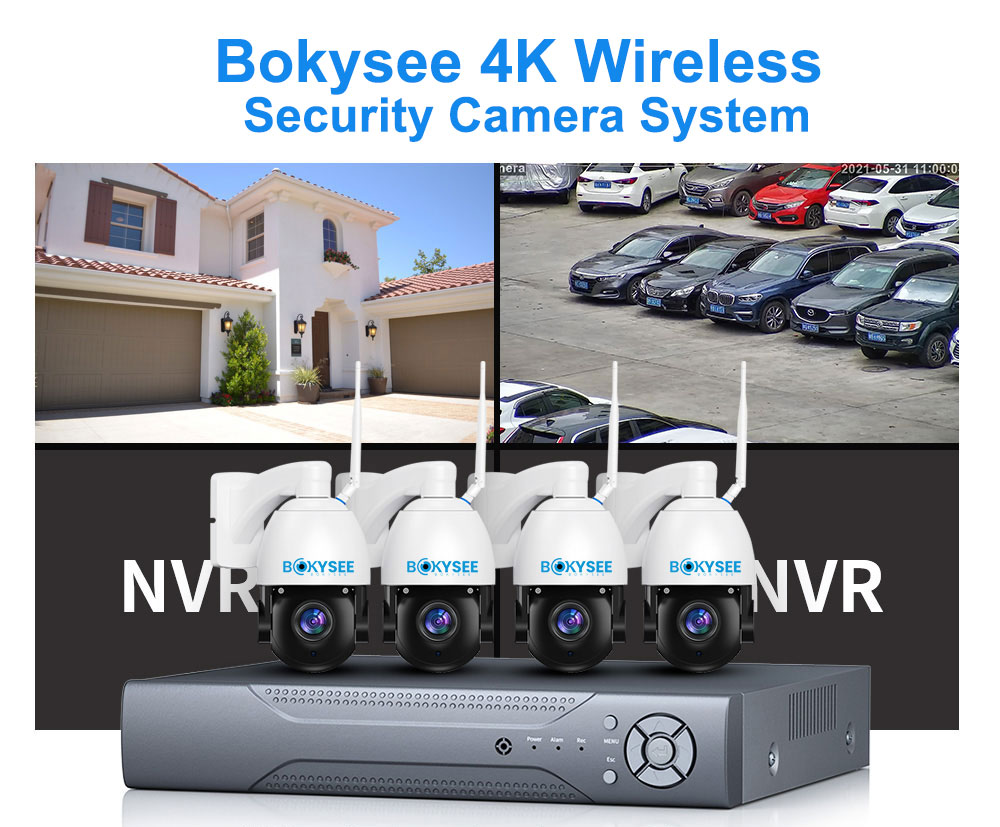
Wireless security camera systems, often referred to as WiFi security cameras, transmit video data over a wireless network instead of using video cables.
What Is a Wireless Security Camera System?
In a wireless system:
-
Cameras connect to a WiFi network
-
Video is transmitted to an NVR, cloud platform, or mobile app
-
Power is supplied by adapters or batteries
Wireless security camera systems are widely used for homes, apartments, small businesses, and temporary installations.
Benefits of Wireless Security Camera Systems
Wireless systems are popular because they offer:
-
Easy and fast installation
-
Minimal cabling work
-
Flexible camera placement
-
Convenient remote access via mobile apps
These features make wireless systems attractive for DIY users and small-scale projects.
Limitations of Wireless Security Cameras
Despite their convenience, wireless systems also have limitations:
-
Dependence on WiFi signal strength
-
Possible interference in crowded networks
-
Less suitable for large or complex installations
Bokysee Wireless Camera Product Highlights
Bokysee’s wireless security camera lineup focuses on performance and stability, including:
-
Dual-light WiFi cameras (IR + full-color night vision)
-
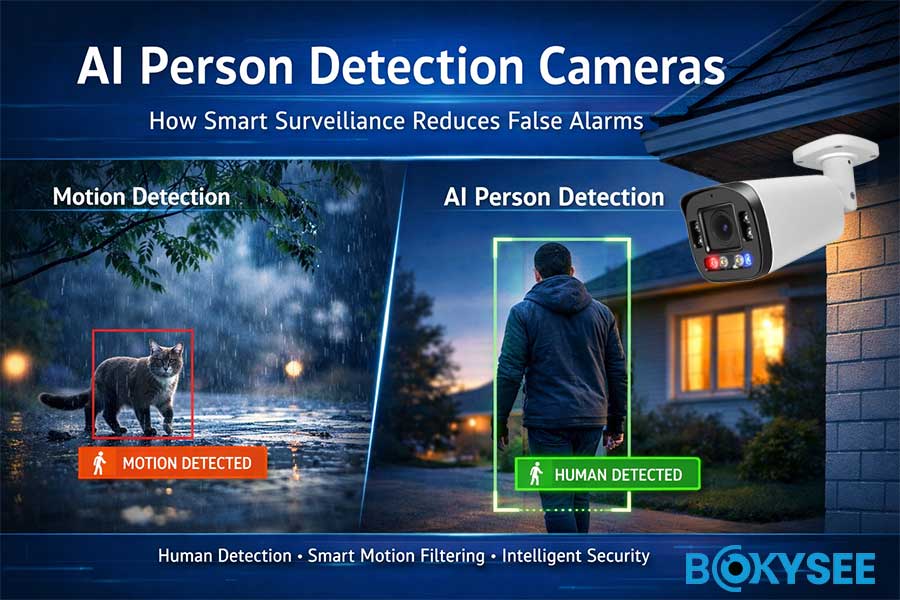
AI human and vehicle detection
-
Two-way audio communication
-
Indoor and outdoor wireless camera options
These wireless solutions are ideal for distributors targeting home security brands and online retail markets.
PoE Security Camera Systems: The Best Balance of Power and Performance
PoE security camera systems are considered the professional standard for modern IP surveillance projects.
What Is a PoE Security Camera System?
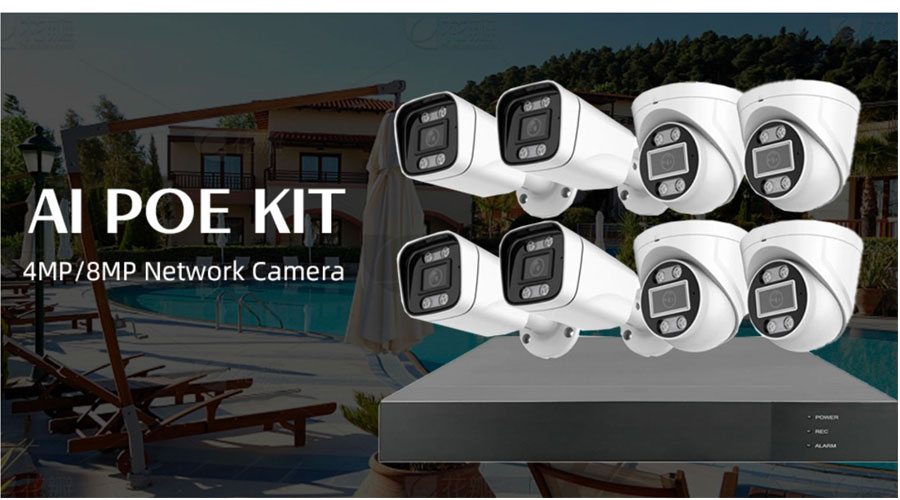
PoE (Power over Ethernet) technology allows a single Ethernet cable to transmit both power and data to the camera. This simplifies installation while maintaining high performance.
A typical PoE system includes:
-
PoE IP cameras
-
PoE switch or PoE NVR
-
Ethernet cables
-
Centralized storage
Why Installers Prefer PoE Camera Systems
PoE systems are widely preferred by professional installers because they offer:
-
Clean and organized cabling
-
High video stability and quality
-
Easy scalability for future expansion
-
Lower long-term maintenance cost
PoE security camera systems are commonly used in commercial buildings, schools, hotels, hospitals, and industrial facilities.
Bokysee PoE Camera and NVR Solutions
Bokysee provides a complete PoE ecosystem, including:
-
Smart dual-light PoE IP cameras
-
AI human and vehicle detection
-
PTZ, dome, bullet, and multi-lens PoE cameras
-
All-in-One PoE NVR Kits with Monitor
For OEM and ODM partners, Bokysee supports custom firmware, UI design, logo branding, and packaging, making PoE systems ideal for building private-label security brands.
4G LTE Security Camera Systems for Remote and Off-Grid Locations
4G security camera systems use cellular networks instead of WiFi or wired connections, making them perfect for locations without internet infrastructure.
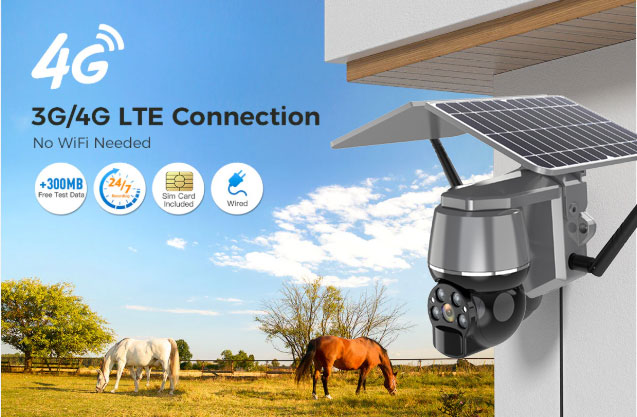
How 4G Security Camera Systems Work
A 4G camera:
-
Uses a SIM card for data transmission
-
Connects directly to a mobile network
-
Stores footage on SD card or cloud
-
Often uses battery or solar power
These systems are designed for remote, temporary, or mobile surveillance needs.
Best Use Cases for 4G Security Camera Systems
4G security cameras are commonly used in:
-
Construction sites
-
Farms and rural properties
-
Oil and gas fields
-
Temporary events and mobile projects
Bokysee 4G and Solar Security Camera Solutions
Bokysee offers advanced 4G security camera systems, including:
-
4G solar-powered security cameras
-
Low-power consumption design
-
AI motion detection
-
Long standby time for off-grid use
These solutions are ideal for distributors serving outdoor and infrastructure monitoring markets.
Comparing Different Types of Security Camera Systems
Understanding the differences between systems helps buyers choose the right solution.
Wired vs Wireless vs PoE vs 4G Security Camera Systems
-
Wired systems: Maximum stability, best for large fixed installations
-
Wireless systems: Easy installation, best for homes and small businesses
-
PoE systems: Professional balance of performance and scalability
-
4G systems: Ideal for remote areas without internet access
There is no single “best” system—only the most suitable one for each project.
Bokysee supports multi-system integration, allowing distributors and installers to offer different camera solutions under one brand portfolio.
Additional Security Camera Types People Also Search For
Beyond connection types, buyers often search for:
-
IP cameras vs analog cameras
-
Indoor vs outdoor security cameras
-
PTZ security camera systems
-
Solar-powered security cameras
-
AI security cameras with human detection
OEM and ODM Security Camera Development by Bokysee
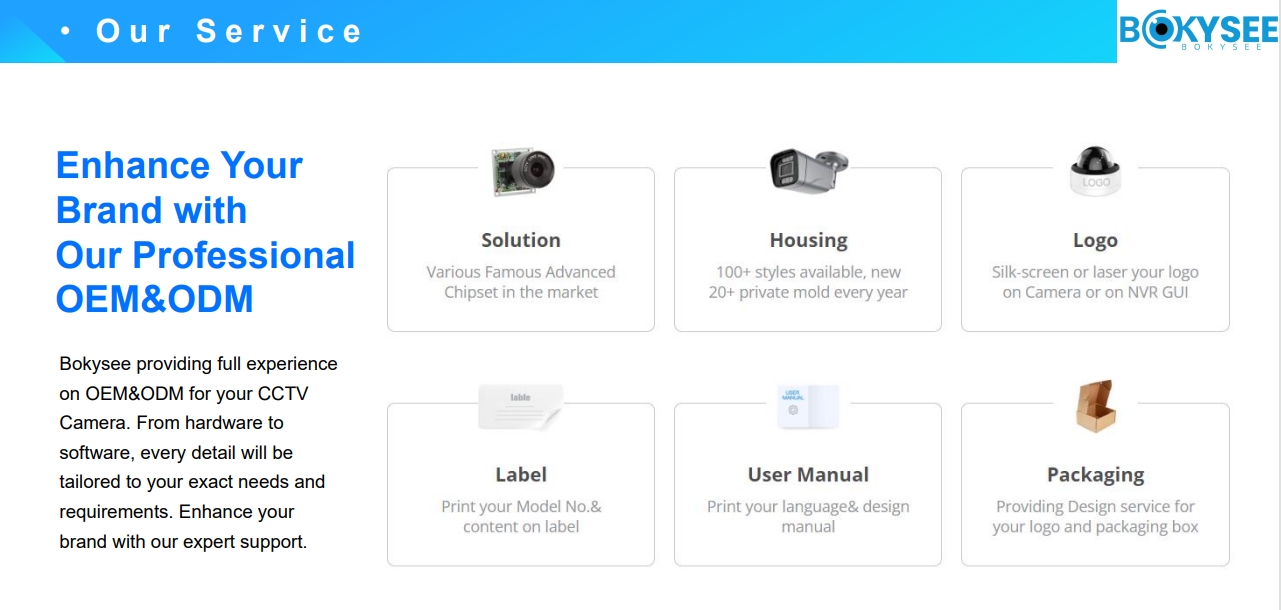
As an OEM and ODM manufacturer, Bokysee supports:
-
Custom hardware design
-
Firmware and app customization
-
Private labeling and packaging
-
Market-specific compliance (CE, FCC, RCM)
This flexibility allows partners to launch competitive products in different regional markets.
FAQs About Types of Security Camera Systems
(1)What are the main types of security camera systems?
The main types include wired, wireless, PoE, and 4G security camera systems, each designed for different installation environments.
(2)Is PoE better than wireless security cameras?
PoE systems offer better stability and scalability, while wireless systems are easier to install for small projects.
(3)Can 4G security cameras work without WiFi?
Yes. 4G cameras use cellular networks and do not require WiFi or wired internet.
(4)Which security camera system is best for installers?
PoE and wired systems are generally preferred by professional installers due to reliability and long-term performance.
Final Thoughts
Understanding the types of security camera systems is essential for choosing the right surveillance solution. From stable wired systems to flexible wireless cameras, professional PoE setups, and remote 4G solutions, each system serves a specific purpose.
With a full range of wired, wireless, PoE, and 4G security camera systems, Bokysee helps distributors, installers, and OEM partners deliver reliable security solutions worldwide.
See Also
Essential Guide to Purchasing 4G Security Cameras
Exploring Various Categories of CCTV Security Cameras
Top Rated 4K PoE Security Cameras for 2025





 English
  Spanish
  Russian