Skip to content
Sourcing a reliable solar panel security camera is the primary defense against operational downtime and a compromised ROI. Consumer-grade units often fail during prolonged cloud cover, creating critical security gaps. This isn’t just an equipment failure; it’s a direct threat to site security and a waste of the initial capital expenditure.
This analysis moves beyond marketing claims to benchmark the core engineering specifications. We evaluate the critical balance between solar energy yield and power consumption, defining the minimum standards for battery capacity, panel efficiency, and IP-rated durability required for year-round uptime.
Evaluating Solar Energy Harvesting Yields
To evaluate solar energy yield, we compare the power a panel can realistically generate against the camera system’s total daily energy consumption. The goal is to create an energy surplus, ensuring reliable operation even during the least sunny month of the year.
Core Factors That Determine Energy Generation
| Factor | Explanation |
|---|---|
| Solar Irradiance | This is the amount of raw solar energy available at a specific location, measured in Peak Sun Hours (PSH). The PSH value changes based on geography, season, and daily weather. System planning must account for the lowest PSH values during winter months to ensure year-round uptime. |
| Panel Specifications | A panel’s nameplate power rating is only the starting point. Its real-world output depends on its conversion efficiency and how well it performs in high temperatures. Hot conditions can reduce a panel’s output, so its temperature coefficient is a critical metric for reliability in exposed locations. |
| System Losses | The energy harvested by the panel is not the same as the energy stored in the battery. Real-world factors like dust on the panel, resistance in wires, and inefficiencies in the charge controller and battery can reduce the final usable energy by 40-50% compared to the panel’s rated power. |
Matching Solar Yield to Camera Power Consumption
| Concept | Explanation |
|---|---|
| Camera Load Profile | This is the total daily energy the camera system consumes. It includes both the constant power draw for basic operation and the intermittent energy spikes from features like IR night vision, PTZ motor movements, or 4G data transmissions. Accurately calculating this load is the first step in sizing a power system. |
| Sizing Formula | We determine the required panel size by dividing the camera’s total daily energy needs (Wh/day) by the site’s lowest monthly PSH and a system efficiency factor (typically 0.5-0.7). This ensures the panel can meet demand even in the worst-case solar conditions. |
| Example Generation (100W Panel) | A 100W panel doesn’t produce 100 watts all day. In a location with 4 Peak Sun Hours (PSH), that 100W panel can realistically produce about 240 watt-hours (Wh) of usable energy per day after accounting for typical system losses of 40%. |
| Energy Balance | A successful solar deployment achieves a positive energy balance. The system must be designed so the panel generates more energy than the camera consumes over a 24-hour period. This surplus energy is essential for recharging the battery and providing a buffer for consecutive cloudy days. |
Monocrystalline Cell Conversion Metrics
Monocrystalline solar cells are defined by high conversion efficiency (19-22%), excellent heat tolerance, and minimal annual degradation. For remote security systems, these metrics deliver more power from a smaller panel, stable energy generation in peak summer heat, and a reliable power source for the camera’s entire service life.
Core Performance Metrics and Benchmarks
- Conversion Efficiency: Commercial monocrystalline panels typically operate at 19-22% efficiency, which allows them to generate sufficient power for security cameras from a limited surface area.
- Temperature Coefficient: A low coefficient, around -0.29%/°C to -0.35%/°C, ensures the panel maintains over 85% of its rated output in peak summer heat, preventing significant power loss.
- Annual Degradation Rate: With a degradation rate under 0.55% annually, the panel provides a stable and reliable power source throughout its 25 to 30-year service life.
Relevance for Remote Security Deployments
- Energy Density for Compact Installations: High conversion efficiency is critical for pole-mounted cameras where panel size is restricted, maximizing power generation in a small footprint.
- Operational Stability in Extreme Heat: Better heat tolerance allows cameras installed in direct sun to function reliably without major drops in energy harvesting during hot weather.
- Long-Term Power Sufficiency: Low degradation ensures the solar supply can consistently power demanding features like night vision and continuous recording year-round with minimal output loss.
Your One-Stop CCTV Manufacturing Partner
Battery Storage and Thermal Stability Standards
For reliable solar camera operation, we focus on three areas: selecting the right battery chemistry like Lithium Iron Phosphate (LiFePO₄) for its stability, sizing capacity to be at least 10 times the solar panel’s output to ensure 2–3 days of autonomy, and managing thermal performance to maximize battery life. All our battery systems are designed to meet key safety standards, including UL 1642 and IEC 62133, to ensure safe and dependable installations.
Battery Sizing and Chemistry Selection
We prefer Lithium iron phosphate (LiFePO₄) chemistry for our solar camera systems. This choice is based on its exceptional cycle life, strong thermal stability, and its ability to handle the partial charging cycles typical in solar applications. This results in a longer-lasting and more reliable power source for your security needs.
A core part of our design philosophy is to size the battery capacity (in Wh) to be at least 10 times the solar panel’s maximum power output (in W). This simple rule helps prevent overcharging on intensely sunny days and builds a sufficient energy reserve to keep the system running when sunlight is poor.
To ensure continuous security, we engineer our systems to provide 2 to 3 days of autonomous operation without any sunlight. This buffer is critical for maintaining camera uptime during long stretches of overcast weather, giving you uninterrupted surveillance when you need it most.
Thermal Performance and Safety Compliance
Battery health is heavily dependent on temperature. Operating outside the optimal range of 10–25 °C (50–77 °F) significantly accelerates degradation. In below-freezing conditions, usable battery capacity can drop by 20–50%, creating a performance risk during winter when solar energy is already scarce.
For installations in extreme climates, we use wide-temperature battery packs rated for operation from –40 °C to +85 °C. These specialized packs are essential for delivering reliable, year-round performance and preventing weather-related outages.
Safety is a top priority. Our battery systems are built to meet strict industry standards to mitigate electrical and fire risks. This includes compliance with:
- UL 1642: For lithium battery cell safety against conditions like short-circuits and impacts.
- IEC 62133: For the safety of the entire battery pack assembly.
- NFPA-aligned practices: For installation procedures that ensure electrical safety and fire mitigation.
Image Sensor Resolution and Bitrate Profiles
For our solar cameras, resolution and bitrate are the two key settings that determine video clarity. Resolution sets the maximum possible detail the sensor can capture, while bitrate determines how much of that detail is preserved in the final video. Choosing the right balance is critical, as higher settings provide more detail but also consume more power and storage, which are limited in an off-grid system.
Defining Resolution and Bitrate for Clear Evidence
Resolution, measured in pixels like 1080p or 4K, establishes the maximum level of detail our camera’s image sensor can capture. Think of it as the canvas size; a larger canvas allows for a more detailed picture, which is essential for identifying distant objects or zooming in on recorded footage.
Bitrate measures the amount of data used to encode the video file each second. This setting determines how much of the original sensor detail is actually kept in the final recording. A high-resolution camera will still produce blurry, unusable video if the bitrate is too low to handle motion or complex scenes.
We use modern compression technology like H.265 to help manage data. This codec can reduce storage and transmission needs by about half compared to the older H.264 format, all without a noticeable drop in image quality. This efficiency is a major advantage for solar-powered systems with finite storage.
Balancing Performance with Solar Power and Storage Limits
Higher resolutions and bitrates directly increase the camera’s power consumption and data storage requirements. For a solar-powered deployment, every watt counts. Running a camera at 4K continuously can strain the battery and require a much larger solar panel to keep it charged, especially during winter or cloudy weather.
Our approach is to find the most efficient configuration for each site. The best setup is often the lowest resolution and bitrate that reliably achieves the security goal, whether that’s identifying a person at a gate or reading a license plate in a yard. This ensures long-term uptime without over-taxing the power system.
We also leverage variable bitrate (VBR) to improve efficiency. VBR automatically reduces the data flow when the scene is static and increases it only when motion occurs. This smart allocation of resources is ideal for solar cameras, as it conserves power during quiet periods and ensures high quality when it matters most.
While 4K resolution offers maximum detail for digital zoom, we find that 1080p or 2K often provides a superior balance of image clarity and energy efficiency for remote deployments. This practical approach maximizes reliability and keeps your site secure, day and night.
Ingress Protection and Weatherproof Ratings
For solar panel security cameras installed outdoors, the Ingress Protection (IP) rating is a key specification for long-term reliability. We find a rating of at least IP66 is practical for most installations to protect against dust and heavy rain, while IP67 offers added security against temporary water immersion. Beyond the IP code, factors like operating temperature range and UV-resistant materials are also vital for durability.
Decoding IP Ratings: What the Numbers Mean
An IP rating uses two digits to define how well a device is sealed. The first digit measures its protection against solid objects, like dust and debris, on a scale from 0 to 6. A rating of 6 means the enclosure is completely dust-tight.
The second digit measures protection against liquids. An IP66 rating confirms the camera can withstand powerful water jets, making it suitable for locations with heavy, wind-driven rain. An IP67 rating goes a step further, providing protection against temporary submersion in water, which adds a crucial margin of safety in flood-prone areas or extremely exposed sites.
Key Weatherproof Factors Beyond IP Codes
While an IP rating is a critical starting point, other design features contribute to a camera’s long-term survival outdoors. We build our systems to handle real-world conditions by focusing on several key factors:
- Operating Temperature Range: A wide range ensures reliable camera function in both extreme heat and freezing cold, which is vital for year-round security.
- UV-Resistant Housing: Materials that resist degradation from constant sun exposure prevent the camera’s exterior from becoming brittle and compromising its seals.
- Corrosion-Resistant Hardware: Using corrosion-resistant components and fully sealed cable entry points improves durability, especially in humid or coastal environments.
Edge AI Object Classification Performance
In solar-powered cameras, effective Edge AI performance is a careful balance of accuracy, speed, and power efficiency. Our systems are designed to correctly identify important objects, deliver alerts within seconds of a motion trigger, and operate within a strict solar energy budget to ensure long-term, autonomous operation.
Core Metrics for On-Device AI in Solar Cameras
Accuracy is measured by how well the system identifies critical objects. We prioritize high precision for classes like ‘person’ and ‘vehicle’ to eliminate the false alarms that plague basic motion sensors, which are often triggered by weather, shadows, or animals. This focus ensures you only get alerts that matter.
Latency is the total time from the initial motion trigger to the final AI classification. This entire process must complete within a few seconds to reliably capture fast-moving subjects before they leave the frame. Our quick wake-up and inference times make sure important events are not missed.
Power efficiency governs the trade-off between the AI model’s complexity and the camera’s battery life. We use optimized, quantized models and low-power hardware accelerators. This allows the camera to run sophisticated analytics while staying within its tight solar energy budget, extending its operational life in the field.
System-Level Outcomes of Effective Edge AI
By filtering events directly on the device, our on-board AI dramatically reduces the number of false alerts. This creates a more reliable and trusted security system. You get meaningful notifications, not constant noise from irrelevant motion.
Local video analysis also means the camera only transmits clips of important events. This significantly lowers data consumption and reduces operational costs, a critical benefit for any system running on a 4G or LTE cellular plan.
Fewer wake cycles triggered by unimportant motion directly extends the camera’s battery autonomy. By conserving power, the system remains operational through multiple days of low sunlight, ensuring continuous protection even during long stretches of cloudy weather.
Factory Aging and Stress Testing Protocols
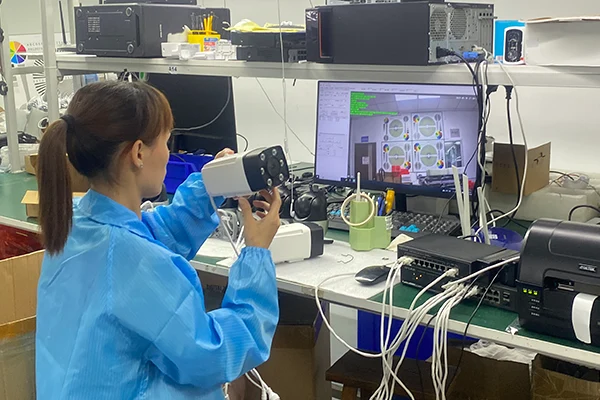
We put our solar cameras through a demanding series of factory aging and stress tests. These protocols simulate years of harsh outdoor exposure to extreme temperatures, moisture, UV radiation, and physical force. This process confirms the long-term reliability of the entire system, ensuring the solar panel delivers consistent power and the camera operates dependably in the field.
Core Accelerated Aging Protocols for Environmental Resilience
To make sure our cameras withstand the elements for their entire service life, we use several accelerated aging tests focused on environmental resilience. Each test targets a specific failure mode associated with long-term outdoor deployment.
- Damp Heat Test: The camera is exposed to high temperatures (85°C) and high humidity (85%) for extended periods. This confirms its resistance to moisture ingress, which prevents corrosion and the breakdown of adhesives and seals.
- Thermal Cycling Test: We subject units to repeated temperature swings, from -40°C to +85°C. This process simulates daily and seasonal changes to test the mechanical fatigue strength of solder joints and internal components.
- UV Exposure Test: Intensified UV radiation simulates years of sunlight exposure. This ensures the camera’s plastic housing, lens covers, and solar panel encapsulants resist yellowing, cracking, or becoming brittle.
Mechanical and Electrical Integrity Verification
Beyond environmental factors, we verify the physical and electrical strength of the complete assembly. These tests guarantee the camera maintains its structural integrity and power generation capability when faced with real-world physical stress.
- Mechanical Load Testing: The camera and its mounting bracket undergo static load tests up to 2400 Pa. This simulates the force of heavy wind or snow, ensuring the structure won’t bend or fail.
- Hail Impact Testing: We project ice balls at the solar panel and camera housing. This test verifies that the glass does not shatter and that the unit maintains its water-tight seal after impact.
- Power Degradation Analysis: After the suite of aging tests, we measure the solar panel’s power output. This ensures degradation remains within acceptable limits (typically under 5%), guaranteeing sufficient energy generation for the camera’s long-term operation.
Long-Term Maintenance and ROI Analysis
Our solar camera systems offer low operating costs, but the return on investment depends on sunlight, battery health, and usage. The biggest economic advantage comes from avoiding the high cost of wiring and reducing service calls, especially at remote sites. Poor sun exposure is the primary risk that can reduce savings through downtime or extra maintenance.
Key Maintenance Tasks and Lifetime Costs
The most common maintenance task is cleaning the solar panels. Dust, pollen, and other debris can build up over time and reduce charging efficiency. We recommend wiping the panels every few months with a soft cloth to keep them performing well.
Battery health is another key factor in long-term costs. While our systems are designed for longevity, all rechargeable batteries eventually degrade. Its replacement is a significant long-term expense influenced by usage cycles and operating temperatures.
Consistent power generation requires managing the camera’s environment. The panel needs at least 2 to 4 hours of direct sunlight each day. This means periodically checking for and managing obstructions like new tree branch growth that can cast shadows and reduce power.
Calculating Long-Term Return on Investment (ROI)
The primary financial benefit of a solar-powered system is avoiding the high upfront costs of traditional electrical installation. This is especially true for remote or temporary sites where trenching, running conduit, and wiring would be expensive and time-consuming.
Ongoing operational savings add to the positive ROI. By running off-grid, you eliminate monthly electricity bills. The system’s self-sufficiency also reduces the need for service visits or “truck rolls” that are typically required for maintaining wired infrastructure.
The single biggest risk to a positive return is insufficient sunlight. If a camera is installed in a heavily shaded area, it can lead to operational downtime, erasing any savings gained from avoiding installation costs. This downtime can be a major hidden cost.
Final Thoughts
Consumer-grade solar cameras offer low upfront costs but introduce unacceptable operational risk for professional deployments. The power system engineering and factory stress testing standards outlined here are the only defense against premature battery failure and weather-related downtime. Deploying hardware that meets these benchmarks protects your reputation and eliminates costly service calls.
Don’t guess on field performance—verify it for yourself. We recommend a small trial order to test our hardware against your specific environmental and operational demands. Contact our solutions team to discuss custom configurations or volume-based OEM partnerships.
Frequently Asked Questions
What defines a commercial-grade solar wireless camera?
A commercial-grade solar camera features rugged, weather-resistant construction (IP66 or higher), a power system built for 5+ days of autonomy without sun, and higher-performance optics. It is specifically designed for reliable, continuous operation at remote or unmanned sites where consumer models would fail.
Can solar cameras operate during 5+ days of cloud cover?
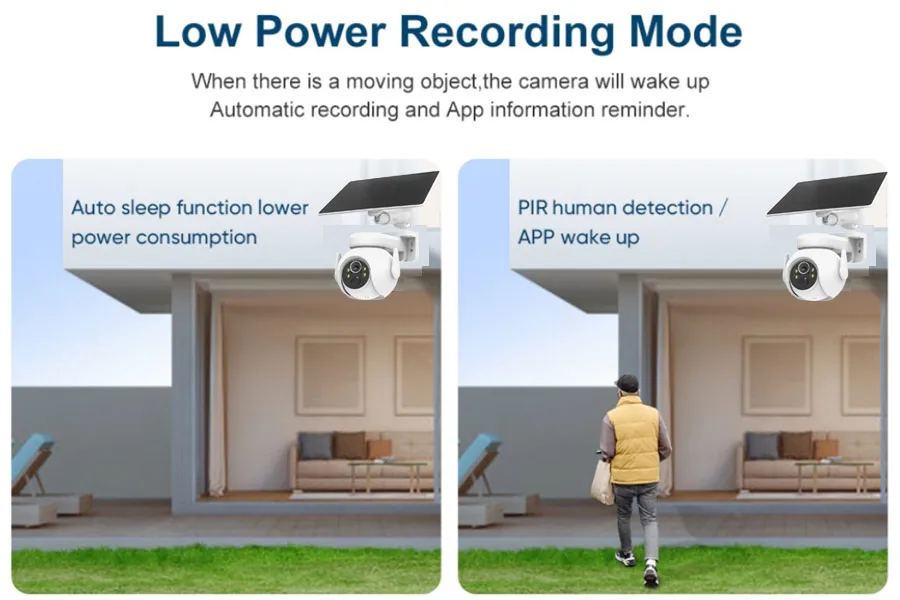
Yes, commercial systems are engineered for this. They use oversized solar panels and large-capacity batteries to store enough energy to operate for 5 to 7 days with no direct sunlight. Power-saving modes, like motion-triggered recording, further extend operational time during prolonged poor weather.
How do physical obstructions impact wireless signal range?
Physical obstructions such as dense buildings, concrete walls, or even heavy foliage can significantly weaken or block wireless signals, reducing communication range. Achieving a clear line-of-sight is crucial. Mitigation tactics include mounting cameras higher or using directional antennas to strengthen the connection.
Why is monocrystalline efficiency vital for remote sites?
Monocrystalline panels are vital because they produce more power per square meter, which is critical when mounting space on a pole is limited. Their higher efficiency also ensures better energy harvesting in low-light conditions, helping recharge batteries faster and maintain system autonomy at remote locations.
What ingress rating is required for extreme storms?
For sites facing extreme storms, an IP66 rating is the minimum requirement, protecting against dust and powerful water jets from heavy rain. An IP67 rating is even better for flood-prone areas, as it adds protection against temporary submersion in water, offering a greater margin of safety.
How does factory aging testing ensure long-term reliability?
Factory aging tests simulate years of operation under harsh conditions, such as extreme temperatures and constant use. This process identifies potential weak points and early component failures before the camera is deployed, significantly reducing the risk of failures at remote sites where maintenance is difficult and costly.







 English
  Spanish
  Russian