Ir al contenido
Deploying a solar powered jobsite camera eliminates the financial liabilities tied to unmonitored shift changes and grid outages. Relying on intermittent guard patrols or grid-dependent hardware leaves high-value materials exposed, with personnel missing up to 80 percent of security incidents due to patrol limitations and fatigue.
This analysis benchmarks off-grid surveillance configurations against industrial deployment standards. We evaluate 4G LTE connectivity requirements, high-efficiency 18650 lithium battery integration paired with smart low-power management, and IP66 housing durability to help you secure site perimeters.
Why Traditional Security Fails on Jobsites
Standard security measures leave jobsites exposed. Human guards miss incidents, while grid-tied cameras fail during power losses and shift changes, creating costly blind spots.
Blind Spots and Human Limitations
Relying on human guards creates immediate vulnerabilities. Security personnel miss up to 80% of incidents due to fatigue, limited patrol ranges, and unavoidable attention lapses across expansive or multi-level environments.
Basic cameras and intermittent patrols fail to fill these voids. They leave continuous monitoring gaps that criminals actively exploit, particularly during daytime staff transitions or unmonitored night shifts.
Reactive Technology and Power Dependency
Standard alarms and low-end cameras operate on a reactive basis. They trigger only after a breach happens, doing nothing to deter internal theft or external vandalism before the damage occurs.
Beyond functional limits, standard hardware breaks down in the field. Budget equipment struggles in harsh outdoor conditions and relies entirely on unstable grid connections. This dependency causes frequent downtime, a critical vulnerability that off-grid solutions specifically resolve.
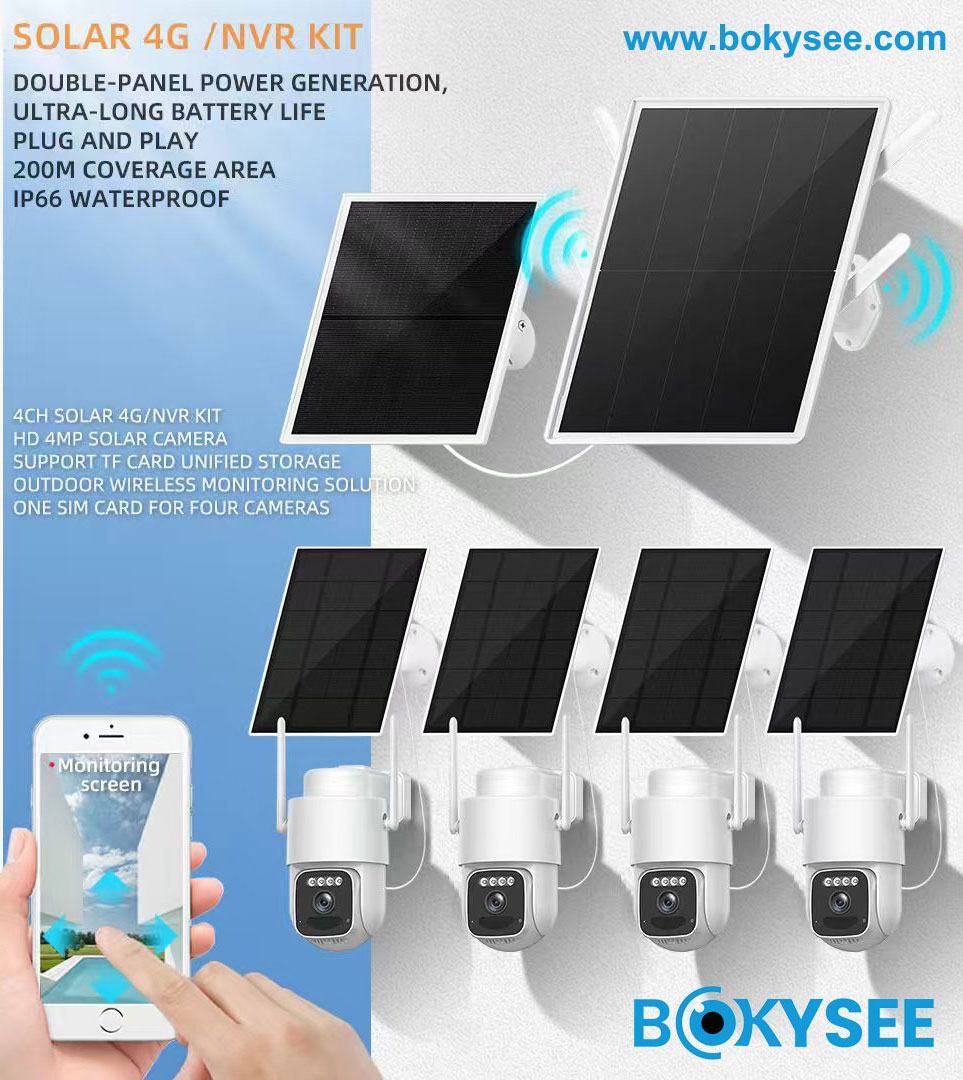
To eliminate these expansive blind spots in off-grid environments, deploying a centralized multi-camera network like the solar 4G NVR security camera ensures 24/7 continuous, multi-angle surveillance without relying on a single local power grid.
Key Components of an Industrial Solar Camera
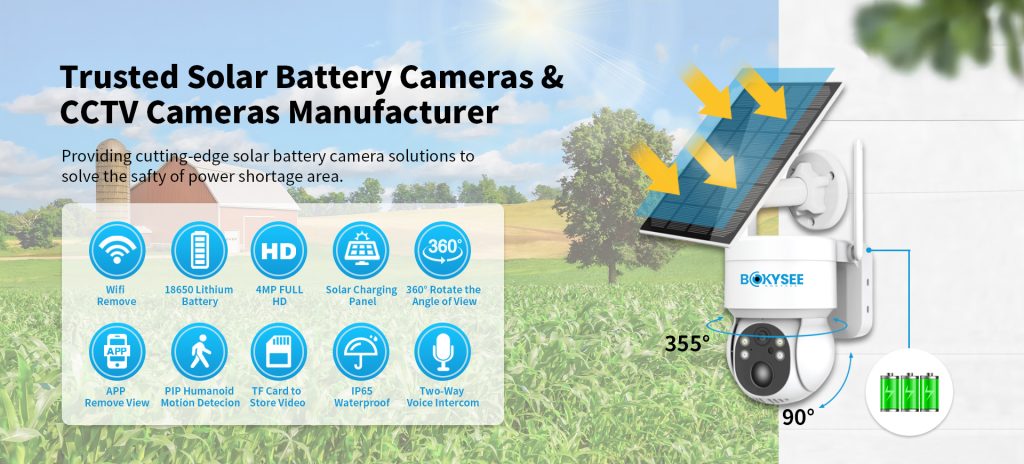
High-grade cámaras solares combine monocrystalline panels, LiFePO4 batteries, and 4G LTE connectivity within IP66 housings to deliver continuous, reliable jobsite surveillance without grid power.
Power Generation and Storage
Industrial jobsites demand relentless power consistency. You cannot rely on consumer-grade power setups when facing multi-day weather interruptions or heavy cloud cover.
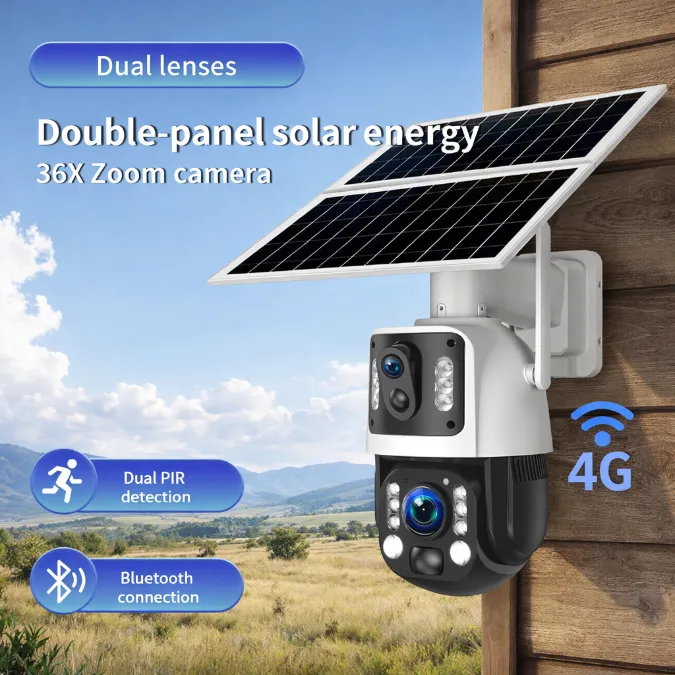
- Paneles solares: Monocrystalline panels with 9W or higher output generate continuous power even in low-light jobsite conditions. Advanced models, such as the BK-LXS38P, utilize a dual panel solar-powered design to double the solar collection surface, maximizing solar charging efficiency.
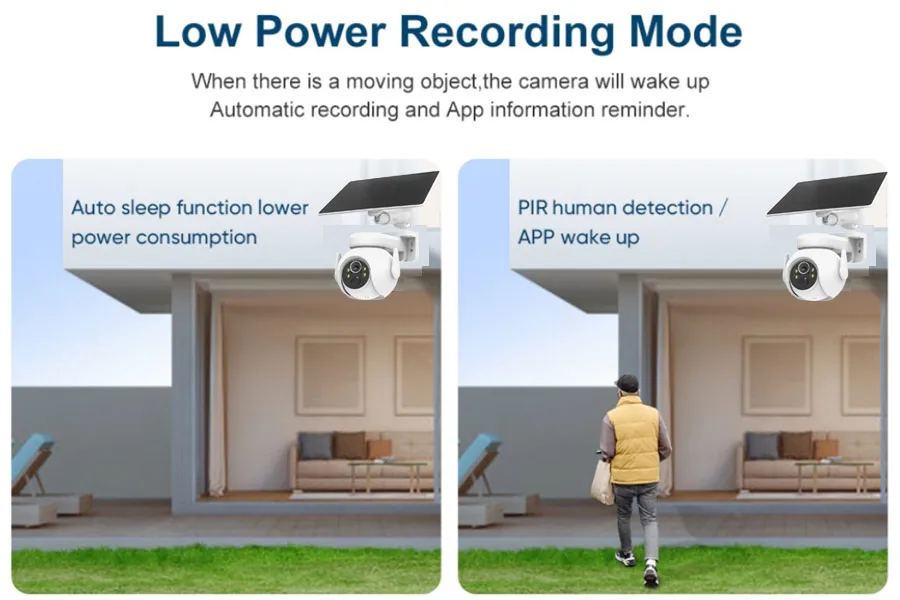
- Battery Banks: Utilizing industrial-grade 18650 lithium batteries, these systems interface with a smart low power recording mode. Instead of bulky, heavy battery setups, the camera operates on microamp standby during inactivity and automatically wakes up to record in milliseconds upon detecting motion.
- Charge Controllers: PWM or MPPT charge controllers regulate power flow between the panel and battery, extending battery lifespan by up to 30%.
Camera Hardware and Connectivity
Capturing clear footage matters just as much as securing the transmission. Remote sites require robust hardware that processes alerts locally and transmits data reliably over cellular networks.
- Surveillance Modules: 2K resolution lenses capture detailed footage using starlight sensors. For comprehensive site coverage, advanced multi-lens systems like the BK-LXS13P feature a 2K HD dual lens with 5X zoom, offering panoramic viewing and full-color night vision to capture license plates and faces accurately.
- Wireless Transmission: Wireless setups utilize 4G LTE or Wi-Fi to send data to hybrid storage systems, including encrypted cloud options and 128GB TF cards.
- Weatherproof Enclosures: IP66-rated housings protect internal hardware from extreme weather, allowing the camera to function in temperatures ranging from -30°C to 70°C.
One-Stop OEM CCTV Solutions For Your Business
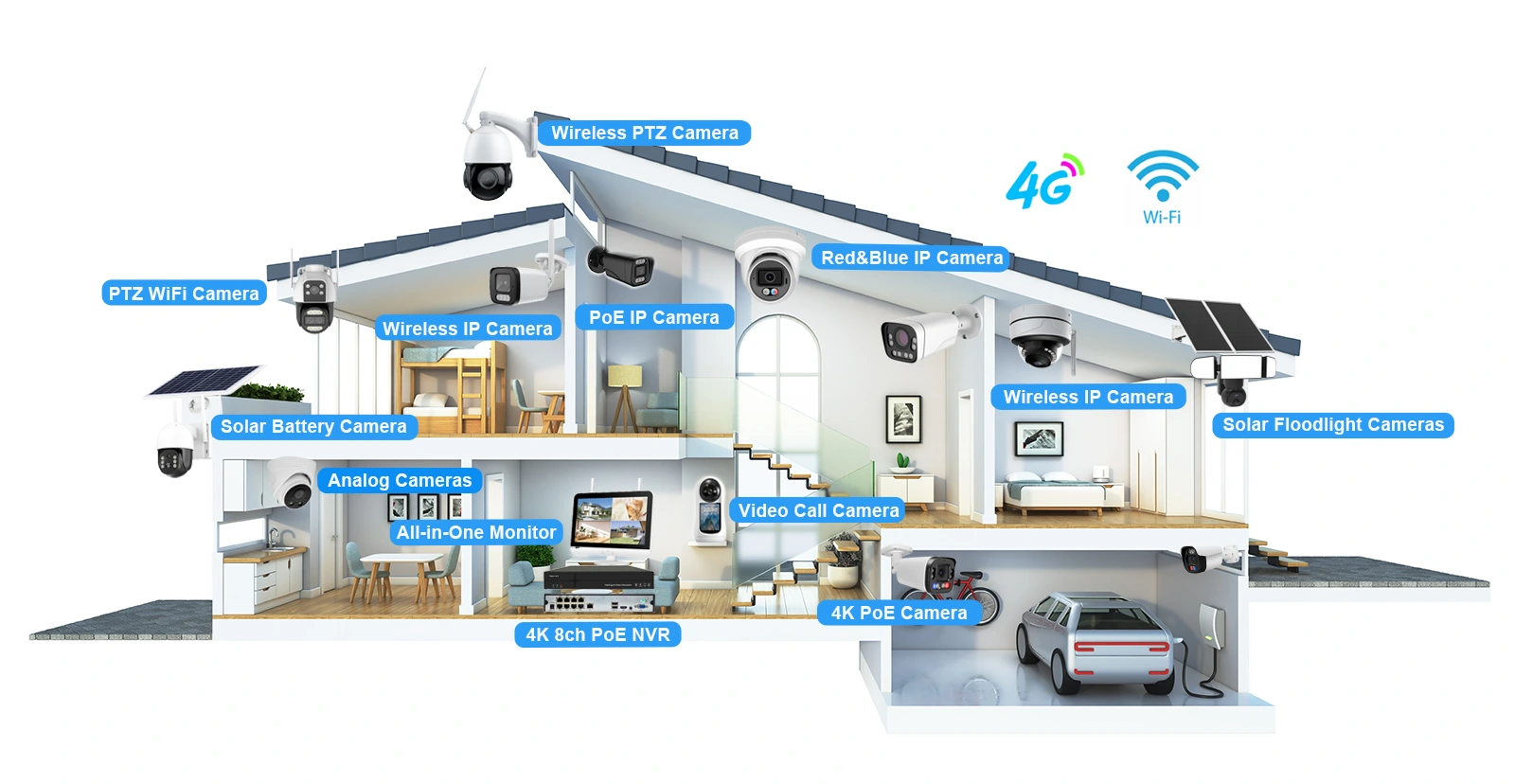
4G LTE vs. WiFi Connectivity for Remote Areas
4G LTE offers off-grid independence for remote sites, eliminating wiring needs, while WiFi provides lower-cost operation strictly within range of existing router networks.
Network Stability and Infrastructure Needs
For remote farms and construction sites lacking local internet, 4G LTE cameras use cellular networks via a standard SIM card to guarantee reliable monitoring. Installers deploy these 4G LTE systems instantly for temporary setups, bypassing the need to trench cables for power or data.
WiFi models demand a stable 2.4GHz router connection. They frequently suffer from outdoor signal dropouts unless you mount them directly against existing buildings with strong network coverage.
For expansive jobsites where multiple WiFi cameras are preferred but broadband is absent, implementing a Bokysee solar 4G WiFi router system creates an independent, solar-powered field hotspot, merging the infrastructure savings of WiFi with the remote capabilities of 4G networks.
Power Efficiency and Associated Costs
Cellular modules consume more energy during network negotiation and signal retries. To support this load, 4G LTE setups require robust solar panels paired with high-capacity lithium batteries. WiFi cameras operate on lower average energy demands, but this restricts their deployment footprint entirely to network-covered zones.
Financially, 4G LTE configurations carry higher upfront hardware prices and ongoing monthly data plan fees. They offset these expenses directly by eliminating the massive costs associated with extending physical infrastructure to remote locations.
Power Management: Battery Life and Solar Efficiency
Jobsite cameras combine high-capacity lithium batteries with efficient solar panels to guarantee continuous off-grid surveillance through extreme weather, sustaining reliable operations for years.
Battery Capacity and Lifespan in Extreme Conditions
Off-grid jobsite cameras require robust energy storage to maintain consistent uptime. They use high-capacity lithium-ion batteries tailored for extended deployment without external power. Entry-level setups start at 5,000mAh, while demanding industrial models pack up to 40,000mAh to handle extreme environments.
- Mid-Range Reserves: Models carrying 20,000mAh packs provide over 7 days of continuous backup during periods without sunlight, easily handling heavy weather interruptions.
- Instant App Alerts: The moment an individual steps into a restricted zone, the system triggers an instant alarm push notification via mobile applications.
Solar Panel Efficiency and Smart Power Consumption
Modern jobsite setups rely heavily on 10W to 20W monocrystalline solar panels. These panels generate a constant power surplus even on heavily cloudy days to keep the battery system fully charged. A single installer can complete a typical setup in under 15 minutes, relying on these resilient panels to last up to 15 years with just minimal annual cleaning.
To maximize panel efficiency and battery life, the camera hardware leverages strict power consumption management techniques:
- Ultra-Low Standby: The hardware extends battery reserves by operating on microamp standby, waking the camera only when PIR sensors detect active motion.
- Smart BMS: Battery Management Systems actively balance individual cells and provide direct temperature compensation to prevent harmful overcharging or deep discharging.
AI Features: Person Detection & Time-Lapse
AI algorithms turn raw footage into actionable data, eliminating false alarms while tracking long-term project progress without the need for manual review.
How Person Detection Filters False Alarms
Traditional motion sensors trigger at every swaying branch or passing animal, flooding your system with useless alerts. AI-powered person detection solves this by analyzing shape, size, and specific movement patterns to confirm human presence. This precision practically eliminates false alarms caused by weather changes or wildlife on the jobsite.
- Data Efficiency: The system uploads only relevant security clips containing verified human activity, significantly reducing cellular data usage.
- Active Deterrence: AI algorithms trigger real-time notifications the moment an individual steps into a restricted zone.
- Behavior Tracking: The camera identifies suspicious loitering around high-value materials and alerts jobsite managers instantly.
Using Time-Lapse for Site Operations
Tracking construction progress over weeks or months requires a different approach than live security feeds. Time-lapse functionality captures images at set intervals and compresses them into accelerated videos. This gives project managers a rapid, visual timeline of jobsite operations directly from the field.
- Progress Tracking: Compresses days or weeks of work into seconds, allowing teams to document project milestones visually.
- Efficiency Analysis: Managers quickly review extended periods of jobsite activity to spot workflow bottlenecks and operational trends.
- Remote Accessibility: The system pushes time-lapse data to off-site applications using reliable 4G LTE networks, keeping stakeholders connected without Wi-Fi infrastructure.
Rigorous Durability Standards (IP66/IP67)
IP66 and IP67 ratings guarantee your jobsite cameras survive extreme dust, heavy rain, and temporary flooding. Industrial hardware pairs this with impact-resistant housings for true 24/7 reliability.
Understanding IP66 and IP67 Ratings
Jobsite environments actively destroy consumer-grade electronics. Professional solar cameras rely on standardized Ingress Protection (IP) ratings to guarantee uninterrupted performance against severe weather and airborne debris.
- IP66 Protection: These enclosures completely block dust particles and withstand powerful water jets from all directions, keeping cameras operational during heavy rain and high winds.
- IP67 Upgrades: This hardware matches the dust protection of IP66 while adding safeguards against temporary submersion in water up to one meter for 30 minutes, fitting flood-prone or coastal sites.
Essential Hardware Enhancements for Construction Sites
Waterproofing alone fails to protect surveillance equipment from the mechanical stress of an active construction zone. Modern jobsite cameras require structural upgrades to survive daily operations and harsh climates.
- Reinforced Housings: Manufacturers build units from aluminum or UV-stabilized polycarbonate. These materials resist physical impacts and prevent corrosion in humid or high-UV locations based on 2026 industry benchmarks.
- Shock-Absorbing Mounts: Specialized mounting brackets protect internal components from constant heavy machinery vibrations. This extends camera lifespans across extreme temperature swings spanning 5°F to 140°F.
How to Deploy a Fleet of Cameras for Large Projects
Strategic deployment of a solar camera fleet requires mapping blind spots, configuring power for severe weather, and optimizing placement to secure the perimeter without trenching.
| Deployment Phase | Execution Strategy | Target Metric |
|---|---|---|
| Site Assessment | Map blind spots, staging areas, and gates | 4-12 cameras per project |
| Installation Positioning | Establish overlapping fields of view | 3-4 meters high, angled downward |
| Power Configuration | Elevate panels to avoid tampering and shade | 20-35 degree angle (facing South) |
Site Assessment and Camera Quantity Planning
Before mounting any hardware, you must conduct a physical walkthrough of the site. Identify vulnerable perimeters, map out blind spots, and locate areas where existing structures or heavy equipment might cast shadows over potential solar panel locations.
- Zone Segmentation: Divide expansive sites into manageable zones like main gates, loading docks, and material staging areas.
- Coverage Strategy: Assign 1-2 cameras per zone to create overlapping fields of view that eliminate monitoring gaps.
- Quantity Planning: Plan for 4-12 cameras on standard 2026 commercial projects to secure all critical entry points and high-value storage areas.
Installation Positioning and Power Configuration
Hardware placement dictates the quality of your security footage and the reliability of your off-grid power. You need to balance wide-area visibility with the precision required to capture fine details.
- Camera Positioning: Mount cameras 3-4 meters high and angle them downward slightly. This height optimizes wide-area coverage while maintaining accurate facial and license plate capture.
- Panel Orientation: Face solar panels south in the Northern Hemisphere at a 20-35 degree angle. Elevate them well out of reach to avoid daily ground-level obstructions and prevent tampering.
- System Sizing: Deploy adequately sized solar arrays and high-capacity batteries to sustain continuous HD imaging and 4G LTE cellular connectivity through severe weather conditions.
Cost-Benefit Analysis: Rental vs. Ownership
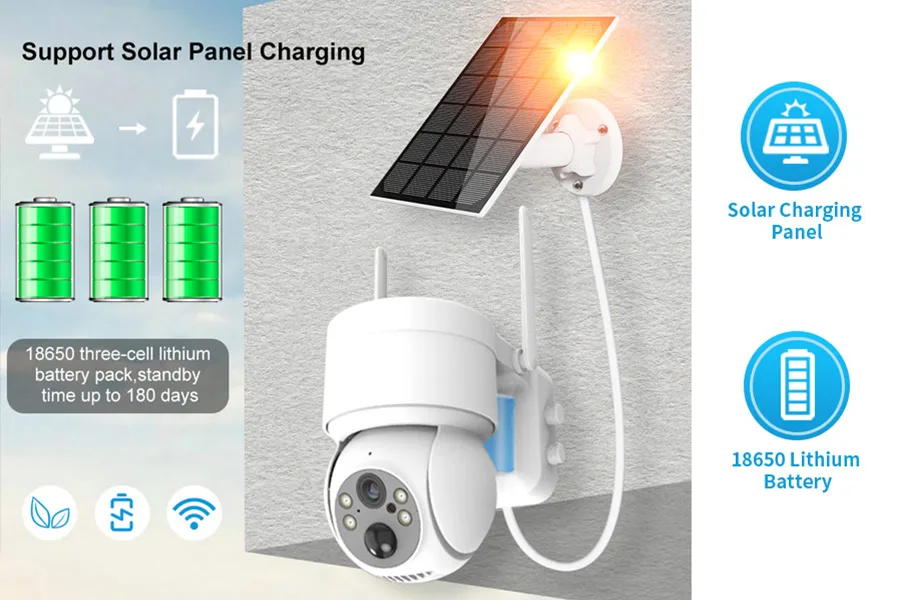
Renting solar jobsite cameras saves up to $25,000 on a six-month project, shifting security from a capital liability to a predictable, tax-deductible operational expense.
Financial and Capital Impacts
Choosing between renting and buying security equipment comes down to how you allocate capital. Renting requires minimal upfront cash. You treat the security system as a predictable operational expense, which provides complete tax deductibility on monitoring services. Purchasing equipment builds depreciable company assets, but the heavy upfront costs and rapid asset devaluation severely impact long-term ROI.
- Six-Month Rental Cost: Averages $1,800 for the duration of the project.
- Six-Month Ownership Cost: Demands $16,200 to $30,400 to cover the equipment, hardwired trenching, and permanent installation.
- Asset Depreciation: Owned surveillance systems lose up to 60% of their market value within the first two years.
Operational Maintenance and Flexibility
Equipment ownership forces your company to take on the daily logistics of security management. When you buy the hardware, your team assumes responsibility for the maintenance schedule. Rental agreements shift this physical and financial burden away from site managers directly onto the equipment provider.
- The Ownership Burden: Buying equipment forces you to manage lithium battery replacements, handle routine system maintenance, and fund your own eventual technology upgrades.
- The Rental Advantage: Lease agreements include all active maintenance, hardware repairs, and ongoing professional support.
- Deployment Speed: Solar-powered rental trailers deploy in under 30 minutes, bypassing the labor-intensive setup required for fixed systems.
- Site Scalability: Rentals scale seamlessly, allowing you to add or remove camera units quickly to match changing project demands and shrinking jobsite footprints.
Preguntas frecuentes
Why use solar cameras on job sites?
Solar-powered cameras deliver continuous security and operational oversight without relying on the grid. You skip the costs and delays of trenching cables, running generators, or finding electrical outlets. This setup allows rapid deployment in remote or expansive areas. Jobsite managers cut electricity and installation expenses while securing 24/7 theft deterrence, remote monitoring, and progress tracking.
How long can solar cameras work on cloudy days?
These systems handle cloudy days by running on internal rechargeable batteries. Standard lithium-ion setups deliver 2 to 7 days of backup power. Industrial-grade lithium iron phosphate batteries run up to 30 days without direct sun. High-efficiency monocrystalline panels also capture diffuse light through heavy cloud cover, trickling a steady charge to keep the hardware running.
Do solar jobsite cameras require a Wi-Fi connection?
No. Most jobsite cameras rely on built-in 4G LTE cellular connectivity to transmit video and data. They connect directly to mobile networks, pushing high-definition footage and instant motion alerts straight to your devices. You get full security coverage in remote areas entirely cut off from local internet infrastructure.
Can I view the camera feeds remotely?
Yes, you have complete control and visibility from anywhere. These cameras link to mobile apps and desktop portals over cellular networks. You can access live video streams, review cloud-stored recordings, and manage motion-triggered alerts. This setup lets you monitor multiple active sites simultaneously without paying for on-site security patrols.
Is the installation process difficult?
Installation requires minimal tools and no technical expertise. Because the units operate independently, you do not pull permits, hire electricians, or run permanent wiring. You mount the camera hardware to a stable pole or surface, point the solar panel directly toward the sun, and plug the panel into the battery system.
Are solar cameras suitable for short-term construction projects?
Yes, they perform exceptionally well for short-term deployments. You can set them up and break them down in a few hours. They require zero permanent infrastructure and adapt quickly as the site footprint changes. By eliminating monthly utility bills and relocation hurdles, they deliver a high return on investment even for temporary setups lasting just a few months.
Reflexiones finales
Relying on consumer-grade cameras or standard security guards leaves valuable construction jobsites exposed to continuous theft and downtime. Industrial solar cameras equipped with high-capacity LiFePO4 batteries and 4G LTE connectivity actively eliminate these costly blind spots. Upgrading to off-grid surveillance provides the only definitive way to secure your perimeter and protect your bottom line from unpredictable grid failures.
Stop leaving your high-value assets vulnerable to outdated security methods. Bokysee provides professional, one-stop CCTV surveillance solutions tailored for worldwide wholesale and commercial projects. Contact our team today to request a fleet quote or discuss flexible deployment options for your next major project.







 Spanish
  English
  Russian