Ir al contenido
Quick Summary: What Are the Main CCTV Camera Types?
The main CCTV camera types include IP, analog, PoE, bullet, dome, turret, PTZ, WiFi, 4G, and solar cameras. Each type serves different security needs, depending on the installation location, network connection, power supply, and coverage area.
| CCTV Camera Type | Mejor para |
|---|---|
| IP & PoE Cameras | Offices, warehouses, and commercial projects |
| Cámaras analógicas | Upgrading existing DVR systems |
| Cámaras tipo bala | Outdoor entrances and perimeters |
| Dome & Turret Cameras | Shops, offices, and general monitoring |
| Cámaras PTZ | Large areas requiring pan, tilt, and zoom |
| Cámaras WiFi | Homes and flexible installations |
| 4G & Solar Cameras | Remote sites without fixed internet or power |
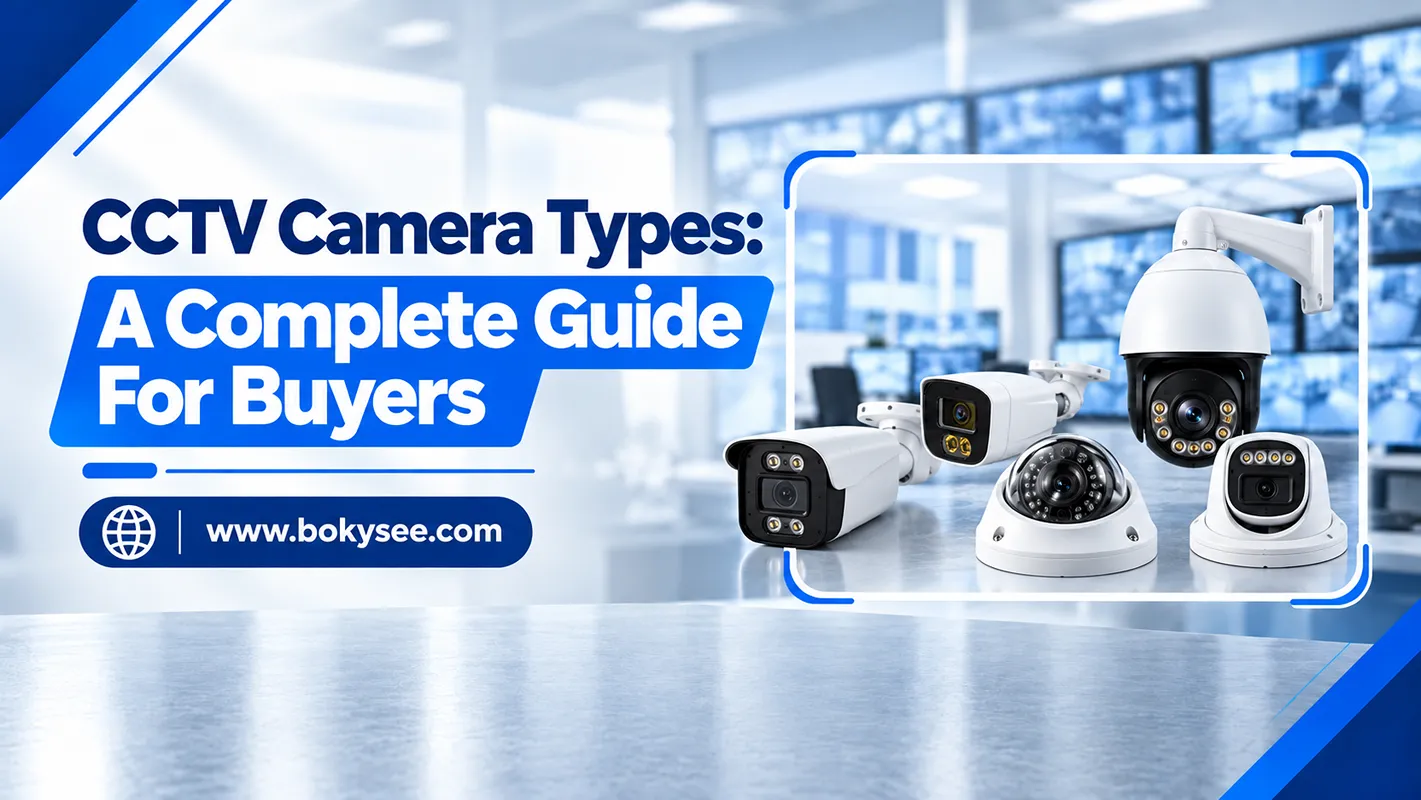
Today, our team will describes various CCTV camera types. We will explore which technologies used in the camera, their housing need, connectivity, and applications. We will also inform IP vs analog system, PoE cameras, wireless and special cameras. Our team will also inform camera selection guide according to projects, and other aspects of purchasing cameras professionally. This will help to purchase proper camera types for residential and business purposes.
Our recommendation: For most commercial projects, PoE IP cameras are a reliable choice. For remote locations, consider 4G or solar cameras. Always choose based on your project needs, not just the camera price.
What Are The Main CCTV Camera Types?
CCTV camera models may be categorized by technology, connectivity, physical structure, installation environment, and applications.
Different categories of technologies include IP camera and analog cameras.
But from connectivity perspective include PoE camera, WiFi, wired Ethernet, and cellular systems. Different categories of housing include dome, bullet, and turret.
Different categories of specialized security cameras include PTZ, 4G, and solar-powered cameras.
1. IP CCTV Cameras
IP camera is a network-based surveillance system, which converts video to digital format and sends it via an IP network.
In comparison with old analog surveillance systems, an IP camera can offer increased flexibility and ease of integration with network-based monitoring systems.
It depends on a particular camera model whether it allows remote access, intelligence detections, better resolution, analytics and other smart features.
For newly installed business security systems, IP technology is very appealing since additional cameras can be connected to the existing network system.
Such CCTV cameras are commonly used for office, industrial, warehouse, retail and educational institutions.
2. Analog CCTV Cameras
Analog cameras use a traditional coax cable system to transfer images to the DVR. Their usefulness is mainly based on an existing installation of analog cameras.
However, they offer an opportunity for easy replacement or expansion within an existing installation. For new installations, more factors need to be considered.
3. PoE CCTV Cameras
A PoE camera makes use of Power over Ethernet to supply both power and communication through an appropriate Ethernet cable.
This can be advantageous in installation due to the fact that it eliminates the need for power cables for each individual camera.
Either a PoE switch or a compatible NVR can supply network connections as well as power for the cameras.
Such CCTV camera types are ideal for commercial and industrial applications.
4. Cámaras de seguridad inalámbricas
Wireless cameras will make use of WiFi or any other wireless network to transmit videos.
Wireless installation makes it easier to save on network cables as well as flexibility when installing where it is difficult to install Ethernet cables.
However, wireless cameras will need to have power supply except for those which run on batteries or solar energy.
IP Vs Analog CCTV Camera Types
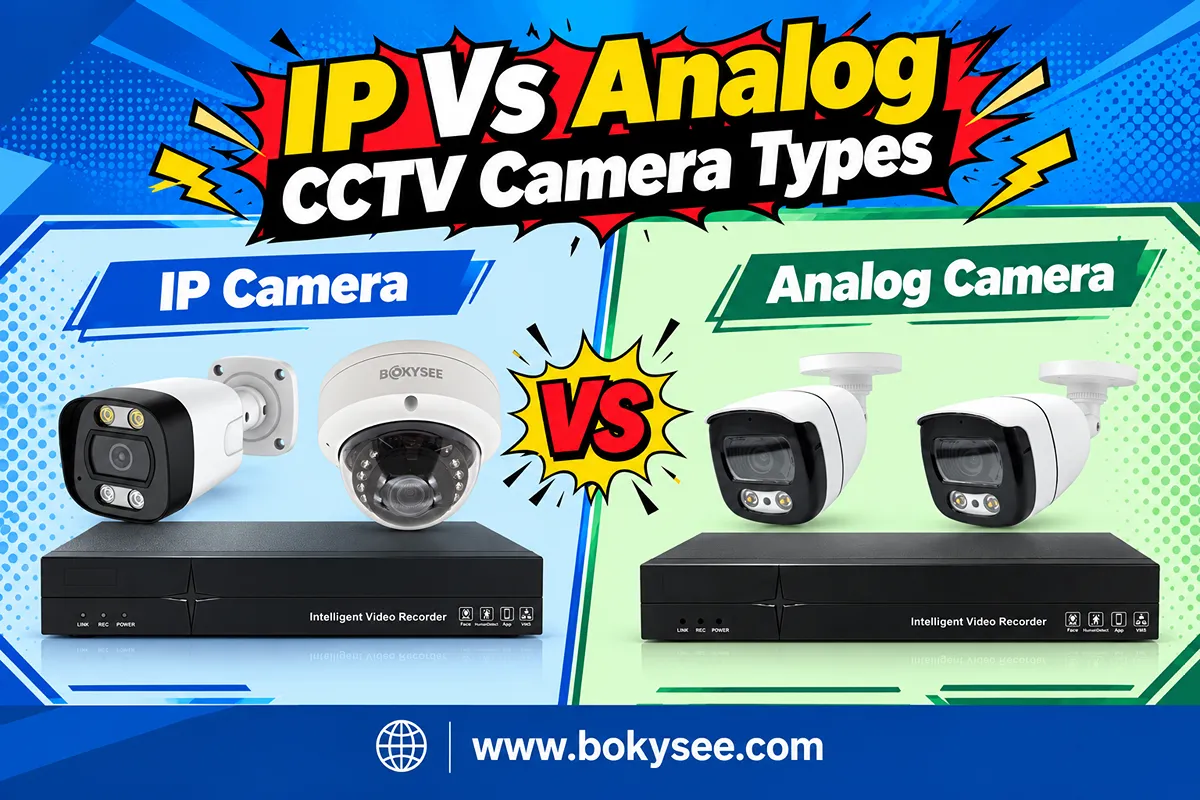
Two of the most popular types of systems for surveillance purposes are IP and analog.
The ability to differentiate between the two will enable the buyer to choose the appropriate system that meets the needs of the project.
IP CCTV Cameras
IP Camera sends its videos digitally over a network and usually interfaces with NVR or a network recording system
The Ethernet network may support data transfer, while PoE may allow for both data and power transfer via a single wire.
IP cameras nowadays may support functions such as remote surveillance, video analytics, person/vehicle detection, among others, based on the type of equipment used.
Scalability is a notable feature of IP cameras for any new business setup due to the ability of the network to accommodate more devices.
Analog CCTV Cameras
Analog cameras utilize coaxial cable for sending video signals to the DVR.
These could prove adequate for the upgrade or replacement of cameras within an existing analog setup where appropriate cabling and equipment are readily available.
The strength in favor of these is their compatibility with the existing system.
But for those who wish to set up a fresh system, there are considerations about scalability and smart systems that should be taken into account.
IP vs Analog CCTV Camera: Key Differences
IP camera is more appropriate when considering future installations that may need to grow and will benefit from networking capabilities. Analog systems can still make economic sense is if the buyer already has an existing DVR system in place, as well as coaxial cables that work with analog cameras.
| Característica | Cámara IP | Analog Camera |
| Video Transmission | Red | Coaxial |
| Recorder | Grabadora de vídeo en red (NVR) | DVR |
| Escalabilidad | Alto | More limited |
| Acceso remoto | Network-based | Depends on system |
| Funciones inteligentes | Broad support | Depends on model |
| Cabling | Ethernet | Coaxial + power |
| Mejor para | New systems | Existing systems |
Bullet Vs Dome Vs Turret CCTV Cameras
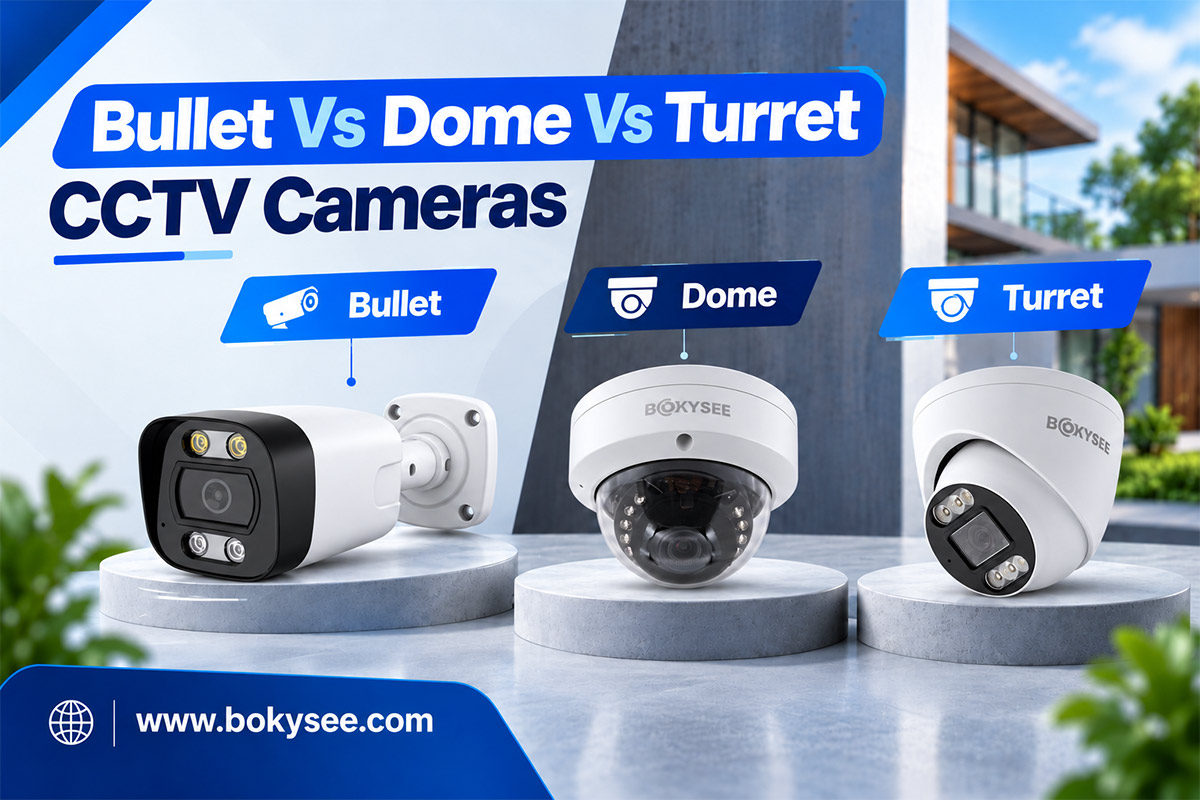
Bullet, dome, and turret are primarily housing and design types, rather than separate video transmission technologies.
Each design can be available in different resolutions, connectivity configurations, and feature levels.
Cámaras CCTV tipo bala
Bullet camera has an elongated body that can be easily identified and often mounted on walls, pillars, and any other installation structure. The design is meant for areas where directionality is required such as doors, exteriors of buildings, driveways, and perimeters.
Infrared illumination is common with many bullet cameras for night time monitoring. The visible structure is an advantage in making the monitoring point clear.
However, the large physical structure leaves the equipment vulnerable to tampering and damage.
Cámaras CCTV tipo domo
A dome camera uses a compact rounded housing and is frequently installed on ceilings or walls. It is popular in offices, retail stores, hotels, corridors, and other indoor environments.
The compact appearance can provide a cleaner installation than a larger bullet housing. Depending on the design, the camera's viewing direction may also be less obvious.
For indoor commercial projects, dome CCTV camera types can provide an effective combination of appearance, coverage, and installation flexibility.
Cámaras CCTV de torreta
Turret cameras are constructed in such a way that the lens can be mounted easily during installation. These cameras can be installed both indoor and outdoor and are generally chosen if there is a need for adjustable lenses during installation.
The exposed nature of their lens makes maintenance easier than other dome cameras.
Bullet vs Dome vs Turret: Which Is Better?
There is no universally best housing. The appropriate design depends on mounting position, viewing direction, environmental exposure, aesthetics, tamper concerns, and maintenance requirements.
| Tipo de cámara | Mejor para | Typical Installation |
| Bullet | Perimeter/Outdoor | Walls, poles |
| Dome | Indoor/General Security | Ceilings, walls |
| Turret | Flexible Indoor/Outdoor | Walls, ceilings |
PTZ, WiFi, 4G And Solar CCTV Camera Types
However, there are some cases when certain projects need something beyond stationary camera surveillance. There is also PTZ, WiFi, 4G, and solar systems that serve other purposes.
1. Cámaras PTZ
PTZ camera can pan, tilt, and zoom and thus enables the operator to have a wide area under observation with one camera. Optical zooming can enable operators to observe far-off objects without necessarily moving the camera around.
PTZ cameras are ideal for use in places like warehouses, yards, parking lots, colleges, transport facilities, and extensive perimeters. Some PTZ camera systems have automated tracking and predetermined observation points.
The only demerit of a PTZ camera is the fact that it cannot monitor every direction all the time.
2. WiFi CCTV Cameras
The WiFi camera can access the wireless network without having to use the Ethernet data connection.
A wireless security camera becomes advantageous when it comes to installing it in a home, small business, temporary installation, and places where the network cables cannot be installed.
There is the problem of power supply to the camera unless it is equipped with an internal battery or solar energy.
3. 4G CCTV Cameras
The 4G camera utilizes cell networks and uses the SIM card for sending out surveillance information.
This camera is handy in places where there is no fixed broadband or any other network infrastructure.
Construction sites, farming grounds, isolated storage locations, short-term projects, and distant locations can make use of this form of connection.
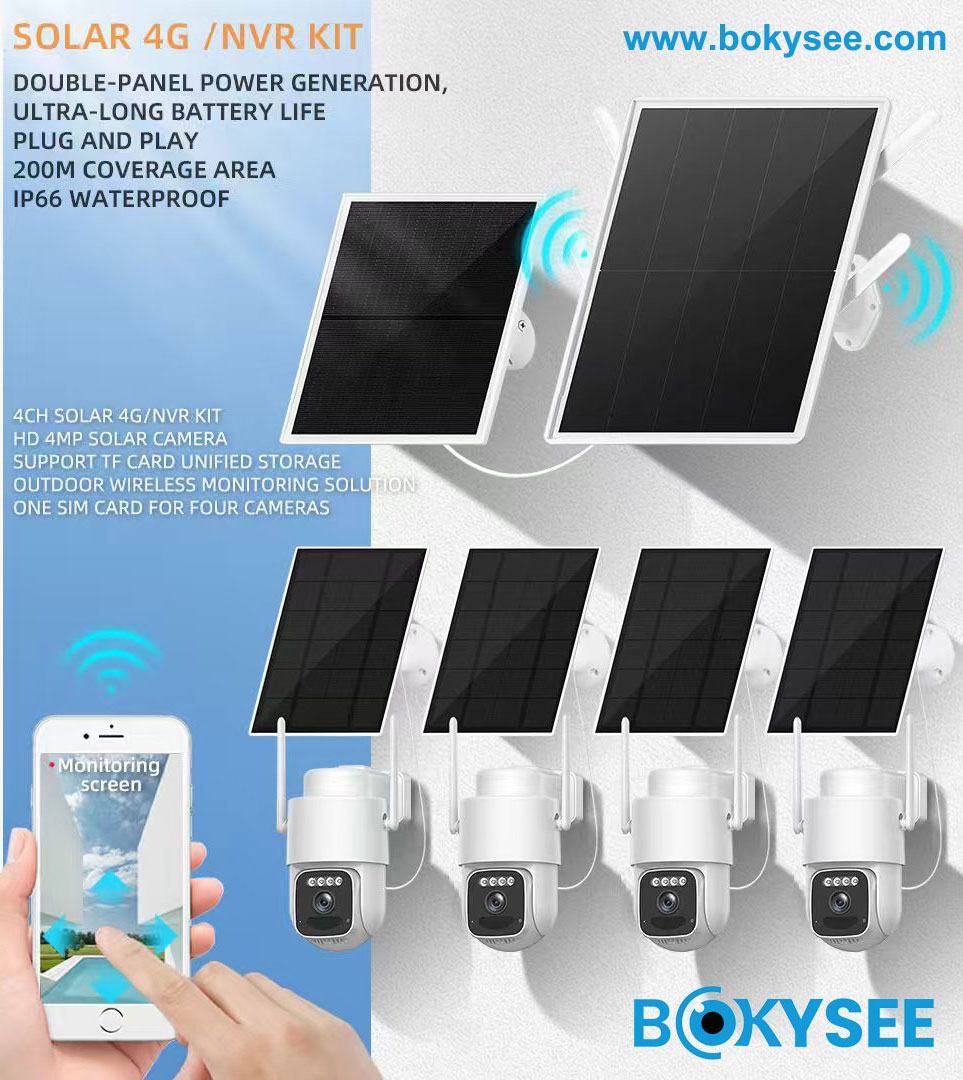
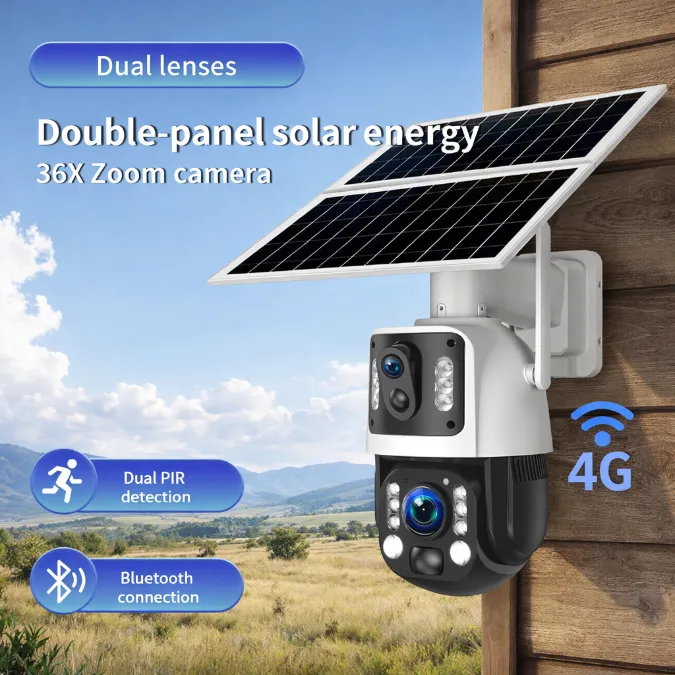
4. Solar CCTV Cameras
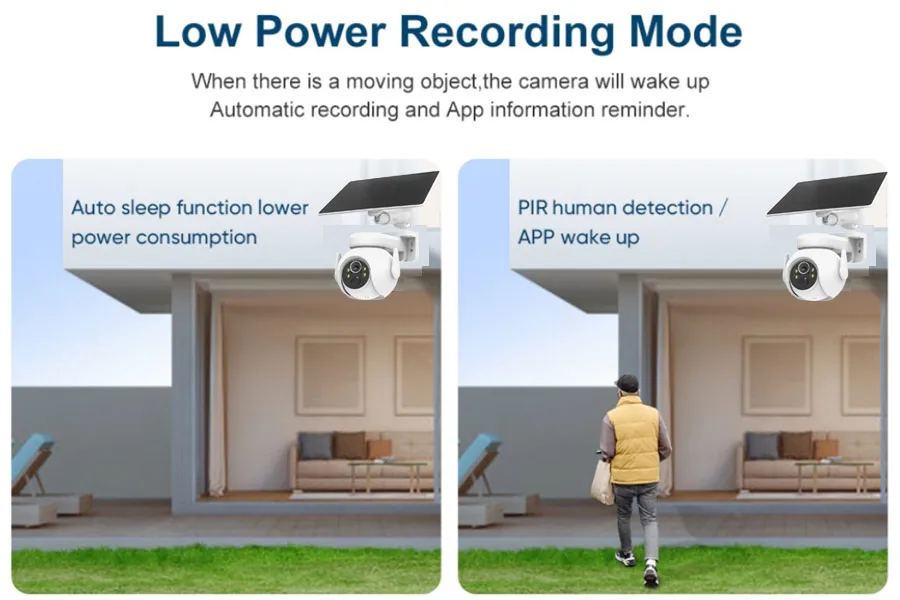
Solar cameras consist of a security camera together with a solar panel and battery. They can offer surveillance in places where there is no access to electricity.
A solar security camera could be quite useful in remote locations, but it is necessary to take into account the presence of sunlight, battery life, weather conditions, panel placement, and power consumption.
PTZ vs WiFi vs 4G vs Solar CCTV Cameras
| Tipo | Conectividad | Fuerza | Best Application |
| PTZ | Network/Wired | Con cable | Large-area monitoring |
| Wi-Fi | Red inalámbrica | Usually wired/battery | Flexible installations |
| 4G | Cellular | Wired/battery/solar | Remote sites |
| Solar | Wireless/cellular | Solar + battery | Off-grid surveillance |
Wired Vs Wireless CCTV Cameras: Which Is Better?
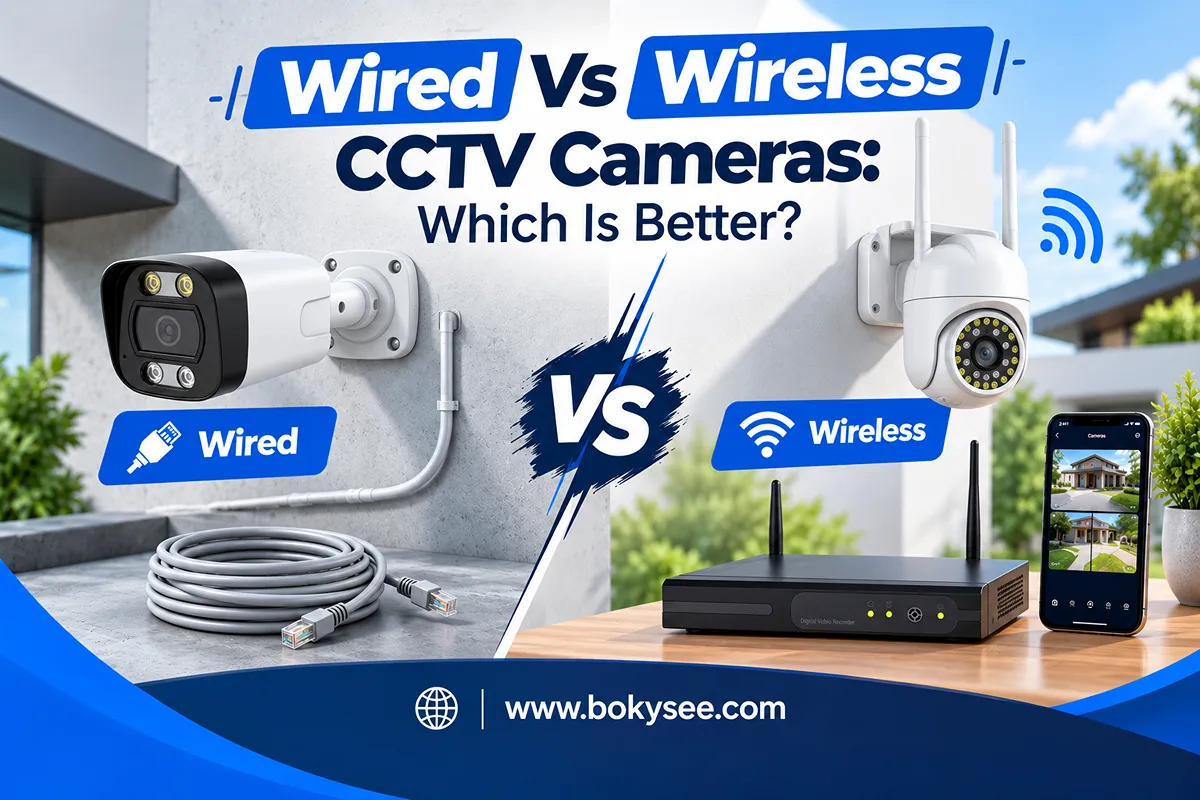
The choice between wired and wireless surveillance depends on infrastructure, reliability requirements, installation difficulty, and project scale.
Wired CCTV Cameras
However, wired solutions like those offered by the PoE camera solution will ensure stability within the network while also providing both power and data via the Ethernet cable.
Wired solutions are therefore ideal for use within professional environments such as offices, factories, warehouses, and campus installations. The only drawback would be that of the cabling.
Cámaras CCTV inalámbricas
A wireless security camera can simplify deployment where Ethernet cabling is difficult. WiFi systems are useful for homes, small businesses, temporary installations, and selected retrofit projects.
However, wireless systems depend on signal quality and network performance. Battery-powered models also require charging or battery maintenance.
Which Option Should Professional Buyers Choose?
In larger professional systems, wired systems that use IP or PoE technologies are usually preferred if installation is possible. Wireless systems tend to be better where wiring is not practical or when flexibility is important.
CCTV Camera Types: Quick Comparison For Buyers
The following table provides a simplified overview of common CCTV camera types and their most appropriate applications.
| CCTV Camera Type | Conectividad | Mejor para | Main Advantage |
| Cámara IP | Ethernet/Network | Commercial systems | Escalabilidad |
| Analog Camera | Coaxial | Existing systems | Simple replacement |
| PoE Camera | Ethernet | Professional installations | Power + data |
| Cámara domo | Wired/Wireless | Indoor security | Compact design |
| Cámara bala | Wired/Wireless | Outdoor security | Directional coverage |
| Cámara PTZ | Network/Other | Large areas | Pan/tilt/zoom |
| WiFi Camera | Wi-Fi | Flexible installations | Easy networking |
| Cámara 4G | Cellular | Remote sites | No fixed internet |
| Cámara solar | Solar + Battery | Off-grid sites | Independent power |
How To Choose CCTV Camera Types For Different Projects
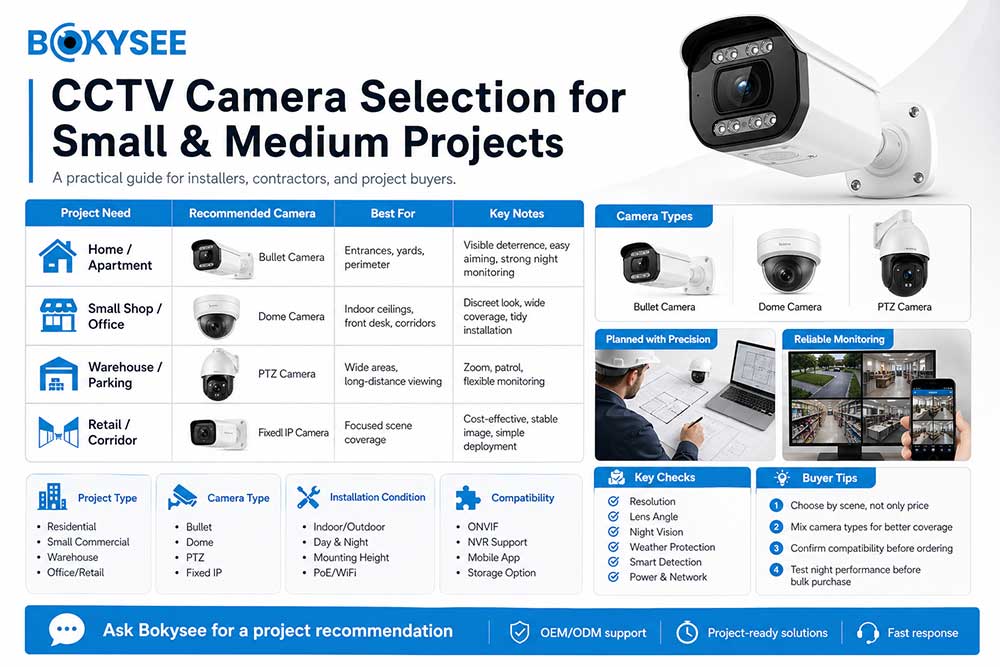
Camera selection should begin with project requirements rather than camera specifications alone. A 4K camera may provide excellent image detail, but it is not necessarily the best option for every location.
CCTV Cameras for Homes
Typically, residential camera projects make use of dome or turret cameras for indoor locations while bullet cameras may be used at the entrance or on the outer walls of homes.
Wireless security cameras might come in handy where there is a need for flexibility in both installation and monitoring.
CCTV Cameras For Offices And Commercial Buildings
Commercial properties often have use for networked systems. A combination of IP camera and PoE is able to offer central connection and recording.
A dome/turret type of camera could do well in offices and passageways, whereas NVR will help in managing several cameras from one point. Access control can also be included in the security system.
CCTV Cameras For Warehouses And Factories
Warehouses and factories often require wider coverage, longer viewing distances, and strong environmental protection.
Bullet cameras can monitor entrances and perimeters, while PTZ cameras can provide flexible observation across large spaces.
PoE camera systems can simplify network infrastructure in industrial buildings, while low-light capability should be considered for facilities operating at night.
CCTV Cameras For Parking Areas And Perimeters
The parking lots and perimeter areas may call for bullet cameras, PTZs, long-range lenses, and powerful night vision.
In the absence of power supply, the CCTV camera types such as 4G or solar-powered may be used. Choice of lens is critical since it depends on the viewing distance.
CCTV Cameras For Remote Projects
Remote surveillance projects can benefit from 4G, battery-powered, or solar systems. These options can reduce dependence on fixed networks and power infrastructure.
However, buyers should confirm cellular coverage, battery autonomy, solar exposure, storage capacity, and environmental protection before selecting equipment.
Key Specifications Buyers Should Compare
When comparing types of security cameras, consider:
● Resolución
● Lens and focal length
● Campo de visión
● Visión nocturna
● IP weather-resistance rating
● Conectividad
● Almacenamiento
● Power requirements
● Temperatura de funcionamiento
● AI and smart detection
● Recording compatibility
How Professional Buyers Should Source CCTV Cameras?
Professionals should first specify their entire project requirements before reaching out to the manufacturers. This would help avoid making unnecessary comparisons between products and aid the manufacturers in suggesting appropriate CCTV camera types.
1. Define The Project Requirements First
Make sure that you prepare the required amount, camera design, resolution, lens, indoor and outdoor needs, connectivity, storage space, power supply, mounting type, and environment.
As an illustration, a customer who ordered 500 cameras for a factory may need to determine the use of PoE, outdoor, night vision, NVR, AI Detection, or custom firmware.
2. Compare Manufacturers, Not Just Product Prices
Price is only one procurement factor. Buyers should evaluate product range, manufacturing capability, quality control, production capacity, certifications, OEM/ODM capabilities, warranty terms, and technical support.
A manufacturer offering multiple CCTV camera types may also make project standardization easier.
3. Ask About OEM And ODM Capabilities
The OEM and ODM services may consist of customized logos, packaging changes, housing customization, firmware choices, software solutions, and product design.
It is important to make sure what type of customization the supplier will perform on specific cameras.
4. Check Samples Before Bulk Orders
Sample testing should evaluate image quality, night performance, network stability, motion detection, waterproofing, recording compatibility, and actual operating performance.
Testing a sample can identify problems before a large production order is placed.
5. Confirm Certifications And Quality Standards
Buyers can get certifications including CE, FCC, RoHS, and others for the destination market. Different products require different certifications for various markets. Therefore, one is required to confirm the certifications from the manufacturer.
CCTV Camera Features Buyers Should Consider
1. Resolución y calidad de imagen
The resolution may be 2MP, 4MP, 5MP, 8MP, and even 4K. More resolution means that more detail is possible; however, the lens quality, lighting, compression, and viewing distance also play their roles.
2. Visión nocturna
Infrared LEDs, sensor sensitivity, and low-light processing determine nighttime performance. Some advanced models also support color night vision under suitable lighting conditions.
3. Weather Resistance
Enclosures for outdoor camera systems require proper ratings. Examples include IP66 and IP67, but the exact requirement will depend on the installation environment and the specifications of the manufacturer.
4. Storage and Recording
Recording can use NVRs, DVRs, SD cards, network storage, or cloud platforms. Storage capacity should be calculated according to camera count, resolution, frame rate, compression, and retention period.
5. Smart Detection
These may include person detection, vehicle detection, motion detection, line crossing, intrusion alarm, etc. Buyers need to check whether the intelligent features are handled by the camera itself or need special recording software.
Common Mistakes When Choosing CCTV Camera Types
● Choosing only by megapixels: High resolution does not guarantee useful images at every distance.
● Ignoring viewing distance: Lens selection must match the area being monitored.
● Using indoor cameras outdoors: Outdoor installations require appropriate environmental protection.
● Choosing the wrong lens: An unsuitable focal length can produce excessive coverage or insufficient detail.
● Ignoring nighttime conditions: Daytime performance does not guarantee effective night surveillance.
● Underestimating storage: Higher resolution and more cameras require additional recording capacity.
● Not checking network compatibility: IP and PoE equipment should be compatible with the planned infrastructure.
● Buying without samples: Bulk purchases should be preceded by practical testing.
● Focusing only on unit price: Installation, maintenance, storage, and support also affect total cost.
● Ignoring technical support: Professional projects may require long-term firmware, integration, and troubleshooting support.
Related CCTV Guides and Security Solutions
Explore these related articles to learn more about CCTV camera selection, security system installation, and choosing the right surveillance equipment for your project.
PoE vs WiFi vs 4G Solar Security Cameras: Which System Is Best for Your Project?
ONVIF Profile S vs Profile T for IP Security Cameras: 2026 Compatibility and Migration Guide
Solar vs. Battery Security Cameras: Which is Best for Your Application?
PoE IP Camera vs WiFi Camera: Which Is Better for Installers?
WiFi Security Cameras vs 4G LTE Security Cameras: Which Solution Is Right for You?
NVR vs DVR: Por qué el sistema de seguridad NVR es el futuro de la vigilancia con IA
Mejores megapíxeles para cámaras de seguridad: 4 MP vs 5 MP vs 6 MP vs 8 MP vs 12 MP
Todos los tipos de cámaras de seguridad con cable: Guía completa del proyecto Bokysee
10 Types of CCTV Security Camera Systems and Buying Guide 2026
Wired vs Wireless Security Cameras: Best Choice for Business
BOKYSEE CCTV Camera Solutions for Professional Buyers
Looking for the right CCTV cameras for your business or security project?
En BOKYSEE, we manufacture a wide range of security cameras for distributors, wholesalers, installers, and system integrators.
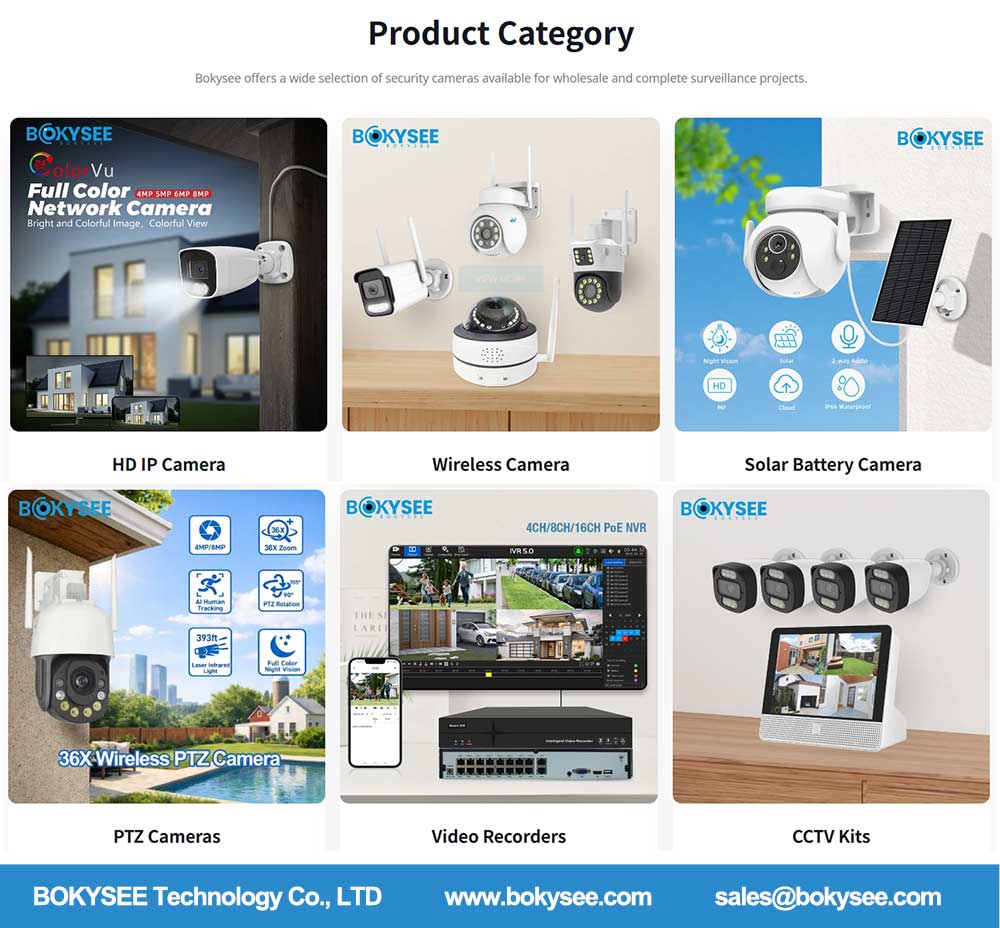
Our main product solutions include:
-
IP & PoE Cameras: 4MP, 5MP, and 8MP cameras for homes, offices, warehouses, and commercial projects.
-
Bullet, Dome & Turret Cameras: Flexible choices for indoor and outdoor installations.
-
Cámaras PTZ: Optical zoom and flexible monitoring for large areas and long-distance surveillance.
-
4G & Solar Cameras: Security solutions for farms, construction sites, and remote locations.
-
NVR Systems & CCTV Kits: Complete recording solutions for professional installations.
We also offer OEM/ODM customization, including private-label logos, packaging, and product configurations to support your brand and local market.
Need CCTV cameras for wholesale or your next project?
Contact BOKYSEE to request our latest catalog, samples, and customized quotations.
Conclusión
The different types of CCTV camera enables customers to create a surveillance system based on particular project needs. So, the best types security cameras must be chosen based on the environment, viewing range, network configuration, availability of power, recording, and other needed features.
Bokysee provides a wide range of CCTV cameras and customized OEM/ODM solutions for professional buyers, distributors, and security project contractors.
Visit our website to explore its product range, request a catalog, and discuss your wholesale or private-label requirements with the team.
Frequently Asked Questions About CCTV Camera Types
1. What are the most common types of CCTV cameras?
The most common CCTV camera types include bullet, dome, turret, PTZ, IP, analog, and wireless cameras. Each type is designed for different installation needs and security applications.
2. Which type of CCTV camera is best for outdoor use?
Bullet and turret cameras are popular for outdoor security. PTZ cameras are useful for larger areas, while 4G solar cameras work well at remote sites. Always check the camera's waterproof rating before installation.
3. What is the difference between IP and analog CCTV cameras?
IP cameras send digital video over a network and usually work with NVR systems. Analog cameras use coaxial cables and typically connect to DVRs. IP cameras are often preferred for new commercial installations.
4. Are wired or wireless CCTV cameras better for businesses?
Wired PoE cameras are generally better for stable, long-term commercial installations. Wireless cameras are useful where network cabling is difficult or flexible installation is needed.
5. How do I choose the right CCTV camera types for my project?
Start with your installation location, viewing distance, lighting, network, and power supply. Then compare camera resolution, night vision, recording compatibility, and total system cost. For large projects, testing samples before ordering is recommended.







 Spanish
  English
  Russian