 Ir al contenido
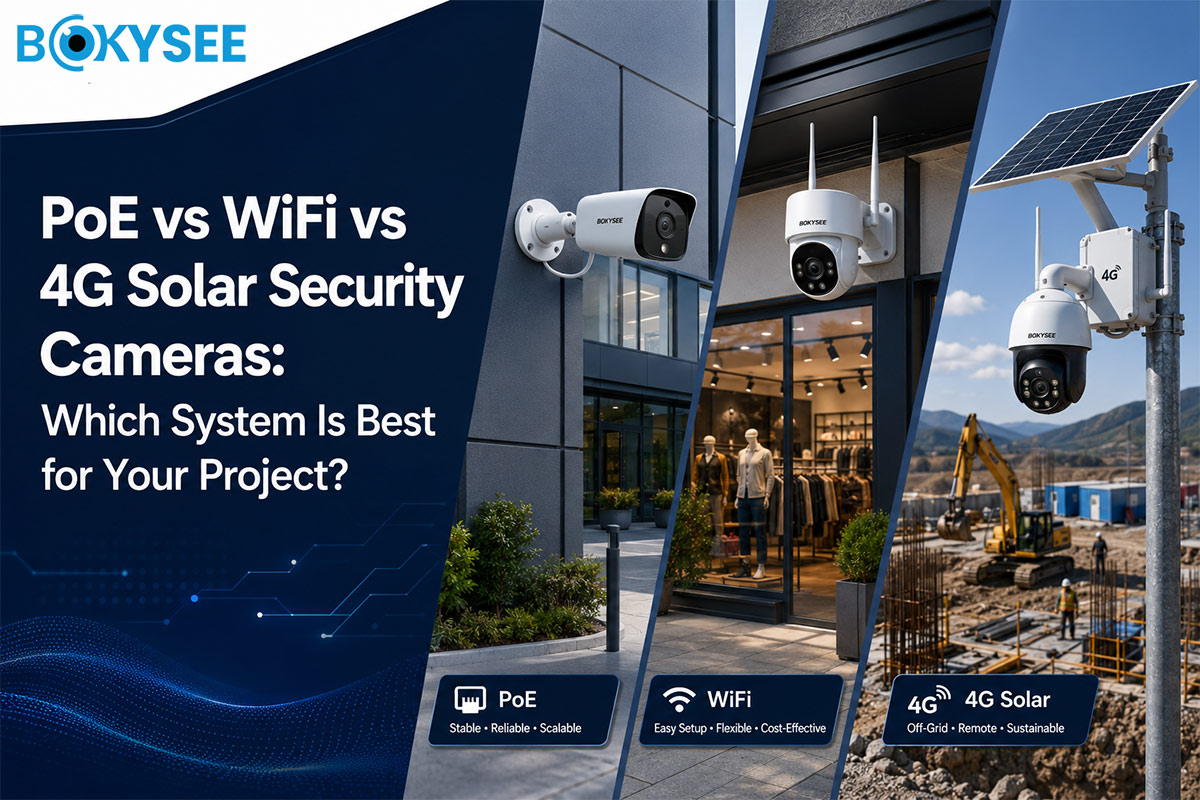
Which Security Camera System Should You Choose?
For most professional projects, PoE cameras provide the best stability; WiFi cameras simplify small installations; 4G solar cameras solve off-grid monitoring; and PTZ cameras cover large areas where long-distance viewing is required. The correct choice depends less on which camera is newest and more on the site's power, network, recording, distance and maintenance conditions.
An overseas distributor or system integrator should not begin by asking only for “the best security camera.” A warehouse, a private home, a farm and a temporary construction site have very different requirements. Choosing the wrong connection method can create repeated disconnections, expensive cabling work or battery problems after installation. A good fabricante de cámaras de seguridad should therefore ask about the application before recommending a model.
PoE Security Cameras for Warehouses, Offices and Commercial Buildings
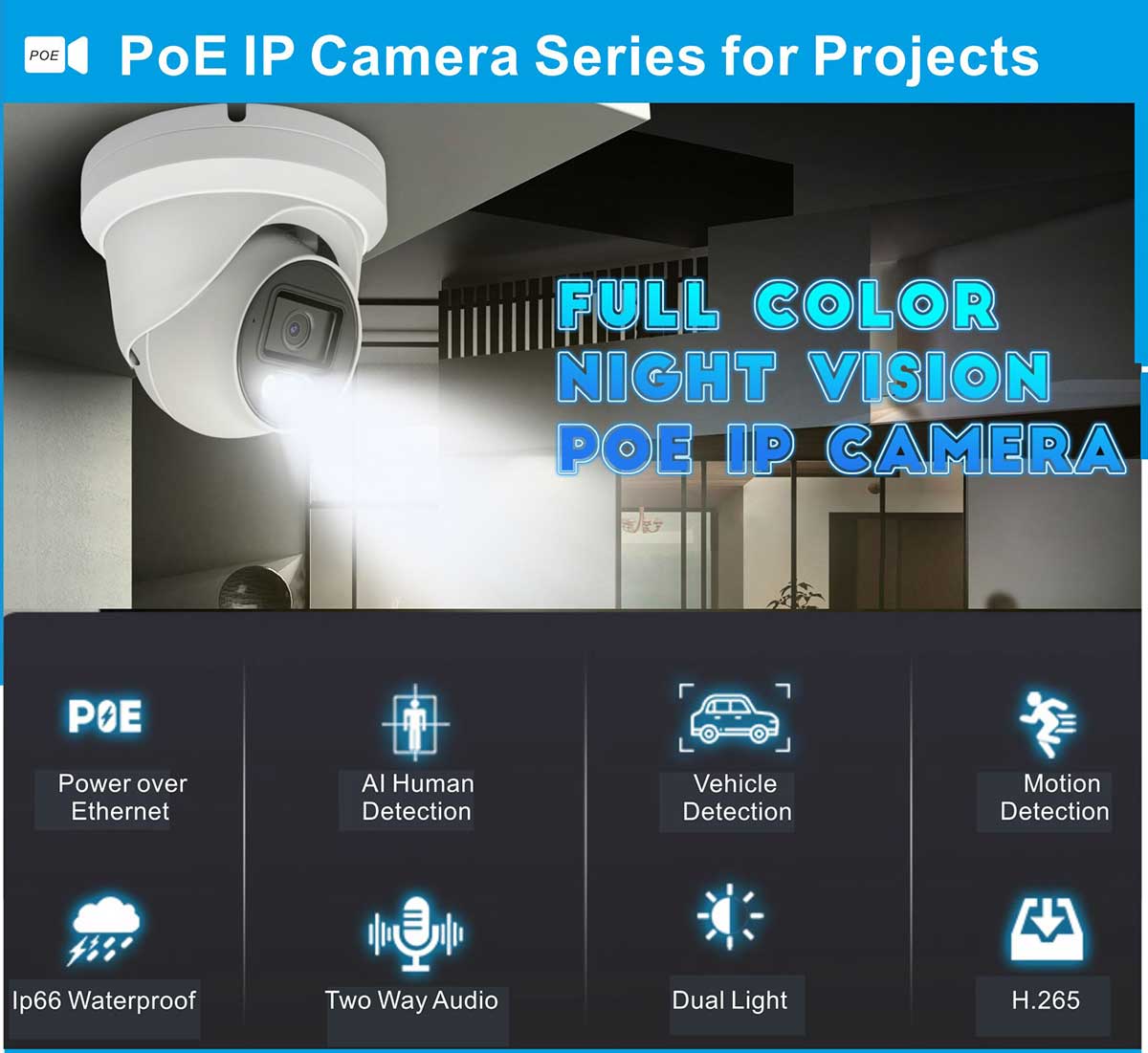
A PoE security camera system is normally the most reliable option for a fixed professional installation. One Ethernet cable carries network data and power, reducing the number of separate cables while maintaining a stable wired connection. PoE cameras are widely used in warehouses, offices, schools, apartment buildings, retail chains, factories and small-to-medium commercial projects.
For a typical project, buyers may compare 4MP, 5MP and 8MP cameras with 2.8mm or 3.6mm lenses. A 2.8mm lens gives a wider view for entrances, corridors and indoor spaces, while a 3.6mm lens provides a slightly narrower image with better subject detail at distance. Other useful options include H.265 compression, built-in microphones, dual-light night vision, human and vehicle detection, IP66 or IP67 housings, ONVIF and RTSP.
De Bokysee PoE and IP camera range is positioned for installers, distributors and project buyers that need stable supply across bullet, dome, PTZ and active-deterrence models. When planning a PoE system, confirm the NVR channel count, recorder bandwidth, PoE power budget and hard-drive capacity rather than selecting cameras separately from the recorder.
WiFi Cameras for Homes, Shops and Light Commercial Projects
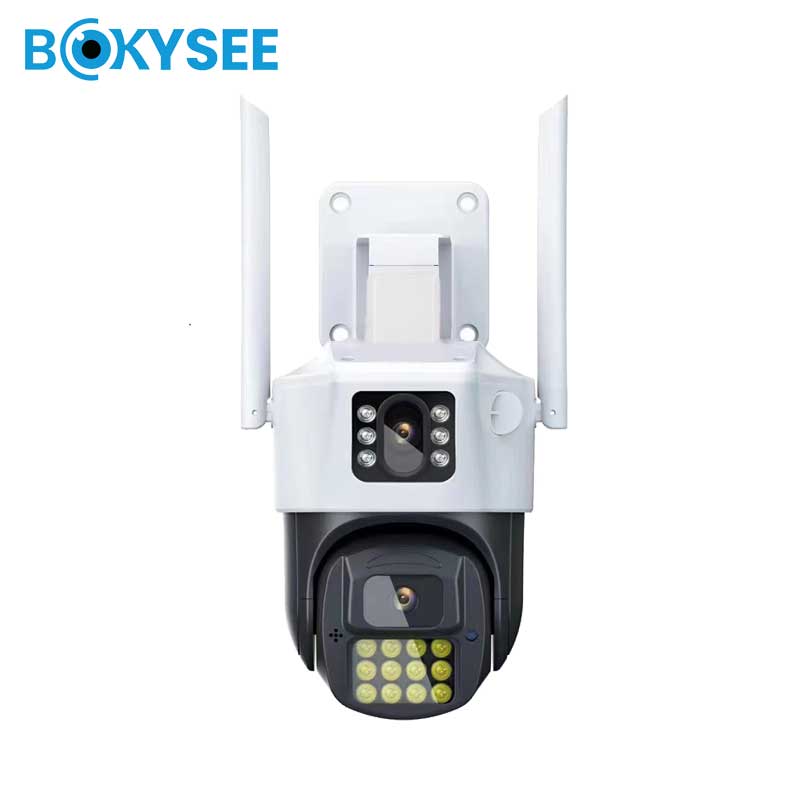
WiFi security cameras are suitable when running Ethernet cables is difficult but a reliable local router and power source are available. They are popular in apartments, villas, small stores, restaurants, offices and temporary indoor monitoring applications.
The main advantage is installation flexibility. The buyer can deploy cameras without rewiring the building. The limitation is that video stability depends on signal strength, router quality, interference and the number of wireless devices. A six-camera shop may work well on a carefully planned network, while a large warehouse with metal shelves and weak coverage may experience unstable streaming.
When comparing a wholesale WiFi camera supplier, check resolution, antenna design, supported frequency, two-way audio, storage method, night vision and mobile access. For B2B buyers, it is also important to test how many cameras can operate on the same router and whether local NVR recording is available. WiFi is convenient, but it should not be treated as a universal replacement for wired PoE.
4G Solar Cameras for Construction Sites, Farms and Remote Locations
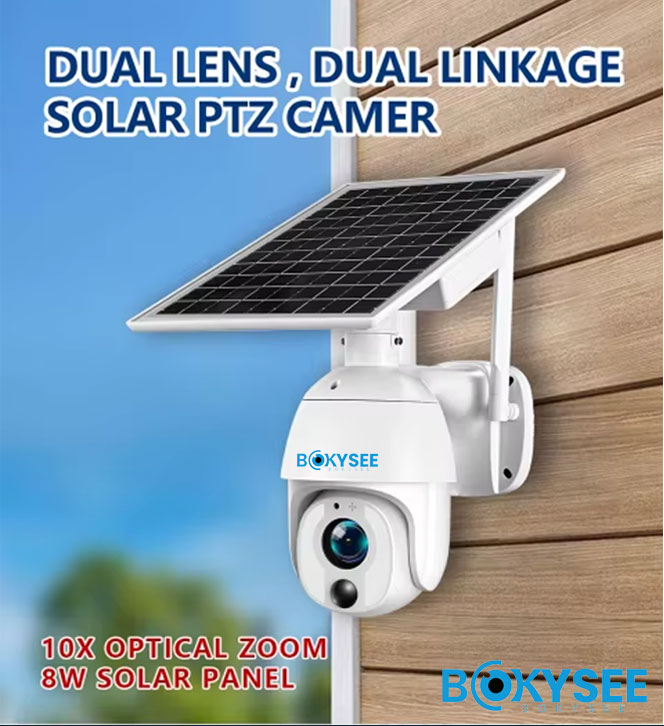
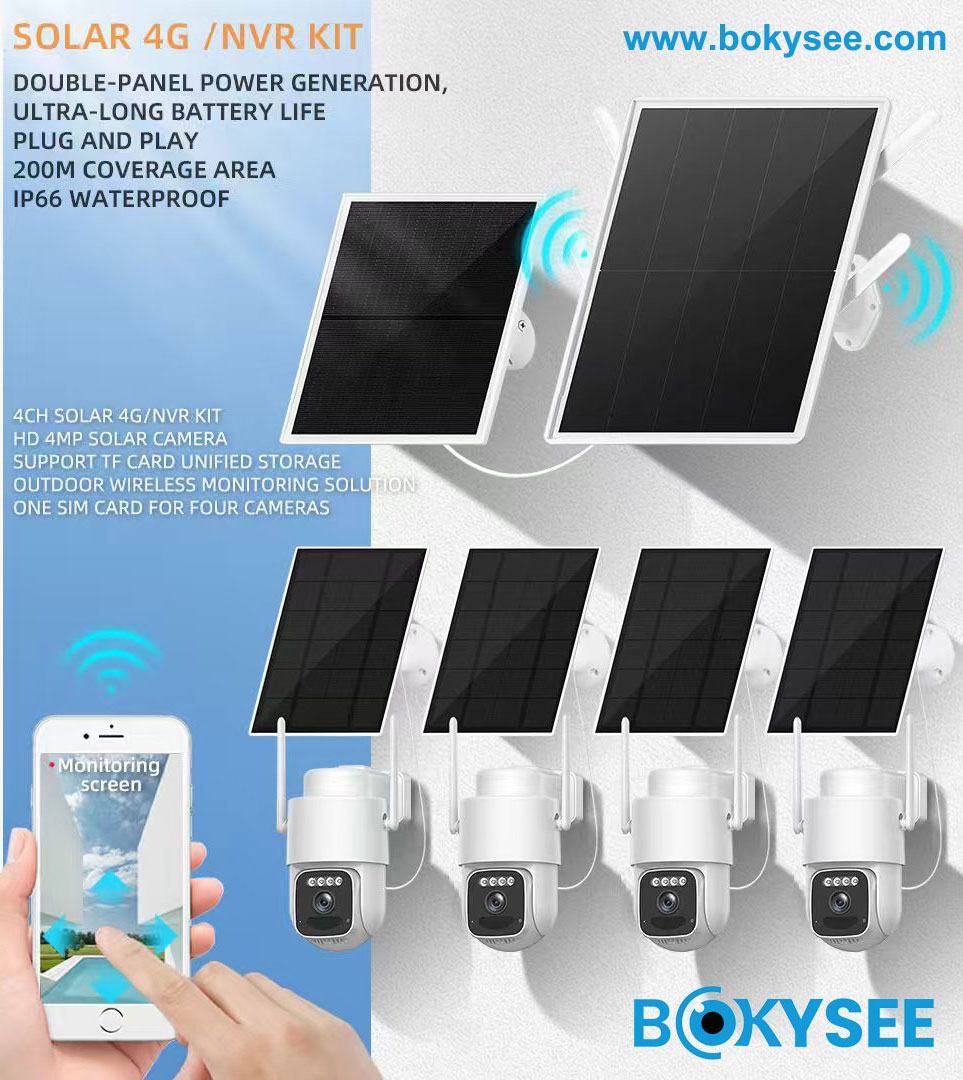
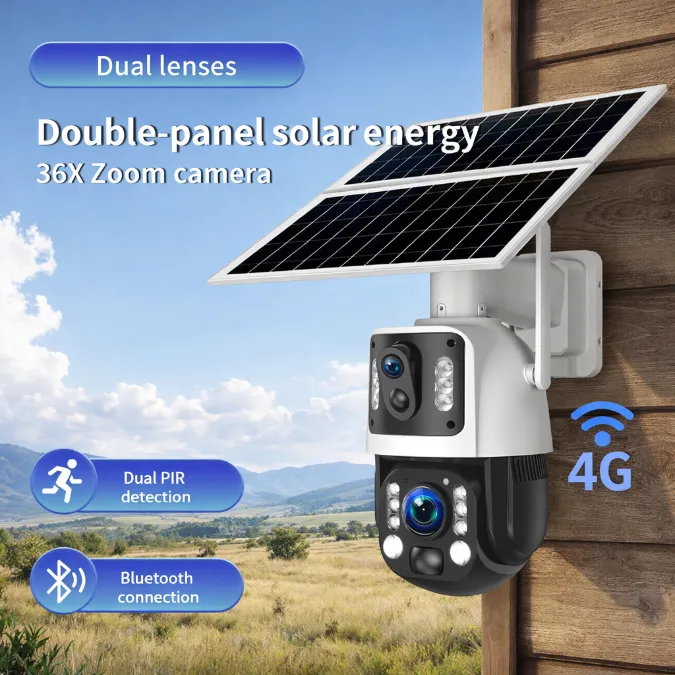
A 4G solar camera is the practical choice when there is no fixed broadband and no reliable mains power. Typical applications include construction sites, farms, ranches, mining areas, remote roads, utility stations, parking areas and infrastructure projects.
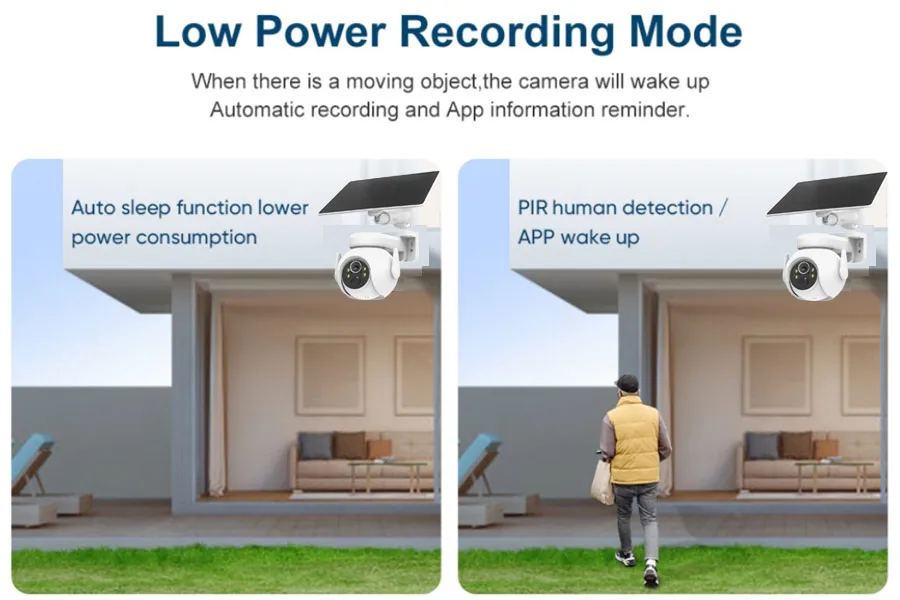
The buyer should verify local LTE bands before ordering. A camera that works in one country may not connect correctly in another if the modem does not support the local operator bands. Battery capacity and solar-panel wattage must also match the recording mode. PIR-triggered cameras use less power, while AOV or continuous low-frame-rate recording requires a larger energy system.
Important specifications include battery capacity, panel output, charging temperature, standby consumption, PIR distance, local storage, cloud options, PTZ range, waterproofing and alarm functions. Bokysee's solar battery camera solutions include WiFi and 4G options for off-grid projects, while its solar panel camera feature guide explains the technical details buyers should compare.
PTZ Cameras for Parking Lots and Wide Outdoor Areas
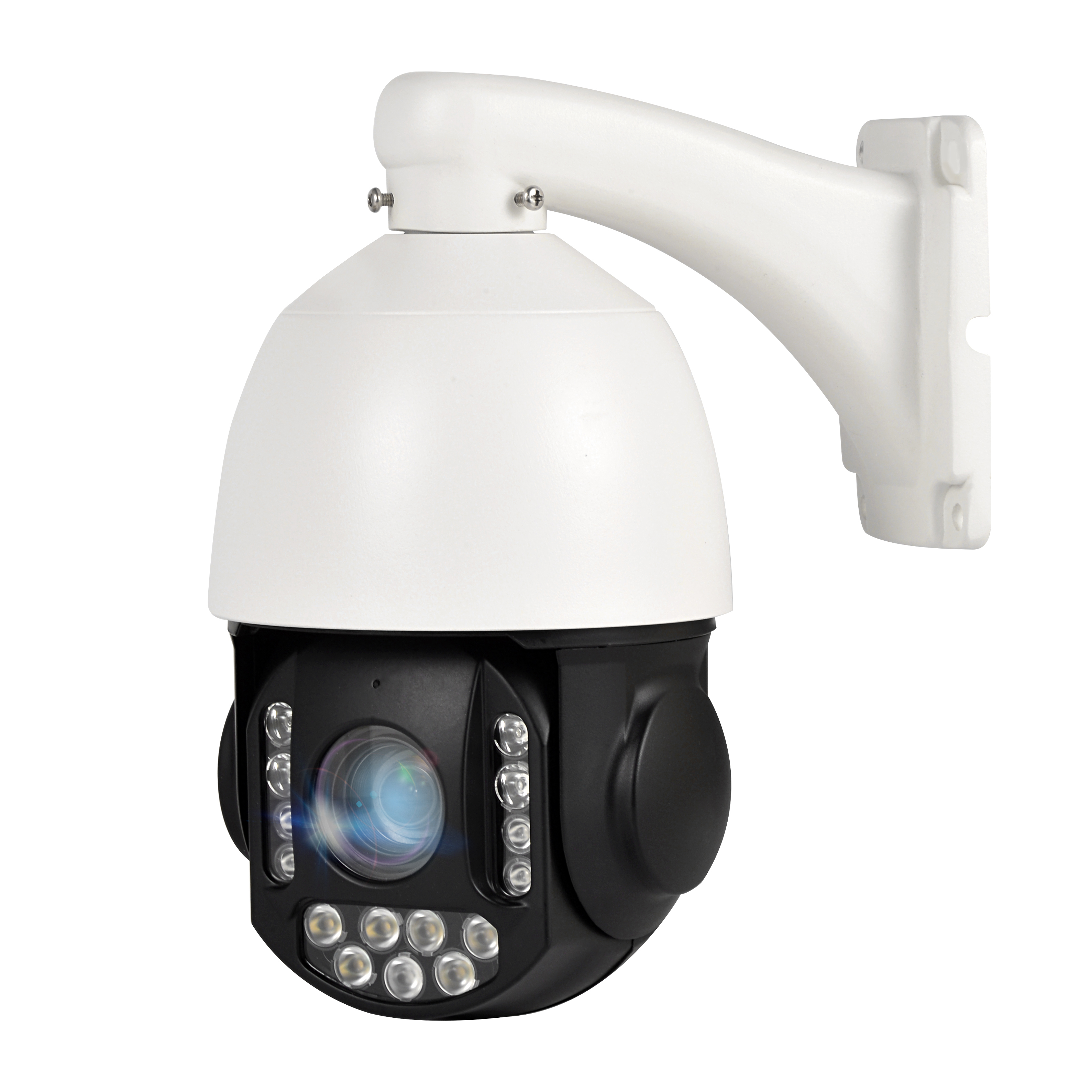
PTZ cameras are useful when one device needs to observe a large space and zoom toward distant activity. Parking lots, factory yards, residential compounds, public spaces and industrial sites often use PTZ cameras together with fixed cameras.
Optical zoom is more important than digital zoom for identification at distance. Depending on the project, buyers may compare 4X, 18X, 20X, 25X, 30X or 36X optical zoom. They should also check preset positions, patrol routes, auto tracking, infrared distance, white-light illumination, pan-and-tilt range and power requirements.
De Bokysee PTZ camera range is designed for wide-area surveillance and includes PoE, WiFi, 4G and solar-powered options. A PTZ camera should not automatically replace fixed cameras: it only records the direction it is viewing. Many professional systems combine fixed overview cameras with one optical-zoom PTZ for active monitoring.
When an NVR Kit Is the Better Purchasing Option
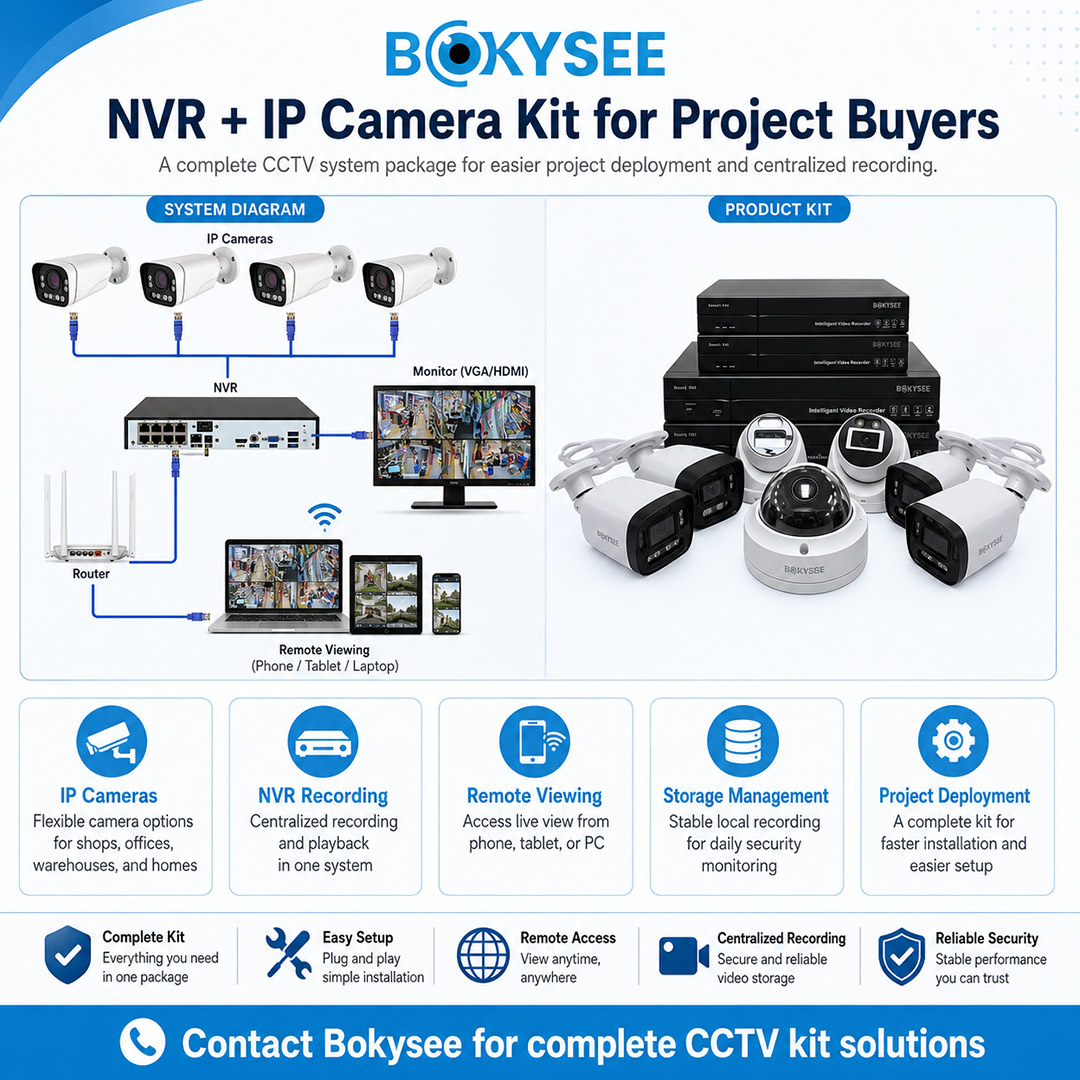
For installers and distributors that need a complete package, an NVR kit can reduce compatibility and configuration work. A kit may include four, eight or sixteen cameras, an NVR, cables, power accessories and remote-viewing software. This is useful for homes, shops, small offices and repeatable installation packages.
Before ordering a PoE or wireless CCTV kit, confirm the recorder's maximum input resolution, decoding ability, recording bandwidth, hard-drive support and PoE capacity. An “8-channel kit” does not always mean the recorder can decode eight 8MP streams at full frame rate. Buyers should request the actual recording and playback specification.
Certifications and Compatibility to Confirm
The required compliance documents depend on the destination market and product configuration. For European projects, buyers commonly review CE and RoHS documentation. Wireless products may fall under radio-equipment requirements. The European Commission explains that CE marking applies only where harmonised EU legislation requires it, and the technical documentation must support conformity. See the official EU CE marking guidance y RoHS information.
For the United States, RF devices may require FCC equipment authorization before marketing or import. Buyers can consult the FCC equipment authorization guidance. Certification must be checked against the exact camera, wireless module and power adapter being purchased.
For system integration, ask whether the selected IP cameras support ONVIF, RTSP and H.265. ONVIF Profile S is designed for IP video streaming, but full compatibility still depends on the exact camera, NVR and firmware. Sample testing remains essential.
MOQ and Sample Testing Recommendations
For standard models, a practical sample order may begin with one to ten units per model. Buyers should test the camera in the real installation environment, not only on an office desk. Evaluate image quality, night vision, network stability, mobile access, recording, AI detection and waterproof installation.
Branding MOQ depends on the process. Laser logos may be possible from approximately ten units per model, while manuals, NVR GUI logo customization, silk-screen printing and fully customized packaging usually require higher quantities. Exact MOQ should be confirmed for the selected model and artwork.
Final Buying Recommendation
Use PoE for stable professional buildings, WiFi for flexible small-site installations, 4G solar for remote locations and PTZ for long-distance or wide-area monitoring. Select an NVR kit when compatibility and fast deployment are more important than mixing individual components.
Bokysee supports overseas installers, distributors, wholesalers and project partners with product selection, samples, OEM branding and one-stop CCTV systems. To receive a model recommendation, provide the application, camera quantity, resolution, network conditions, recording period and target market through the Bokysee contact page.







 Spanish
  English
  Russian